Update on Brad Stanfield's Rapamycin Clinical Study in NZ

I haven’t seen Part III, but I agree with your analysis in Parts I and II.

It remains, however, that given my understanding of the mechanism through which Rapamycin affects cells I think it should be taken less frequently than every week. I am taking it tomorrow 7 weeks after the last dose. A high dose, however.

1 Like

Part III

In order to understand the aging process in muscle and what to do about it, we need to examine a fundamental concept in aging that unfortunately is rarely accounted for by the vast majority of biohackers. That concept is that aging is not just deterioration, but it is adaptation.

I have previously posted several studies on this site showing that many aging related changes in (1) the immune system (2) the cardiovascular system (3) the microbiome are not just a deterioration but an adaptation to other global changes in the organisms. An older immune system is a system adapted in some respects to the conditions of the rest of the body, because it is an effort at homeostasis of the whole organism, where one system compensates for the deterioration of another. If you now attempt to “bring back” the older immune system to the metrics of a younger one, you don’t get a younger functioning overall system, you get a dramatically worse outcome. Let’s go back to the house plumbing analogy. Imagine that when faced with weaker water flow from the tap (the result of age accumulated mineral deposits) we actually boost the water pressure so that the water flow is as if the pipes are brand new (“young”) - it will give you a very short increase in the rate of the water flow and then burst the pipes. The slower water flow is an adaptation of the aging plumbing system. If you want to fix the plumbing system, you need to go upstream and fix a lot of other things first, remove the deposits, fix the corrosion and so on. It takes a lot to fix the plumbing, merely boosting water pressure so that the water flows as if the pipes are young will lead to disaster. The same situation if you try to “boost” the immune system as we’re incessantly urged to do - this can very well be counterproductive, unless you take a very holistic approach and try fixing problems much upstream. I posted a study to that effect in the immune system. I did the same for the cardiovascular system and the microbiome, studies showing how a surface intervention to “fix” some aspect (bring it to “young” levels) results in disaster. This btw. is why I’m very cautious about the Michael Lustgarten approach of trying to push all biomarkers to their “youthful” state - when are you actually rolling back the clock and when are you merely obviating the aging adaptation which is trying to deal with the problems and bring the whole body into homeostasis? This is a huge problem in the biohacking longevity space. We are constantly reading studies that show some intervention, drug, supplement etc. bringing something to a more “youthful” state and we don’t ask ourselves if this is the right approach and we’re not actually making things much worse by working against the body adaptation processes. There are some nods toward this concept when there’s a hamhanded attempt to “increase antioxidants” without asking if doing so in this case might not result in a worse outcome like in cancer or removal of exercise adaptations.This is true of all systems in the body, including the muscle. Surely we understand that on some level in the case of muscles, because we understand that while some increased muscle mass is good, doing so by injecting steroids is suboptimal.

We need a much more subtle approach - generally this is going to be by going upstream in the aging pathway and more global solutions. Not increasing muscle size by injecting steroids so to speak. That is why the higher upstream you go, the more preserved the anti-aging effect is going to be, as in affecting the mTOR protein. Note that mTOR inhibition results in a very global effect of slowing the rate of aging itself, not so much by addressing discrete pathologies as such. So we have the same set of age related morbidities and pathologies, just postponed in time because we slowed the aging process. This is true of all these mTOR inhibitor interventions, whether through CR/fasting or rapamycin - you are slowing down the whole aging process at a high level - this is an approach that gets around the “adaptation” of the body to age-related changes, because you are slowing the aging itself and therefore we avoid the need for adaptation. That’s a very fundamental concept.

Do we see something similar to that in muscle tissue, as we do for all those curves in SGLT2i/kidney health, hormonal levels etc.? Yes we do. Here’s an interesting study - you can read the study or at least you should read the pop sci article on that study, it’s a really important one addressing this concept squarely, so I would strongly urge you to read this article at least, if not the study itself.

In fact, this is such a good study that I’m going to make a separate thread about it.

Cellular Survivorship Bias as a Mechanistic Driver of Muscle Stem Cell Aging

And one of the pop sci articles I found about this study, worth reading:

Muscle recovery slows with age, but it may not be a bad thing

A few quotes:

"Aging rarely announces itself in dramatic ways. It arrives through small delays. A sore muscle lingers longer than expected or a minor strain lasts weeks instead of days.

Movements that once felt effortless now demand caution. Many people read this as decline. The body seems to be losing its edge. But recent research offers a different view. These changes may not signal failure. They may reflect a shift in priorities inside the body."

"Young cells sprint, old cells endure

“Think of it like a marathon runner versus a sprinter. The stem cells in young animals are hyper-functioning – really good at what they do, namely sprinting, but they’re not good for the long term,” said Dr. Thomas Rando from the Stanford University School of Medicine.

‘They can make it through the 100-yard dash, but they can’t make it even halfway through the marathon. By contrast, aged stem cells are like marathon runners – slower to respond, but better equipped for the long haul.’

‘However, what makes them so proficient over long distances is exactly what renders them poor at sprinting.’

This contrast highlights a key shift. Aging cells do not simply weaken. They adjust their strategy."

"As tissues age, their environment becomes more demanding. Oxidative stress increases. Damage accumulates. Not all cells can survive under these conditions.

The cells that remain are not the fastest or most efficient. They are the ones that endure."

"This balance between performance and survival is not unique to muscle cells. It appears across living systems.

During periods of scarcity, animals often reduce activity linked to growth or reproduction. Energy shifts toward survival. This response helps them endure difficult conditions. The same principle operates within aging tissues. “Species survive because they reproduce, but in times of deprivation, animals turn on their own resilience programs,” Rando said.

“There are a lot of examples in nature of allocating resources to survival under times of stress. It’s exactly aligned with what we’re seeing at the cellular level.”

Muscle stem cells follow this pattern. They slow down to preserve their long-term function."

[This is called - CR!]

“Any attempt to modify this system must weigh short-term gains against long-term consequences.”

"Slower recovery may not signal failure. It may represent a protective adjustment. The body chooses to preserve its resources instead of using them all at once.

Some age-related changes that look detrimental – like slower tissue repair – may actually be necessary compromises that prevent something worse: the complete depletion of the stem cell pool,” said Dr. Rando.

This perspective shifts the narrative. Aging becomes a process of balance rather than simple decline."


So - here we can see the same idea for muscle aging as we see in CR and other mTOR affecting interventions like rapamycin. You slam on the brakes. In the SGLT2i/kidney terms, you prevent the “hyperfiltration”, the frenzy of incessant activation. The muscle like many other tissues gradually loses the ability to receive signals - it becomes resistant to protein, growth etc. It’s like the loss of sensitivity to insulin - when you are no longer insulin sensitive, merely boosting the levels of insulin, boosting the signal is like going into hyperfiltration mode of increased effort that works in the short term, but leads to disaster longer term (increasing insulin until diabetes and eventual pancreatic beta cell exhaustion and death). Instead, you want to go upstream and fix the problem of signal reception loss, like insulin resistance, so you are not merely boosting the signal - go upstream through mTOR inhibition (CR or rapamycin).

CR just as rapamycin is slamming the brakes on the aging process in muscles at the cost of short term blunting of exercise performance. Long term, we know what CR does for muscles and rapamycin works through the same master regulator mTOR. It fixes loss of signal reception like insulin resistance.

This is where Dr. Brad goes wrong. He has the wrong model of why muscle recovery and adaptation slows down with aging. The primary lever is not autophagy, and therefore the cycling of autophagy model cannot explain the result. If you have the wrong model in mind, then run an experiment that gives you negative results, it’s not because there is something wrong with the tested intervention, it’s that your expectation is wrong because you have the wrong model. In the house plumbing analogy, Brad thinks that the intervention of lowering the pressure valve (administering rapamycin) means that it doesn’t work, because it causes the water flow to weaken, whereas that simply says that his model of how the plumbing system works is wrong. Same when he administers rapamycin thinking that based on his autophagy model if the exercise performance drops it means that rapamycin doesn’t work as hoped for, instead of realizing that the effect is actually good, instead it’s his model that’s bad. As the study above shows - slower muscle recovery is an adaptation, and blunted exercise peformance is a way to get ahead of the aging process itself by affecting mTOR.

More in part IV.
1 Like

Part IV

So where do we go from here? Dr. Brad thinks this means we should attenuate rapamycin administration either to zero in the elderly (to avoid sarcopenia), or lower the dose, or lengthen the interval of rapamycin from 1-week to 2 weeks or more. At some point you will no longer have rapamycin blunting the exercise performance. Because so many of his assumptions and extrapolations are either wrong or scientifically illegitimate, this is nonsensical advice. Imagine that you are taking a medication that is saving you from fatal cancer. But there are side effects. Would you then advocate the attrition of the medication to the point where there are no side effects? Congratulations, you are now doing nothing for your cancer. It’s silly.

Dr. Brad is wrong about the use of exercise performance, especially short term, as a metric of successful aging or muscle health. He is using the wrong model (autophagy) to evaluate the impact of rapamycin and his prescriptions are therefore completely misguided.

But back to the question of where that leaves us - in exactly the same place as before the study. We still don’t know what the optimal dose and schedule is of rapamycin for successful aging. It could be daily, weekly, multi-weekly (per John Hemming) - we don’t know, we are speculating and experimenting. I have my approach, but I have no proof, maybe MK’s approach is best, or maybe John’s, or desertshore’s. We don’t know. We still don’t know which effects of rapamycin represent downsides (including exercise adaptation) to be ameliorated through other interventions, including other drugs (or more exercise). We still can’t prove that rapamycin is definitely extending lifespans in humans. We are in exactly the same place.

I for one see zero reasons to change my once a week 6mg dose of rapamycin (to be soon boosted to 8mg per the Arizona study design), based on Dr. Brad’s study. It would be utterly absurd. I see no personal relevance of this study to my situation, period.

Rapamycin continues to be a gamble. Those of us who elect to take rapamycin evaluate the upsides as worth it compared to downsides. Everyone has their own analysis and their own risk tolerance. Speaking for myself, I take rapamycin for four classes of reasons. One, it works in each and every species that has been studied - that’s very powerful. Now, I ask myself what are the odds that humans are the one special snowflake where it doesn’t work. But, you have to always look to counterarguments, not just things to confirm your bias. The counterargument to that argument is that the simpler the organism, the more powerful the effect, yeast multiples of lifespan, worms extremely high, flies high, mice about 20-30% extension of max lifespan, cats and dogs likely 10-15%, by the time you get to humans you might be barely at 5% if that, not to mention truly long-lived species such as bowheaded whales. That’s true of all anti-aging interventions including CR - the more complex the organism and the more long lived, the smaller the life extension effect. Meanwhile, for that theoretical 5% you might have very real life limiting side effects - it just might net out to zero if not go negative. Is that so? I don’t know. The second set of reasons, is that rapamycin is the only drug that has actual max life extension potential (and the other intervention is CR) that has a chance of slowing the global rate of aging at a very upstream point of aging pathways. If I am to try biohacking aging, as far as drugs go, rapamycin is my only choice - I either play that card or have to walk away from the table… I choose to play. Counterargument: let us never forget, no intervention works for everyone in the cohort. CR shortens the lifespan of some mice in a cohort, as does rapamycin. You might be unlucky in being a non-responder (or lucky being a superresponder like Agetron and Charles). Third set of reasons: rapamycin appears to be a pretty safe drug, and the known downsides such as possible glucose and lipid disregulation are easily ameliorated through other drugs (which I would want to take anyway even if there were no rapamycin!). Counterargument: there are scattered studies where rapamycin is not a harmless drug, especially if you get the dosing protocol wrong - and news alert, we have no idea what the right protocol or dosing is… we’re flying half-blind. Fourth, the same reason Matt Kaeberlein is optimistic - there are enough studies with hints that rapamycin has benefits in different conditions that in all that smoke there might be a fire somewhere. Counterargument is very simple - until there is some kind of very solid evidence (perhaps with the Arizona trial), all this is copium hopium, we’ve seen many hopes be dashed before, and rapamycin may very well be one of them.

A final observation about biohacking. There have been sharp panic moves as a result of this study following Dr. Brad’s speculation that the dose should be stretched out in frequency. For multiple reasons I outlined in these posts, that’s a severe overreaction. It is a common flaw in many biohacker approaches to make dramatic adjustments based on any old study that comes out on any given day. That’s no way to proceed. You will be forever yanked around by studies the import of which most have only a vague idea of. My approach is different. Before I adopt a drug or supplement for my stack, I first conduct exhaustive research. As a result, one gains a certain amount of background data on these specific interventions, where I can then evaluate whether the extapolation from any given study is legitimate or not as oulined in the previous installments of this post - unless you have a deep contextual data base for your stack, you cannot evaluate whether any study implications are legitimate and worth paying attention to or not. As happens here, because I decided to take rapamycin after extensive research, I had enough of a background to see the flaws in Dr. Brad’s extrapolations and speculations.

As a heuristic. First, read all you can about your drug and how it fits with the rest of your stack and your particular health situation. Second, examine the study dispassionately and establish the quality and design of the study. Third, if the design is good, establish very clearly the limits of what has actually been shown in the study - this is critical and the number one mistake scientists make - they don’t pay enough attention to what is actually shown vs what they speculate has been shown (as an example I enumerated what was actually shown in points 1-9 in Brad’s study). Fourth, ask yourself if the extrapolations from the study made by the authors or commentators are scientifically legitimate or not, based on the totality of the contextual data - are there other studies or evidence for contrary conclusions.

The end result, is that it takes me a very long time to research and settle on a drug for my stack, and as a consequence my stack tends to be very stable - it takes correspondingly long for me to put in as take out any drug. This doesn’t mean I don’t change my mind based on emerging evidence, but I always try to stay ahead of the curve by continuing reading and education. This prevents my getting yanked around by every study that drops from somewhere. I may one day decide to abandon rapamycin, or change the dosing or protocol, but it won’t be today as a result of Dr. Brad’s study.

I apologize for the length of this, but hope it helps cast some light on the study whether one agrees with me or not.

YMMV.

6 Likes

My view on Rapamycin is that its main mode of operation that is positive is encouraging selective mitophagy and to a certain extent, therefore, the intensity of the signal is more important than its frequency. Hence having higher doses at a lower frequency (the limit is side effects) is likely to do a better job at recycling the inefficient mitochondria. That is why often single doses can have quite a significant effect.

As a thought experiment consider a set of mitochondria of a range of efficiencies and the question as to whether removing the least 1% efficient once a week is better than removing the least 2% efficient once a fortnight.

Thank you for your great blog. You make a lot of interesting points.

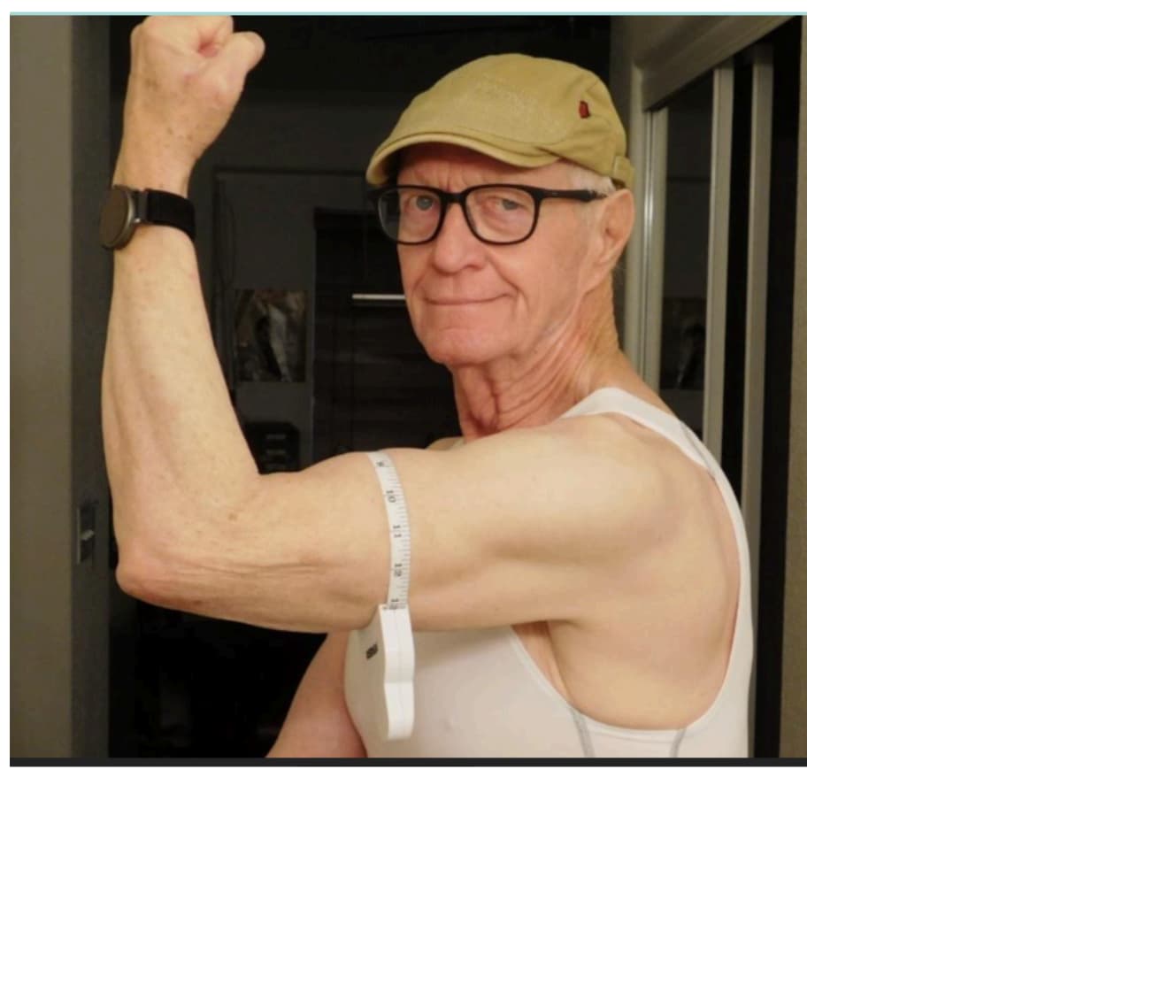
Though I am n=1, I can assure you that rapamycin dramatically slows sarcopenia in elderly males. It also has anti-cancer properties. As for blunted muscle gain, since I have always been a “hard gainer,” I wouldn’t even notice a minor blunting of the exercise response.

Dosing is still a subject of much debate. I have chosen to follow Dr. Mihail Blogosklonny’s recommendation. I have been doing a high dose (8+ mg with GFJ) for five years. Luckily, I have no subjective side effects from this dose, except for slower wound healing, and I can’t even be sure that’s true because older people heal more slowly.

Since I recently joined a new gym, I am trying to see if I can still increase my muscle mass. This will be fairly easy for me to find out, as I took a holiday break from the gym and lost some muscle mass. I will be trying a once-monthly high dose of at least 20 mg or more of rapamycin.

Forgive me for reposting a picture of me at age 83. I will post a new one for comparison when I have been back at the gym for a while. At this point, I had been taking high-dose rapamycin for about 2 years.

6 Likes

I wondered about this - I do exercise on rapamycin days but avoid heavy resistance and intense cardio - without having a well argued reason why.

My faltering argument/worry is that: mTOR inhibition impairs muscle protein synthesis (MPS). Heavy resistance training causes micro-tears and stress in muscle fibers. Also intense Cardio and heart muscle? Normally, mTORC1 drives the repair and adaptation process (elevated MPS for hours to days post-workout). Rapamycin blocks this, so damaged fibers may recover more slowly or suboptimally?

So i stick to zone 2, tai chi and try not to care if i lose a game of tennis. But maybe its just: any excuse to avoid the gym…

1 Like

That’s sensible.

I am a member of a gym, but I have not been for some time. My daughters have pretended to be me.

That is less hassle than setting up guest access.

1 Like

This is a very interesting point, and I had had similar thoughts.

One of possibility is that Rapamycin side effects affected the performance of the participants. If you look at adverse events, the Rapa arm reported 99 AEs versus 63 in placebo. Those were things like fatigue, headache etc. Now, if I had fatigue and a headache and you asked me to stand and sit on a chair as many times as possible, I’d probably put in less effort.

And regarding over-interpretation, I totally agree. People saying they’ll stop lifting etc makes zero sense.

If you do take a magnifying glass to the results, you can see that in the placebo group, the standard deviation rose from 3.42 to 5.92 between baseline and week 13, while rapamycin’s went from 2.12 to 4.18. In Fig 2B, you can see two placebo group people who basically doubled their performance at baseline. That’s also a good argument for why we shouldn’t over-interpret, because the results are hugely swayed by just a couple of individuals.

100% agree. Very very well said. I read every word of your series of posts, and this is a nice summary statement!

To my understanding, in the hypertrophy research field, the links between fibre damage, MPS and eventual strength/muscle gains are not as clear-cut as expected. For example, you can have hypertrophy without much underlying damage (think about blood flow restriction training, for example). You can also have large amounts of muscle damage (run a marathon and be sore for days) and not much resulting hypertrophy.

IMO, as long as you’re not hitting a point of chronic overtraining where you can never repair damage fast enough, it won’t be an issue. For most of us non-pro-bodybuilders, strength training 2-3x per week is more than adequate to look good with your shirt off and stay strong, metabolically healthy etc. That should be recoverable for almost anybody.

This is the part that makes no sense to me (no offence intended). So even if, on Rapa, you can only get 58% of the gains (as in Brad’s study), it doesn’t negate all gains or make the exercise pointless in any way. And the benefits from resistance/strength training are simply massive. Bear in mind, in Brad’s trial, participants were doing a crappy exercise cycle thing and standing up off a chair. If you can barbell squat your bodyweight for 5 reps, you are a HELL of a lot fitter and stronger and more capable than most, and that’s honestly a very modest goal which most people can obtain in less than 2 years of training.

3 Likes

yes, you’re almost certainly correct - i just avoid zone 5 on rapamycin days out of an overabundance of caution and laziness

1 Like

We do not know that. It’s an assumption.

2 Likes

Yeah maybe my original claim was a bit too vague. We have reasonably strong evidence that avoiding sarcopenia — meaning preserving muscle mass as you age — is important for longevity. This is not just an assumption.

Yes, I read that muscle quality (strength and function) is an even more powerful predictor of longevity than muscle quantity (mass) alone. Our muscle strength declines much faster than we actually lose muscle volume.

4 Likes

Yes, I think that’s right. And muscle mass is a major input into strength and function but it’s not the only input

Trying to maintain my muscles - it’s not easy and especially on my low protein diet.

“Consequently, mTORC1 (the master regulator of translation initiation) likely remained partially inhibited during the critical post-exercise windows of the following sessions, thereby dampening the hypertrophic response.”

The study didn’t even measure muscle mass or size… it is all speculation and nonsense. It is a very poor study with writing that shouldn’t have passed peer review.

1 Like

Example of a problem I described in my posts on this study: the terribly common and devastating flaw plaguing a large proportion of papers out there - the inability of the authors and commentators to understand what a study actually shows. In this case, it showed that there is blunted exercise benefit* - that’s it. The extrapolation about why that is, (mTOR inhibition), or any long term (greater than 13 weeks ) consequences is pure speculation that in this case is also scientifically illegitimate (legitimate vs illegitimate speculation is another concept I elucidated in those posts).

*sum total of what the study showed:

“(1) rapamycin at 6mg (2) once a week (3) over a period of 13 weeks (4) blunted exercise performance improvement (5) in select measures of select domains (sit-stand, walk, grip) (6) in older individuals 65-85 of age (7) who underwent a regular exercise program (8) and who were intially largely sedentary at baseline (9) and the study included some bloodwork biomarker results.” Everything else is speculation, whether scientifically legitimate or not.

Quite a shame it gets as much press and attention as it did.

1 Like

Wrong. Blood work actually showed a statistically significant deterioration in lipid profiles and glucose metabolism—and that was after just 13 weeks. It makes absolutely no sense to assume that taking it for a longer period would somehow improve, rather than worsen, markers like blood sugar, lipids, the epigenetic clock, or grip strength.

At the very least, the 1mg or 6mg weekly regimens are completely untenable in current clinical practice. I personally do not follow the 6mg weekly protocol adopted by the majority, because based on all available literature, 6mg per week is not a scientifically sound regimen. Our current focus should be on determining an appropriate regimen, rather than simply prolonging the trial duration.

1 Like

The logical approach now would be to design a trial that establishes multiple rapamycin dosage arms to investigate which dose improves physiological markers in the short term, before proceeding to long-term trials with that specific dose.

Most people just simply follow the dosage recommended by Alan Green. Because he has a huge reputation in the anti-aging community, criticizing him can easily trigger a backlash. My take is that you just need to watch a few of his interviews to see what his actual level of expertise is.

4 Likes

Wrong…Statistically and clinically significant are two different things. The glucose profile was negligible (increase of 0.1% for HbA1C) for any clinically meaningful change, especially without a repeat measure. Grip strength is silly when the intervention 1) didn’t engage grip strength training at all and 2) it didn’t even approach a statistical significance. It is as general of a measure as BMI. Works well at very large scale but fails when sample size is far too inadequate. Epigenetic clocks have yet to demonstrate any meaningful translation. Maybe wait for some larger scale higher quality studies coming before over-interpreting the results of a single low quality study.

I could complain about their lack of dietary control and activity monitoring outside the exercise sessions but I wont because I know the study had limited funds and the team performing it was naive to the complexities of a drug-exercise interaction study.

1 Like