The Orexin Neuropeptide System; Why Your Wakefulness Neurons Fade With Age—and How to Turn Them Back On

That depends on the dosage range. Do we know what it is?
I have purchased products from Limitless Biotech in the past with no ill effects.

Perplexity Pro (Deep Research) says:

Limitless Biotech (also known and branded as Limitless Life Nootropics, at limitlesslifenootropics.com) is a U.S.‑based online retailer and chemical‑supply company focused on research‑grade peptides, nootropics, and longevity‑adjacent compounds, marketed primarily for “research use only” rather than as FDA‑approved drugs. The company is headquartered in or near Pensacola, Florida, and operates under the trade name Limitless Life Nootropics, with products made and tested in the U.S. and third‑party‑verified for purity.

Founders and leadership

The company is widely described as being founded and led by Christopher (Chris) Mercer, who is shown on LinkedIn as the CEO of “www.limitlesslifenootropics.com” under the entity Live Limitless LLC in the Pensacola area. Public write‑ups and discussions about the brand also refer to him as the owner/CEO who has been involved in interviews (including a 2016 episode of Showtime’s Dark Net) describing how he sourced, repackaged, and sold nootropics from a home‑kitchen‑style setup before the company grew into its current “Limitless Biotech”‑style operation.

History and rebranding

The business started out as Limitless Life Nootropics, selling nootropics and cognitive‑enhancement‑style supplements, often via direct‑to‑consumer and affiliate channels.

Over time it expanded into research‑grade peptides and anti‑aging‑adjacent compounds, rebranding or dual‑branding itself as Limitless Biotech to emphasize its “research‑grade, USA‑made peptides with third‑party testing” angle.

It has positioned itself as a “leading” peptide supplier in the biohacking/anti‑aging community, often promoted by influencers such as Jay Campbell and Ben Greenfield, while also attracting criticism from some Reddit and forum users over quality claims, customer‑service issues, and prior “home‑kitchen” practices.

Limitless Biotech sits in a legally gray, high‑risk niche (research peptides and synthetic nootropics), and its business practices and history create enough red flags that regulators, platforms, and customers continue to scrutinize it despite third‑party testing claims and positive press/“awards.”

Why awards and testing coexist with scrutiny

Limitless has been promoted in niche fitness/peptide media as a “top peptides company,” with review sites and at least one industry press release naming it a leading or “best” peptide vendor, often citing its broad catalog and availability of CoAs. These endorsements come from commercial reviewers and partners, not regulators, so they can coexist with unresolved concerns about sourcing, payment methods, incomplete testing transparency, and uneven customer experience that continue to attract skepticism and complaints."
50 mcg/spray

Finnrick has graded four Limitless products, with a range of B to D.

1 Like

I should add that Finnrick, which still hasn’t hasn’t delivered test results five weeks after I submitted a vial, and which declined to provide a refund for the $200 I paid, did offer to test my next sample at no cost and on an expedited basis.

2 Likes

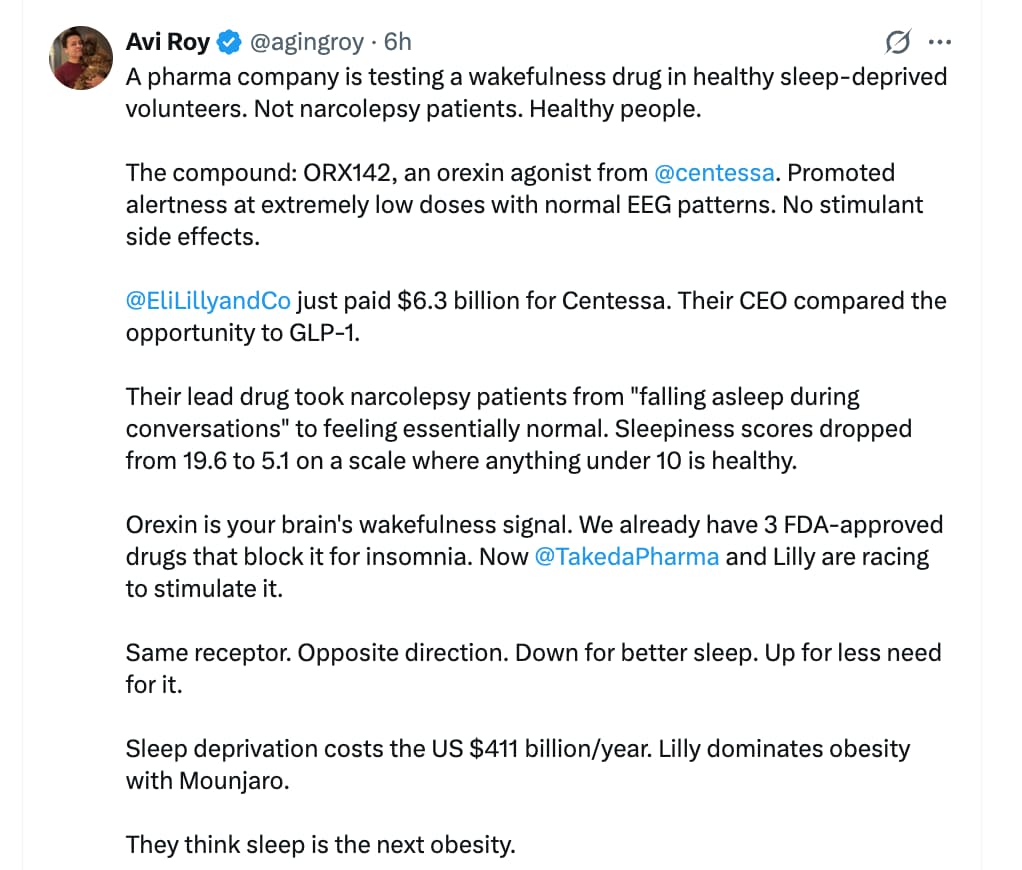
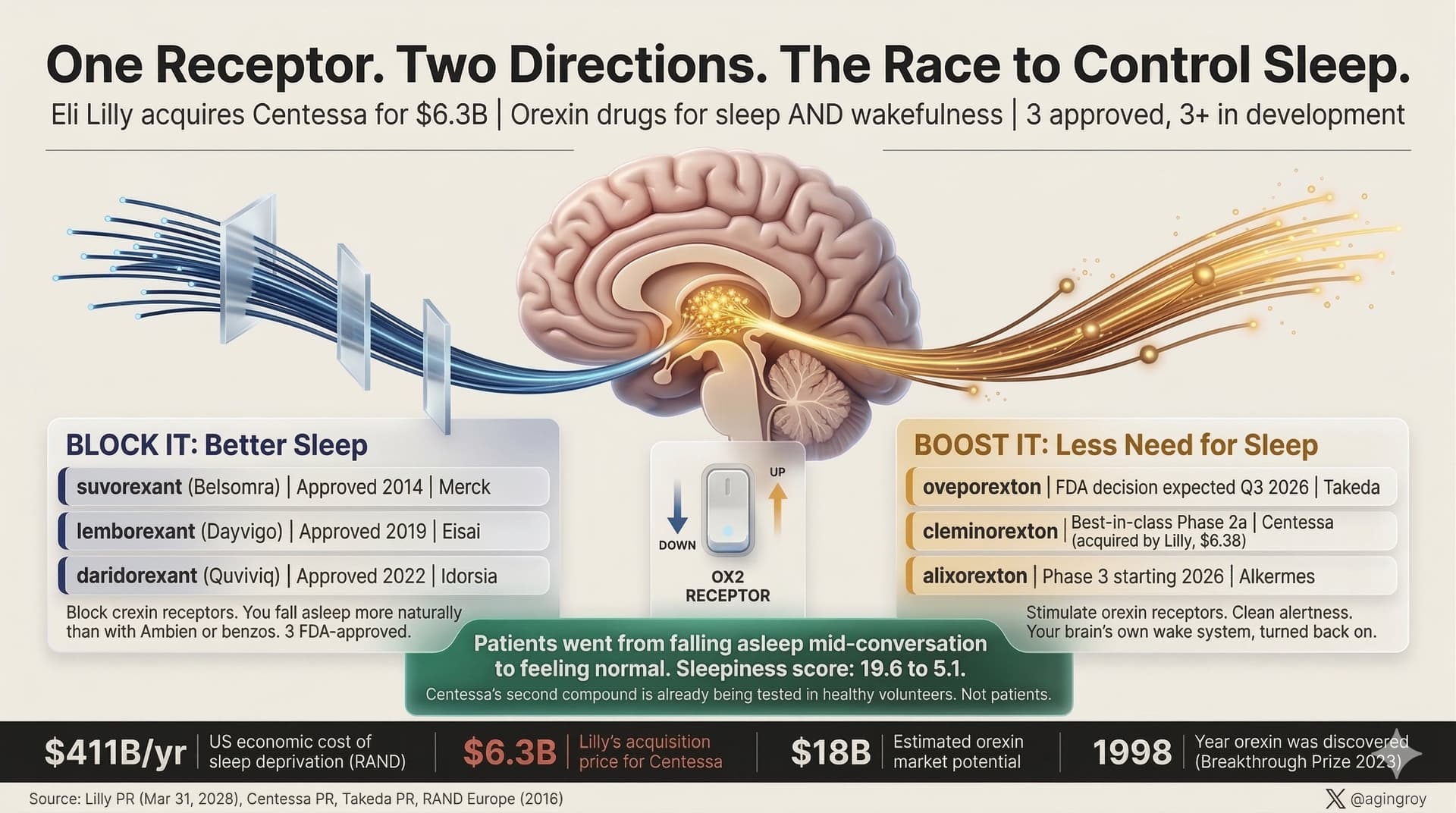
Source: https://x.com/agingroy/status/2039680847700205949?s=20

3 Likes

How some people sleep only four hours a night and still feel great

Who are these hidden superheroes?

Natural short sleep isn’t a mindset, a habit or a product of willpower. It’s a biological variant.

Over the past two decades, researchers have identified a small cluster of genes that allow some people to sleep far less than average while remaining perfectly healthy.

One of the first clues came from a gene called DEC2, which helps regulate levels of orexin, a brain chemical that promotes wakefulness.

Too little orexin is known to cause narcolepsy; yet natural short sleepers appear to produce more of it, keeping them alert on much less rest.

Orexin is created in the hypothalamus, and promotes alertness, focus and regular sleep cycles - Credit: Getty

When researchers introduced the mutation into mice, they found the animals slept significantly less without showing the cognitive lapses that normally follow sleep deprivation.

Since then, at least seven genes have been linked to this phenomenon. In every case, engineering the human mutation into mice leads to the same result: shorter sleep cycles with no obvious downside.

According to Prof Guy Leschziner, a consultant neurologist and sleep expert, everything we currently know suggests that natural short sleep is entirely genetic.

He rarely sees such people in clinic – partly because it isn’t a disorder, and partly because those who have it often don’t realise they’re unusual.

“Short sleepers don’t assume it’s abnormal in any way until someone close to them points it out,” he says.

“Particularly if there’s a family history, there will be other individuals who sleep with a similar pattern. So for them it’s normal.”

But while natural short sleepers remain a genetic rarity, the science that explains them is accelerating.

Read the full story here: How some people sleep only four hours a night and still feel great | BBC Science Focus Magazine

Orexin OX2 receptor agonists disclosed in Vertex Pharmaceuticals patent

April 7, 2026

Vertex Pharmaceuticals Inc. has patented new macrocyclic sulfonamide orexin OX2 receptor agonists potentially useful for the treatment of amyotrophic lateral sclerosis, obesity, hypertension, retinopathy, multiple sclerosis, narcolepsy, hypersomnia and Parkinson’s disease, among others.

source: Orexin OX2 receptor agonists disclosed in Vertex Pharmaceuticals patent | BioWorld

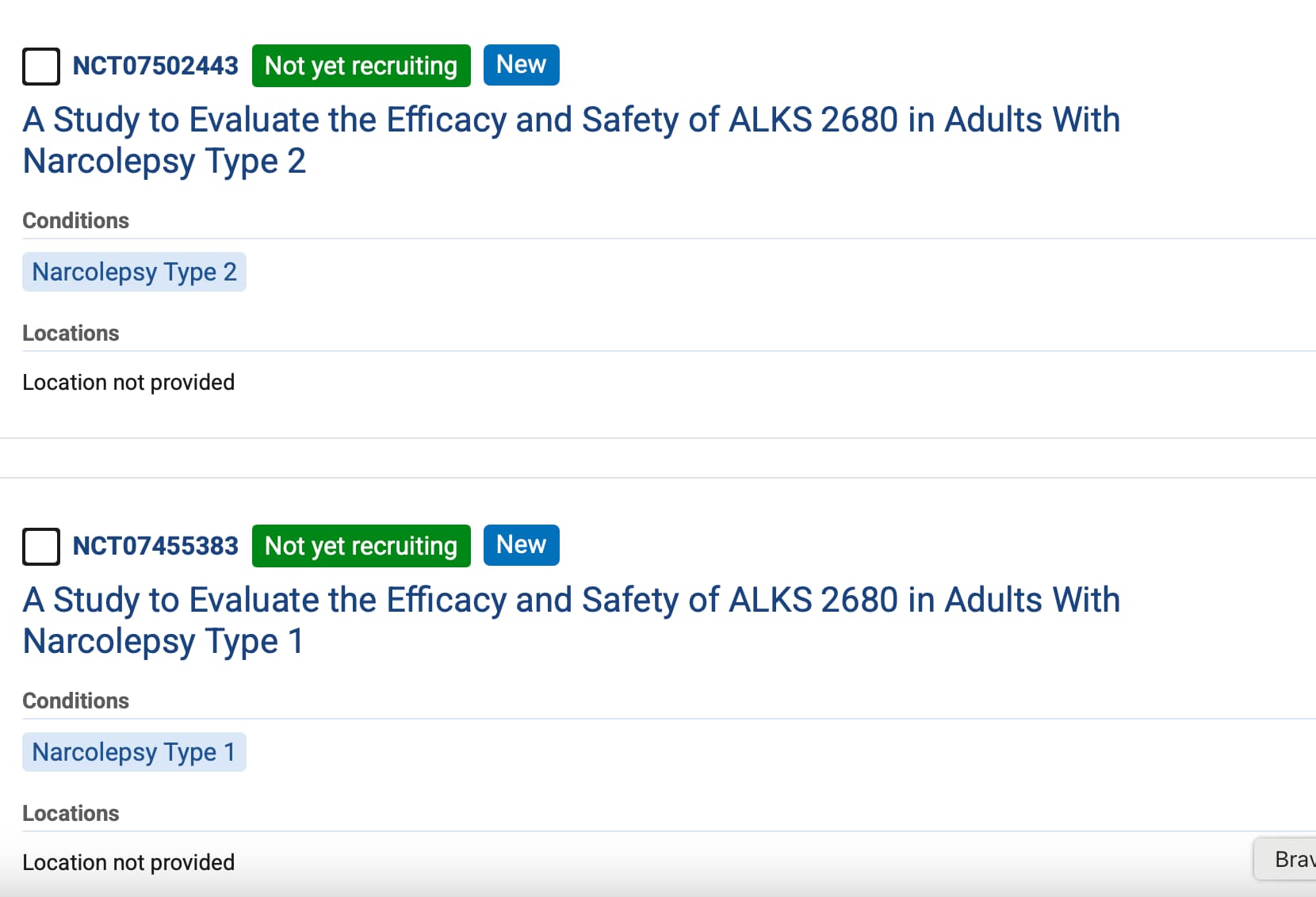
Alkermes Launches Phase 3 Brilliance Program for Alixorexton in Narcolepsy

In recent news, Alkermes has initiated the phase 3 Brilliance clinical program evaluating alixorexton, an investigational oral orexin 2 receptor (OX2R) agonist, for the treatment of narcolepsy type 1 (NT1) and narcolepsy type 2 (NT2).¹ The program includes three randomized, double-blind, placebo-controlled trials—Brilliance NT1 (Studies 302 [NCT07455383] and 304) and Brilliance NT2 (Study 303; NCT07502443)—each designed to assess efficacy, safety, and dosing strategies over a 12-week treatment period.

Phase 3 Program Design and Endpoints

The Brilliance studies will evaluate both once-daily and split-dose regimens of alixorexton across global populations. In NT1, each study is expected to enroll approximately 150 patients, while the NT2 trial will include approximately 180 participants.

“The initiation of the phase 3 Brilliance Studies program marks an exciting and important milestone for alixorexton. Building on the positive findings observed in our large phase 2 program across both narcolepsy type 1 and type 2, we are entering this pivotal stage with confidence,” Craig Hopkinson, MD, MBChB, Chief Medical Officer and Executive Vice President of Research & Development at Alkermes, said in a statement.1 “We look forward to evaluating alixorexton in both once-daily and split-dose regimens as we seek to optimize efficacy, safety and dosing flexibility in the development of a potential new treatment option for patients and providers.”

Across all studies, the primary endpoint is change from baseline to week 12 in mean sleep latency on the Maintenance of Wakefulness Test (MWT), a standard objective measure of wakefulness. Secondary endpoints include changes in Epworth Sleepiness Scale (ESS) scores, patient-reported outcomes assessing fatigue and cognition, and overall disease severity.2,3

source: https://www.neurologylive.com/view/alkermes-launches-phase-3-brilliance-program-alixorexton-narcolepsy

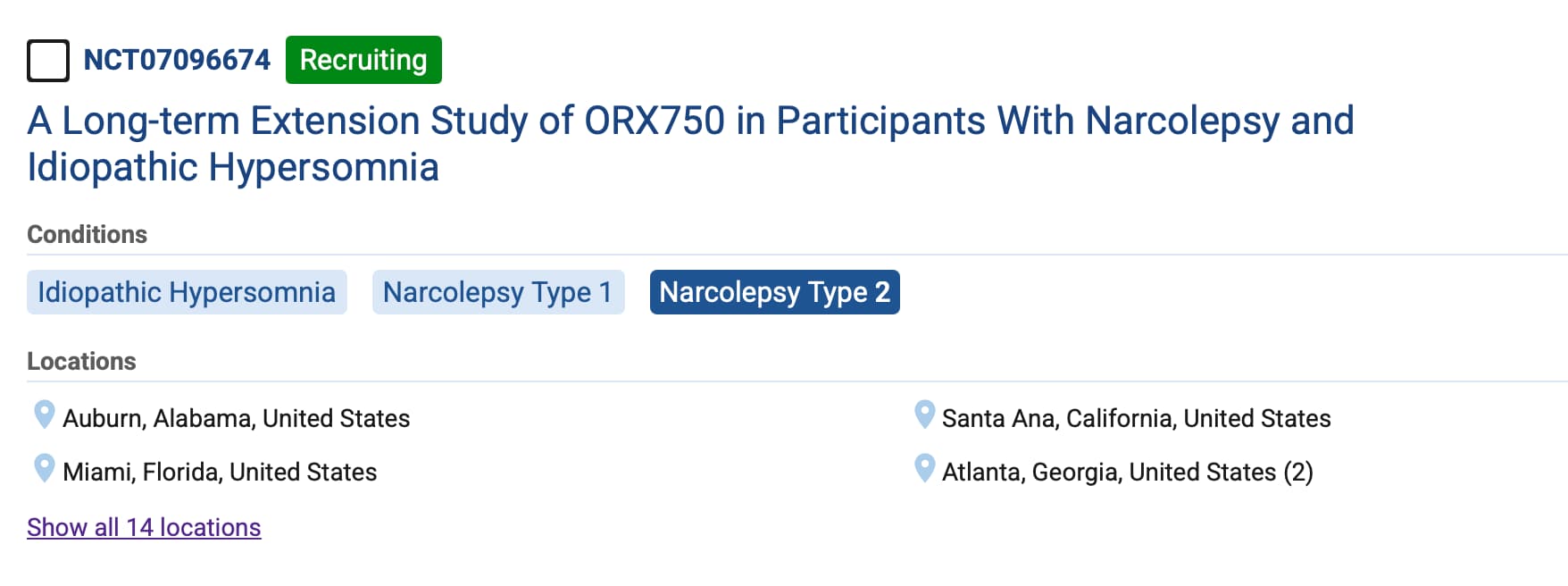
Orexin clinical trials to participate in…

More info: ClinicalTrials.gov

Upcoming trials:

More info: ClinicalTrials.gov

and other studies focused on Orexin 2 receptor agonists: ClinicalTrials.gov