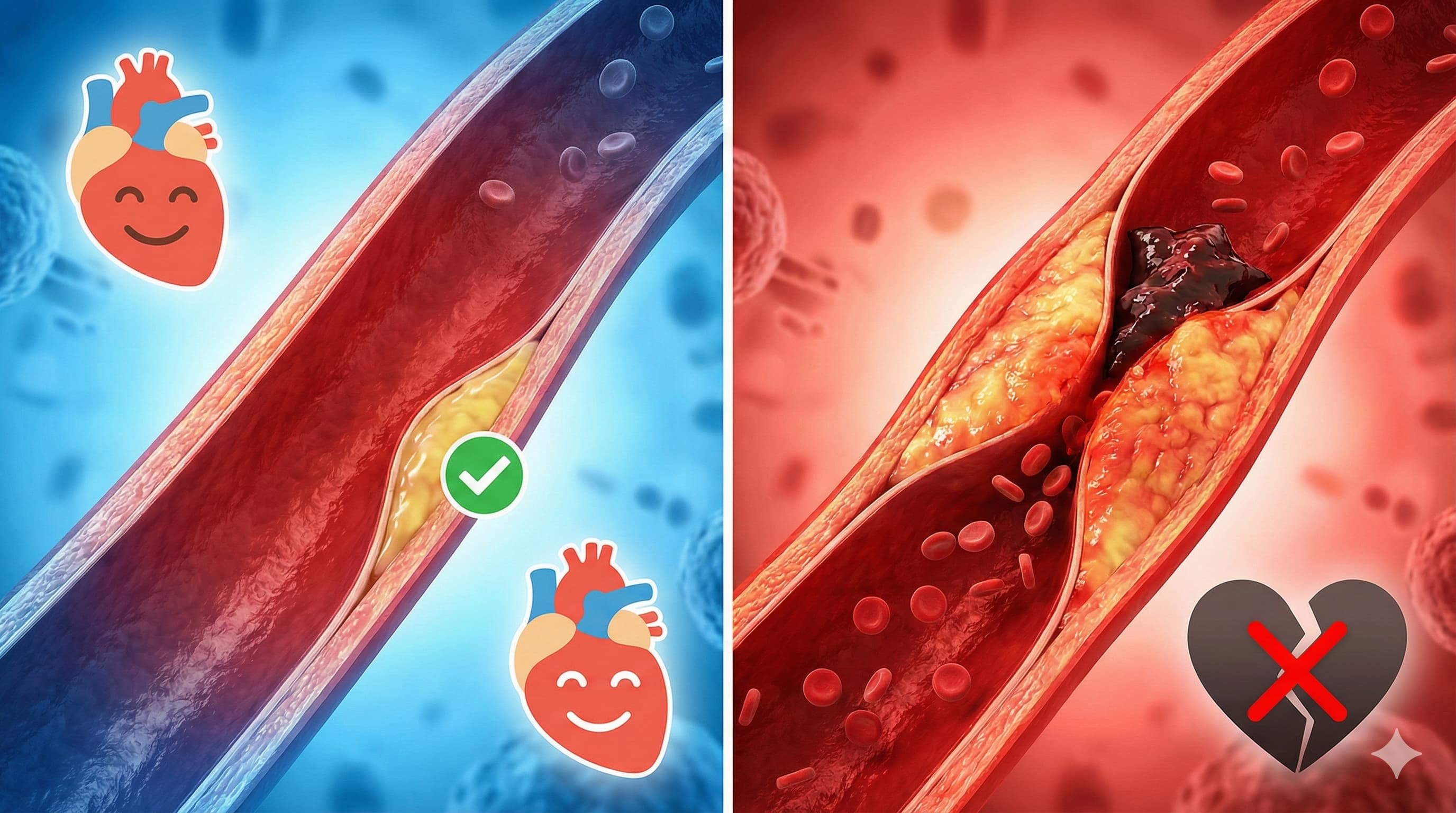
The Coronary Plaque Progression Paradigm: Why Your "Low Risk" Score Might Be Lethal

For decades, the standard of care for preventing heart attacks has relied on a “risk factor” casino—using calculators (like Framingham or ASCVD scores) to guess your probability of an event based on age, cholesterol, and smoking status. This 2019 State-of-the-Art Review by Ahmadi, Narula, and colleagues declares that model obsolete. Their core thesis disrupts the “Vulnerable Plaque” dogma, which assumed heart attacks occur when mild, non-obstructive lesions suddenly rupture.

Instead, the authors provide compelling evidence for the “Plaque Progression” model. Analyzing data from serial angiograms and intravascular ultrasound (IVUS) taken months before heart attacks, they found that “mild” plaques do not just randomly rupture; they undergo a phase of rapid, voluminous progression immediately preceding the event. The plaque grows, the necrotic core expands, and the fibrous cap thins—a process that is visible on imaging months before the attack.

The “Big Idea” here is a shift from treating probability to treating pathology. The authors argue that if we use modern imaging (Coronary CTA) to detect subclinical atherosclerosis early, we can use intensive lipid-lowering therapy to mechanically halt plaque progression. The data shows that when LDL is driven below 70 mg/dL ( <1.8mMol/L), and ideally lower, plaque growth stops, and the risk of rupture drops near zero. This suggests that the current distinction between “Primary Prevention” (before a heart attack) and “Secondary Prevention” (after a heart attack) is an artificial administrative boundary. The only biological distinction that matters is: Do you have plaque, and is it growing?

Source:


Part 2: The Biohacker Analysis

Review Scope & Evidence Base

  • Type: State-of-the-Art Clinical Review (Meta-synthesis of serial angiography, IVUS, and CTA studies).
  • Subjects: Humans. The review aggregates data from major trials like PROSPECT, PARADIGM, and GLAGOV.
  • Key Insight: In the PROSPECT study, non-culprit lesions that caused future events were mild at baseline (32% stenosis) but rapidly doubled in size (to ~65%) before rupturing. This “rapid progression phase” is the window of opportunity for intervention.

Mechanistic Deep Dive (Longevity Lens)

  • The Necrotic Core Driver: The study identifies the expansion of the “necrotic core” (dead cellular debris inside the artery wall) as the primary fuel for progression. This is a failure of autophagy and efferocytosis (clearing dead cells).
  • Lipid-Driven Inflammation: The rapid growth is fueled by LDL cholesterol infiltration. Lowering LDL removes the fuel source.
  • Plaque Stabilization (Calcification): Crucially, the paper notes that successful statin therapy often increasescoronary calcium scores. This is not progression of disease, but a transformation of “soft,” rupture-prone fatty plaque into “hard,” stable calcified scar tissue. This distinction is vital for biohackers tracking their own Calcium Scores.

Novelty (The “New” Knowledge)

The paper dismantles the idea that “low risk” patients (by standard calculators) are safe. It cites the PESA study, showing 50% of “low risk” individuals have subclinical atherosclerosis. The novelty is the proposal of a new clinical standard: “Preponing” Secondary Prevention. Treat anyone with visible plaque as if they have already had a heart attack.

Critical Limitations

  • No Randomized Control Trial (RCT) for Strategy: While the drug data is from RCTs, the specific strategy of “Screen everyone with CTA and treat based on plaque regardless of risk score” was a proposal, not a tested trial outcome in this paper (though SCOT-HEART later supported this).
  • Radiation Exposure: The reliance on serial Coronary CTA implies repeated radiation exposure, which may be a concern for younger longevity enthusiasts, though modern scanners have very low doses.
  • Cost-Benefit Gap: Mass screening with CTA is expensive and not currently reimbursed for asymptomatic people in many systems.

Part 3: Actionable Intelligence

The Translational Protocol: “Halt the Progression”

  • Target: The biological goal is to freeze plaque volume and induce “phenotypic stabilization” (thickening the fibrous cap).
  • The “Stop” Signal: The paper cites data showing plaque progression halts at LDL levels between 70–80 mg/dL. Plaque regression (shrinkage) typically requires LDL <50 mg/dL.

1. Pharmacological Intervention (Standard of Care +)

  • Primary Agent: Rosuvastatin (5–40 mg) or Atorvastatin (20–80 mg).
    • Mechanism: HMG-CoA reductase inhibition; stabilizes plaque, lowers inflammation (hsCRP).
    • Safety: Extensive long-term safety data.
  • Adjunct Agent: Ezetimibe (10 mg).
    • Use Case: Added if Statin alone does not reach LDL < 70 mg/dL. Inhibits cholesterol absorption.
  • Elite Intervention: PCSK9 Inhibitors (Evolocumab/Alirocumab).
    • Use Case: For aggressive regression or statin intolerance. Can drive LDL to <20 mg/dL.
    • Cost: High (~$400–$600/month if not covered), but profoundly effective.
    • Biohacker Note: The GLAGOV trial showed distinct plaque regression with Evolocumab added to statins.
2. Biomarker Verification Panel

Don’t guess; measure.

  • Efficacy Markers:
    • ApoB: The gold standard for particle number. Target < 60 mg/dL.
    • LDL-C: Target < 50 mg/dL for regression.
    • hsCRP: Target < 1.0 mg/L (Inflammation check).
    • Lp(a): Measure once genetically. If elevated (>50 mg/dL), aggressive LDL lowering is even more critical.
  • Safety Monitoring:
    • Liver: ALT/AST (Baseline, then 3 months).
    • Muscle: Creatine Kinase (CK) only if symptomatic.
    • Metabolic: HbA1c (Statins can slightly increase insulin resistance; counter with lifestyle/Metformin).

3. Imaging Protocol

  • Baseline: Coronary Calcium Scan (CAC). Cheap (~$100), low radiation.
    • Score 0: Retest in 3-5 years.
    • Score > 0: You have plaque. Initiate “Plaque Progression Prevention.”
  • Advanced: Coronary CTA (CCTA) with AI analysis (e.g., Cleerly).
    • Why: Distinguishes between “Soft” (dangerous) and “Calcified” (stable) plaque.
    • Frequency: Every 3–5 years if soft plaque is present, to track stabilization.

4. Population Applicability

  • Contraindications: Active liver disease, pregnancy.
  • Caution: Those with “Statin Intolerance” (often nocebo, but sometimes real genetic SLCO1B1 issues) should pivot to Ezetimibe + PCSK9 inhibitors or Bempedoic Acid.

Part 4: The Strategic FAQ

1. “I have a Calcium Score of zero, but my LDL is high. Am I safe?” Answer: Not necessarily. A zero Calcium Score (CAC) is excellent, but it misses “soft” non-calcified plaque, which is the early stage of the disease. The PESA study showed many people with normal scores still have soft atherosclerosis. However, your 10-year risk is statistically low.Action: If ApoB is high, consider a CCTA to rule out soft plaque, or treat the ApoB preventatively.

2. “Will driving my LDL to 30 mg/dL damage my brain? The brain needs cholesterol.” Answer: No. [Confidence: High]. The brain synthesizes its own cholesterol locally; it does not rely on LDL from the blood (which cannot cross the blood-brain barrier efficiently). Large trials like FOURIER (Evolocumab) achieved LDL levels <20 mg/dL with no increase in cognitive decline or dementia compared to placebo. In fact, some data suggests improved cognitive preservation due to better vascular health.

3. “I started Statins and my Calcium Score WENT UP. Did the drug fail?” Answer: No, the drug worked. This is the “Statin Paradox.” Statins accelerate the calcification of existing soft plaque. They strip out the lipids and inflammation, leaving behind a calcified scar. Dense calcium is stable and unlikely to rupture. You want your plaque to be rock-hard, not soft and fatty.

4. “Can I take Rapamycin with Statins?” Answer: Yes. There is no major negative interaction. Mechanistically, they may be synergistic. Statins weakly inhibit mTORC1 in some tissues, potentially complimenting Rapamycin’s longevity effects. Both have anti-inflammatory properties.

5. “What about Metformin and Statins? I take both.” Answer: This is a safe and common “stack.” Meta-analyses show the combination significantly reduces CRP (inflammation) and lipids better than either alone. There is no adverse pharmacokinetic interaction.

6. “I take an SGLT2 Inhibitor (Jardiance/Farxiga). Any issues with Statins?” Answer: Generally safe, but stay hydrated. There are rare case reports of “myotoxicity” potentiation (muscle weakness) when combined, likely due to fluid shifts/dehydration. Monitor for muscle pain and maintain electrolyte balance.

7. “Is plaque regression actually possible, or just ‘stabilization’?” Answer: Regression is possible but difficult. The GLAGOV trial proved that pushing LDL < 60 mg/dL can physically shrink plaque volume by ~1% per year. It is easier to shrink the “soft” necrotic core than to remove calcification.

8. “Why not just rely on diet? Can’t I eat my way to plaque regression?” Answer: Extremely unlikely for established plaque. While diet is crucial for prevention, the paper notes that dietary modification alone often fails to lower LDL sufficiently (<70 mg/dL) to arrest established plaque progression. The body’s homeostatic drive to produce cholesterol usually fights dietary changes.

9. “What is the ‘No Observed Adverse Effect Level’ (NOAEL) for very low LDL?” Answer: We haven’t found the floor yet. Physiological LDL in newborns is ~30 mg/dL. Hunter-gatherer populations often have LDL ~50–70 mg/dL. Clinical trials have pushed LDL to <15 mg/dL safely. The “toxicity” of low LDL appears to be a myth in the context of adult physiology.

10. “If I have high Lp(a), does this protocol change?” Answer: Yes. Lp(a) is a genetic accelerator of plaque. Statins generally do not lower Lp(a) (and may slightly raise it). If you have high Lp(a), you must drive your LDL-C and ApoB even lower (target < 50 mg/dL) to compensate for the added risk, and consider a PCSK9 inhibitor which can lower Lp(a) by ~20–30%.

That pesa study itself is worth a read

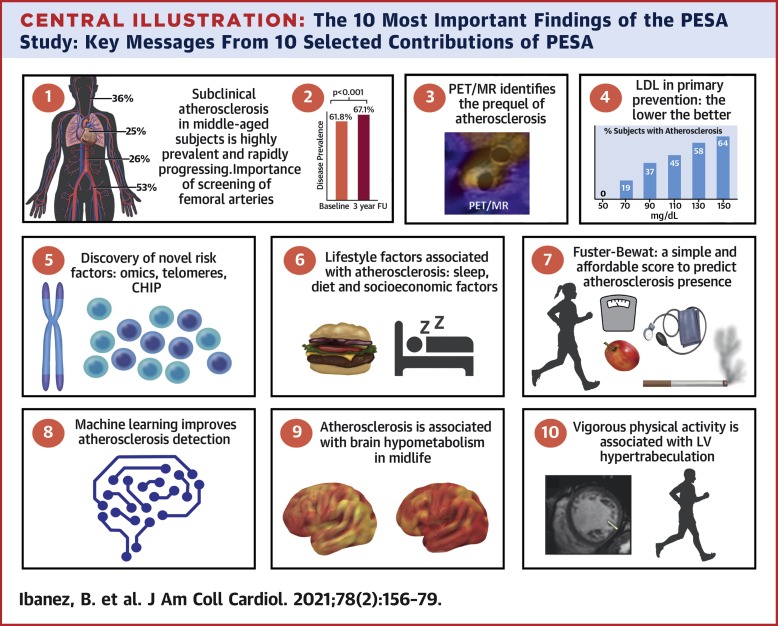
Progression of Early Subclinical Atherosclerosis (PESA) Study: JACC Focus Seminar 7/8

https://www.sciencedirect.com/science/article/pii/S0735109721051159

1 Like

The “Healthy” Myth: 63% of Asymptomatic Adults Harbor Silent Atherosclerosis, PESA Study Reveals

In a paradigm-shifting revelation for preventive cardiology, the Progression of Early Subclinical Atherosclerosis (PESA) Study—a massive longitudinal initiative by the Centro Nacional de Investigaciones Cardiovasculares (CNIC) in Spain, published in the Journal of the American College of Cardiology—has dismantled the traditional concept of “low cardiovascular risk.”

For decades, clinicians have reassured patients with “normal” LDL cholesterol (100–110 mg/dL) that they are safe. The PESA findings, derived from over 4,000 middle-aged bank employees, prove this comfort is statistically unfounded. The “Big Idea” here is that atherosclerosis is not a disease of the elderly; it is a cumulative pathology that begins decades before symptoms appear. The study utilized advanced multimodal imaging (3D Vascular Ultrasound, Cardiac CT, and PET/MRI) to look inside the arteries of people who felt perfectly fine. The results were startling: 63% of these “healthy” individuals had visible atherosclerotic plaque, and in many cases, the disease was aggressive and multi-territorial, affecting the femoral arteries, carotids, and aorta long before calcium deposits (the target of standard CAC scans) were visible.

The study also established a direct link between “Grim Epigenetic Age” acceleration and plaque burden, suggesting that your arteries are aging faster than the rest of you. Furthermore, PESA identified non-traditional drivers of this silent killer, including irregular sleep patterns and skipping breakfast, linking circadian biology directly to vascular health. For the longevity enthusiast, the message is stark: relying on standard lipid panels and “feeling good” is a strategy for failure. True prevention requires visualizing the disease early and treating LDL targets far more aggressively than current guidelines suggest.

Impact Evaluation: The impact score of this journal (Journal of the American College of Cardiology) is 22.3 (2024 Impact Factor), Therefore, this is an Elite impact journal, representing the highest tier of cardiovascular consensus.

Mechanistic Deep Dive

  • Lipoprotein Retention & LDL Thresholds: The study validates the “Cumulative Exposure” hypothesis. Plaque progression was observed in 32.7% of subjects over 6 years. Crucially, plaque regression (reversal) was seen in only 8% of subjects and was strictly associated with achieving lower LDL-C levels, challenging the 100 mg/dL “safety” zone.
  • Inflammation (The IL-6/Inflammasome Axis): Multi-omics analysis within PESA revealed that subclinical atherosclerosis drives systemic inflammation, specifically activating the IL-6 and **Inflammasome (NLRP3)**pathways. This creates a feed-forward loop where plaque accelerates biological aging (GrimAge), which further inflames the vasculature.
  • Circadian & Metabolic Clocks: PESA is unique in identifying Circadian Misalignment as a mechanism. Subjects with short sleep (<6 hours) or fragmented sleep had significantly higher plaque burden. Skipping breakfast was identified not just as a dietary choice but as a marker of circadian disruption linked to a 2.5x increase in generalized atherosclerosis.
  • Organ-Specific Priorities: The Femoral Arteries (legs) were identified as the “Canary in the Coal Mine,” often developing plaque before the coronary arteries or carotids.

Novelty

What we didn’t know yesterday is that Subclinical Atherosclerosis (SA) is the norm, not the exception, in middle-aged professionals. Previously, a CAC score of 0 was considered a “clean bill of health.” PESA demonstrates that soft plaque(undetectable by Calcium Scores) is rampant in the femoral and carotid arteries of people with CAC=0. It shifts the screening paradigm from “Calcification” (late-stage) to “Plaque Burden” (early-stage).

Biomarker Verification Panel

  • Efficacy Markers (The “PESA” Targets):
    • ApoB: Target < 60 mg/dL (Superior to LDL-C).
    • LDL-C: Target < 55 mg/dL (for plaque regression).
    • Lp(a): Check once genetically to rule out extreme risk.
  • Safety Monitoring:
    • Liver: ALT, AST (Baseline & 12 weeks).
    • Muscle: Creatine Kinase (CK) only if symptomatic.
    • Metabolic: HbA1c (monitor for insulin resistance).

The Strategic FAQ

1. “I have a Calcium Score (CAC) of 0. Am I safe according to PESA?” Answer: No. PESA showed that many individuals with CAC=0 still had significant soft plaque in the femoral or carotid arteries. CAC only detects calcified(end-stage) plaque. You need a 3D Vascular Ultrasound (or carotid CIMT/plaque scan) to see early soft plaque.

2. “Does the PESA study suggest I should take a statin even if my LDL is ‘normal’ (e.g., 100 mg/dL)?” Answer: Yes, if plaque is present. PESA redefines “normal” LDL as atherogenic for 63% of the population. If imaging confirms plaque, the goal shifts from “normal” to “therapeutic” (<70 mg/dL, , (<1.8mMol/L), or lower) to halt progression.

3. “Can lifestyle alone (diet/exercise) reverse the plaque seen in PESA?” Answer: Unlikely to fully reverse it. Only 8% of PESA participants showed regression, and it required massive risk factor optimization. While lifestyle is non-negotiable, established plaque typically requires pharmacological lipid lowering (Statins/PCSK9i) to achieve the ultra-low LDL needed for regression.

4. “What is the ‘Femoral First’ finding?” Answer: The study found that atherosclerosis often appears in the femoral arteries (legs) before it appears in the heart or neck. Biohackers should request a femoral ultrasound screening, which is rarely included in standard physicals.

5. “How does sleep impact my plaque risk?” Answer: [Confidence: High] PESA data shows that sleeping <6 hours or having fragmented sleep increases plaque burden by ~27-34%. The mechanism involves circadian disruption of vascular repair and increased systemic inflammation.

6. “Is skipping breakfast actually bad, or is that just epidemiology?” Answer: PESA specifically linked skipping breakfast to a 2.5-fold higher odd of generalized atherosclerosis. While this may proxy for “stressful lifestyle,” the effect size is too large to ignore. It suggests that nutrient timing signals (circadian entrainment) matter for vascular health.

7. “Does this study support the use of Rapamycin?” Answer: Indirectly. PESA identifies mTOR-driven inflammation (via IL-6/NLRP3) as a driver of plaque progression. While PESA didn’t test Rapamycin, the mechanistic overlap suggests mTOR inhibition could dampen the inflammatory fire that drives soft plaque, provided lipids are also controlled.

8. “What acts as the ‘Control Group’ in real life?” Answer: The “Control Group” is the general population following standard guidelines (LDL < 116 mg/dL for low risk). PESA shows this group progressively accumulates plaque. You do not want to be in the control group.

9. “If I start Rosuvastatin, will it interact with my Metformin or supplements?” Answer: Metformin: Safe. Supplements: Generally safe, but avoid Red Yeast Rice (it’s just a dirty statin) if taking pharma statins to avoid double-dosing. Berberine can inhibit CYP enzymes and might alter metabolism; use caution.

10. “What is the single most critical blood test missing from standard panels?” Answer: **ApoB (Apolipoprotein B).**PESA confirms that LDL-C mass is a discordant predictor. ApoB counts the actual number of atherogenic particles driving the disease.

The Fuster-BEWAT Score: The “Lab-Free” Heart Health Metric

The Fuster-BEWAT score is a simplified cardiovascular health index developed by Dr. Valentin Fuster and researchers at the CNIC (standardized in the PESA study).

Its primary innovation is that it requires no blood work. Unlike the American Heart Association’s “Life’s Simple 7” (which requires cholesterol and glucose tests), the BEWAT score performs just as well at predicting subclinical atherosclerosis using only five non-laboratory variables.

This makes it the ultimate “do-it-yourself” biohacker metric for daily tracking.


How to Calculate Your Score (0 – 15 Points)

The score evaluates five variables (B-E-W-A-T). Each category is scored from 0 (Poor) to 3 (Ideal).

  • Maximum Score: 15 (Perfect Cardiovascular Health)
  • Target: > 10 (Moderate to High Health)

1. B — Blood Pressure

Measures systolic and diastolic pressure.

  • 3 Points (Ideal): < 120 / < 80 mmHg
  • 2 Points (Intermediate): 120–139 / 80–89 mmHg
  • 1 Point (Poor): 140–159 / 90–99 mmHg
  • 0 Points (Very Poor): ≥ 160 / ≥ 100 mmHg (or taking medication)

2. E — Exercise (Physical Activity)

Based on minutes of moderate-vigorous activity per week.

  • 3 Points (Ideal): ≥ 150 min/week moderate OR ≥ 75 min/week vigorous
  • 2 Points (Intermediate): Some activity, but fails to meet the threshold above
  • 1 Point (Poor): Minimal activity (mostly sedentary)
  • 0 Points (Very Poor): No exercise / Completely sedentary

3. W — Weight (BMI)

Body Mass Index ($weight(kg) / height(m)^2$).

  • 3 Points (Ideal): BMI < 25
  • 2 Points (Intermediate): BMI 25 – 29.9 (Overweight)
  • 1 Point (Poor): BMI 30 – 34.9 (Obese Class I)
  • 0 Points (Very Poor): BMI ≥ 35 (Obese Class II/III)

4. A — Alimentation (Diet Quality)

Usually measured by fruit/vegetable intake or adherence to the Mediterranean Diet.

  • 3 Points (Ideal): High intake of fruits/vegetables daily; low sugar/processed meats.
  • 2 Points (Intermediate): Moderate adherence; occasional processed foods.
  • 1 Point (Poor): Low fruit/veg intake; regular junk food.
  • 0 Points (Very Poor): High processed intake; almost no plants.(Note: In rigorous settings, this is often quantified by a MED-DIET score ≥ 9 for max points).

5. T — Tobacco (Smoking Status)

  • 3 Points (Ideal): Never smoked (or quit > 1 year ago)
  • 2 Points (Intermediate): Quit < 1 year ago
  • 1 Point (Poor): Current smoker (occasional)
  • 0 Points (Very Poor): Current daily smoker

Why It Matters (The PESA Finding)

The PESA study compared this BEWAT score against the standard ICVH score (which includes Cholesterol and Glucose).

  • The Result: The correlation was nearly identical (R^2 > 0.90).
  • The Takeaway: You do not need a lipid panel to know if your lifestyle is driving plaque accumulation. If your BEWAT score is low (<10), you are statistically likely to be accumulating subclinical atherosclerosis, regardless of what your lipid panel says today.