Not an expert. Just what came up when I was trying to finds ways to optimize my ADMA levels and that aspect of endothelial health (and I decided to hold off on L-Citrulline and try some other things first).
Just did a quick Gemini 3 prompt and it came up there again so you can easily research it if you are interested.
Citrulline malate is the best way to make faux lemonade. I add it to a decaf fruit tea with glycine, and it’s delicious. I’ve also started adding tart cherry extract as well which enhances the flavor further. Since I drink it before bed, the extra melatonin enhancement seems to be a perfect complement to the citrulline and glycine.
I feel like I’m becoming a culinary longevity afficianado.
none at all - was hoping to improve pulse wave velocity but that has gotten slightly higher. Maybe I’m just consuming filler. My BP has not changed either but has always been 104/68
The Withings Body scale measures this, mine is 5 years lower than my chro-age. I’m going to try L-citrulline to see if it improves.
I feel like my Manganese experiment over the past 2 years is helping to keep my PWV lower than my age and I did see it go down over the first year but it seems to have slowed in the past year,
Since Manganese is a two edged sword, one beneficial the other harmful, this is one that should not be used at high doses. I have no clue how this mineral would relate to a genetic SOD2. deficiency so I’ll ask my friend Perplexity. That will be at the end of the attached PDF.
It’s important to understand the “risks” of too much Mn, the first few sections explain that risk.
Apparently supplementing with Mn is not going to be of much benefit to this condition, unless one is deficient.
I supplement 10mg per day, not sure how much I get in my diet. This is on the high side but there are 40mg doses available, not sure why though.
My objective is to watch my PWV (pulse wave velocity) and see how that is going. So far my PWV is below my chronological age (64 vs 70years). I use a Withings Body Cardio scale for this, that is the only one I believe can do this measurement. I also have a Renpho Morpho 8 lead scale to collect other data.
PWV is considered a better measurement that blood pressure for evaluating arterial condition.
To date there are no clinical studies in humans to evaluate if optimum Manganese levels affect arterial plaque and arterial stiffness, only extreme high doses in mice demonstrate this effect.
Not terribly concerned at this dose 5 days a week and every few months I take a couple weeks off. If you read the PDF, you can see I’ve done more homework on this than most people.
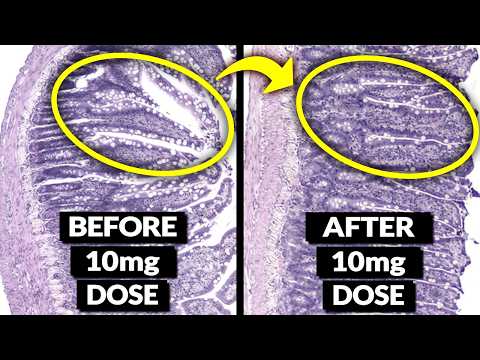
ONE DOSE Of This Cheap Supplement Repairs Leaky Gut (New Study)
It references this 2014 paper (so, not a new study):
Conclusions: Pre-exercise L-citrulline intake preserves splanchnic perfusion and attenuates intestinal injury during exercise in athletes compared with placebo, probably by enhancing arginine availability. These results suggest that oral L-citrulline supplementation is a promising intervention to combat splanchnic hypoperfusion-induced intestinal compromise.
I do this because I’m like a crow, I see a shiny object and I want it LoL! I’ve jumped on more than a few bandwagons over the years and I’m trying to manage my supp stack in a somewhat ratioanl manner these days. Since there is little in the way of l-citrulline helping a person like me with a gut issue I don’t “seem” to have, I’m passing on this one.
BUT I do have a very hard core workout son who may benefit from this.
I started taking L Citrulline too thanks to this post. Regarding the impact of LPS to the atherosclerosis problem my LLM seems to think the impact is minor and interestingly running in the heat is pretty high:
Rescuing the Post-Viral Endothelium: How L-Citrulline Supplements Counteract Vascular Damage and Supercharge Physical Recovery (from Post-COVID-19 Syndrome).
The downstream devastation of post-viral syndromes is increasingly understood as an enduring crisis of the vascular endothelium. When critical illnesses force hospitalization, the body is frequently trapped in a state of persistent, low-grade vascular inflammation. This localized inflammatory lock restricts long-term cellular performance and physical recovery long after the initial acute viral infection has cleared from the host. In a rigorous randomized controlled clinical trial published in the journal Nutrients, a team of clinical investigators reports that strategic nutritional support using the nonessential amino acid L-citrulline can successfully reverse critical elements of this cellular damage and dramatically restore aerobic capacity in recovering patients.
The core idea animating this research centers on the regulation of vascular tone, nitric oxide availability, and immune activation. Severe viral infection often induces structural endotheliopathy, characteristically turning down the output of endothelial nitric oxide synthase and slashing the availability of cellular nitric oxide. Without adequate nitric oxide, blood vessels undergo pathological activation, increasing smooth muscle tone and displaying a sticky array of adhesion molecules that recruit inflammatory monocytes to the vessel wall. Among these vascular markers, intercellular adhesion molecule 1 (ICAM-1) acts as a primary late indicator of tissue injury and sustained immune dysfunction.
By administering a single daily oral dose of 4 grams of L-citrulline over a three-month period, the investigators targeted this precise molecular bottleneck. Because oral L-citrulline efficiently bypasses early hepatic breakdown to serve as a highly effective systemic precursor for L-arginine, it fuels the natural enzymatic synthesis of nitric oxide. The clinical outcomes were striking: the L-citrulline cohort exhibited a massive, statistically significant drop in circulating ICAM-1 levels compared to the control group, establishing a clear reduction in active vascular endothelial injury.
Even more profoundly, this molecular repair translated directly into a massive functional rescue. Patients receiving L-citrulline demonstrated an exceptional 141.2-meter improvement in their six-minute walk distance, vastly eclipsing the standard recovery observed in the unsupplemented control arm. By restoring blood flow, oxygenation, and nutrient delivery directly to fatigued peripheral muscle tissues, this simple intervention successfully breaks the cycle of chronic physical deconditioning and vascular injury that defines post-viral exhaustion.
Actionable Insights
This clinical trial offers immediate, actionable utility for individuals designing therapeutic or biohacking protocols to address endothelial damage and long-term somatic deconditioning:
Optimize Nitric Oxide Bioavailability: Implementing a daily regimen of 4 grams of oral L-citrulline powder can directly mitigate vascular endothelial activation. This protocol suppresses lingering immune-adhesion markers like ICAM-1. It is highly relevant for individuals recovering from critical post-viral fatigue or displaying signs of chronic vascular inflammation.
Enhance Microvascular Muscle Perfusion: Supplementation effectively increases systemic nitric oxide production to lower microvascular smooth muscle tone. This optimization maximizes microvascular perfusion to working muscles. This mechanism provides a practical means to radically accelerate aerobic performance gains and physical conditioning, as shown by a significant 141.2-meter improvement in clinical walking test thresholds.
Manage Systemic Fatigue via Nitrogen Waste Clearance: L-citrulline serves as a pivotal intermediate in the hepatic urea cycle. This pathway optimizes the metabolic removal of toxic ammonium wastes. Ensuring robust ammonium clearance is an actionable method to prevent premature muscle fatigue. This directly protects structural muscle functionality and supports systemic physical resilience.
Institution: Unidad Clínica de Investigación Cardiopulmonar y Metabólica del Servicio de Cardiología, Instituto Nacional de Enfermedades Respiratorias Ismael Cosío Villegas, Mexico City.
Country: Mexico.
Journal Name:Nutrients, Published: 27 May 2026
Impact Evaluation: The impact score of this journal is 5.0, evaluated against a typical high-end range of 0–60+ for top general science, therefore this is a High impact journal.