Summary: A new study revealed the precise biological pathways by which early-life adversity becomes “embodied,” translating childhood trauma into lifelong physical and psychological health vulnerabilities. The investigation utilized high-resolution functional magnetic resonance imaging (fMRI) paired with systemic inflammatory biomarker tracking in 128 young adults.
Our chronological age advances at the same pace in everyone, but our biology may tell a different story. Three new studies using data from over 150,000 UK adults show that adverse experiences in childhood and adulthood, including abuse, neglect and trauma, are associated with older biological ageing profiles at midlife.
Some of those associations are cumulative, sex-specific and detectable up to decades after exposure. In this blog, we explain how researchers measure biological ageing, what we found and why childhood experiences still leave a mark on the body later in life.
The Dietary Echo of Childhood Trauma: How Early Adversity Programs the Adolescent Immune System
A growing body of literature links early life stress (ELS) to chronic, low-grade systemic inflammation and increased mortality in adulthood. However, the behavioral intermediaries driving this phenotype have remained poorly understood. A breakthrough study demonstrates that severe stress experienced during infancy leaves a lasting behavioral imprint, manifesting as a highly pro-inflammatory diet more than a decade later, which directly drives peripheral inflammation.
The investigation focused on adolescents who spent their earliest months in resource-limited orphanages before being adopted into affluent families. Despite living in highly resourced environments for an average of 14 years, these previously institutionalized youth consumed significantly more pro-inflammatory foods than their non-adopted peers. This behavior is explained by the Neuro-Immune Network Hypothesis. Severe early deprivation alters neural circuits regulating reward processing, threat responses, and executive control. Consequently, individuals become biologically predisposed to seek out hyper-palatable, calorie-dense foods (high in refined sugars and saturated fats) as a form of physiological self-medication.
Crucially, this dietary pattern acts as a direct bridge to systemic inflammation. Using the Dietary Inflammatory Index (DII), researchers found that higher dietary inflammation scores directly predicted elevated levels of key circulating cytokines, specifically Interleukin-6 (IL-6) and Tumor Necrosis Factor-alpha (TNF-alpha). Path analyses revealed that dietary choices statistically mediated the entire relationship between early institutional neglect and adolescent TNF-alpha levels. This creates a destructive feed-forward loop: early stress programs maladaptive eating habits, and the resulting pro-inflammatory diet perpetuates systemic low-grade inflammation, accelerating biological aging pathways.
The broader significance for longevity medicine is profound. It demonstrates that early environmental insult permanently calibrates metabolic and immune baselines, which cannot be entirely erased by subsequent socioeconomic or environmental enrichment. However, because diet is a modifiable behavioral lever, it presents an actionable therapeutic target to interrupt the translation of childhood trauma into adult disease.
Actionable Insights
For longevity biohackers, clinicians, and individuals managing historical trauma, the take-home message is clear: mitigating historical ELS requires strict, deliberate down-regulation of the Dietary Inflammatory Index (DII).
The paper demonstrates a powerful, quantifiable treatment effect:
-
Previously institutionalized youth exhibited a significantly higher mean DII score of 1.97 compared to 1.19 in controls (p = 0.003).
-
Across the cohort, dietary inflammation directly scaled with peripheral cytokine levels. Multiple regression analyses revealed that the standardized effect size (Std. B) of DII predicting TNF-alpha was 0.232 (p = 0.001), and for IL-6 was 0.168 (p = 0.027). Every unit increase in DII score increased unstandardized log-transformed TNF-alpha by 0.318 pg/ml.
To offset this biological trajectory, individuals should aggressively implement anti-inflammatory dietary architectures, such as the Mediterranean or strict plant-based diets, which emphasize omega-3 fatty acids, polyphenols, and high fiber. Global databases show DII scores can be driven as low as -8.87. Given that dietary inflammation fully mediates the path to upstream inflammatory initiators like TNF-alpha, driving the DII into negative territory offers a direct, non-pharmacological mechanism to lower the systemic chronic inflammation that underpins cardiovascular disease, type 2 diabetes, and neurodegeneration.
Source:
- Open Access Paper: Inflammatory diet mediates the relationship between early life stress and inflammation in adolescents
- Institutions: Center for Cognitive and Brain Health, Northeastern University, Boston, MA; Institute of Child Development, University of Minnesota, Minneapolis, MN; Department of Laboratory Medicine and Pathology, University of Minnesota, Minneapolis, MN, USA.
- Journal Name: Brain, Behavior, and Immunity.
- Impact Score: The impact score (CiteScore/Journal Impact Factor) of this journal is approximately 8.8. Evaluated against a typical high-end range of 0–60+ for top general science journals, this is a High impact journal, representing a premier tier for psychoneuroimmunology and systemic inflammation research.
Medical Education is Failing the Childhood Trauma Test
A systematic review reveals that while American medical training programs are expanding their curricula on Adverse Childhood Experiences (ACEs), the underlying educational interventions are methodologically weak, brief, and heavily reliant on unreliable trainee self-assessments. The severe lack of objective testing and longitudinal tracking means future physicians remain poorly equipped to mitigate the chronic inflammatory cascades driven by early life trauma.
Adverse Childhood Experiences (ACEs)—encompassing abuse, neglect, and household dysfunction—affect nearly two-thirds of the United States population. From a physiological standpoint, this early trauma is not merely a psychological scar; it is an upstream driver of systemic biological decay. Prolonged childhood stress dysregulates the sympathetic nervous system, triggers chronic cellular inflammation, and alters neurodevelopment. This state of permanent hyper-vigilance exhibits a strict dose-dependent relationship with adult metabolic collapse, depression, and severe chronic diseases.
Despite this profound impact on adult health and longevity, a systematic review by Fairchild et al. (2026) reveals that the medical establishment’s approach to training physicians on trauma-informed care is superficial. Out of 608 unique studies screened, only 15 empirical interventions in the US medical education pipeline met the inclusion criteria.
The core issue is a systemic lack of educational rigor. The median time dedicated to teaching future frontline physicians about this massive health driver is a mere 2.5 hours. Furthermore, two-thirds of these programs rely on passive, lecture-based formats. While 86.7% of the studies claimed to show post-intervention improvements in ACEs knowledge, only 20% actually measured this objectively through standardized tests or clinical skill evaluations. The vast majority of the literature relies on asking medical students and residents if they feel more confident. In medical education, self-assessment routinely leads to massive overestimations of actual competence. Consequently, the current pipeline produces clinicians who are aware that trauma impacts longevity, but who lack the verified, objective skills to screen, de-escalate, or treat it in real-world clinical environments.
Actionable Insights
For healthcare professionals, biotech entrepreneurs, and longevity practitioners, the gaps identified in this paper yield immediate, practical directives:
-
Implement Standardized, Forced Clinical Workflows: Do not rely on passive clinician education to change medical outcomes. The data shows that simply educating physicians yields no statistical change in their actual comfort or screening likelihood. However, when a physical, standardized screening tool is actively integrated into clinical operations, objective screening compliance can skyrocket from an absolute baseline of 0% to 60%.
-
Acknowledge the Self-Assessment Trap: Trainees and clinicians cannot accurately gauge their own trauma-informed capabilities. Objective evaluation metrics (such as multiple-choice quizzes or standardized patient simulations) must be utilized to verify competence.
-
Prioritize Personal ACE Score Evaluation: For individuals optimizing their own longevity, calculating your personal ACE score is a highly practical first step. Understanding this score provides an objective framework for personalized trauma-informed self-care and helps identify personal health trajectories.
Context & Impact Evaluation
- Open Access Paper: ACEs Educational Interventions for Medical Students and Residents: A Systematic Review
- Institutions: College of Human Medicine, Michigan State University College of Human Medicine, and Michigan State University Libraries (East Lansing, MI, USA).
- Journal Name: Family Medicine
Thanks @RapAdmin for keeping this thread updated.
Yet again, it’s amazing how many things are not coming down to “traditional” health, but to mental health, wellbeing, trauma etc. I think this has been greatly overlooked for a long time, and it’s nice to see lots of new evidence coming out.
As a university professor, I see lots of 18-25 year olds, and many of them do basically seem traumatised. You give them the smallest compliment or some dedicated attention and they’re so surprised and appreciative. No idea what sort of parents they had 
It’s in the Blood: A Congo Basin Village Shows a Father’s Care — and His Quarrels — Leave Molecular Fingerprints on His Children
In a remote fishing-farming community in the Republic of the Congo, researchers found that how peers rated a father’s caregiving and marital conflict was statistically associated with patterns of DNA methylation in his children’s blood — and that the caregiving-linked marks tracked with the children’s physical growth. The work extends the “biological embedding” hypothesis beyond the usual Western samples, but it is small, cross-sectional, and correlational.
For two decades, a central idea in developmental biology has been that early family life gets “written” into the body at a molecular level — a process called biological embedding. The dominant tool for reading those marks is DNA methylation (DNAm), chemical tags that sit on the genome and can shift in response to the environment. Almost all of this work has been done in wealthy, Euro-American populations, and almost all of it has measured mothers, not fathers.
This preprint pushes into genuinely new territory on both counts. Working with 54 children from 17 Bandongo families in the rainforest of northern Congo — a non-market, pathogen-heavy subsistence society — the team asked whether two kinds of family dynamics left a methylation signature in children’s blood: negative (parental conflict) and positive (a father’s direct hands-on care and his indirect care, meaning food and resource provisioning). Crucially, the family ratings did not come from surveys but from other fathers in the village, ranking each other using a photo array — a culturally appropriate “peer-ranking” method.
Scanning roughly 46,000 co-methylated regions of the genome, they flagged eleven regions linked to parental conflict and five linked to paternal care. One conflict-associated region cleared the strictest statistical bar, sitting in TMEM86A, a gene tied to lipid and energy metabolism. Others fell in or near genes involved in inflammation (TOLLIP) and development.
The more interesting move came next. Using path models, the team showed that the caregiving-linked methylation — but not the conflict-linked methylation — tracked with the children’s actual physical condition (skinfold thickness and peer-rated health), with moderate-to-large statistical strength. They also found that families with more children showed methylation patterns running in the opposite direction to those produced by conflict, raising the speculative possibility that siblings buffer family stress.
The “big idea” is one of convergence: despite a radically different culture, economy, and ecology, the genes and biological themes implicated here — stress, immunity, development — echo what has been seen in Toronto, Wisconsin, and the UK. That cross-cultural similarity is the paper’s strongest contribution.
The cautions are equally large. With only 17 independent families driving the exposure measure, this is a statistically underpowered, observational snapshot. It cannot establish cause, and a liberal error threshold means several “hits” may be noise. It is a provocative map, not a verdict.
Actionable Insights
This is an anthropological epigenetics study of children, not a personal longevity protocol. The honest take-home messages are indirect:
- The relational/provisioning environment is biologically measurable. Children of fathers ranked higher on caregiving showed methylation patterns that tracked with better physical condition. Effect magnitude: standardized path coefficients of |B| ≈ 0.44–0.56 (moderate-to-large by Cohen’s convention) linking care-associated methylation to skinfold thickness and peer-rated health.
- Conflict-linked marks did NOT predict child health here — consistent with prior null findings in the same cohort — suggesting DNAm at these loci is a correlate of stress exposure, not necessarily a causal mediator of harm.
- “Dose” is small at the population level. The most robust hit showed a methylation difference of only ~3.7 percentage points (Δβ = 0.037) across the high-versus-low conflict contrast — biologically plausible but modest.
For the longevity reader, the transferable principle is unchanged from prior literature: psychosocial environment imprints on the epigenome early, and provisioning/care quality appears protective.
Source:
- Open Access Paper: Children’s DNA Methylation and Family Dynamics in a Congo Basin Subsistence Community: Links with Parental Conflict and Fathers’ Caregiving
- Institutions: University of British Columbia (lead — Kobor/Chan group), University of Notre Dame (Gettler), Purdue, UMass Lowell, Durham University (UK), Max Planck Institute for Evolutionary Anthropology (Germany), Laboratoire National de Santé Publique (Brazzaville, Congo).
- Country of study population: Republic of the Congo (Likouala Department).
- Venue: bioRxiv preprint
Neurostructural Embedding of Systemic Stress: A Brain-Wide Association Analysis of Childhood Environments
A massive brain-wide association study demonstrates that childhood socioeconomic environments are the dominant predictors of individual variations in human brain structure and functional connectivity, eclipsing the impacts of both cognition and mental health. These structural alterations map directly onto the brain’s sensorimotor and arousal networks, revealing a distinct neural signature of chronic environmental stress.
Human neuroimaging has long struggled to map robust, reproducible relationships between brain architecture and individual behavioral phenotypes. In a definitive attempt to rank the real-world forces sculpting the human psyche, a study by Marek et al. analyzed 649 distinct phenotypic measures against the structural and functional brain scans of thousands of children aged 9 to 10. The data reveals a clear, unvarnished truth: the socioeconomic context of a child’s upbringing is the single most powerful non-biological factor altering the macroscale organization of the developing brain.
Socioeconomic status (SES)—a composite of neighborhood opportunity, family income, parental education, and school resources—overwhelmingly dominated the highest-ranked brain associations. Out of the top 40 strongest correlations identified across the entire phenome, SES variables accounted for 37 of the variations in functional connectivity and 35 of the variations in cortical thickness. This structural footprint was subsequently replicated in an independent adult cohort and remained completely independent of genetic ancestry, confirming that the variations are driven by the material realities of the childhood environment rather than hereditary predispositions.
Intriguingly, these neurostructural variations were not concentrated in higher-order cognitive regions. Instead, the structural differences localized heavily within the sensorimotor cortex—areas responsible for processing sensory inputs and motor outputs. These exact regions overlap with the neural circuitry that regulates systemic arousal, wakefulness, and physiological activation. The data strongly indicates that lower socioeconomic environments embed themselves biologically by forcing the brain into a state of chronic, sustained alert. Upstream lifestyle stressors frequently tied to lower SES, such as restricted sleep duration and elevated screen time, mapped onto these identical sensorimotor nodes.
Ultimately, this research reframes how we view cognitive development and neural healthspan. It demonstrates that standard brain-cognition models become highly inaccurate when they fail to account for background socioeconomic status, largely because traditional neuroimaging cohorts have been skewed toward affluent populations. While the developing brain retains significant adaptive plasticity, these findings prove that environmental stress physically molds the sensory and regulatory foundations of the central nervous system before an individual even hits adolescence.
Actionable Insights
For clinicians, biotech professionals, and longevity biohackers, this paper provides a stark reminder that systemic physiological strain overrides micro-optimized cognitive protocols. Because environmental volatility shapes the brain via autonomic arousal networks, direct interventions must prioritize stabilizing the body’s stress response and sleep architecture. The study specifically links lower sleep duration and high screen time to negative alterations in sensorimotor functional connectivity. Therefore, rigorous sleep optimization and the mitigation of nocturnal sensory overstimulation are foundational to preserving cortical integrity.
Effect Size and Variance Analysis
To understand the real-world magnitude of these findings, look directly at the variance metrics. The paper notes that even though socioeconomic status is the strongest phenotypic variable in the study, 84% or more of the variation in brain measures was not explained by socioeconomic status.
This means that SES accounts for a maximum of 16% of the total variance in cortical thickness and functional connectivity. In the landscape of human neuroimaging, an effect size explaining up to 16% of structural variance is extraordinarily large. However, from an optimization standpoint, it reveals that 84% of your neurostructural fate is determined by other factors, including direct biological interventions, targeted behaviors, sleep hygiene, and autonomic nervous system regulation. Early environment shapes the baseline, but it does not dictate final neurological capacity.
Source:
- Paywalled “Perspective”: Childhood environments shape the brain, June 11, 2026
- Institutions: Penn Lifespan Informatics and Neuroimaging Center; Lifespan Brain Institute of Penn Medicine and Children’s Hospital of Philadelphia; Department of Psychiatry, University of Pennsylvania.
- Country: United States.
- Journal Name: Science.
- Impact Evaluation: The impact score of this journal is 44.7, evaluated against a typical high-end range of 0–60+ for top general science, therefore this is an Elite impact journal.
Nature Loads the Gun, Nurture Pulls the Trigger — Independently: Sweden’s 2.7-Million-Person Ledger on What Really Drives Schizophrenia and Bipolar Disorder
Using Swedish national registers covering everyone born from 1973 to 1998, researchers quantified how inherited family risk and early-life environmental exposures jointly shape the odds of developing schizophrenia (SCZ) or bipolar disorder (BD). They found that a multi-generational genetic risk index and modifiable exposures — chiefly childhood adversity and substance use — each raise risk substantially, but do so largely independently of one another, with little evidence that genes amplify environmental harm or vice versa. Genetic risk was steeper for schizophrenia (roughly 9x for the top risk group) than bipolar disorder (roughly 6x), while population-level modeling suggested that eliminating substance use or childhood adversity could theoretically prevent up to a fifth of cases.
For decades, psychiatry has repeated a comfortable slogan: mental illness arises from “genes and environment interacting.” This study, drawing on one of the most complete population datasets on Earth, delivers a more uncomfortable and more precise message. The interaction may be weaker than assumed. Instead, inherited risk and life exposures appear to stack additively, each contributing its own quota of risk on largely separate tracks.
The team built family genetic risk scores (FGRS) — an aggregate estimate of inherited liability computed from the diagnoses of up to four degrees of relatives (an average of 22 relatives per person), weighted by shared DNA, relatives’ age, and shared household. This is not a blood-test genotype; it is a statistical portrait of a family’s psychiatric history spanning generations. They then matched 3,057 schizophrenia cases and 15,029 bipolar cases to unaffected controls and asked how genetic and environmental risk combined.
The genetic gradient was stark. Individuals in the top fifth of family risk carried roughly nine times the odds of schizophrenia and six times the odds of bipolar disorder compared with people who had no affected relatives. Curiously, this genetic signal was stronger for schizophrenia even though the two disorders are thought to be similarly heritable — an unresolved puzzle the authors flag but cannot explain.
The headline for prevention is environmental. Childhood adversity (parental death, incarceration, separation, substance use, or abuse) and substance use emerged as the two most impactful modifiable factors. Crucially, their effects barely moved when genetic risk was controlled for, and vice versa — evidence that these are not merely genetic effects in disguise. In population terms, the authors estimate that removing substance use could avert about 18 percent of schizophrenia cases, and removing childhood adversity about 20 percent of bipolar cases.
The catch, which the authors state honestly, is that these population attributable fractions assume clean causation. In reality, substance use may partly be an early symptom rather than a cause, and childhood adversity is entangled with a parent’s own illness. When the team adjusted for childhood socioeconomic status, the adversity signal for schizophrenia nearly halved — a warning that “modifiable” is doing heavy lifting.
Actionable Insights
Be clear-eyed: this is a population-epidemiology paper about serious mental illness. Its take-home messages are structural and preventive, and the effect sizes are for developing SCZ/BD.
The two levers the data support:
Substance use. At the individual exposure level, a substance use diagnosis was associated with an IRR of 6.21 for schizophrenia and 4.84 for bipolar disorder — meaning roughly 6x and 5x elevated odds. These are among the largest environmental signals in the psychiatric literature. Population attributable fraction: SCZ 18.3 percent, BD 13.2 percent. Interpretation caveat below.
Childhood adversity (ACEs). IRR 1.65 (SCZ) and 1.74 (BD) — a 65 to 74 percent increase in odds. PAF: SCZ 14.1 percent, BD 19.8 percent. But adjusting for childhood socioeconomic status collapsed the SCZ figure to 8.6 percent, so treat the modifiable fraction as an upper bound.
For a clinician or health-conscious reader, the defensible message is narrow: avoiding a substance use disorder and mitigating adverse childhood environments are the highest-leverage points, and they act on top of, not merely through, inherited risk. The IRRs also mean that eliminating one exposure cannot cancel a high genetic baseline — it modifies it.
Context / Source
- Full title: Effects of family genetic risk scores and environmental factors on risk of schizophrenia and bipolar disorder.
- Access: Open Access
- Institutions: Karolinska Institutet (Stockholm, Sweden); Lund University (Malmö, Sweden); Virginia Commonwealth University (Richmond, USA).
- Country of data: Sweden.
- Journal: Molecular Psychiatry (Springer Nature / Nature Portfolio).
- Impact evaluation: The impact score of this journal is 10.1, therefore this is a High impact journal.
Track your children’s blood pressure during the teenage years: Your Rising Teenage Blood Pressure Is a Bigger Time Bomb Than Your Adult Reading
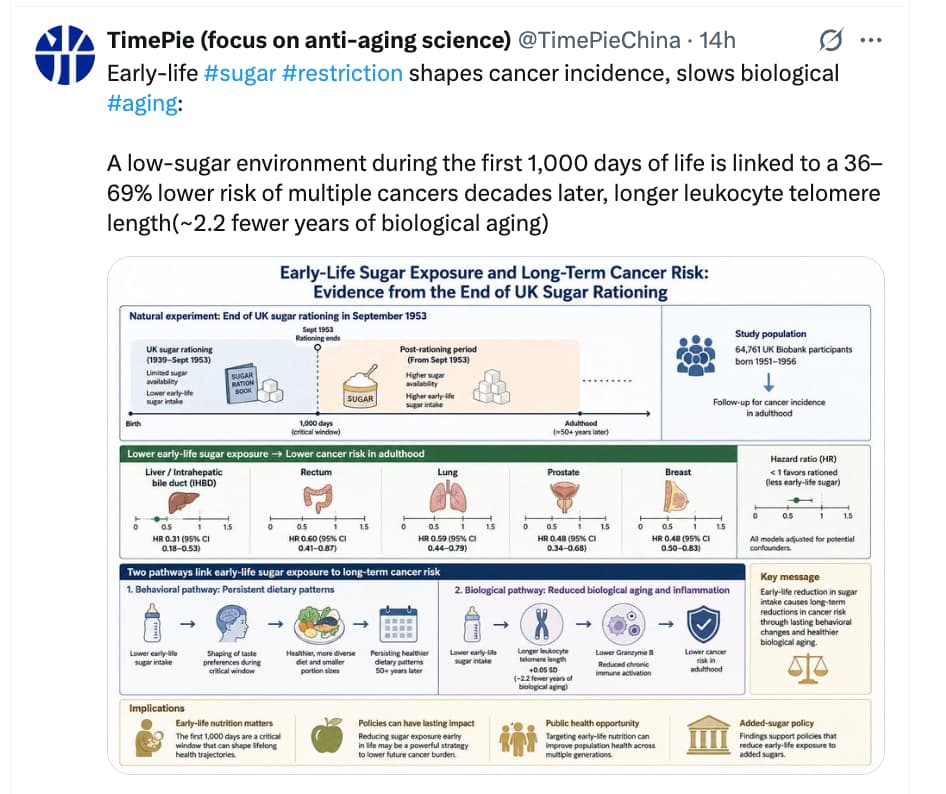
People who consumed less sugar during the first 1,000 days after conception may be significantly less likely to develop Alzheimer’s disease later in life, according to a new study published in the journal npj Aging .
The study:
Early-life sugar rationing, brain aging, and long-term neurodegenerative and psychiatric health outcomes: a population-based natural experiment study
Related paper:
Blame the Divorce, Miss the Cause: Why the Split Itself May Not Be What Scars Kids
Using four years of pooled U.S. survey data on more than 128,000 adults, researchers confirmed that people whose parents divorced during their childhood, or who were born to unmarried parents, report more adult depression and recent mental distress than people whose parents stayed married. The twist is what happened when the team accounted for other hardships that tend to travel with divorce, above all a parent’s own mental illness and substance use. Once those were included, the link between the marital event itself and adult mental health largely vanished. The signal that looked like divorce turns out to be mostly the company divorce keeps.
For decades, a familiar worry has hung over separated families: that the divorce itself leaves a lasting mark on children that follows them into adulthood. A new analysis in Psychiatry Research puts a large and careful dataset behind that worry, and then complicates it in a way that matters for anyone thinking about how early life shapes long-term health.
The team, led by Mary Kate Schilke and Esme Fuller-Thomson at the University of Toronto with Philip Baiden at the University of Texas at Arlington, drew on the U.S. Behavioral Risk Factor Surveillance System, a rolling national health survey. From the 2021 to 2024 waves they assembled 128,264 adults, deliberately excluding anyone who reported childhood sexual or physical abuse so that those severe traumas could not muddy the picture. They then compared three groups: adults whose parents stayed continuously married, those whose parents divorced before they turned 18, and those born to unmarried parents.
At first glance the pattern is exactly what you would expect. Lifetime depression was reported by 14.1 percent of the continuously-married group, rising to 19.2 percent among children of divorce and 18.7 percent among children of unmarried parents. Frequent mental distress in the past month showed the same tilt, climbing from 8.5 percent to 13.6 and 16.3 percent respectively. On their own, these gaps look like a clear cost of family breakup.
The heart of the paper is what came next. The researchers layered in other adverse childhood experiences one at a time, then in clusters. A single factor did most of the work. Accounting for parental mental illness cut the divorce-to-depression association by 68 percent. Parental substance use knocked off roughly another half on its own. Put the two together and the association was no longer statistically distinguishable from zero. Add socioeconomic and health-behaviour factors on top, and it disappeared entirely.
The interpretation the authors reach, cautiously, is that the divorce event is not the active ingredient. Divorce rarely arrives alone. One in three children of divorce in this sample also lived with parental substance use, one in five with parental mental illness. These co-travelling adversities, several of them partly heritable, appear to be doing the damage that divorce gets blamed for.
The practical upshot is a shift in where to aim. If you want to protect a child’s long-term mental health, the target is the constellation of family adversity, especially untreated parental mental illness and addiction, not the marriage certificate. It is an unusually large study making an unusually humble point: the obvious culprit is mostly a bystander.
Actionable Insights
Keep one caveat in front of you the whole time: this is a snapshot survey of adults recalling their childhoods, not an experiment, so it can show links but cannot prove cause. With that said, here is what you can actually use.
The headline number that survives scrutiny is not about divorce, it is about parents. A child living with a parent who has untreated mental illness or a substance-use problem carries the real elevated risk. So if that describes a household you can influence, the highest-value action is getting the parent into treatment, because that is the factor the data keep pointing to.
How big is the raw effect before adjustment? Modest. Children of divorce had a depression rate of 19.2 percent versus 14.1 percent for the married group. That is a 5.1 percentage-point absolute increase, or a relative risk of about 1.36, meaning roughly 36 percent higher likelihood. In plain terms, you would need about 20 children of divorce for one extra depression case beyond the married-parent baseline. Translated into a standardized effect size, the odds ratio of 1.41 corresponds to a Cohen’s d of about 0.19, which sits in the small range. The strongest raw signal in the whole paper, distress among children of unmarried parents (16.3 versus 8.5 percent, roughly double the odds), still only reaches a Cohen’s d near 0.36, a small-to-moderate effect. And every one of these effects shrinks toward nothing once parental mental illness and addiction are accounted for. The take-home: the family environment around a child matters far more than whether the parents’ relationship carries a legal label.
Context and Source
- Open Access Paper: Long after the split: The association between parental divorce and mental health in adults.
- Authors and institutions: Mary Kate Schilke (Tyndale University and Toronto Metropolitan University, Canada), Philip Baiden (University of Texas at Arlington, United States), and Esme Fuller-Thomson (University of Toronto, Canada).
- Journal: Psychiatry Research (Elsevier).
- Impact evaluation: The impact score of this journal is 5.1 (2025 Journal Impact Factor; CiteScore 8.7), evaluated against a typical high-end range of 0 to 60+ for top general-science and flagship clinical journals, therefore this is a Medium impact journal.
How early life stress leads to long term stress hypersensitivity later in life
Researchers at Princeton, Washington University in St. Louis, and Mount Sinai show that early-life stress in mice leaves a lasting chemical tag, H3K4me1, on the DNA-packaging proteins of neurons in the ventral tegmental area, a core dopamine hub. The tag is written by an enzyme called SETD7, which is elevated after stress. This tagging does not by itself change behavior. Instead it primes the circuit, so that a later stress in adulthood produces an exaggerated genetic, electrical, and behavioral response. Adding the enzyme artificially reproduces stress vulnerability, and removing it protects against it. The work offers a concrete molecular mechanism for why childhood adversity raises lifelong risk for depression and anxiety.
One of the most reliable findings in mental-health research is also one of the hardest to explain: people who face serious adversity as children are more vulnerable to depression, anxiety, and substance-use disorders decades later. The stress does not simply pass. Something gets stored. This study proposes what that something is at the molecular level, and where it lives in the brain.
The team focused on the ventral tegmental area, or VTA, a small cluster of dopamine-producing neurons that sits at the center of the brain’s motivation and reward machinery. Using a mouse model in which pups experience stress between postnatal days 10 and 17, the researchers first ran an unbiased survey of more than 200 chemical modifications on histones, the spool-like proteins that DNA winds around. Roughly three quarters of the changes they found pushed chromatin toward a more open, ready-to-read state. One modification stood out: monomethylation of histone H3 at lysine 4, written in shorthand as H3K4me1, a mark associated with primed enhancers, the genomic switches that sit poised to activate genes.
They then traced the mark back to its author. Of a dozen or more candidate enzymes, only one, SETD7, was consistently increased after early stress. SETD7 is unusually clean in what it does: it adds a single methyl group to H3K4 and nothing more, which made it an ideal tool to test cause and effect.
Here the study earns its central claim. Using engineered viruses, the researchers turned SETD7 up in the developing VTA of otherwise normal mice, and turned it down in stressed mice. Turning it up did nothing on its own. But when those mice met a stressor in adulthood, their dopamine neurons fired more, their gene-expression response flipped from mostly shutting down to actively ramping up, and their behavior tipped toward the socially withdrawn, anxious profile that marks stress susceptibility. Turning SETD7 down in early-stressed mice did the reverse, largely restoring resilience.
The big idea is epigenetic priming. Early adversity does not necessarily damage the circuit outright. It leaves a molecular bookmark that changes how the circuit will respond the next time life gets hard. That reframes childhood adversity as a latent, and potentially reversible, molecular state rather than fixed damage. The same logic hints that priming might one day be nudged toward resilience, though that remains a long way from the clinic.
Actionable Insights
Be honest about what this paper is: a mouse study of brain biology. It does not test a supplement, a diet, a drug you can buy, or a longevity protocol. There is no lifestyle lever here that a reader can pull tomorrow, and anyone selling a SETD7 or H3K4me1 hack based on this paper is ahead of the evidence.
What it does offer is a strong, mechanistically grounded reinforcement of a public-health message: early-life adversity is biologically encoded, and the encoding sits in the dopamine reward system that governs motivation and mood. The take-home for adults with difficult childhoods is that heightened stress reactivity is a real, physical predisposition, not a character flaw, and that later stressors are the trigger that converts predisposition into symptoms. That argues for taking adult stress management seriously as prevention, especially for this group.
On magnitude, the manipulations that mattered were large in the mouse. Boosting the enzyme roughly sextupled the odds of becoming stress-susceptible (50 percent of enzyme-boosted mice became susceptible versus about 8 percent of controls, a relative risk near 6). Blocking it cut susceptibility from 85 percent down to 33 percent in previously stressed mice, a reduction of about 61 percent. Those are big biological swings, but they are in animals and in engineered conditions, not in people. [Confidence: Medium]
Context and Source
- Open access Paper: Early-life stress alters H3K4me1 in VTA to prime stress sensitivity.
- Authors: Hye Ji J. Kim, Luke T. Geiger, Julie-Anne Balouek, and colleagues, with senior authors Ian Maze, Meaghan C. Creed, and Catherine Jensen Peña.
- Institutions and country: Princeton Neuroscience Institute (Princeton University); Washington University in St. Louis; Icahn School of Medicine at Mount Sinai and Howard Hughes Medical Institute. All United States.
-
Journal: Neuron (Cell Press, an imprint of Elsevier). Volume 115, dated January 6, 2027 (published online 2026).
Impact evaluation: Neuron’s Journal Impact Factor is approximately 15 (2024 Journal Citation Reports), with a Scopus CiteScore near 25. The impact score of this journal is approximately 15, evaluated against a typical high-end range of 0 to 60-plus for top general-science and flagship journals, therefore this is a High impact journal.
Pushed that WWII study through my Claude analysis prompt:
Bottom line: A large study of British adults found that people whose first two years of life fell under wartime sugar rationing were somewhat less likely to be diagnosed with dementia, Alzheimer’s, depression, and anxiety decades later, and had brains that looked very slightly “younger” on scans. But the effect on dementia, in real-world terms, is small — roughly one or two fewer cases per thousand people — and the study can’t prove sugar was the cause, because almost everything about British life was changing in 1953. You should keep following the sensible existing advice to limit added sugar for pregnant women and babies, but this study alone is no reason to panic about a toddler’s birthday cake.