https://player.fm/series/unexplainable-2890259/stress-ages-us-on-a-cellular-level
1 Like
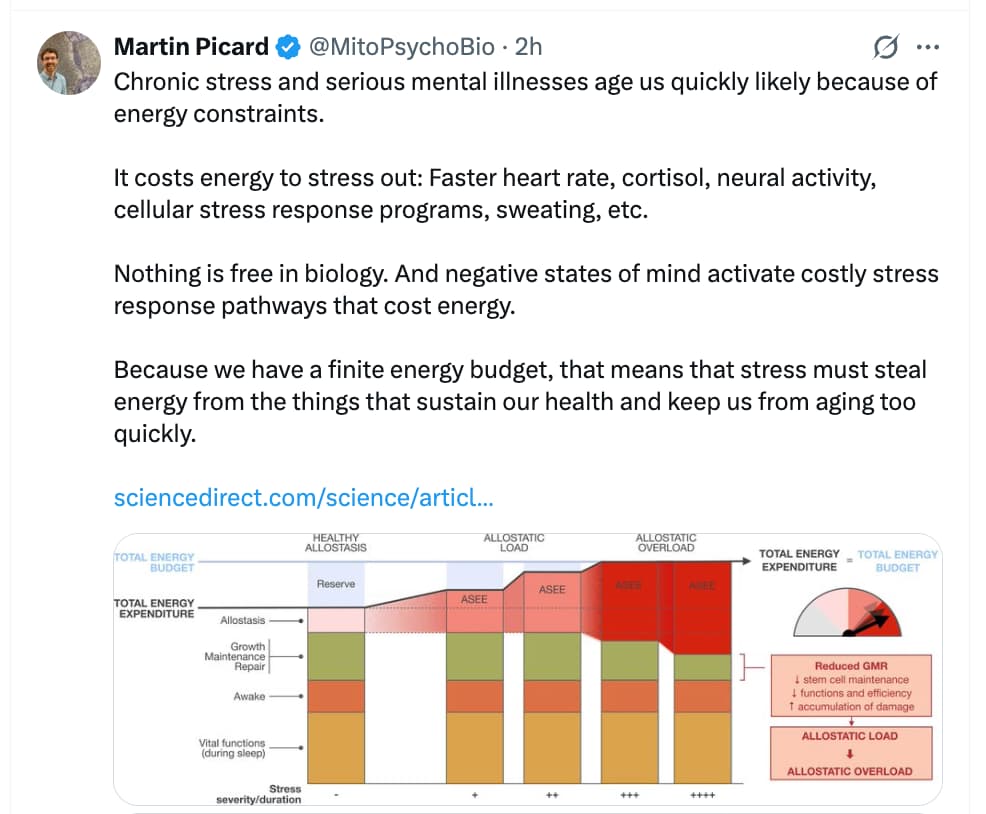
Paper: https://www.sciencedirect.com/science/article/pii/S030645302200292X?via%3Dihub
Source: https://x.com/MitoPsychoBio/status/2039739832985915403?s=20
3 Likes
All the more reason to chill and relax. 
3 Likes
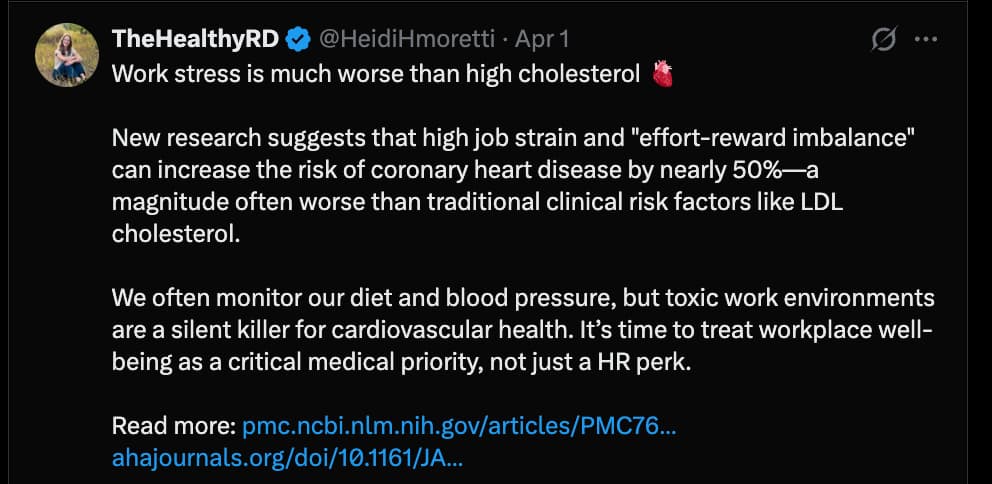
Psychological Stress as a Risk Factor for Cardiovascular Disease: A Case-Control Study
Paper: Psychological Stress as a Risk Factor for Cardiovascular Disease: A Case-Control Study - PMC
Association of Low‐Density Lipoprotein Cholesterol Levels with More than 20‐Year Risk of Cardiovascular and All‐Cause Mortality in the General Population
Paper: https://www.ahajournals.org/doi/10.1161/JAHA.121.023690
2 Likes
“ …Because we have a finite energy budget….”
Maybe finite (vs infinite) but not fixed / unchangeable. Build mitochondria to increase the energy budget. Exercise is good for a lot of things.
I do not see how any assertions in that tweet can be derived from the linked studies.
Published in 2020 (‘New research suggests…’  )
)
Six month single site observational study of a hundred Afghans with cardio events that brought them to the hospital, with the family/friends/caregivers that accompanied them used as controls. No adjustments for… anything. Based on a questionnaire filled out after the event.
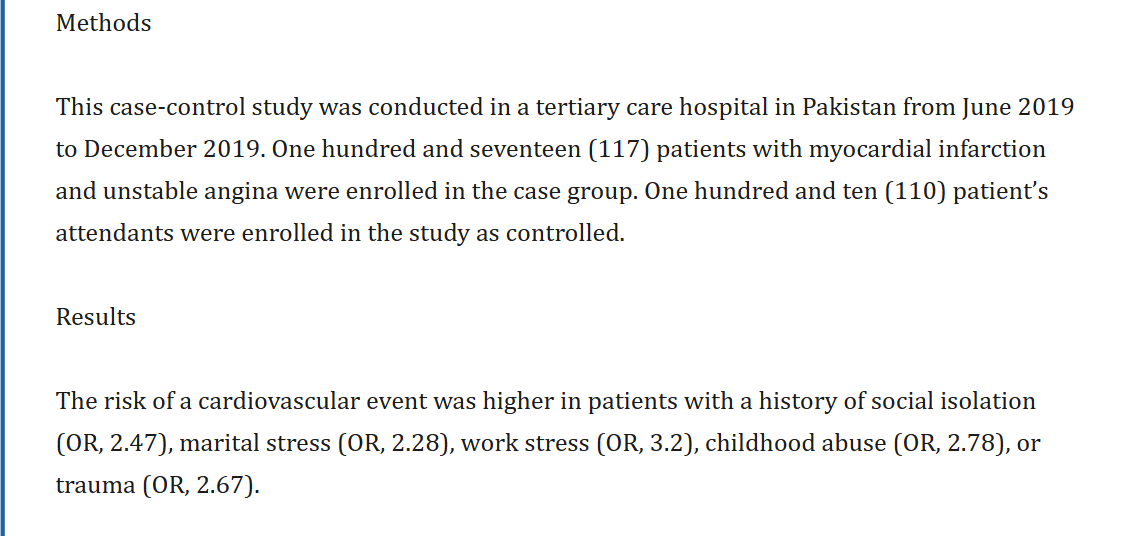
This is the money quote from the second study (which is from 2022): Summarized - ‘LDL > 100 healthier than LDL <70’.
After adjustment for age, sex, race and ethnicity, education, socioeconomic status, lifestyle factors, C‐reactive protein, body mass index, and other cardiovascular risk factors, individuals with LDL‐C<70 mg/dL, compared to those with LDL‐C 100–129.9 mg/dL, had HRs of 1.45 (95% CI, 1.10–1.93) for all‐cause mortality, 1.60 (95% CI, 1.01–2.54) for CVD mortality, and 4.04 (95% CI, 1.83–8.89) for stroke‐specific mortality, but no increased risk of coronary heart disease mortality.
Looks like the ACC/AHA need to revise their new guidelines.
1 Like
Can we ‘vaccinate’ ourselves against stress?
A traditional vaccine primes the immune system to build better defences. Researchers think we can do something similar to increase our resilience to the pressures and worries of life
It might sound strange to talk about inoculating ourselves against stress, but we might be able to do just that.
Just as a vaccine safely trains the immune system so it can defend against later attack, researchers think we can do something similar with stress.
This idea is often studied in military personnel. Exposing soldiers to simulations of stressful events, while giving them the tools and support to cope, can minimise the impact of future stress. In one study, cadets who received resilience training had lower cortisol levels in later intense military exercises than those who hadn’t received the training. Likewise, paramedics who have received resilience training are also at lower risk of developing post-traumatic stress disorder (PTSD) and depression.
Fortunately, most people don’t need military-style training to gain these benefits. Deliberately exposing yourself to manageable, everyday stress can build resilience, says Julie Vašků at Masaryk University in the Czech Republic.
Recent research shows that successfully navigating stressful situations remodels the brain, provoking changes across the “stress network”, including the prefrontal cortex, which regulates emotions; the hippocampus, involved in memory; and the amygdala, which detects threats. When people voluntarily face mild stressors, these circuits adapt in ways that make future challenges easier to handle and help your body return to baseline more quickly.
The key is that the stress must remain manageable. A mild stressor is a situation in which you feel some sort of bearable discomfort, says Vašků. “It cannot be overwhelming. Once it’s overwhelming, it’s traumatising.” She suggests going somewhere unfamiliar or speaking with people you wouldn’t normally approach. Additional support can help. “Bring someone else with you,” she says.
This kind of exposure therapy works well in adults, but should we apply it in childhood, too? Severe childhood adversity clearly increases the risk of later mental and physical health problems, yet small amounts of mild adversity may bring benefits. In rodents, continuous maternal separation from birth increases adult stress responses, whereas the same amount of maternal separation but given in small bursts produces more resilient adults. Similar patterns have been observed in primates exposed to short periods of maternal separation.
It is difficult to translate such findings to humans, and unethical to run comparable experiments. Still, Carmine Pariante at King’s College London suggests “we could be slightly less protective as a society”. By this, of course, he doesn’t mean deliberately exposing anyone to trauma, but occasionally allowing ourselves – and our children – to experience more manageable challenges.
Read the full story: Can we ‘vaccinate’ ourselves against stress? (New Scientist)
That sounds quite a reasonable suggestion. We do need a good understanding of how to manage the ANS. (Autonomic Nervous System).
1 Like
“Managing” the ANS is a tall order. Maybe we can make progress with a few effective means to nudge it regularly back toward balance of sympathetic vs parasympathetic activation. I find my Pulsetto is useful used daily before bed. Breathing drills are more reliable, especially resonance frequency breathing which is nice way to meditate before bed. I should do breathing drills / meditation during the day, perhaps right after I workout. I think the issue is staying “on alert” too much of the time. Being productive all the time trains the body to not relax so well that I cannot relax without drugs (in the past).
1 Like
You’re talking about this device? Buy Pulsetto Vagus Nerve Stimulation Device for Calm and Sleep
How long have you used it for? What are the benefits you’ve noticed?
1 Like
Yes that’s the one. It’s a simple device that applies rapid electric pulses to each side of the neck in the vicinity of the vagus nerve. I don’t think there is any scientific proof that such a design works. The FDA approved device is implanted exactly on the vagus nerve. But, having used it for 2 years steadily, I can report it puts me to sleep. I use it everyday before bed and use it again if I wake up in the middle of the night. It definitely relaxes me. Perhaps it is a conditioned response but since it seems to work I keep using it.
2 Likes
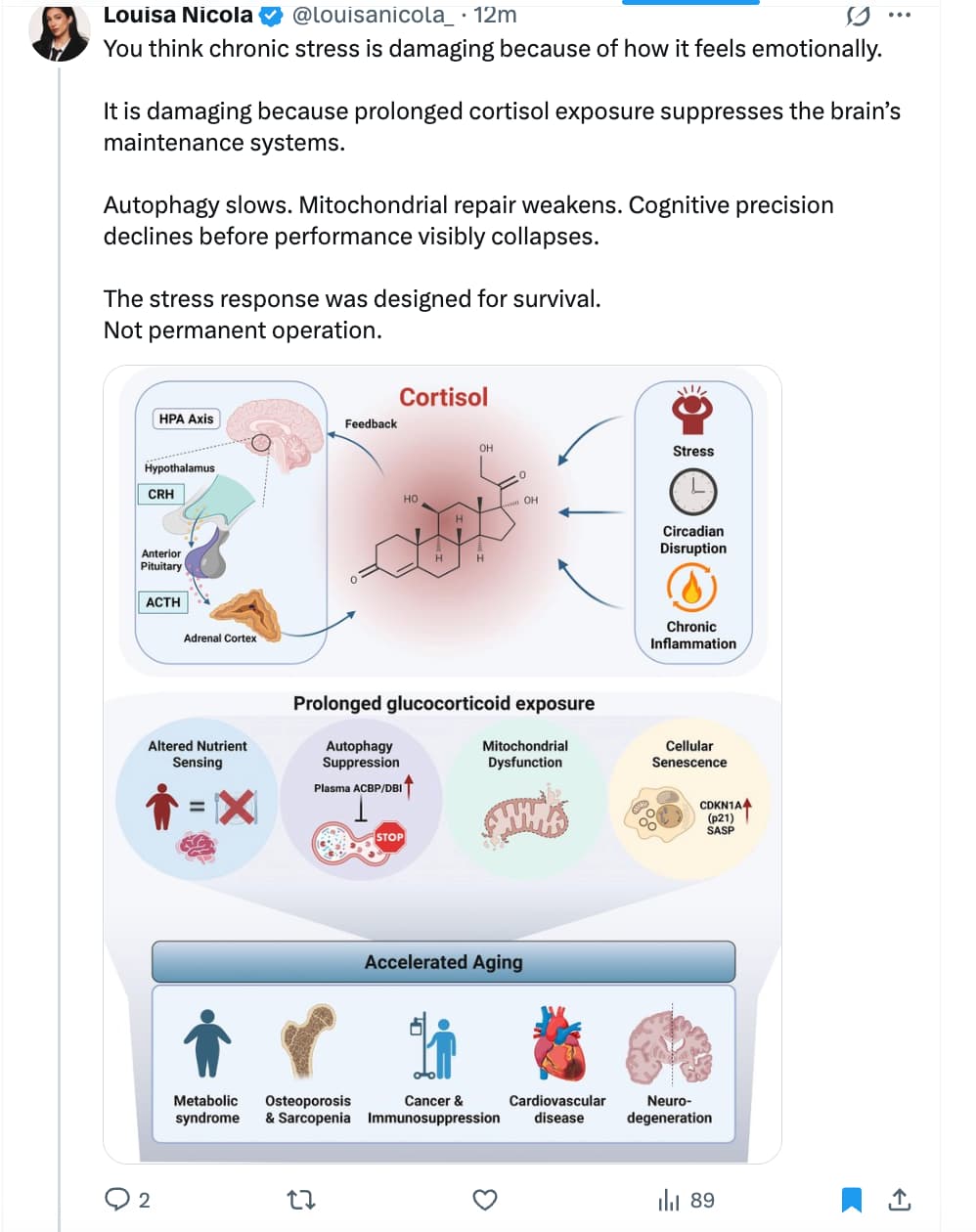
Source: https://x.com/louisanicola_/status/2060078590025519223?s=20
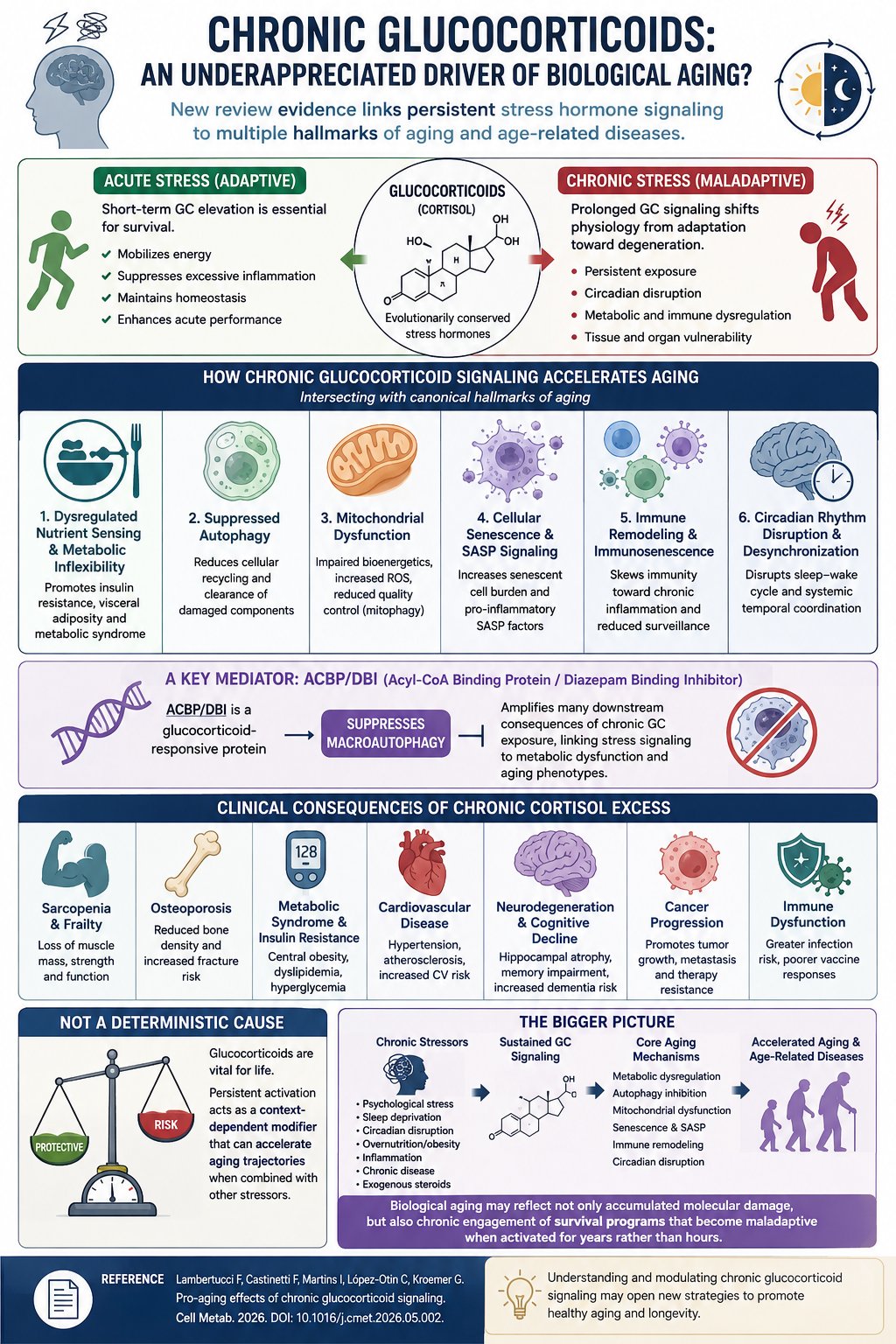
Paper: Pro-aging effects of chronic glucocorticoid signaling
2 Likes
The Lifelong Toll of Trauma: Cumulative Life Stress Permanently Depletes Aging Physiological Reserves
The World Health Organization introduced the paradigm of “intrinsic capacity” to serve as a holistic, multi-dimensional gauge of healthy aging, reflecting an individual’s combined physical and mental reserves across locomotion, vitality, cognition, psychology, and sensory health. While traditional longevity interventions prioritize metabolic, pharmacological, or genetic optimization, a prospective multi-cohort study published in 2026 reveals that psychological and environmental trauma across the life course acts as a direct drain on these biological reserves.
Analyzing data from 14,927 aging adults across the United States, England, and China, researchers tracked how exposure to stressful life events (SLEs)—such as childhood financial hardship, parental divorce, adulthood unemployment, or the death of a spouse—manifests as functional decline in later life. The findings demonstrate a clear, cumulative degradation of intrinsic capacity as stress accumulates across decades. Individuals who experienced trauma during both childhood and adulthood exhibited the steepest, most uniform declines in functional health across all three geographically and socioeconomically distinct cohorts.
Crucially, the study upends the assumption that early-life trauma is the sole definitive driver of chronic adult vulnerability. Adulthood stress independent of childhood history showed a more pronounced negative association with later-life intrinsic capacity than childhood stress alone. This lifelong accumulation of stress appears to “get under the skin,” potentially driving sustained hyper-activation of stress pathways and immune dysfunction. Ultimately, this depletes the physiological margins required to withstand the standard challenges of biological aging, accelerating functional decline long before explicit clinical disease states manifest.
Actionable Insights
For longevity enthusiasts and clinicians, the primary take-home message is clear: aggressive stress mitigation and psychological resilience frameworks are mandatory physiological requirements to maximize healthspan. The study highlights an alarming cumulative effect size: individuals exposed to trauma in both childhood and adulthood face a 24% to 28% higher relative risk of falling into the lowest tier of intrinsic capacity in late life (HRS RR = 1.25, ELSA RR = 1.28, CHARLS RR = 1.24). Even isolated adulthood stress increases this risk of low functional capacity by 10% to 24% across populations.
To preserve long-term functional reserves, individuals must actively engage in somatic and psychological interventions that modulate the perceived severity of threats and lower chronic cortisol burdens. This includes establishing highly active social and objective support systems, which have been shown to buffer against adulthood adversity. Furthermore, because the negative impacts of lifetime stress were found to be significantly stronger in younger-old adults compared to old-old individuals, these stress-deceleration strategies must be deployed aggressively during mid-life and early adulthood to protect biological reserves before irreversible baseline degradation occurs.
Source:
- Open Access Paper: Association of life-course stressful life events with later-life intrinsic capacity: A multi-cohort study
- Lead Institutions: School of Public Health, Zhejiang University School of Medicine (Hangzhou, China); Hubert Department of Global Health, Rollins School of Public Health, Emory University (Atlanta, GA, USA); UNSW Business School, The University of New South Wales (Kensington, NSW, Australia).
- Journal Name: The Journal of Nutrition, Health and Aging.
- Impact Evaluation: The impact score of this journal is 4.3, evaluated against a typical high-end range of 0–60+ for top general science, therefore this is a Medium impact journal.
This really stood out to me from the article:
Overall, the researchers found that mice that could eat throughout the day were more adversely affected by chronic stress than those following an IF regimen. Specifically, they appeared to take greater pleasure in feeding, have higher energy levels and exhibit fewer depression-like behaviors.
The Long Shadow: How Childhood Stress Rewires the Brain’s Switchboard for Life — and How Learning Might Rewire It Back
Early-life stress appears to reorganize the brain’s three core large-scale networks (default-mode, central-executive, and salience), and the authors argue this reshapes motivation, learning, and cognitive flexibility from childhood into old age. They propose that deliberate, lifelong novel-skill learning could partly reverse the damage.
Stress in childhood does not simply leave a psychological scar — it may physically retune the wiring diagram of the brain, with consequences that echo across an entire lifespan. That is the central argument of a new review from researchers at the University of Southern California, UCLA, and UC Riverside, published in Neuroscience and Biobehavioral Reviews.
The “big idea” is built on a well-established framework called the triple-network model. Three sprawling brain networks normally cooperate to run higher cognition: the default-mode network (inward-focused thought and memory), the central-executive network (deliberate problem-solving and task-switching), and the salience network (the air-traffic controller that decides what deserves attention). The authors marshal evidence from human neuroimaging and animal studies suggesting that early-life stress — neglect, abuse, institutional rearing, poverty, parental divorce — distorts how these networks connect, both within themselves and to deeper emotional structures such as the amygdala, hippocampus, and prefrontal cortex.
The casualty they focus on is cognitive flexibility: the everyday ability to switch between ideas, update your strategy when the rules change, and adapt to a moving target. The review proposes a chain of cause and effect it calls the “environment-brain-behavior pathway.” Stress alters network connectivity; altered connectivity degrades the motivation and learning circuits; weakened motivation and learning then blunt cognitive flexibility — and because brain networks keep maturing into the mid-twenties and shifting again in old age, the authors argue the effects compound across the whole lifespan.
A striking theme is that the damage is not uniform. The authors repeatedly flag sex differences (male animals tend toward hyperconnectivity, females toward hypoconnectivity) and a distinction between threat-based stress (which may paradoxically sharpen some adaptive skills) and deprivation-based stress (which more consistently impairs flexibility). They frame some changes not as pure damage but as “accelerated maturation” — an early-life adaptation to a harsh world that becomes a liability in a safer one.
The hopeful turn is the intervention pitch. Because these networks stay plastic, the authors argue that learning itself is a therapeutic tool. Picking up genuinely novel real-world skills — a language, dance, painting, financial literacy — alongside mindfulness, exercise, and improved caregiving, may strengthen the very circuits that stress weakened, potentially into late adulthood. It is a deliberately optimistic, “growth not deficit” reframing — but, crucially, it rests on a synthesis of other people’s data, not on a new experiment.
Actionable Insights
The take-homes below are the authors’ synthesized recommendations; where I note magnitude, it is not quantified in this source and would need to be chased to the primary citations. Treating any number here as a measured benefit would be a category error.
What you can practically act on:
- Treat novel-skill learning as a connectivity intervention, not a hobby. The authors single out learning that is genuinely new and effortful (a new language, dance, an instrument, financial literacy) as a lever on cognitive flexibility across the lifespan.
- Stack low-cost lifestyle factors: mindfulness, exercise, and (where relevant) bilingualism are named as executive-function supports.
- If you have an ELS history, screen for reward/motivation deficits. The review argues clinicians treating depression should assess early-life stress and reward responsiveness, because trauma history can predict more variance in reward circuitry than a depression diagnosis itself.
- Timing and type of stress matter more than the label. Deprivation-type stress is the higher-priority target for flexibility-boosting intervention; threat-type may need a different approach.
Bottom line for the biohacker: the actionable content here is a reasonable, low-risk lifestyle prescription (keep learning hard new things, exercise, mindfulness).
Source:
- Paywalled Paper: Effects of early life stress on functional connectivity underlying cognitive flexibility across the lifespan
- Institutions: University of Southern California (Los Angeles); University of California, Los Angeles; University of California, Riverside.
- Country: United States.
- Journal: Neuroscience and Biobehavioral Reviews (Elsevier).
- Funding: NSF CAREER Award (BCS-1848026) to R. Wu; Johns Hopkins Alzheimer’s Disease Resource Center for Minority Aging Research (1P30AG059298). The authors also disclose using Claude AI to help organize the literature review.
- Impact Evaluation: Latest Journal Impact Factor (JIF) ≈ 7.9 (5-year JIF ≈ 9.3); CiteScore ≈ 12.8; SJR quartile Q1. The impact score of this journal is 7.9 (JIF) / 12.8 (CiteScore), evaluated against a typical high-end range of 0–60+ for top general-science journals, therefore this is a Medium (upper-mid) impact journal — it is a strong, top-quartile specialty review venue
1 Like
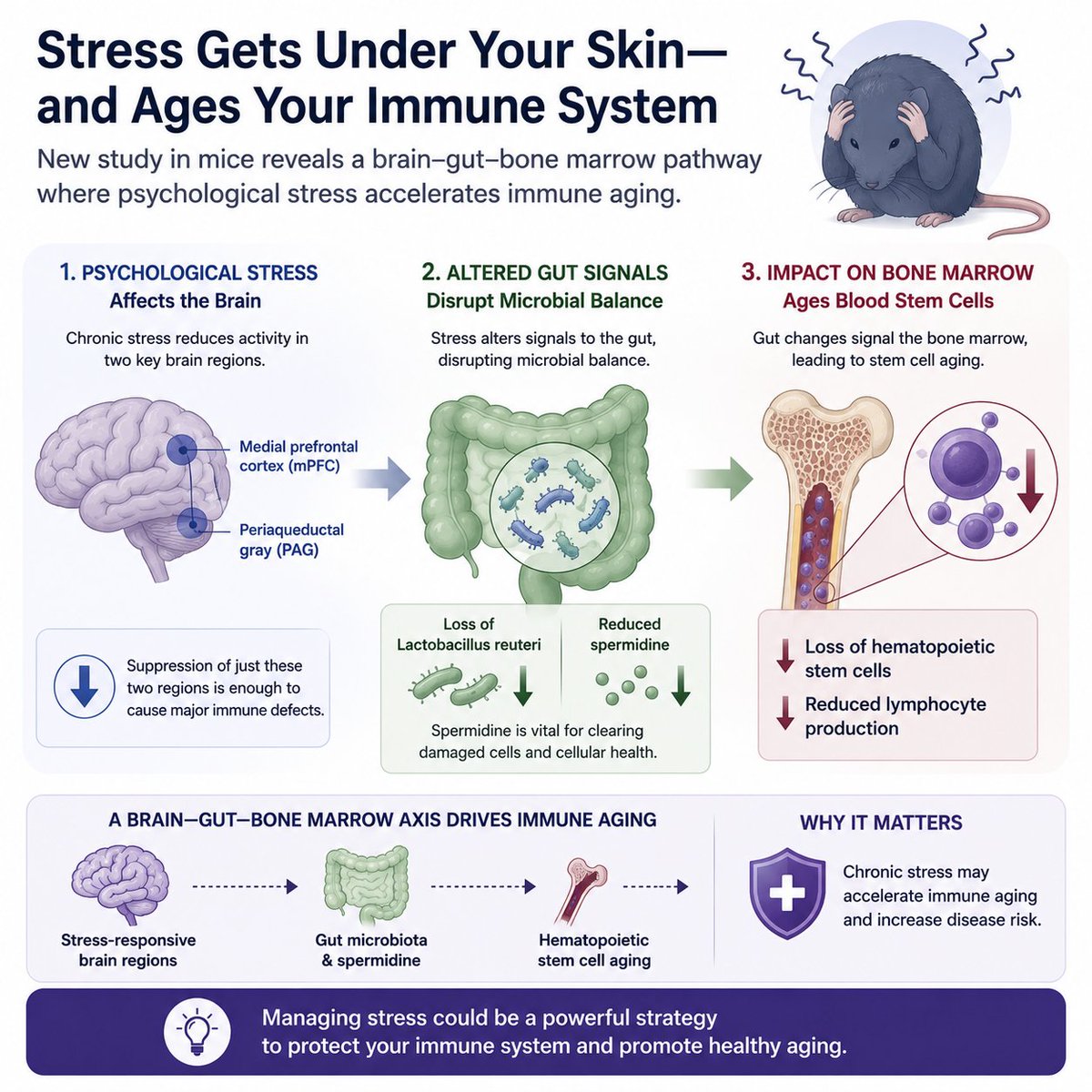
Psychological stress alters gut microbes and ages blood stem cells in mice: depletes L. reuteri and lowers spermidine, a compound that helps clear damaged cells.
https://www.cell.com/cell-stem-cell/fulltext/S1934-5909(26)00204-3
1 Like
Does the perception that stress affects health matter? The association with health and mortality
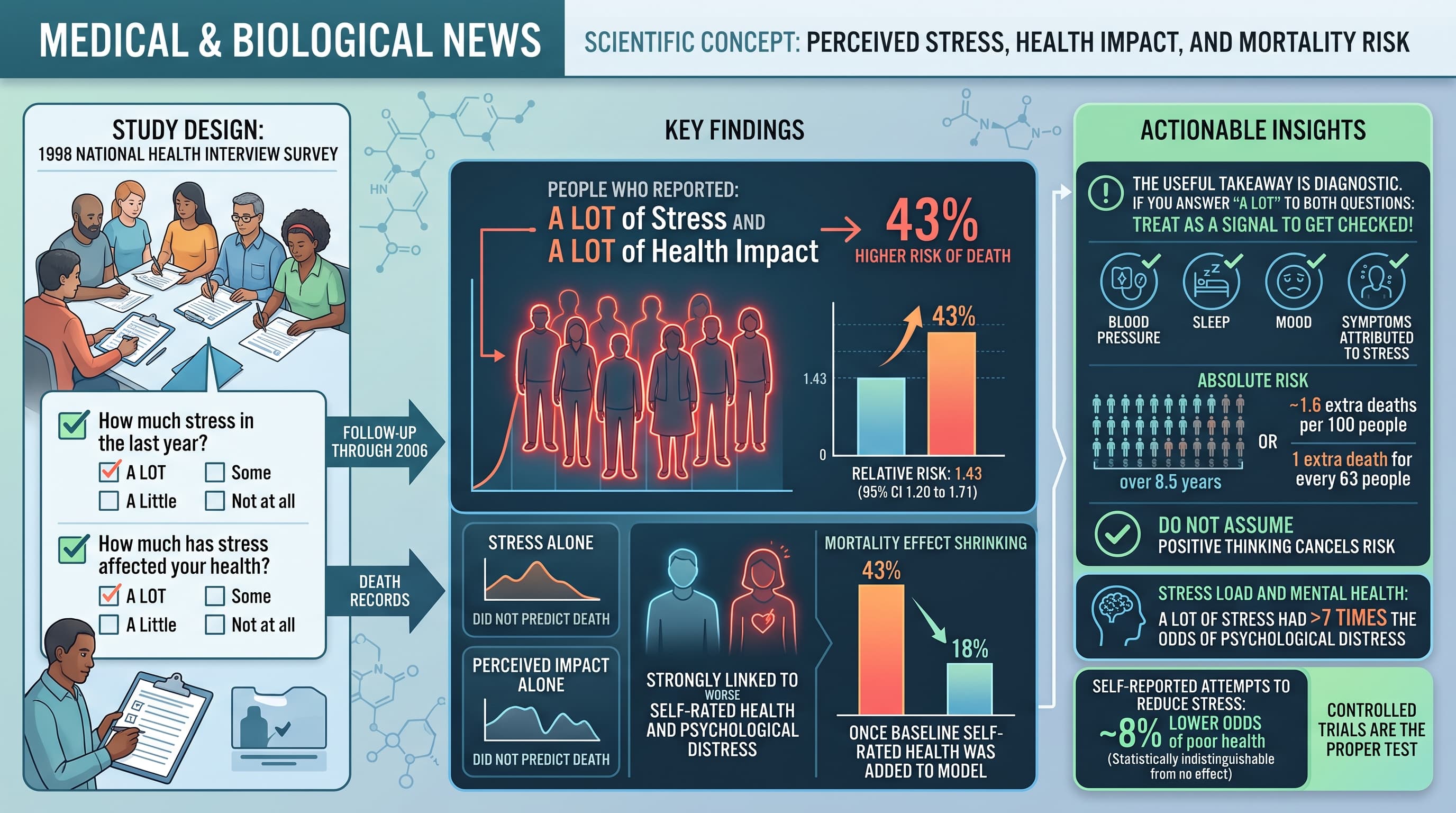
This analysis linked 1998 National Health Interview Survey answers from 28,753 U.S. adults to death records through 2006. People who said they had a lot of stress and that stress had affected their health a lot had a 43% higher risk of death over about 8.5 years (HR 1.43, 95% CI 1.20 to 1.71). Stress alone did not predict death, and neither did perceived health impact alone. Both measures were strongly linked to worse self-rated health and psychological distress. The mortality effect shrank to a non-significant 18% once baseline self-rated health was added to the model. That points to reverse causation or confounding by illness rather than a harmful belief.
In 1998, roughly 29,000 American adults answered two simple questions in a federal health survey. How much stress had they experienced in the past year? And how much effect had that stress had on their health? Researchers at the University of Wisconsin-Madison linked those answers to national death records through the end of 2006. What they found has since travelled far beyond an academic journal.
People who reported both a lot of stress and a lot of damage to their health from it were 43 percent more likely to die during follow-up than people who reported neither. That held after adjusting for age, income, education, smoking, exercise, chronic disease and access to care. Stress alone did not predict death. Believing stress was affecting your health, on its own, did not either. Only the combination carried the signal.
The authors frame this through appraisal theory, the idea that how we interpret a threat shapes its physical toll. If your mind treats stress as a danger to your body, perhaps the body obliges. The finding became a centerpiece of popular talks and books arguing that changing your mindset about stress could protect you. It is still often paraphrased as “believing stress is bad for you can kill you.”
That paraphrase goes further than the data. The survey did not ask whether people believed stress is harmful in general. It asked how much stress had actually affected their own health. Someone who is already sick, with palpitations, insomnia or a flaring ulcer, has every reason to answer “a lot.” The “perception” may partly be an accurate report of illness already underway, and that illness would naturally predict earlier death.
The paper’s own sensitivity analysis points the same way. When the researchers added people’s self-rated health to the model, the 43 percent excess risk shrank to 18 percent and lost statistical significance. Roughly half of the effect runs through how sick people already felt when they were surveyed.
The absolute numbers are also modest. The model-estimated cumulative risk of death rose from about 3.5 percent to 5.1 percent over roughly eight and a half years, a difference of 1.6 percentage points. At national scale that matters. The authors estimate more than 20,000 excess deaths a year if the link were causal, but they state clearly that it may not be.
The data on current health tell a louder story. People who said stress affected their health a lot were about four times as likely to rate their health as fair or poor, and five times as likely to score in the psychological distress range. Those associations are large, but they cannot show which way the arrow points.
What the study does establish is that one question, “how much has stress affected your health?”, flags a group at measurably higher risk. That is useful for clinicians. Whether retraining the belief would lengthen anyone’s life is an experimental question this study was never designed to answer.
Actionable Insights
The most useful takeaway is diagnostic, not motivational. If you would answer “a lot” to both “how stressed have you been?” and “how much has stress affected your health?”, treat that as a signal to get checked: blood pressure, sleep, mood, and any symptoms you have been attributing to stress. In this cohort, that combination carried a 43% higher relative risk of death. In absolute terms, that is about 1.6 extra deaths per 100 people over 8.5 years, or roughly one extra death for every 63 people in that group.
Do not assume that thinking more positively about stress will cancel that risk. Once current health was accounted for, the excess risk fell to 18% and was no longer statistically reliable.
Stress load matters most clearly for mental health. People reporting a lot of stress had over 7 times the odds of psychological distress, a very large effect by any standard.
Self-reported attempts to reduce stress showed only about 8% lower odds of poor health, statistically indistinguishable from no effect. This does not mean stress management is useless. People who try it may differ from those who do not, and a survey cannot tell whether a technique works. Controlled trials are the proper test.
Context and Source
- Open Access Paper: Does the Perception that Stress Affects Health Matter? The Association with Health and Mortality, Sept. 2012.
- Institution: University of Wisconsin-Madison
- Country: United States
- Journal: Health Psychology
- Impact evaluation: The impact score of this journal is 2.9, evaluated against a typical high-end range of 0 to 25+ for top psychology and behavioral medicine journals, therefore this is a Medium impact journal.
1 Like
How do you stay graceful under pressure?