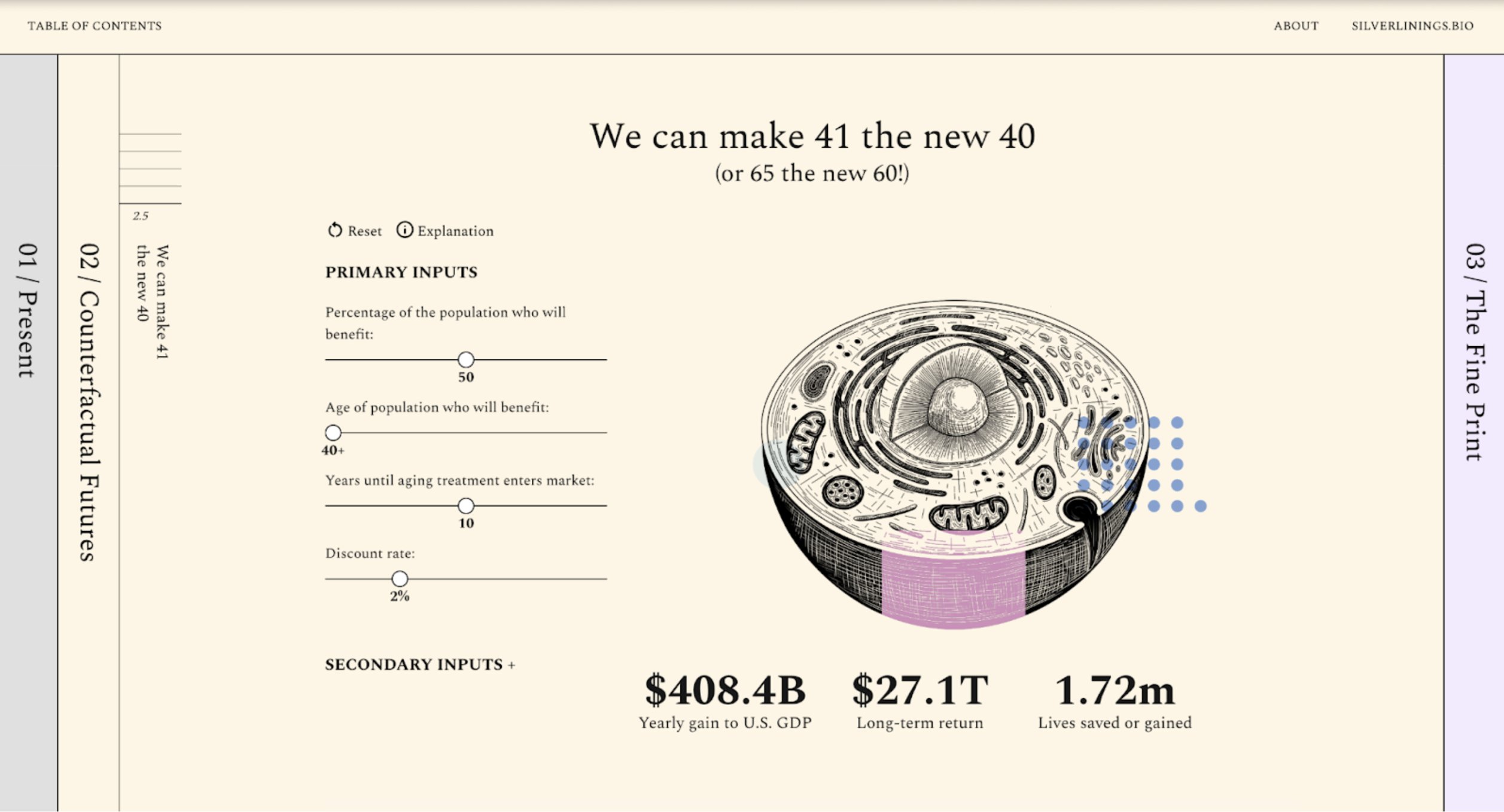
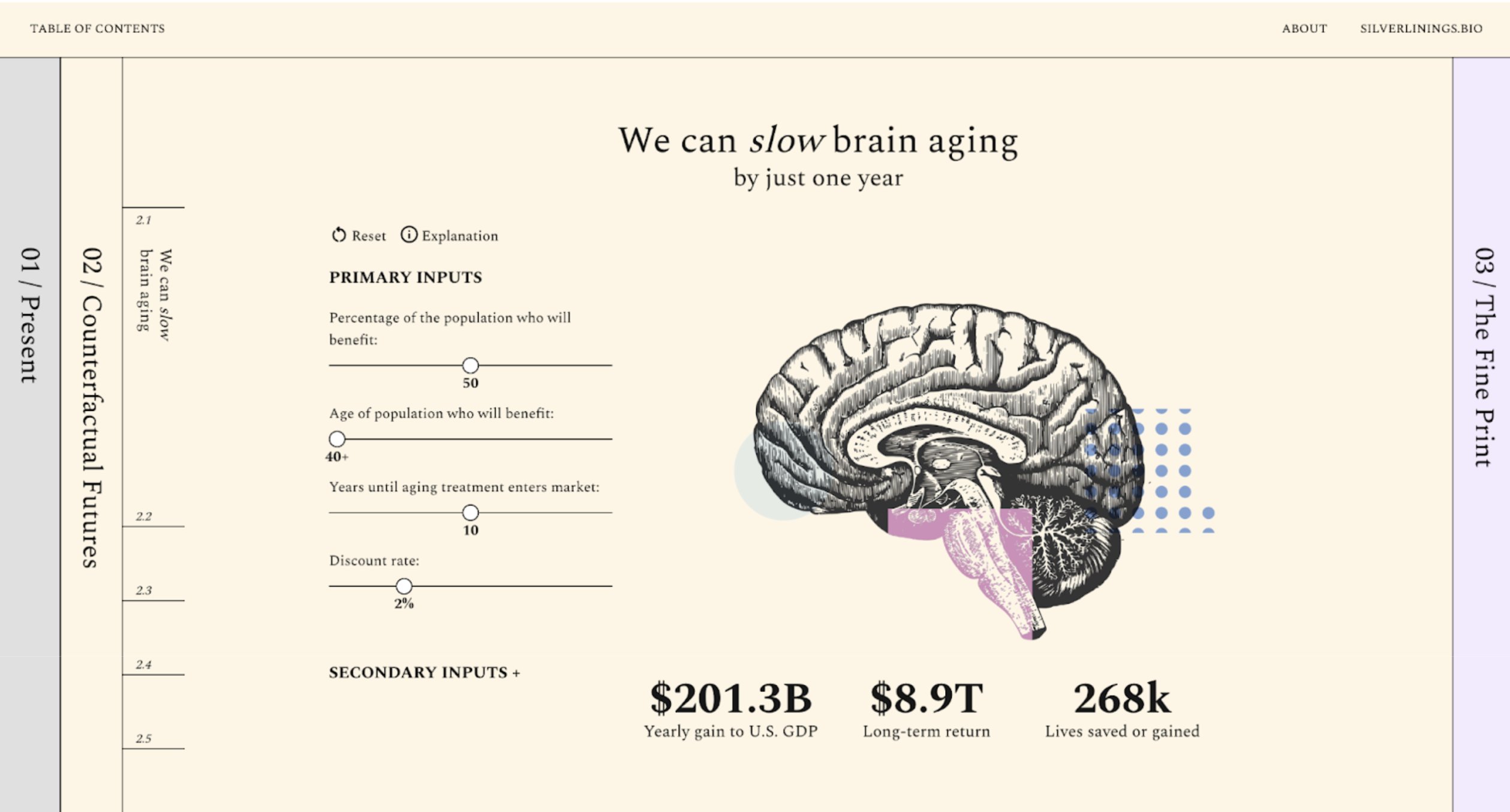
How could tiny breakthroughs in aging science change U.S. GDP and population growth? What’s the economic value of making 41 the new 40, or 65 the new 60? How many lives could we create or save if we could slow reproductive or brain aging by just 1 year? What would billions of healthier hours be worth to the economy, if we assume no change in the age of retirement?
I spent the last two years obsessing over the design, research, and execution of this project. The result is a book upcoming with Harvard University Press, a preprint, and—maybe your favorite part—an interactive simulation tool that lets you input your own timelines and assumptions for specific breakthroughs in aging bio, then see the ROI in terms of US population & GDP growth.
From @RickEcon and Jason DeBacker—the economists who co-developed the open-source, macro model that made this project possible—to extensive comments as well as interviews with 102 scientists (!) and countless iterations with award-winning designer Giorgia Lupi and the @pentagram team, we built something we hope will be a benchmark for how scientists, economists, designers, philosophers, entrepreneurs and storytellers can come together to paint, fund, and build different flourishing futures for our species.
I couldn’t be more excited to share this. It’s the start of an open and evolving project—the labor and product of love, obsession, and unrelenting care. I hope you have fun playing with our simulation tool — and if you do, please share!
Raiany Romanni-Klein is founder of the Institute for Life and Technology, a new 501c3 designed to streamline and quantify progress in U.S. science and technology. She is also a Scholar-in-Residence at the American Federation for Aging Research. Previously, she helped design and launch the $101 million Healthspan XPRIZE, and was based at the Amaranth Foundation and the Wyss Institute at Harvard University.
Gemini Pro AI Video Summary:
Executive Summary
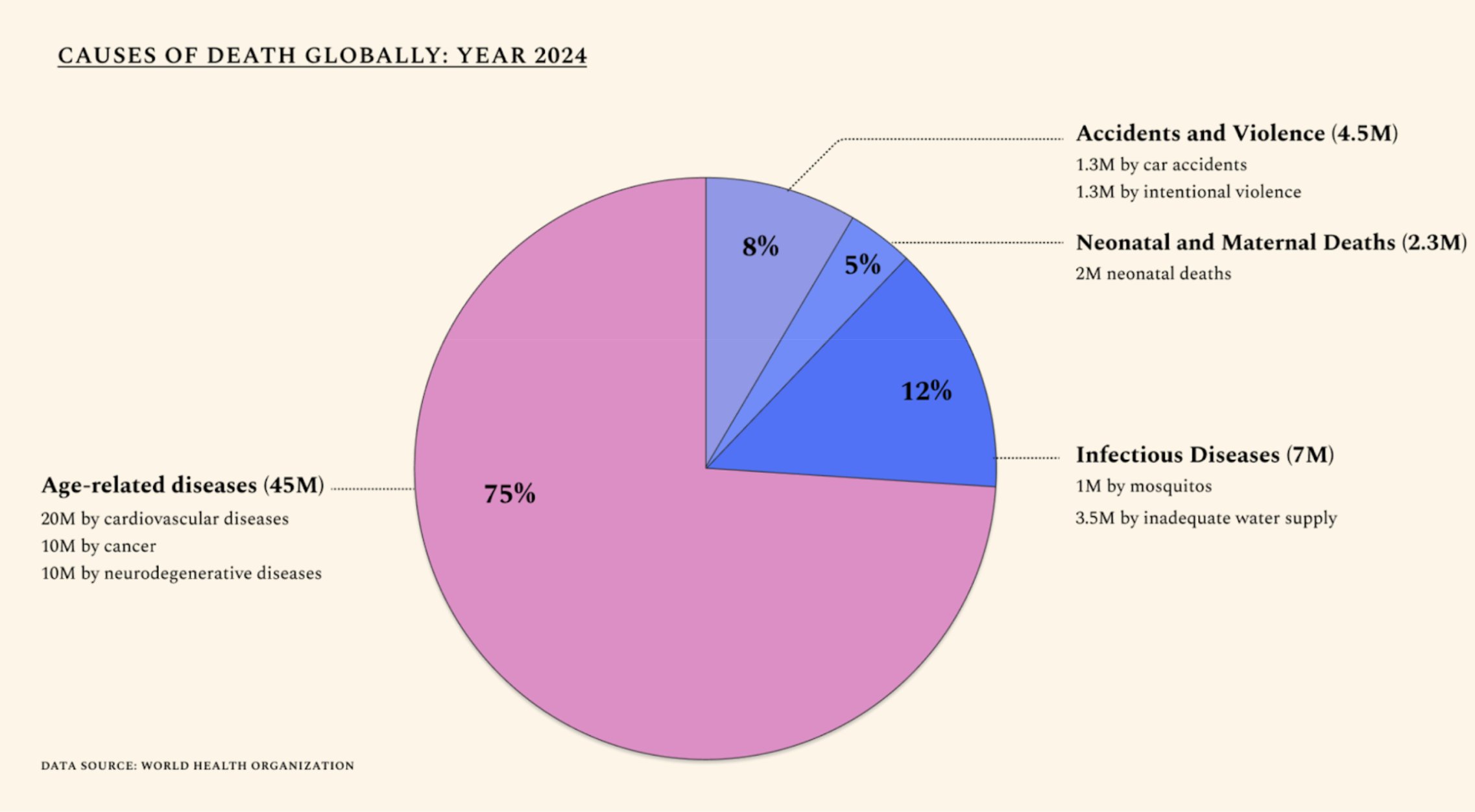
The transition from “fast death” (accidental, infectious, predatory) to “slow death” (chronic, age-related) represents the most significant shift in human mortality history. While 20th-century medicine doubled life expectancy, it failed to achieve a proportional increase in healthspan, resulting in a global crisis of gradual decline. The transcript argues that biological aging is the primary risk factor for the modern world’s leading causes of death, including cancer, cardiovascular disease, and dementia. Despite this, aging research remains chronically underfunded compared to specific disease research.
The core thesis is that slowing biological aging is not merely a scientific curiosity but an economic and moral imperative. Current demographic trends show a declining working-age population burdened by the massive costs of caring for an aging citizenry; by the end of the decade, the US is projected to spend half its federal budget on adults over 65. The author evaluates several solutions—including pronatalism, raising retirement ages, and robotics—concluding that extending the human healthspan is the only sustainable path forward.
Macroeconomic simulations presented suggest that shifting biological aging backward by just five years would yield over $100 trillion for the US economy over several decades, primarily by extending the “productive triangle” of peak earnings and wisdom. The analysis identifies underserved R&D areas, such as ovarian aging and “part replacement,” as high-leverage interventions. The talk concludes by dismissing “equity” and “institutional readiness” arguments against longevity biotech, asserting that innovation must precede the moral and legal frameworks that eventually govern them. Ultimately, treating aging as a preventable condition is framed as the next great leap in human progress, comparable to the advent of germ theory.
Bullet Summary
Mortality Shift: Humanity has transitioned from “fast” external deaths to “slow” internal deaths mediated by innate biology over decades.
Healthspan Gap: Lifespan doubled in the 20th century, but healthspan—the period of life spent in good health—did not keep pace.
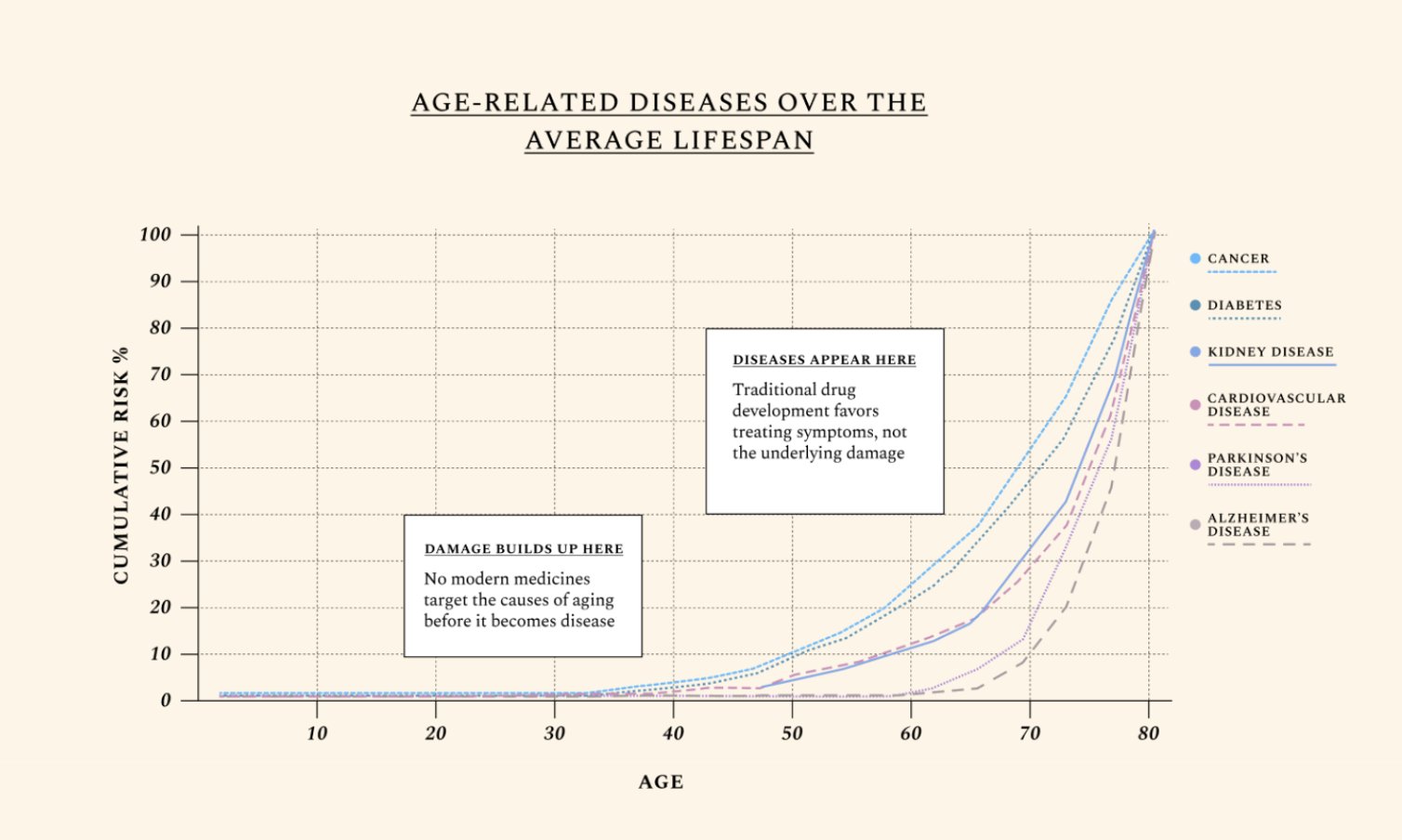
Biological Aging as Driver: Aging is the foundational risk factor for cancer (median diagnosis age 66), heart disease (65), and dementia (83).
Economic Ticking Clock: The US will soon spend 50% of its federal budget on the 65+ demographic, totaling approximately $3 trillion annually.
The “Productive Triangle”: Human earnings typically peak at age 58; biological aging currently truncates this period of maximum economic and intellectual contribution.
Cancer Cure Limitations: Eradicating all cancer would only add ~2 years to life expectancy because it does not address underlying biological decay.
The 5-Year Shift: Reducing biological age by 5 years would add $2 trillion annually to the US GDP—equivalent to adding the entire Canadian economy every year.
Ovarian Aging: Targeted research into ovarian health is identified as a high-value intervention for extending female healthspan and economic productivity.
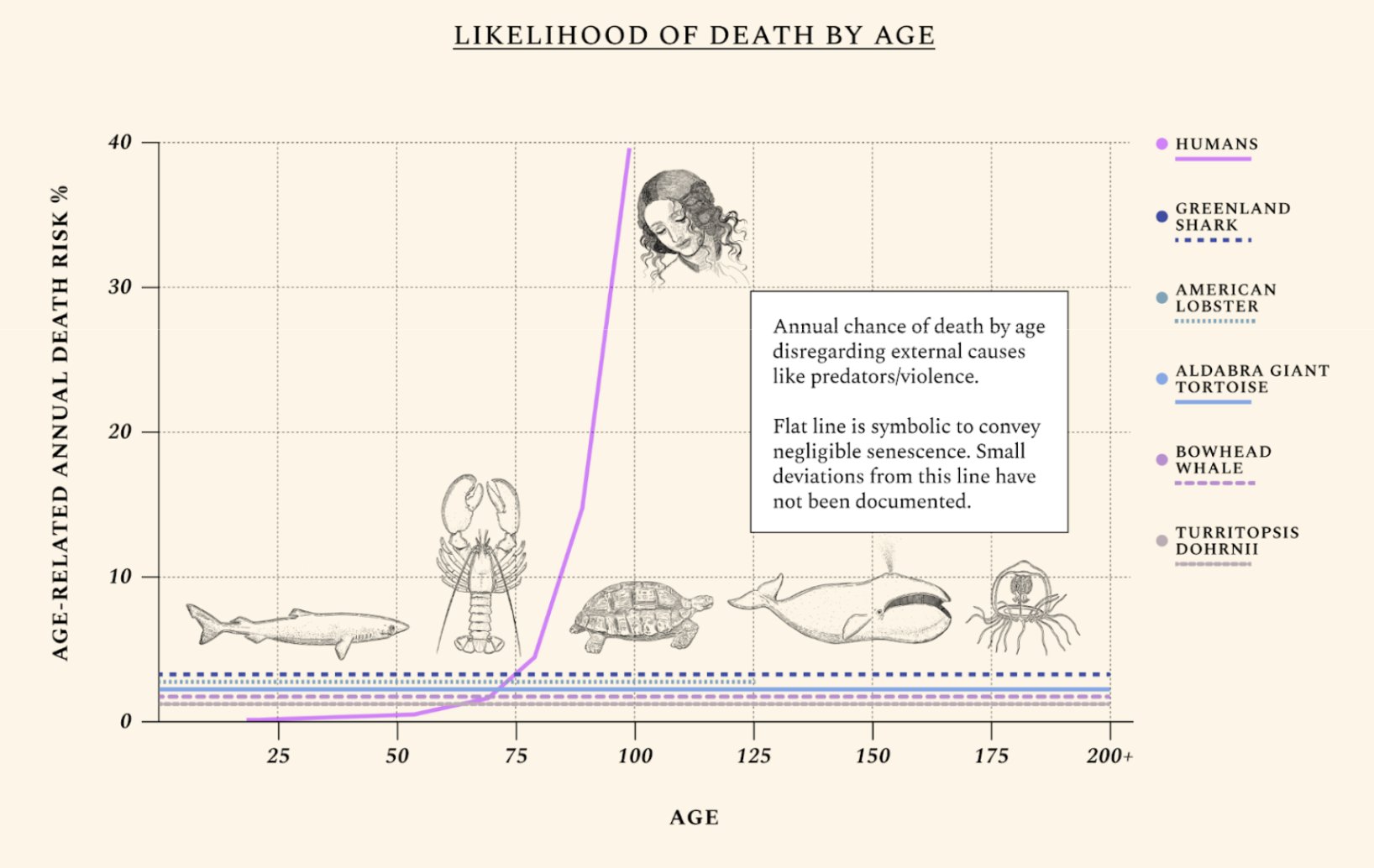
Nature’s Precedent: Species like bowhead whales (200-year lifespan) and American lobsters prove that biological senescence is not a fixed physical constant.
Genetic Evidence: A 1993 C. elegans study showed that manipulating just two genes could quadruple lifespan in a model organism.
Funding Disparity: Despite its impact, aging research receives a fraction of the funding directed toward individual diseases like cancer.
Translational Necessity: Moving beyond “unproven supplements” to rigorous clinical trials is required to validate human longevity interventions.
Inequity Acknowledgment: New biotechnologies will likely be distributed unequally at first, but global progress requires early adopters to subsidize development.
Moral Imperative: The author argues that slowing “slow death” is as ethically urgent as preventing “fast death” (e.g., car accidents or malaria).
Institutional Evolution: Arguments that society “isn’t ready” for longer lives are dismissed as circular; ethics and laws evolve to meet technological realities.
GeroScience (2023) reviews show exercise affects autophagy and mitochondrial function, though it doesn’t stop the “clock” entirely.
A (Meta-analyses)
Strong Support
Technical Deep-Dive
The transcript centers on the Geroscience Hypothesis: the idea that since aging is the primary driver of chronic disease, targeting the molecular mechanisms of aging (the “Hallmarks”) is more efficient than treating individual diseases post-manifestation.
Economic Modeling: The speaker utilizes the “Value of a Statistical Life” (VSL) framework. By slowing senescence, the model shifts the survival curve to the right (compression of morbidity), preserving human capital.
The Ovarian Factor: Ovarian senescence is one of the earliest “organ-specific” aging events in humans. The technical argument is that the loss of endocrine signaling post-menopause triggers systemic decline in inflammatory and metabolic pathways (, ).
Comparative Genomics: The mention of the bowhead whale refers to Peto’s Paradox—the observation that large, long-lived animals have suppressed cancer rates despite having more cells. This suggests that “longevity genes” involving enhanced DNA repair (, regulation) can be targeted.
Actionable Insights
Top Tier (High Confidence)
Prioritize Cardiovascular Health: Since heart disease is the primary “slow death” killer (median age 65), aggressive management of ApoB and blood pressure is the highest-leverage action for longevity.
Exercise as a Biologic: Utilize consistent resistance and aerobic training to modulate the “hallmarks of aging,” specifically mitochondrial health and insulin sensitivity.
Economic Planning for Longevity: Anticipate a longer “productive triangle.” Inverting the retirement model to account for a possible 100-year life is a practical necessity for entrepreneurs.
Experimental (Risk/Reward)
Biomarker Tracking: Monitor “predictive biomarkers” (e.g., epigenetic clocks or GlycanAge) to assess the rate of biological aging, though clinical utility for specific interventions is still being refined.
Focus on Reproductive Longevity: For women, seeking specialized care to manage the systemic impacts of perimenopause/menopause is a critical, often overlooked healthspan intervention.
Avoid
The “Cure One Disease” Fallacy: Avoid focusing solely on preventing one condition (like cancer) while ignoring systemic health; without addressing general aging, the “competing risk” of other diseases remains high.
Unregulated Longevity Supplements: The speaker explicitly warns against “unproven supplements” that lack rigorous clinical trial data (Level A/B evidence).
The Demographic and GDP Impacts of Slowing Biological Aging
Biological aging imposes significant socio-economic costs, increasing health expenses, reducing productivity, stalling population growth and straining social systems, culminating in reduced economic activity. We draw insights from interviews with 102 scientists working on aging biology and develop four macroeconomic simulations: slowing brain aging, slowing reproductive aging, and an overall delay in biological aging (including the novel concept of replacing aging). Our model is calibrated to represent how slowing biological aging manifests in the US economy and population through the channels of mortality, fertility, and productivity rates by age. We simulate the economic and demographic impacts of near-future advancements in aging science. We find that a one-year delay in brain aging alone could add $201 billion annually to US GDP. A one-year delay in overall biological aging could boost GDP by $408 billion annually, yielding $27.1 trillion in net present value in the long run.