Effects of blood pressure and antihypertensive drugs on osteoarthritis: a mendelian randomized study 2023
We found no evidence that systolic and diastolic blood pressure significantly affected osteoarthritis. However, among antihypertensive drugs, we observed a significant positive correlation between potassium-preserving diuretics and aldosterone antagonists and all osteoarthritis (OR: 0.560, 95% CI 0.406–0.772, P = 0.0004).
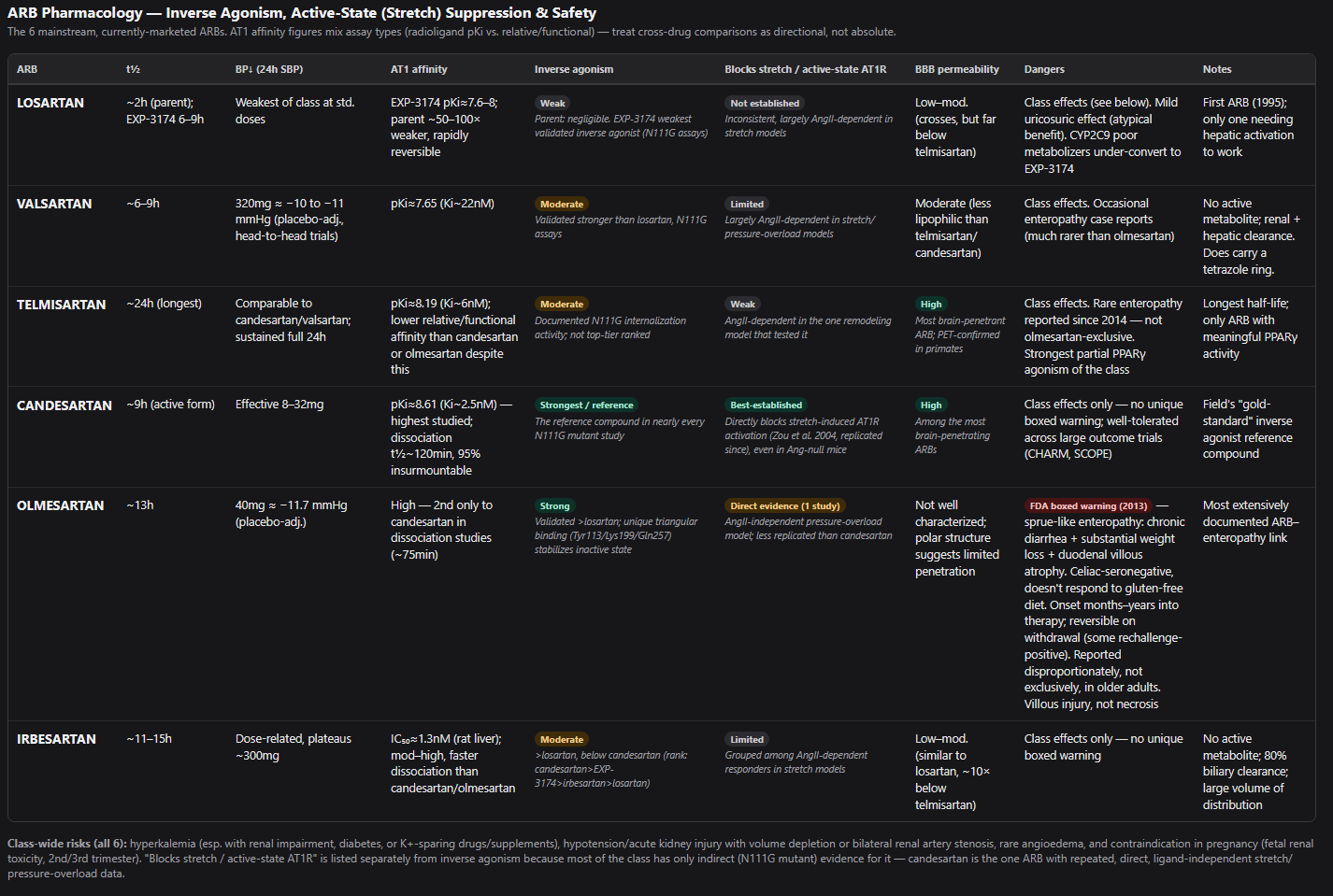
Previous studies suggest that the homeostasis regulation of chondrocytes depends on the local renin–angiotensin system. Thus, angiotensin-converting enzyme (ACE) inhibitors or angiotensin-II receptor blockers may have therapeutic potential for knee OA [6].
Furthermore, a systemic review [23] on losartan and Angiotensin-II receptor blockers indicates that Angiotensin-II receptor blockers have beneficial effects on chondrocytes in animals, suggesting a potential protective effect against Osteoarthritis.
The effects of losartan or angiotensin II receptor antagonists on cartilage: a systematic review 2022
Both in vitro and in vivo studies provide evidence to demonstrate beneficial effects of Ang II receptor antagonists on osteoarthritis and cartilage defect models across animal species.
At baseline, the CCBs group was with significantly higher pain score than the beta-blockers group (3.3 vs 1.3, p < .05), the angiotensin receptor blockers group (3.3 vs 1.4, p < .05), and the thiazide diuretics group (3.3 vs 1.6, p < .05) in male; the CCBs group was with significantly higher pain score than the beta-blockers group (3.8 vs 2.0, p < .01), and the angiotensin receptor blockers group (3.8 vs 2.2, p < .05) in female. The results of females at 36 months were similar to the baseline. Among the common antihypertensive drugs, CCBs were associated with high replacement rates, high pain scores, and less JSW in KOA patients.
None of those papers are great, but based on MR + models I would discard the FAERS article you sent @CronosTempi.
 - go figure (cross-posting):