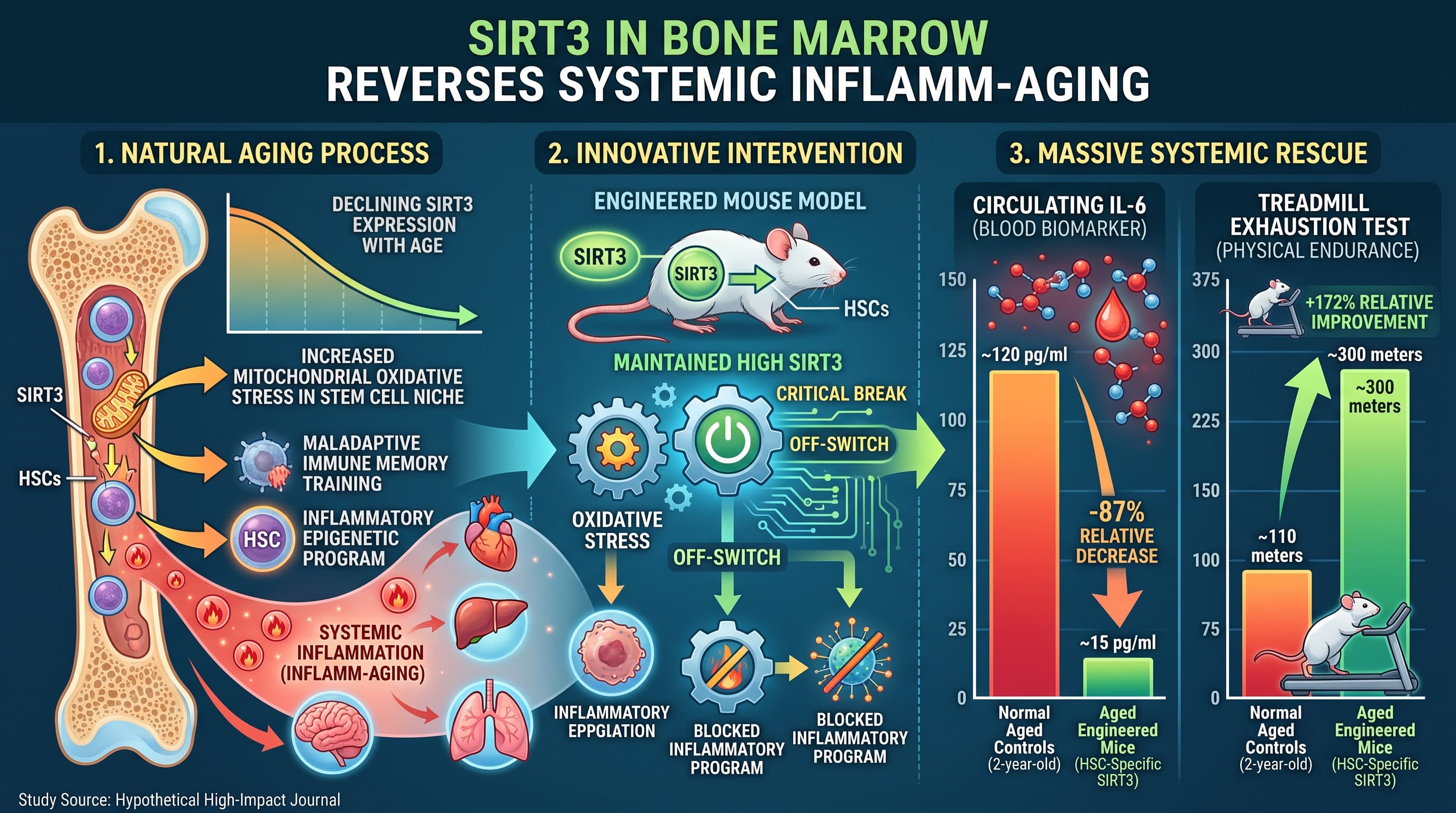
A new study demonstrates that the biological origin of age-related systemic inflammation lies within the hematopoietic stem cells of the bone marrow. Researchers found that the mitochondrial deacetylase SIRT3, which normally declines with age, acts as a critical brake against maladaptive immune memory, and overexpressing it in these stem cells prevents age-related tissue decline.
The underlying biological driver of systemic aging is chronic, sterile inflammation. While researchers have long observed rising circulating cytokines in older populations, the exact cellular origin of this phenomenon has remained elusive. This paper provides compelling evidence that hematopoietic stem cells are a primary source of this aging cascade. Over a lifetime, these stem cells are exposed to repeated inflammatory insults and stress signals. In response, they undergo epigenetic rewiring to launch faster, stronger immune responses in the future, a phenomenon known as trained immunity. While beneficial for fighting acute infections in youth, this immune memory becomes highly maladaptive in older age, resulting in a persistent overproduction of myeloid cells that flood distant organs with inflammatory signals.
The research team identified the mitochondrial enzyme SIRT3 as the critical off-switch for this maladaptive training. SIRT3 expression naturally drops as organisms age, leading to increased mitochondrial oxidative stress within the stem cell niche. This metabolic shift forces the stem cells to adopt an inflammatory epigenetic program. By engineering mice to maintain high SIRT3 expression specifically in their hematopoietic stem cells, the researchers successfully blocked this aging response. The stem cells of these engineered mice produced progeny with a regulatory, rather than inflammatory, phenotype.
The downstream physiological effects of correcting this stem cell defect were massive. Restoring SIRT3 in the bone marrow did not just improve blood biomarkers; it actively rescued distant tissue function. Aged mice with SIRT3 overexpression exhibited significantly fewer inflammatory macrophages infiltrating their muscles and lungs. Consequently, they maintained youthful muscle endurance, preserved cognitive function, and showed improved glucose tolerance compared to normal aged mice. When researchers transferred just the spleen cells from old normal mice into young mice, the young mice rapidly developed systemic inflammation and muscle weakness. This definitively proves that circulating immune cells serve as the primary vector for age-related physical decline.
Actionable Insights
The fundamental takeaway is that the immune system’s memory of past stress turns maladaptive as we age, driving the chronic inflammation that degrades tissue function. For individuals optimizing their healthspan, this highlights the necessity of preventing mitochondrial dysfunction in the immune compartment.
The magnitude of this intervention is substantial. In the study, two-year-old mice with maintained SIRT3 expression exhibited an absolute reduction in circulating IL-6 from approximately 120 pg/ml down to 15 pg/ml, representing an 87 percent relative decrease. The phenotypic rescue was equally striking. In treadmill exhaustion tests, the aged engineered mice ran for approximately 300 meters compared to just 110 meters for normal aged controls, which translates to a 172 percent relative improvement in physical endurance.
While direct genetic engineering of stem cells is not yet clinically available, maintenance of cellular NAD+ pools via precursors like niacinamide is mechanistically adjacent to optimizing sirtuin activity. Monitoring downstream inflammatory biomarkers like IL-6 and high-sensitivity C-Reactive Protein provides a practical method to track maladaptive immune states within a Medicine 3.0 prevention framework. Furthermore, the profound preservation of treadmill endurance in these models strongly supports maintaining high-frequency cardiovascular conditioning to offset age-related macrophage infiltration and functional decline in muscle tissue.
Context and Source
- Open Access Paper: Trained immunity links hematopoietic stem cell aging to aging-associated inflammation, Published: 16 July 2026.
- Institution: University of California, Berkeley; Buck Institute for Research on Aging; Radboud University Medical Center; University of Bonn, among others.
- Country: United States, Netherlands, Germany
- Journal: Nature Aging
- Impact Evaluation: The impact score of this journal is 16.6, evaluated against a typical high-end range of 0 to 60 for top general science, therefore this is a High impact journal.