Cardiovascular Inflammation: a Symptom of Unresolved Molecular Entropy, Not the Root Cause

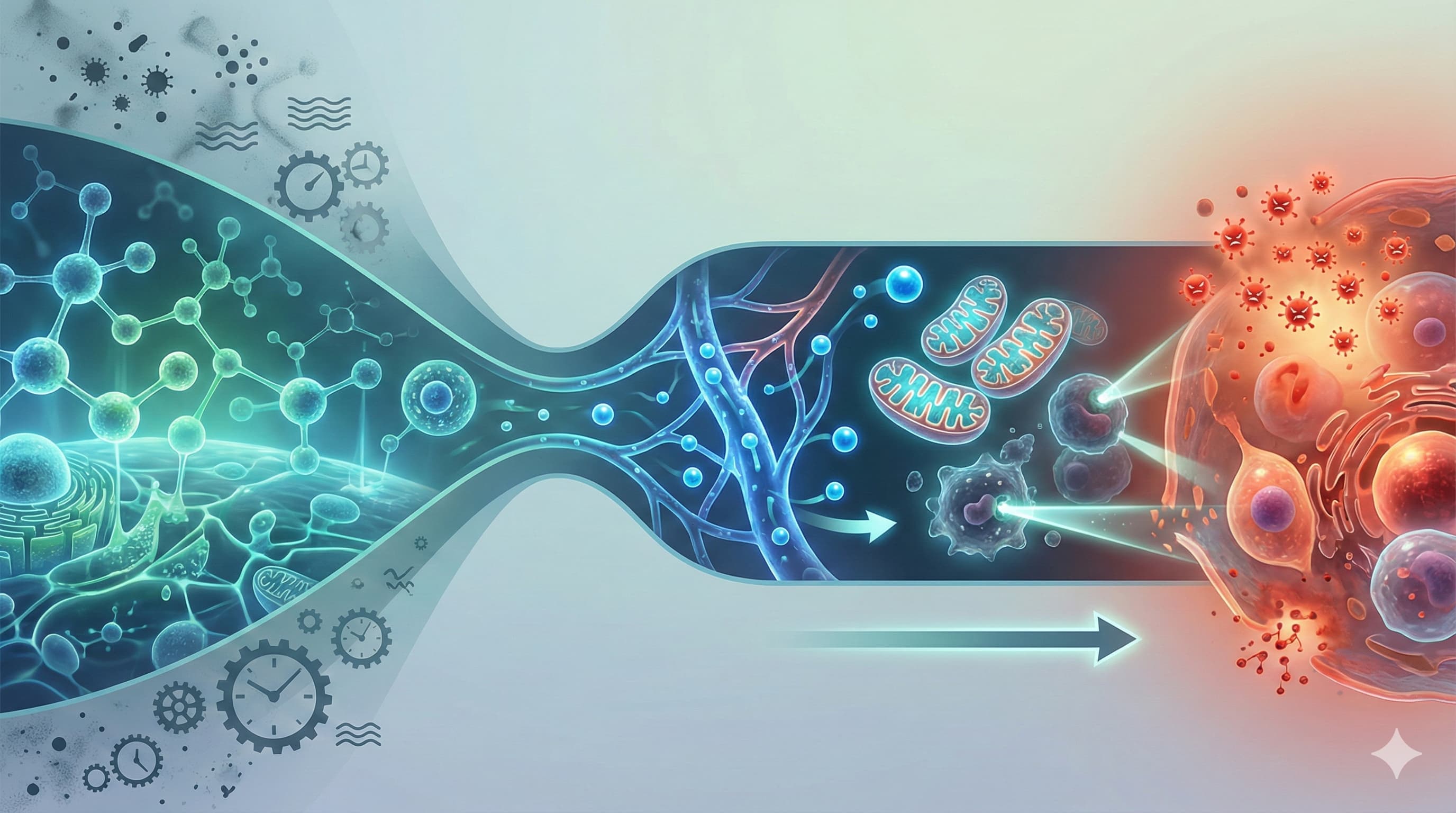
Cardiovascular disease (CVD) has long been framed as an inflammatory condition, largely driven by the assumption that immune system dysfunction directly precipitates vascular pathology. However, this paper fundamentally reorients that narrative. Rather than viewing inflammation as the primary driver of CVD, the authors posit that chronic inflammation is a downstream biological response to cumulative, unmitigated molecular and cellular damage. This damage is driven by environmental stressors and intrinsic age-related entropy.

The core thesis is that initial inflammatory signals function as a vital resilience mechanism meant to resolve cellular stress. As the organism ages, the burden of stochastic molecular damage—such as genomic instability, protein misfolding, and mitochondrial dysfunction—overwhelms cellular repair mechanisms. Cells subsequently enter senescence or undergo programmed cell death, releasing danger-associated molecular patterns (DAMPs) and adopting a senescence-associated secretory phenotype (SASP). This constant secretion of cytokines acts as an SOS signal to surrounding tissues, locking the microenvironment in a state of chronic, maladaptive inflammation that ultimately drives atherosclerosis and impairs tissue perfusion.

For longevity interventions, this suggests that merely suppressing inflammatory cytokines (like IL-1β or IL-6) treats the symptom, not the disease. Actionable longevity strategies must target the upstream drivers: resolving microvascular tissue hypoperfusion, clearing senescent cells, enhancing mitochondrial quality control, and upregulating nitric oxide (NO) bioavailability. The authors highlight multiple pharmacological pathways, from NAD precursors to senolytics, that address these primary metabolic and proteostatic failures.

Study Context & Impact:

1 Like

Mechanistic Deep Dive

The authors systematically dismantle the origins of cardiovascular “inflammageing” through specific longevity pathways:

  • Mitochondrial Dynamics & cGAS-STING: Chronic microvascular hypoperfusion increases energy resistance, leading to reductive stress and reactive oxygen species (ROS). Damaged mitochondria release oxidized cardiolipin and mitochondrial DNA (mtDNA) into the cytosol. This mtDNA is sensed by the cGAS-STING pathway and the NLRP3 inflammasome, triggering massive interferon and IL-1β responses.

  • Proteostasis (UPR & ISR): Hypoxia in vascular tissue triggers the Unfolded Protein Response (UPR) and the Integrated Stress Response (ISR). Phosphorylation of eIF2α halts general protein translation but selectively allows translation of stress transcription factors like ATF4. This drives the expression of metabolic stress markers like GDF15 and pro-inflammatory cytokines like IL-6.

  • Cellular Senescence & Plaque Dynamics: Atherosclerosis is portrayed as a failure of resilience. Endothelial cells and vascular smooth muscle cells (VSMCs) subjected to shear stress and oxidized LDL undergo senescence. Senescent VSMCs lose their contractile phenotype, secrete matrix metalloproteinases (MMPs) that degrade the extracellular matrix (ECM), and destabilize the arterial plaque cap.

  • Organ-Specific Aging Priorities: A critical finding of their proteomic meta-analysis is that many circulating “CVD biomarkers” (e.g., GDF15, MMP12, CD302) are actually synthesized in non-cardiovascular tissues, primarily the kidney, liver, lung, and salivary glands. This strongly suggests that vascular aging is heavily influenced by systemic organ failure and peripheral SASP burdens.

Novelty

This paper successfully merges the “lipid hypothesis” and “inflammation hypothesis” of atherosclerosis by placing cellular senescence and molecular damage at the apex of the causal chain. It significantly reclassifies widely used blood biomarkers: molecules like GDF15 and various MMPs are not simply immune markers, but direct readouts of mitochondrial stress, ECM degradation, and systemic SASP. It also shifts focus toward chronic, paucisymptomatic tissue hypoperfusion as an insidious, systemic driver of the biological aging process.

Critical Limitations

  • Translational Uncertainty: While the paper expertly outlines upstream targets (e.g., restoring NO signaling via PDE5 inhibitors or targeting mitochondria with Urolithin A) , the clinical translation of broadly suppressing the UPR/ISR or SASP in humans remains fraught with off-target risks, including impaired acute healing or compromised tumor suppression.

  • Methodological Weaknesses: The proteomic analysis relies on associative epidemiological data. While it identifies proteins linked to cardiovascular outcomes in at least six studies, correlation does not definitively prove that these specific circulating proteins are the causal agents of the disease rather than mere bystanders. [Confidence: Medium]

Pathways the Authors Suggest Targeting:

The authors identify distinct pharmacological pathways to counter the age-related accumulation of molecular damage, metabolic failure, and proteostatic stress that drive cardiovascular inflammation. These approaches intervene upstream of the inflammatory cascade.

1. Senotherapeutics: Targeting Cellular Senescence and SASP

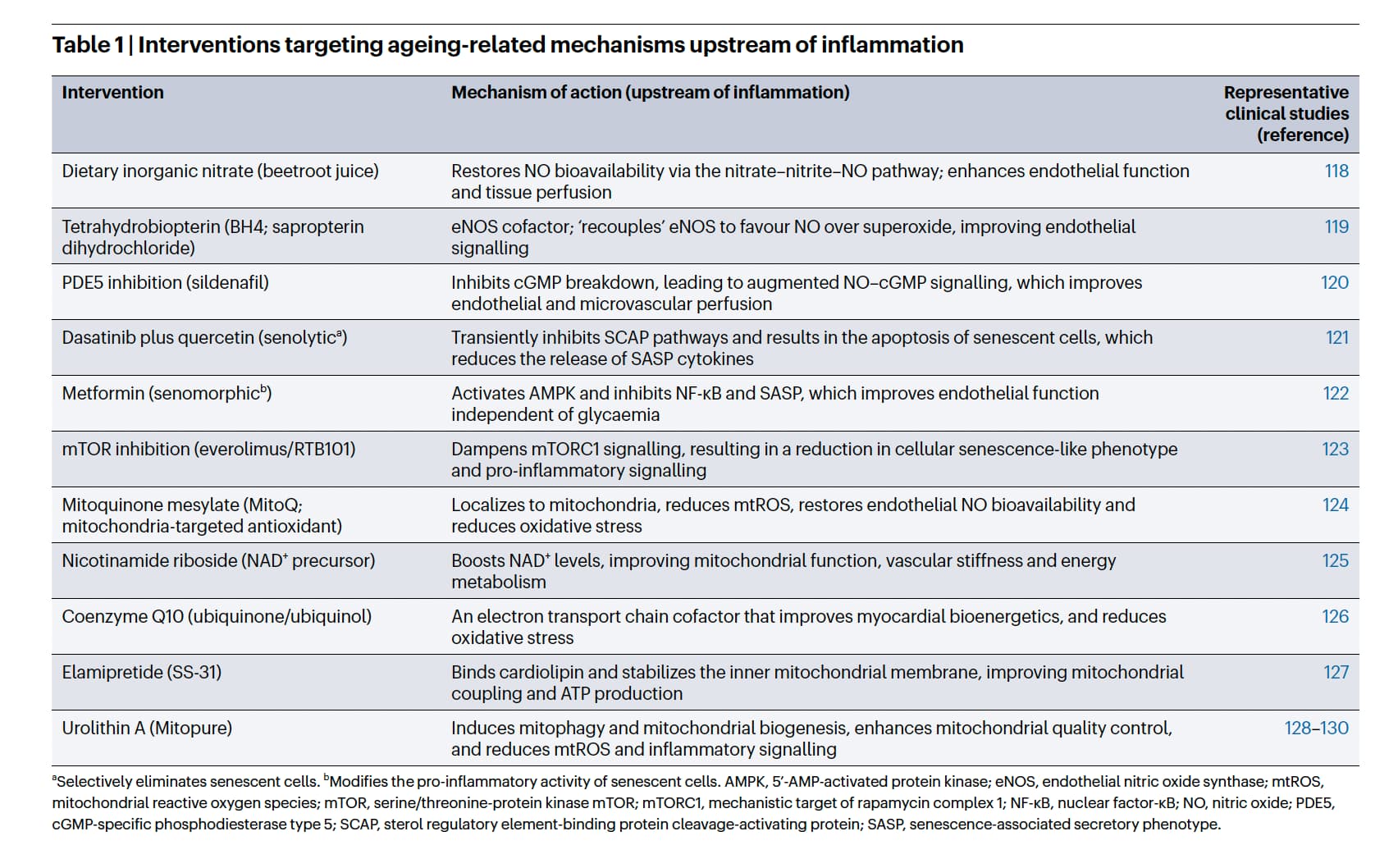
  • Senolytics (Dasatinib plus Quercetin): Selectively eliminate senescent cells by transiently inhibiting sterol regulatory element-binding protein cleavage-activating protein (SCAP) pathways. This induces apoptosis in damaged cells, directly reducing the systemic release of senescence-associated secretory phenotype (SASP) cytokines.
  • Senomorphics (Metformin): Modifies the pro-inflammatory activity of existing senescent cells rather than eliminating them. It activates 5’-AMP-activated protein kinase (AMPK) and inhibits nuclear factor-ÎşB (NF-ÎşB) and the SASP, which improves endothelial function independent of blood glucose levels.
  • mTOR Inhibition (Everolimus/RTB101): Dampens mechanistic target of rapamycin complex 1 (mTORC1) signaling. This suppression mitigates the cellular senescence-like phenotype and pro-inflammatory signaling cascades linked to proteostatic failure.

2. Mitochondrial Quality Control and Bioenergetics

  • Mitophagy Activators (Urolithin A / Mitopure): Induce mitophagy (the clearance of defective mitochondria) and stimulate new mitochondrial biogenesis. This enhances overall mitochondrial quality control, lowering mitochondrial reactive oxygen species (mtROS) and blunting subsequent inflammatory signaling.
  • NAD+ Precursors (Nicotinamide Riboside): Elevate intracellular NAD+ levels to optimize mitochondrial function, improve cellular energy metabolism, and reduce vascular stiffness.
  • Mitochondria-Targeted Antioxidants (Mitoquinone mesylate / MitoQ): Localize directly within mitochondria to neutralize mtROS, reduce local oxidative stress, and restore endothelial nitric oxide (NO) bioavailability.
  • Inner Mitochondrial Membrane Stabilizers (Elamipretide / SS-31): Bind to cardiolipin to stabilize the inner mitochondrial membrane. This structural reinforcement improves mitochondrial coupling and maximizes ATP production.
  • Electron Transport Chain Cofactors (Coenzyme Q10 / Ubiquinone / Ubiquinol): Function as cofactors in the electron transport chain to improve myocardial bioenergetics and mitigate oxidative stress.

3. Enhancing Tissue Perfusion and Endothelial Function

  • PDE5 Inhibition (Sildenafil): Inhibits cGMP breakdown, resulting in augmented NO-cGMP signaling. This cascade improves both endothelial and microvascular perfusion, addressing the hypoxic tissue stress that initiates the Integrated Stress Response (ISR).
  • GLP-1 Receptor Agonists (Liraglutide, Semaglutide): Reduce chronic inflammation and cardiovascular pathology by augmenting endothelial function and microcirculation. These effects operate via both NO-dependent mechanisms (such as activating the AMPK-PI3K-Akt-eNOS pathway) and NO-independent pathways.
  • Dietary Inorganic Nitrate (Beetroot juice): Restores NO bioavailability through the nitrate-nitrite-NO pathway, enhancing endothelial function and overall tissue perfusion.
  • eNOS Cofactors (Tetrahydrobiopterin / BH4): “Recouples” endothelial nitric oxide synthase (eNOS) to favor the production of NO over damaging superoxide radicals, thereby repairing endothelial signaling.

1 Like

Actionable Intelligence

The Translational Protocol: Urolithin A (UA)

We will focus this protocol on Urolithin A, which the authors highlight as a primary clinical intervention for mitochondrial quality control and mitigating upstream drivers of inflammation.

  • Human Equivalent Dose (HED): Preclinical mouse models frequently demonstrate muscle and longevity benefits at an oral dose of 50 mg/kg/day.
    • Math (FDA BSA Normalization): 50 mg/kgĂ—(3/37)=4.05 mg/kg. For a standard 70 kg human, the theoretical HED is 283.5 mg/day.
    • Correction for human metabolism: Current human clinical trials successfully utilize 500 mg to 1,000 mg daily [ClinicalTrials.gov]. This indicates that standard allometric scaling significantly underestimates the effective human dose, largely due to extensive human Phase II metabolism (glucuronidation and sulfation) in the enterocytes and liver [PubChem].
  • Pharmacokinetics (PK/PD): * Half-life: ~17–22 hours.
    • Bioavailability: Reliance on dietary precursors (ellagitannins from pomegranates or walnuts) is highly inefficient; only 30-40% of humans possess the necessary gut microbiota to convert these to UA. Direct oral supplementation (e.g., Mitopure) circumvents this bottleneck, increasing plasma UA levels roughly 6-fold compared to diet. UA is lipophilic and successfully penetrates the blood-brain barrier (BBB) [ADDF Report].
  • Safety & Toxicity:
    • NOAEL: Extremely high. >3,451 mg/kg bw/day in male rats (the highest dose tested in a 90-day oral study) [PubMed].
    • LD50: Not definitively reached in standard acute toxicity assays; the FDA has granted it Generally Recognized as Safe (GRAS) status.
    • Phase I safety profile: Clinically proven to be well-tolerated up to 1,000 mg/day for 4 months in older adults with no serious adverse events reported.
    • CYP450 / Organ Signals: UA may interact with CYP3A4. In D-galactose-induced aging models, it exerts active hepatoprotective and nephroprotective effects by reducing malondialdehyde (MDA) [RSC Advances]. Critical Caveat: UA must be approached with extreme caution in immunosuppressed or renal transplant patients, as its effects on calcineurin inhibitor metabolism and transplanted organ physiology are completely unverified.

Biomarker Verification

Target engagement can be verified via specific downstream blood panels. Successful intervention should yield:

  • Systemic Markers: Reduced plasma ceramides (a validated CVD risk predictor) and reduced C-reactive protein (CRP).
  • Metabolic Markers: Favorable modulation of plasma acylcarnitines, indicating improved mitochondrial turnover.
  • Cellular Markers: Advanced flow cytometry will show increased mitochondrial mass and reduced inflammatory cytokine expression (IL-6, TNF-α) specifically in CD3+/CD8+ T-cells [ASCO Abstract]. Muscle biopsies confirm the upregulation of mitophagy gene signatures.

Feasibility & ROI

  • Sourcing: Broadly available as an over-the-counter dietary supplement, most notably under the patented Mitopure formulation (Amazentis/Timeline Nutrition).
  • Cost vs. Effect: Approximately $100–$150/month for the clinical dose of 500 mg–1,000 mg/day. The ROI is high for adults (50+) presenting with declining muscular endurance, elevated baseline CRP, or metabolic syndrome. The marginal gain for healthy, highly active individuals under 35 remains unproven and is likely low.

The Strategic FAQ

1. Are the elevated levels of circulating SASP markers (like GDF15) truly causal in atherosclerosis, or are they purely compensatory bystanders to the real driver (hypoxia)? Based on the paper, they initially function as a compensatory resilience mechanism to alert surrounding tissues of metabolic or mitochondrial stress. However, chronic, unresolved secretion becomes maladaptive, actively degrading the extracellular matrix and compromising plaque caps, making them secondary drivers of the disease.

2. How do we accurately measure “chronic microvascular hypoperfusion” in asymptomatic patients before irreversible fibrosis occurs? This remains a critical clinical blind spot. The authors admit that clinical signs only appear in severe states, and current diagnostic tools—such as circulating lactate or sidestream dark-field imaging—are either biologically insensitive to mild hypoxia or not user-friendly in standard clinical practice.

3. If we successfully clear senescent endothelial cells using senolytics like Dasatinib + Quercetin, how does the vascular tissue regenerate without exhausting the local stem cell niche? The paper does not resolve this paradox. It notes that senescent endothelial cells impair regenerative capacity, but it is a known biological trade-off that aggressively clearing senescent cells requires a competent progenitor pool to replace them, which is itself diminished by age-related entropy.

4. Urolithin A induces mitophagy, but could chronic, high-dose administration trigger excessive mitochondrial depletion in energy-demanding tissues like the heart? Phase I trials and preclinical data indicate UA acts as an optimizer, clearing defective mitochondria and stimulating biogenesis without causing pathological depletion. However, robust data beyond 4 months of continuous human use is currently absent.

5. Is the accumulation of oxidized LDL the initiator of endothelial senescence, or does pre-existing, stochastically driven endothelial senescence allow for the accumulation of oxidized LDL? It is a pathological feedback loop. Initial stressors like ROS and turbulent blood flow promote LDL entry and oxidation in the subendothelial space. This insult pushes endothelial cells into senescence, upregulating adhesion molecules (ICAM1) that recruit macrophages to ingest oxLDL, turning them into foam cells.

atherosclerotic plaque formation, AI generated

6. Given the Unfolded Protein Response (UPR) and Integrated Stress Response (ISR) are essential for handling acute proteostatic stress, wouldn’t chronically suppressing them to lower inflammation increase the risk of protein aggregation diseases? Absolutely. The authors emphasize that these stress response pathways are protective. Longevity interventions must aim to resolve the upstream damage (e.g., hypoxia or nutrient stress) rather than directly silencing the UPR/ISR, which could lead to fatal cellular dysfunction.

7. Your proteomic analysis highlights non-cardiovascular tissues (kidney, liver) as major sources of CVD biomarkers. Does this mean targeting vascular tissue alone is a fundamentally flawed approach to CVD? Yes. The meta-analysis reveals that genes encoding major CVD risk proteins are highly expressed in the kidney, liver, and lungs. This indicates that vascular aging is inextricably linked to systemic organ failure and peripheral SASP burdens.

8. How do NO-boosting interventions (like PDE5 inhibitors) address the root cause of macromolecular damage rather than just temporarily masking the hemodynamic resistance? By dilating arterioles and improving microvascular tissue perfusion, PDE5 inhibitors restore the flow of electrons to oxygen in the mitochondria. This alleviates the reductive stress and ROS leakage that directly initiates the inflammatory cascade.

10. Does chronological age dictate the point of no return for these resilience mechanisms, or is the “entropic threshold” entirely determined by biological damage? It is entirely driven by biological entropy. While chronological age correlates with damage, the threshold at which resilience mechanisms fail and transition into maladaptive inflammation is dictated by the cumulative burden of stochastic cellular stressors, environmental insults, and un-repaired molecular damage.
1 Like