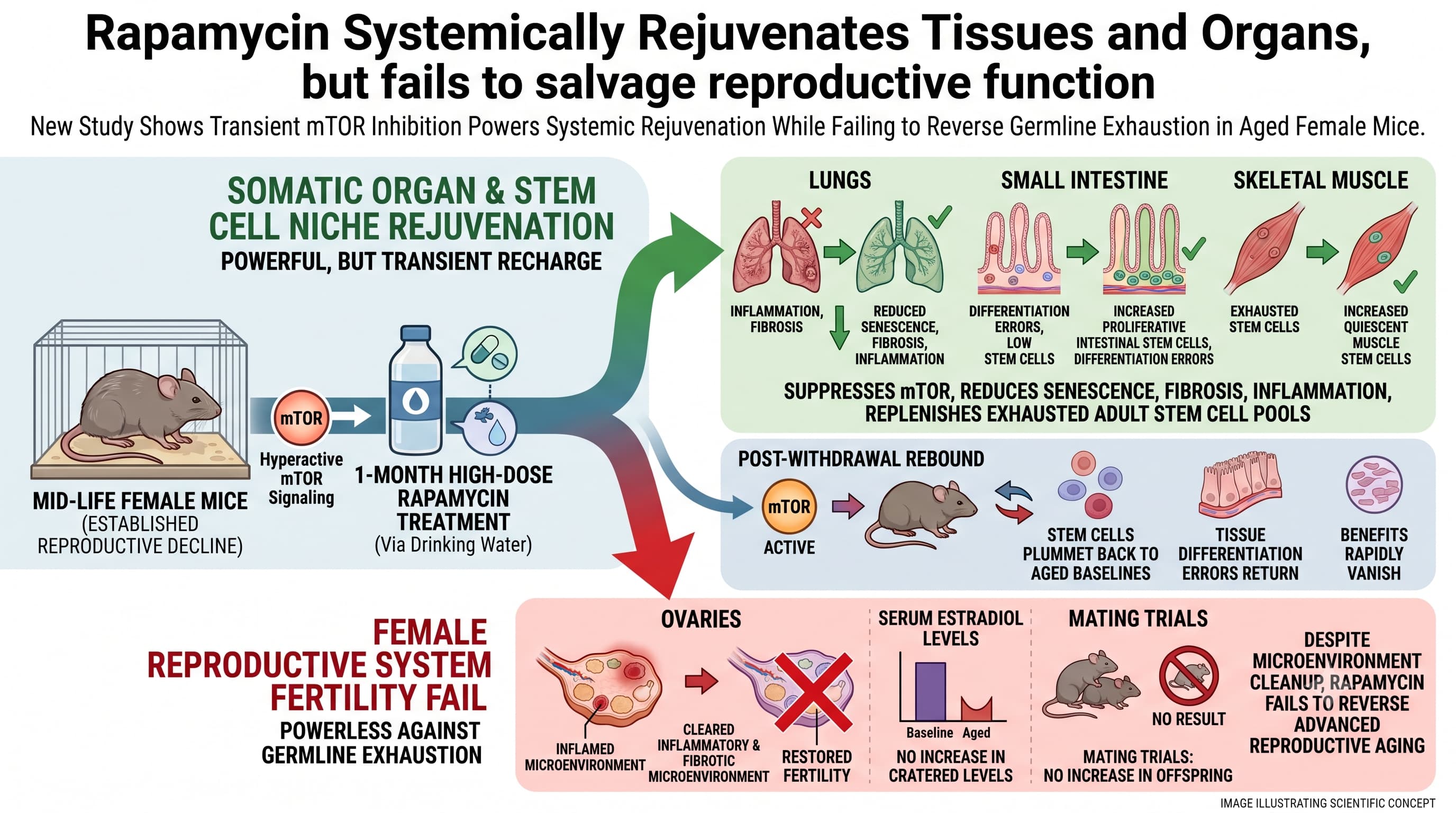
A new study demonstrates that transient mid-life rapamycin treatment in female mice systemically rejuvenates somatic organs and stem cell niches by suppressing hyperactive mTOR signaling. However, the intervention did not salvage fertility or baseline endocrine function once reproductive decline is established, and the somatic benefits rapidly vanish upon drug withdrawal.
For women, the perimenopausal transition represents a period of accelerated physiological decline, marking a sharp increase in susceptibility to age-associated chronic diseases. At the center of this systemic breakdown is the mechanistic target of rapamycin (mTOR) pathway, a master nutrient-sensing hub that drives cellular hypertrophy, translation, and eventual exhaustion when chronically overactivated. While previous research validated that inhibiting mTOR can preserve the ovarian reserve in young or middle-aged mice, a critical question remained: can it reverse damage once the reproductive clock has already run down?
To investigate, researchers targeted 10-month-old female mice. At this life stage, the mice exhibit irregular estrous cycles equivalent to human perimenopause, preceding overt systemic frailty. Initial transcriptomic screens confirmed that both the oocytes and their supporting granulosa cells exhibited hyperactive mTOR signaling, characterized by a major upregulation of ribosome biogenesis and cytoplasmic translation genes.
The team administered a high dose of rapamycin via drinking water for exactly one month. The molecular results across somatic tissues were highly encouraging. Rapamycin successfully suppressed downstream mTOR targets, leading to a sweeping reduction in cellular senescence, fibrosis, and chronic inflammation across the lungs, small intestine, and skeletal muscle. More profoundly, the drug rescued exhausted adult stem cell pools. It replenished quiescent muscle stem cells, increased proliferative intestinal stem cells, and corrected age-related errors in tissue differentiation—such as mitigating the skewed, inflammatory cellular shifts typically seen in the aging gut.
However, this systemic rejuvenation hit a hard boundary at the germline. Despite clearing out the inflammatory and fibrotic microenvironment of the ovaries, rapamycin failed to restore female fertility or elevate cratered serum estradiol levels. Mating trials yielded no increase in offspring, proving that advanced reproductive aging cannot be engineered backward through late-stage mTOR inhibition.
Compounding this limitation, a subsequent one-month drug withdrawal period revealed that the somatic clock immediately wound back up. Once rapamycin was removed, mTOR signaling rebounded, the newly updated stem cell populations plummeted back to aged baselines, and tissue differentiation errors returned. The study reveals an important dichotomy: mid-life mTOR inhibition can powerfully—but transiently—recharge systemic tissue regeneration, but it is entirely powerless against the permanent exhaustion of the female reproductive system.
Actionable Insights
-
The Reproductive Timing Window: mTOR inhibition via rapamycin must be initiated well before the onset of advanced reproductive decline if the preservation of fertility or ovarian endocrine architecture is the primary objective. Late-stage interventions fail to rescue oocyte quality or serum estradiol (E2) levels.
-
Somatic Healthspan Rejuvenation: For non-reproductive tissue longevity (lung, gut, skeletal muscle), initiation during the perimenopausal window remains highly effective at clearing senescent cells and reversing stem cell exhaustion.
-
The Transience of Short-Term Blocks: Biological benefits are highly dependent on sustained pathway inhibition. A 30-day intervention provided clear microenvironmental optimization, but a 30-day washout fully reset tissues to an aged baseline.
-
Quantifiable Real-World Benefits (Effect Sizes): Clinicians and biohackers should note the substantial magnitude of specific tissue improvements during active treatment:
- Ovarian Senescence: A relative ~75% reduction in SA-β-gal positive area (dropping from ~24% to ~6%).
- Tissue Fibrosis: A relative ~55% reduction in ovarian fibrotic area (dropping from ~9% to ~4%).
- Stem Cell Density: A ~44% increase in functional intestinal stem cells (LGR5+ cells per crypt) and a ~45% increase in quiescent muscle stem cells (PAX7+ density).
Source:
- Paywalled Paper: Short-Term Rapamycin Mitigates the Senescence of Ovaries and Somatic Stem Cells in Multiple Organs in Reproductively Aged Mice , 18 February 2026.
- Institutions: State Key Laboratory of Medicinal Chemical Biology, Nankai University, Tianjin, China; Department of Cell Biology and Genetics, Nankai University, Tianjin, China; Department of Gynecology, Tianjin Union Medical Center, The First Affiliated Hospital of Nankai University, Tianjin, China.
- Journal Name: The FASEB Journal.
- Impact Evaluation: The impact score of this journal is 4.3, evaluated against a typical high-end range of 0–60+ for top general science, therefore this is a Medium impact journal.