Just a thought…
If using rapamycin affectively makes us systemically younger, do
…large-scale studies and indicate statin use in the elderly reduces all-cause mortality independent of lipid levels.
actually matter?
Just a thought…
If using rapamycin affectively makes us systemically younger, do
…large-scale studies and indicate statin use in the elderly reduces all-cause mortality independent of lipid levels.
actually matter?
I believe in statins because they helped me keep my lipids in control when I was overweight.
For years I took statins even after I had lost weight and my lipids were in the medium to low normal range. After I started taking rapamycin I also started looking at other things I was taking, like a statin, etc. After reading many articles in PubMed etc. I decided that statins maybe were not the best choice at my age. There are many elderly people who need to be on statins because of their “comorbidities”, namely obesity. But for the fit, I don’t think they are necessary or life-extending.
Most of the studies show benefits for the elderly in the “high-risk” group.
There are a multitude of studies that basically say the same thing as these two studies:
"The side effects of the treatment are more likely to occur in elderly patients, due to their multiple associated comorbidities and drugs that may interact with statins. In elderly people, the benefits and disadvantages of the treatment with statins should be put in balance, especially in those receiving high doses of statins.’
“The possible side effects of statin therapy are diabetes mellitus, myopathy, and rhabdomyolysis, hepatotoxicity.”
“One must balance the benefits (secondary atherosclerotic cardiovascular prevention, stroke reduction, decreased morbidity and mortality) with the potential risks to the elderly (altered metabolism, comorbidities, polypharmacy and drug-drug interactions, side effects, cognitive limitations, and cost).”
This can be important for people who are indicated to take actual medications.
Lowering apoB isn’t the whole story, there might be other mechanisms in play like plaque stabilization reducing events more so than only apoB reduction.
This means that diet, supplements and lifestyle isn’t a replacement for medications in those cases. But I am not a doctor but this is what I’ve heard from Dr. Avi.
Millions of people take melatonin without a prescription in the United States because of the Dietary Supplements Health and Education Act, not because of anything about its safety. Melatonin requires a prescription in the UK, Japan, and many European countries.
A bag of Earl Grey tea contains 2 g of total herbal material, of which roughly 500 mg is bergamot — and you don’t actually eat the contents of the bag, but only a brief low-temperature water extraction. Bergamot supplements are dosed at 500-1000 mg bergamot 25:1 extract, which is equivalent to 12,500-25,000 mg of bergamot.
So, what? Show me some news of people suffering effects from taking bergamot.
You can have the last word. It’s a waste of time discussing this with you.
A similar thing is said about metformin. That life extension is independent of its blood glucose-lowering effect.
The thing about statins that is worrying to me is that there may be some increase in dementia amount the elderly taking it. I would rather have a heart attack than descend into dementia. I feel I am already taking a plethora  of life-extension drugs and supplements so I can probably skip the statins.
But …
I am using Amla Powder ( whole fruit ), do you know the equivalent of powder to extract regarding the dose?
I was getting great results with Amla powder taking one teaspoon twice a day. The biggest change was seeing my liver values drop (AST, ALT etc). You have to mix it with something to cover the taste, I would use pomegranate juice and a little sodium bicarbonate to make it foam up, then down the hatch.
Yes, frustrating isn’t it? Because I don’t need statins anymore to keep my lipids in the “normal” range, I have stopped taking a statin. I don’t think there is any reason that younger people who need a statin not use them. In any case, there is not much evidence either way.
“However, the findings are conflicting, with some studies suggesting a potential neuroprotective effect of statins, while others report acute memory loss in the first thirty days following exposure to statin lipid-lowering drugs”
https://www.nature.com/articles/s41598-023-35258-6
Hi @desertshores I started citrus bergamot too as my lipids went out of range after 3 months of 5mg per week rapamycin. Only just started and will take another blood test in 3 months.
I note that bergamot polyphenols includes naringin certainly for the brand I take:
I believe Naringenin inhibits the enzymes Cytochrome P450 (3A4) or (CYP3A4) which in turn could increase the absorption of rapamycin. In the absence of an easily accessible and affordable rapamycin blood test in my part of the world I am wondering if I should avoid taking bergamot on the day I take rapa out of an abundance of caution.
Since the effects of the inhibition of CYP3A4 can last 3 days or more, I would expect some increased absorption for several days after taking citrus bergamot.
I have been taking various doses of up to 20mg with olive oil and up to 12 grams with grapefruit juice. The worst side effect I had was mild diarrhea after large doses.
I can get a rapamycin blood test, but it is very inconvenient for me as Labcorp is some distance and poorly run in my area. My current thinking is to check my lipids periodically to make sure they are in the “normal” range. Currently, I am taking 5 mg with olive oil.
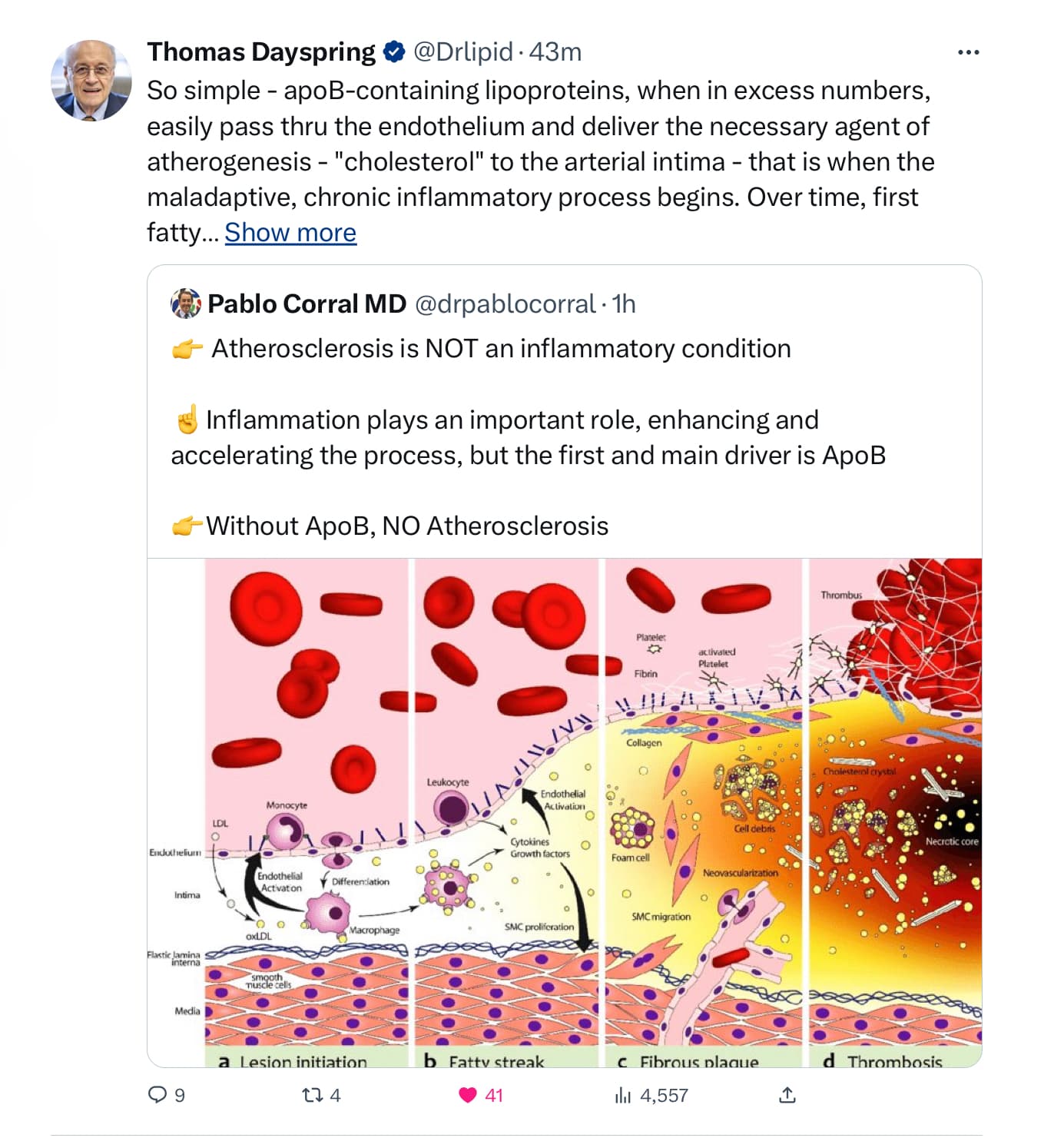
Reducing APoB seems to be job 1. Mine was surprisingly high.
https://twitter.com/drlipid/status/1667912480218136576?s=61&t=07_80n6oZJZB6WcbBibpig
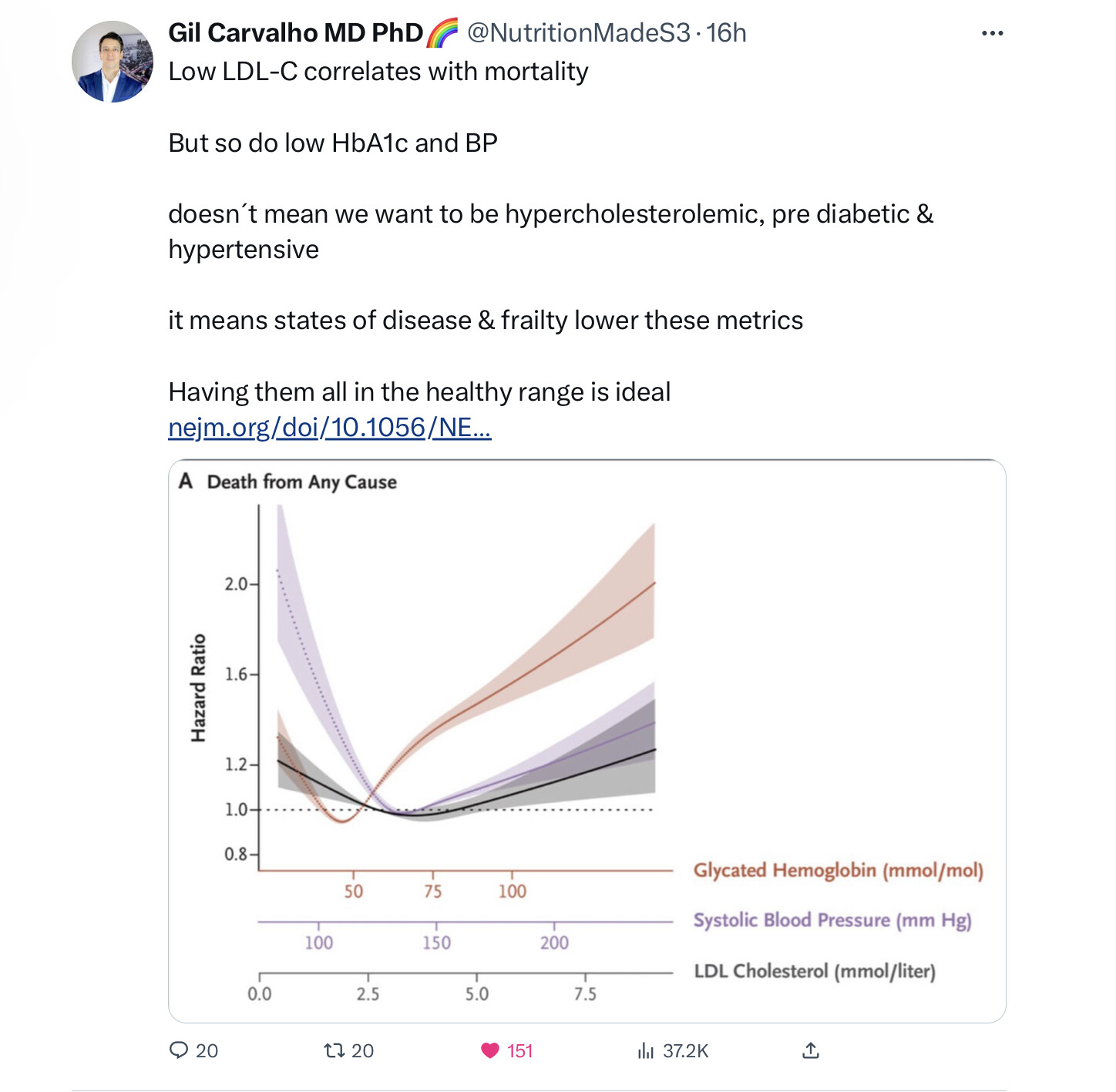
https://twitter.com/nutritionmades3/status/1667680802925150208?s=61&t=07_80n6oZJZB6WcbBibpig
Were your lipids also high at the same time? In other words, do high lipids cause high ApoB?
While I am not necessarily disagreeing with the viewpoint, it should be noted that the graphs show: “This analysis was restricted to patients with type 2 diabetes.”
I’m sure you’re doing most of this already, but i find it very interesting to see the quantification of lifestyle/dietary factors on apo-b.
Fish= 23% reduction
Nuts = 7 mg/dl reduction
No hard frying = 25% reduction
Exercise= 14% reduction
The other big impacts are from dietary fiber, olive oil lower ‘free’ fructose, but I don’t have any quant data on these. More Fibre intake is likely to be the big win
Taken all together it should be possible to reduce by up to 75% just from these dietary and lifestyle factors.
Sources:
In a study of 20 people, a diet that included fish at least two times a week reduced ApoB levels by 23% over 24 weeks compared to a typical Western diet [90].
eating 43 g of walnuts a day for 8 weeks decreased ApoB by 7 mg/dL [92].
Compounds in fried and roasted foods called advanced glycation endproducts (AGEs) are able to raise ApoB levels. When 26 people consumed diets low in AGEs, their ApoB levels decreased by 25% [96]
In fact, I do all of it. I never measured ApoB, but my cholesterol is high, and if there’s a connection, then it would be right to assume that my ApoB is also elevated.
Hi apoB and non-hdl cholesterol do correlate. But if you eat a lot of fish the correlation is less strong. (Fish oil changes/improves the particle size and so more cholesterol volume can be transported with fewer apo-b. Its apo-b which better correlates with cvd risk.
So you may be in much better position than your cholesterol results would suggest. Apob really is the gold standard test now. L
Unfortunately, I didn’t get any other blood work done apart from testing for omega-3’s. I had gone in to get tested for the ageless rapamycin program. They couldn’t find that paperwork. I had paid for these tests last year and never completed them.