Again, I would like to point out that methylene blue and photobiomodulation is useful in both treating and preventing brain disorders.
The first paper below has quite an extensive discussion on the use of MB in treating or perhaps preventing Parkinson’s disease
What is especially helpful about this paper is the plethora of citations concerning MB and brain and mitochondrial functions.
2 Likes
Thanks a lot @adssx , nothing to apologize for.
100% agree with the sentiment that we are all here to help each other.
I think that actually might have been what triggered me - I did not want the information and rationale that our discussion to lead to misunderstanding by anyone else reading the thread and then taking away incorrect ways of thinking about things.
I do truly believe you have always acted with good faith.
And - I do think you with your data and publication driven approach are one of the best contributors to the forum in recent months! So thank you so much for all your contributions.
Onward and upward 


5 Likes
Thx for this and the other paper with eg
Mitochondrial dysfunction plays a central role in the formation of neuroinflammation and oxidative stress, which are important factors contributing to the development of brain disease. Ample evidence suggests mitochondria are a promising target for neuroprotection. Recently, methods targeting mitochondria have been considered as potential approaches for treatment of brain disease through the inhibition of inflammation and oxidative injury.
@adssx have you thoughts about key thinks that sustain optimal mitochondria, like eg
- zone 2
- fasting (and I think time restricted eating)
- Mitopure, see eg link below
1 Like
I think that was discussed bought based on the worlds current data and understanding a few months ago on the forum?
Or let me know if there is any specific aspect(s) you think we should unpack further?
Otherwise perhaps ok to agree to disagree on how low optimal is in different contexts - and we can revisit as new studies, data and mechanistic understanding comes out?
What dosing are you trying? Which brand?
what is your position on PCSK9i?
Don’t you think optimal is different on case to case basis? Or you think someone with advanced ASCVD and someone with metabolic syndrome who smokes without signs of ASCVD and someone who’s genetics and phenotype is low risk for ASCVD should target same apoB?
Yes, fair point. I was really trying to soften the debate by reminding everybody that there’s much we don’t know, and there are other manageable factors that are important.
4 Likes
I’m going old school. Beeswax honeycomb 2g in my morning coffee. Should be about 120mg of policosanol. Ish. Its not the most precise experiment…
2 Likes
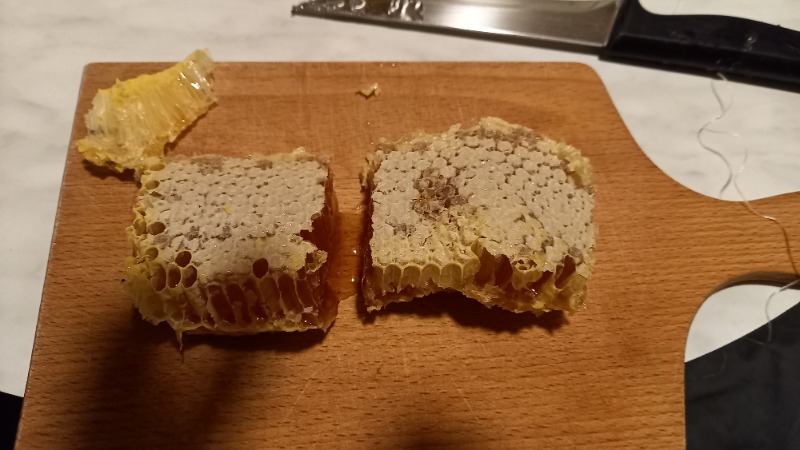
The experiment is a stretch. I don’t think there’s anything published on honeycomb derived policosanol. And the evidence for sugar cane policosanol is mixed. But i have the bees so I’m hopeful!
1 Like
I think almost everything in medicine should take into account different case by case specifics
In this case goals and what resources are available and could be prioritized is the bigger driver.
The resource aspect is a real aspect here since “risk free” supply of some of the medicines (PSCK9i, Bemp Accid) are still crazy expensive (though that will chance as patents expire) - if one does not feel ok with getting via India or so of course.
When it comes to ApoB in the vast, vast, vast majority of people who are shooting for optimal longevity, the optimal is generally going to be to go at low as possible as long as an ok combination of diet and exercise and basically always one or more of the ApoB modulating medicines can be found to works - which in this unique part of medicine generally will be achievable.
There may be some theoretical corner cases of being allergic to all medicines or more commonly a person actually not want prioritize longevity optimization or may not even want to prioritize healthspan optimization, but if one does have a longevity goal, one will in my option - based on today’s totality of data - want to try and go after Apo B in a very, very hard way - even in cases where one is fit, metabolically healthy, etc.
2 Likes
Put yourself in the 80 apoB person’s shoes, which is scta123, what would make you comfortable to sustain that apoB at that level and not go up or down?
At ApoB 80 I would not feel comfortable in any case (unless I was a child/ teenager and could wait for even more data, but even that comes with risks).
So the only case would be if each of the low risks meds were not working or creating bad effects.
The nice thing is that lower doses/less medicine would be needed at 80 than for someone who is at 120 and so on. So the “cost” of lowering is smaller.
(if my goals were not focused on aggressive health and longevity optimization then I might think about it diffidently, but I think you asked me what I would do).
1 Like
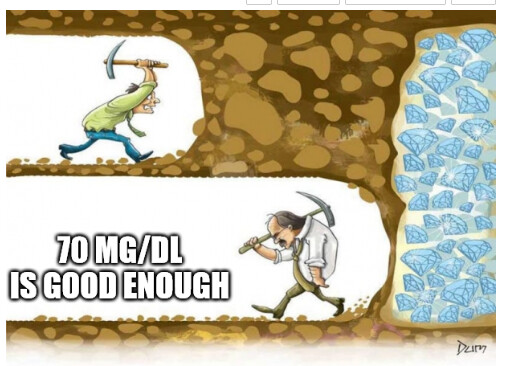
All I can think about is that I’m going to die of a heart attack when I see 80 apoB. Same at 70, 60. At 50 I am starting to think nah, and at 20-29 mg/dl, I’m going to think: Now I can focus on other things.
I have zero ability to imagine how I could think otherwise. That’s why some people’s responses are so alien to me.
5 Likes
Mine was 58 last test. It went up to 84 first months into rapamycin.
Do you feel there is enough data for this two to advocate them in primary prevention in low risk individuals solely on the basis that they are useful and necessary in high risk population?
Is the potential risk reduction worth the eventual side effects? My non HDL-C is way below 130 mg/dl, so my absolute risk reduction does not look that big in 30 years. What additional benefits do you think I would have from 40% LDL-C reduction?
2 Likes
I think you need to try some medications to determine if they give you any side effects. For instance, I was horribly intolerant to statins, but my body handles bempedoic acid and ezetimibe just fine.
My biggest worry at this point was that LabCorp botched my last test and scared the crap out of me (My LDL went from 81 to 122). It’ll be nice if my LDL goes to 50 due to BA and Ezetimibe and a LabCorp testing error.  I’ll get my ApoB retested this summer, and I’ll bring my BA and Ezetimibe when I travel.
3 Likes
I think it’s interesting to try to put some numbers on the relative cvd risk impact of the various factors so we can consider apo b in context.I think these support the argument that we should focus more broadly than apo b.
My personal view is that we don’t have very good long-term intervention study data for all cause mortality data or side effects for lowering apo b to very low levels with current pharmaceuticals.
By contrast we can optimize diet, blood glucose, k2, blood pressure, evoo, fish, exercise, fibre with low side effect risk and each one of these can give a comparable beneficial CVD impact (to say, lowering apob from 65 to 40). The diet and lifestyle interventions also have many other benefits for all cause mortality, dementia, cancer, healthspan etc
Whether to target very low (sub 50 mg/dl) apob with pharma will vary by the individual. For some it will be sensible, but for me, reducing my apo b from 65 to 40 with pharma long term doesn’t seem worth the risk at the moment given that I can prioritize the other factors, because if I do, I believe I can reduce my long term (30 year) risk of atherosclerosis to a very low level.
Apo b. Based on mendelian randomization studies apob 40 vs 65 equates to about a 24% lower risk of cad
Hba1c “A 1% increase in absolute concentrations of glycated hemoglobin is associated with about 10-20% increase in cardiovascular disease risk”
Glycated hemoglobin as a marker of cardiovascular risk - PubMed.
Med diet. “The results of the analysis showed that sticking closely to a Mediterranean diet was associated with a 24% lower risk of cardiovascular disease ,”
https://www.bmj.com/company/newsroom/mediterranean-diet-may-cut-womens-cardiovascular-disease-and-death-risk-by-nearly-25/%23
Blood pressure. A 25% reduction in cvd risk is associated with approx 30mgHG lower systolic bp
Intake of fatty fish (≥1 mean/week) was associated with a 50% reduction in risk of primary cardiac arrest.
Issues of Fish Consumption for Cardiovascular Disease Risk Reduction - PMC(%E2%89%A5,risk%20of%20primary%20cardiac%20arrest.
Vitamin k1 and k2. “people who eat a diet rich in vitamin K have up to a 34 percent lower risk of atherosclerosis-related cardiovascular disease”
Exercise “people who engaged in 150 minutes of moderate-intensity leisure activity per week had a 14 percent lower risk of coronary heart disease than those who reported no exercise”
Can Exercise Prevent or Reverse Heart Disease? | Healthline?
Fibre increasing dietary fibre by 14g reduces cvd risk by about 18%
EVOO " Higher baseline total olive oil consumption was associated with 48% (HR: 0.52; 95% CI: 0.29 to 0.93) reduced risk of cardiovascular mortality ."
https://www.researchgate.net/publication/262489294_Olive_oil_intake_and_risk_of_cardiovascular_disease_and_mortality_in_the_PREDIMED_Study#:~:text=Higher%20baseline%20total%20olive%20oil,%25%20and%207%25%2C%20respectively.
Curious what people think of all this. A question that springs to mind is: for someone with apob of say 65 mg/dl, which is likely to reduce 30 year atherosclerosis risk the most: a standard dose of psk9i or metformin?
I obviously don’t know the answer, but my guess would be metformin.
6 Likes
That’s your decision to make, I don’t understand why you keep asking a similar question when Neo has already decided for him what makes sense. Instead of asking questions you can just say that you’ve decided the risk vs. reward isn’t in favor of the intervention for you. I have not seen you explain why. You have to think for yourself. You are actively making the decision to not do anything about it, so what’s the reason why?
Why does Neo has to tell explain his reasoning, and not you, yours?
I don’t want to hear anything except the part where you explain why the risk is higher than the reward for you. If you haven’t thought about it before well now you can.
First you have to figure out what the expected reward is, then what the expected risks are. Once you’ve established that in an accurate way, you can compare them both. It’s likely you are wrong on at least the reward side.
Bempedoic acid is only active in the liver, it is hepatoselective. It is only converted in the liver to the active form.
I don’t know enough about it, but I would guess it has zero negative effect on parkinson and alzheimer’s as it only affects serum apoB/LDL since it is active in the liver. I don’t know where the genes relating to parkinson’s are related to increases in LDL. They might be active in the brain, increasing brain cholesterol as well. That makes me think if increasing serum apoA1 can help as it can pass the BBB and take over some roles of other lipoproteins and of course it shouldn’t be atherogenic.
1 Like