Do you know if there is direct evidence on ezetimibe and DHA/EPA absorption? Either positive or negative?
The study i quoted relates to EPA. It suggests that if your EPA levels are good, then then the ldl-c benefit of ezetimibe is offset - suggesting that EPA absorption may be blocked.
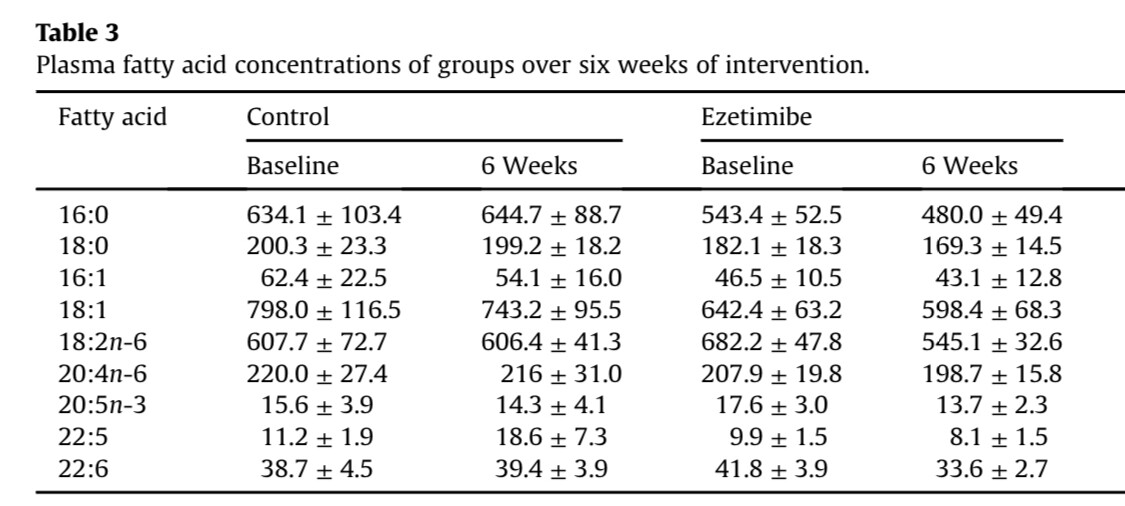
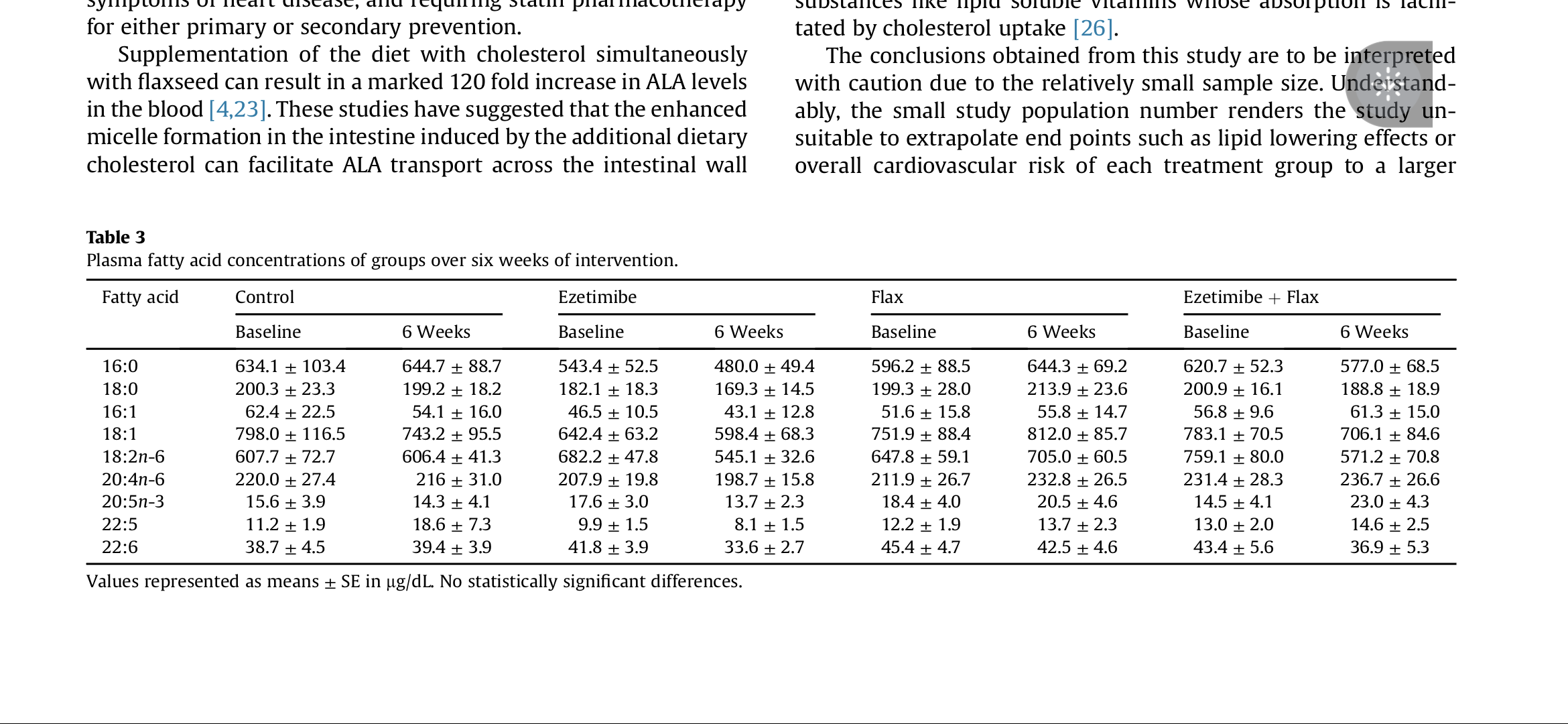
Have you checked this study? It is small sample and statistically insignificant but there are some indications that ezetimibe affects absorption of omega 3.
Thank you, it is small, but persuasive for ALA. And I can’t quite see how ezetimibe would block ALA and not the other omega 3s (Dha and EPA).
I’m planning to experiment with micro dose ezetimibe - but the thought of effectively rendering my high fish diet useless is off-putting to say the least!
You can test the your omegas - have you done that?
Could be good to do a before and after
This is the test I use. Heard that it is better than normal blood testing labs because it looks at what’s in the cell membrane and hence gives you an average over time that is more stable/reliable (kind of like HbA1c vs just one blood glucose reading). Learned that it is what Peter Attia’s team uses after looking at different options.
“There were no significant differences amongst the groups in
terms of circulating total cholesterol, LDL, HDL, triglyceride levels in the blood.”
“ALA (alpha-linolenic acid). ALA is the form of omega-3 found in plants.
Omega-3s are essential nutrients that you need to get from your diet. When you get ALA from food, your body is able to turn some of the ALA into EPA and subsequently to DHA. However, this process provides just a small amount of EPA and DHA. So, dietary sources of EPA and DHA (like fish) are essential.”
“The review team found that reductions in cardiovascular events with ALA were so small that about 1000 people would need to increase consumption of ALA for one of them to benefit.”
“Omega-3 fatty acids have many potential benefits for your cardiovascular health. One key benefit is that they help lower your triglyceride levels.” That’s what my statin, ezetimibe, and Pantethine do.
.I don’t find the study impressive.
Ezetimibe and atorvastatin have my LDL levels in very good shape.
Statin plus Omega 3 did not do that.
I will keep taking my ezetimibe.
Some recent papers are questioning the supposed benefits of omega-3 supplements.
Yes the fish oil supplement data has always been a bit hit and miss. And ALAs are very much second best when it comes to Omega 3. But I do think the weight of evidence is in favour of oily fish.
“Fish is proven to possess several health benefits, such as anti-oxidation, anti-inflammation, wound healing, neuroprotection, cardioprotection, and hepatoprotection properties. Fish proteins, such as immunoglobins, act as defense agents against viral and bacterial infections.”
I like the idea of testing my Omega 3 before and after ezetimibe. But, given the luxury of only wanting (needing?) a small reduction in my apoB (i bounce around the 50-65 mg/dl range) I think I’ll drop my ezetimibe plan for now and go with microdose rosuvastatin + policosanol from my bees and see where that gets me.
Yes it is only a pilot study, and so only suggestive that ezetimibe inhibits the absorption of only one type of Omega 3. But given there seems no other research on this, i think ‘upping my sardines’ would be my inclination if I were on ezetimibe.
Good point. Looking at the rest of the data, ezetimibe+flaxseed oil had a relatively large negative impact on DHA, but a relatively large positive impact on EPA. Which is odd. Enough reason for me to eat a little more fish if I ever take ezetimibe. And to test omega 3 levels. But I’d love a full study given this pilot.
Thank you, i haven’t tested my Omega 3 levels. Probably should anyway, but will certainly do so if I start ezetimibe. The data on this isn’t strong but its persuaded me to hold back on ezetimibe for now, and just experiment with rosuvastatin microdose + policosanol.
RapAdmin, This conversation is long and sometimes rambling. Closing it may be appropriate. However, it does have some good information. For people who would like to reduce some of the clutter in the conversation, they can do the following to hide individual user comments:
Click on the User Name and a dialogue box will appear.
Click on the User Name within the dialogue box and a page of statistics will appear.
Look to the upper right on the page of statistics for a box that displays “Normal.”
Click the box that displays “Normal” and you will see “Normal”, “Muted”, “Ignored.”
Click “Ignored” and a dialogue box that says “Ignore User” will appear.
In the “Ignore User” dialogue box select the Time Frame of “Forever.”
Then, cick the blue “Ignore” button in the dialogue box for this to take effect.
You may miss a few important details, but this can be a big time saver.
I agree that getting your omega-3 from fish is better than taking it from a supplement.
The problem is that I don’t like fish. Eating fish gives you more nutrients than an omega-3 supplement and certainly makes it better than a fish oil supplement.
.I take an EPA/DHA fish oil supplement instead of eating fish, but mainly because of the weak evidence that it has some benefits for the elderly brain.
“The mortality benefit was largely due to the studies which enrolled high risk patients, while the reduction in nonfatal cardiovascular events was noted in the moderate risk patients (secondary prevention only). Meta-regression failed to demonstrate a relationship between the daily dose of omega-3 fatty acid and clinical outcome.”
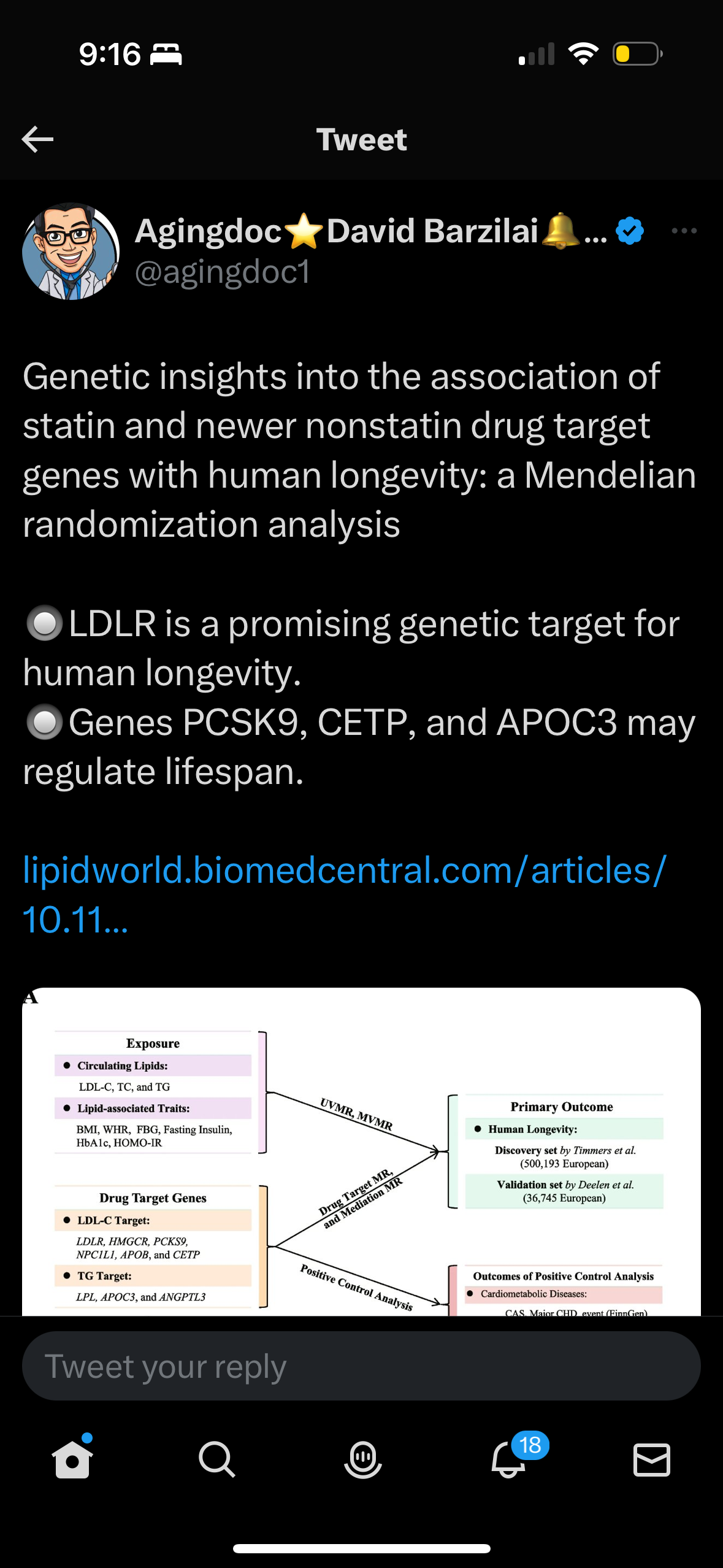
Genetically proxied LDLR variants, which mimic the effects of lowering low-density lipoprotein cholesterol (LDL-C), were associated with extended lifespan. This association was replicated in the validation set and was further confirmed in the eQTL summary data of blood and liver tissues. Mediation analysis revealed that the genetic mimicry of LDLR enhancement extended lifespan by reducing the risk of major coronary heart disease, accounting for 22.8% of the mediation effect. The genetically proxied CETP and APOC3 inhibitions also showed causal effects on increased life expectancy in both outcome datasets. The lipid-lowering variants of HMGCR, PCKS9, LPL, and APOB were associated with longer lifespans but did not causally increase extreme longevity. No statistical evidence was detected to support an association between NPC1L1 and lifespan.
Conclusion
This study suggests that LDLR is a promising genetic target for human longevity. Lipid-related gene targets, such as PCSK9, CETP, and APOC3, might potentially regulate human lifespan, thus offering promising prospects for developing newer nonstatin therapies.
I’ve literally just started today. 2.5mg eod. The dose response curve suggests most of the benefit comes from the 1st 1mg
I was aiming for 1mg ed but can only cut the pills in quarters…
“Rosuvastatin was associated with highly significant dose-dependent reductions in LDL cholesterol compared with placebo (p <0.001); decreases ranged from 34% (1 mg) to 65% (80 mg).”
Important to note that in the ezetimibe/ALA paper, the dose of flax oil was only 2 grams. That’s not even half of a teaspoon. Would simply taking fatty acid supplement with a full meal containing more fat allow for greater micelle formation and full absorption of ALA? Also, the alleged mechanism is decreased micelle formation, but ezetimibe does not decrease absorption of fat-soluble vitamins, which it should if decreased micelles were a clinically relevant thing.