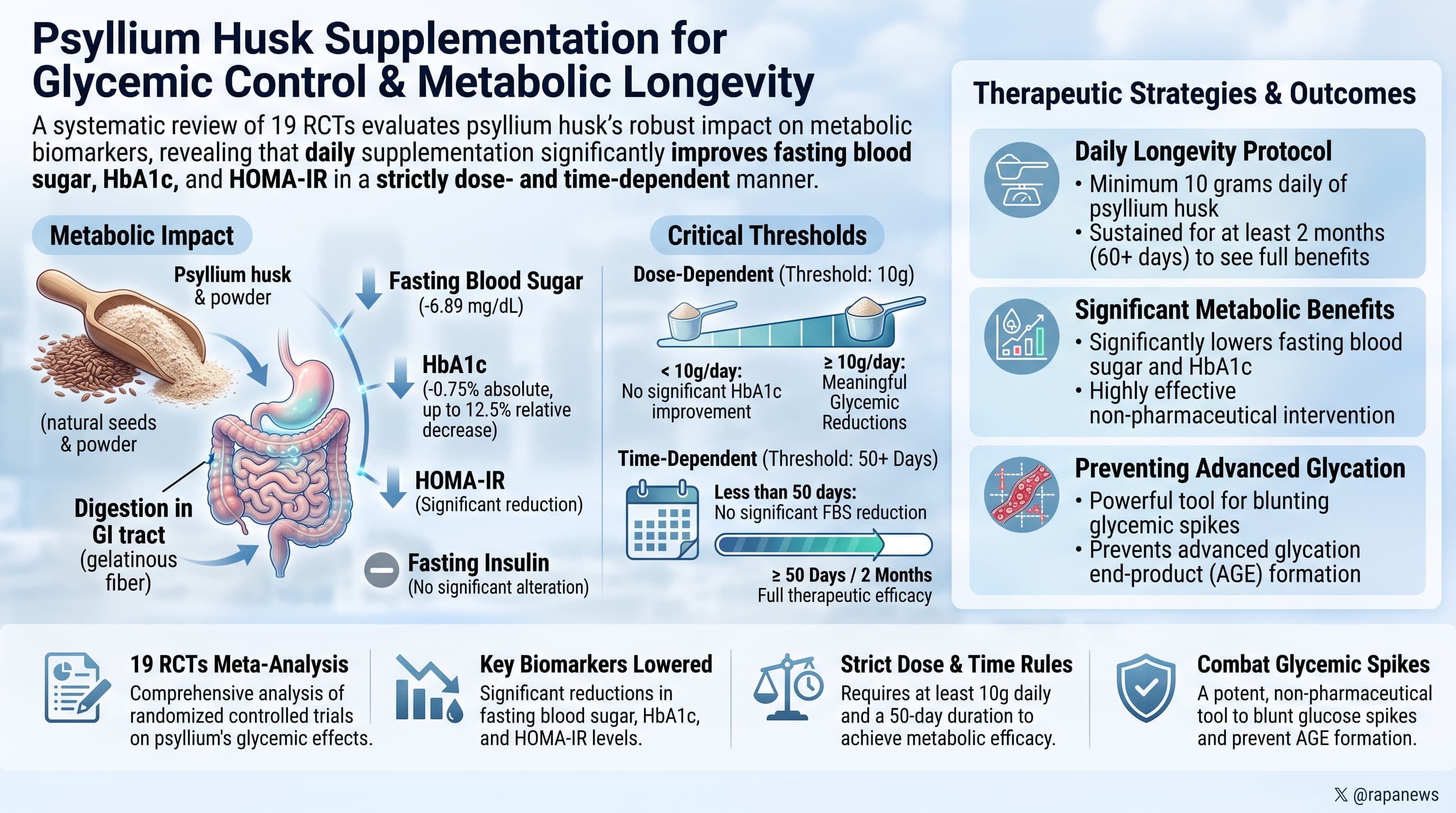
A systematic review and meta-analysis of 19 randomized controlled trials evaluated the effects of psyllium husk supplementation on glycemic control markers. The analysis found that psyllium consumption significantly reduces fasting blood sugar, hemoglobin A1c, and HOMA-IR levels compared to a placebo, though it does not significantly alter fasting insulin levels. These benefits are highly dose-dependent and time-dependent, requiring specific thresholds to achieve metabolic efficacy.
The global rise in metabolic dysfunction accelerates biological aging primarily through sustained hyperglycemia and the subsequent formation of advanced glycation end-products. Dietary fiber has long been recommended for metabolic health, but isolated, viscous, gel-forming fibers like psyllium possess distinct pharmacological properties. The overarching finding of this comprehensive meta-analysis is that psyllium supplementation exerts a robust, highly targeted effect on critical longevity biomarkers, specifically hemoglobin A1c (HbA1c) and fasting blood sugar (FBS). Psyllium operates mechanistically by increasing intestinal viscosity and delaying macronutrient absorption. This delayed transit mimics the effects of alpha-glucosidase inhibitors, flattening the postprandial glucose curve and increasing the secretion of glucagon-like peptide 1 (GLP-1). GLP-1 is a crucial incretin hormone that enhances insulin sensitivity and promotes satiety, pathways that are heavily targeted by modern anti-aging and weight-loss therapeutics. By preventing rapid glucose spikes, psyllium limits the metabolic stress placed on pancreatic beta cells and reduces the systemic inflammatory cascade triggered by hyperglycemia. The clinical data indicate that these biological effects are not uniformly distributed but are instead subject to strict dosage and duration requirements. Supplementation must exceed a specific volume threshold to yield statistically significant improvements in fasting blood glucose, and the intervention must be sustained over a prolonged period to reflect changes in long-term markers like HbA1c. The findings strongly suggest that isolated functional fibers can serve as a primary intervention for glycemic management rather than a mere dietary adjunct [Confidence: High]. The ability to lower HbA1c is highly relevant for longevity regimens, as even minor reductions in average blood glucose are correlated with decreased all-cause mortality and reduced microvascular damage. The lack of significant change in fasting insulin, despite improvements in the Homeostatic Model Assessment of Insulin Resistance (HOMA-IR), points to a complex physiological interaction where insulin sensitivity improves at the receptor level without necessarily requiring a drastic suppression of basal insulin secretion.
Actionable Insights
To leverage psyllium for metabolic optimization and longevity, supplementation protocols must strictly adhere to the dose and duration thresholds identified in the clinical data. Participants consuming less than 10 grams per day did not see significant improvements in HbA1c, while those taking more than 10 grams per day achieved meaningful glycemic reductions. Furthermore, interventions shorter than 50 days failed to produce significant reductions in fasting blood sugar. Therefore, a functional longevity protocol requires a minimum of 10 grams of psyllium husk daily, sustained for at least two months, to alter metabolic biomarkers. The absolute effect size is substantial for a non-pharmaceutical intervention. The weighted mean difference for HbA1c was an absolute reduction of 0.75%. For an individual with a baseline HbA1c of 6.0%, a 0.75% absolute reduction represents a 12.5% relative decrease in this critical aging biomarker. Similarly, fasting blood sugar was reduced by an average of 6.89 mg/dL. These magnitude changes highlight psyllium as a potent tool for blunting glycemic spikes and preventing advanced glycation end-product formation.
Context and Source
- Open Access Paper: The effect of psyllium on fasting blood sugar, HbA1c, HOMA IR, and insulin control: a GRADE-assessed systematic review and meta-analysis of randomized controlled trials
- Institution: Isfahan University of Medical Sciences; Coventry University
- Country: Iran, United Kingdom
- Journal: BMC Endocrine Disorders
- Impact Evaluation: The impact score of this journal is 2.8, evaluated against a typical high-end range of 0 to 60+ for top general science, therefore this is a Medium impact journal.