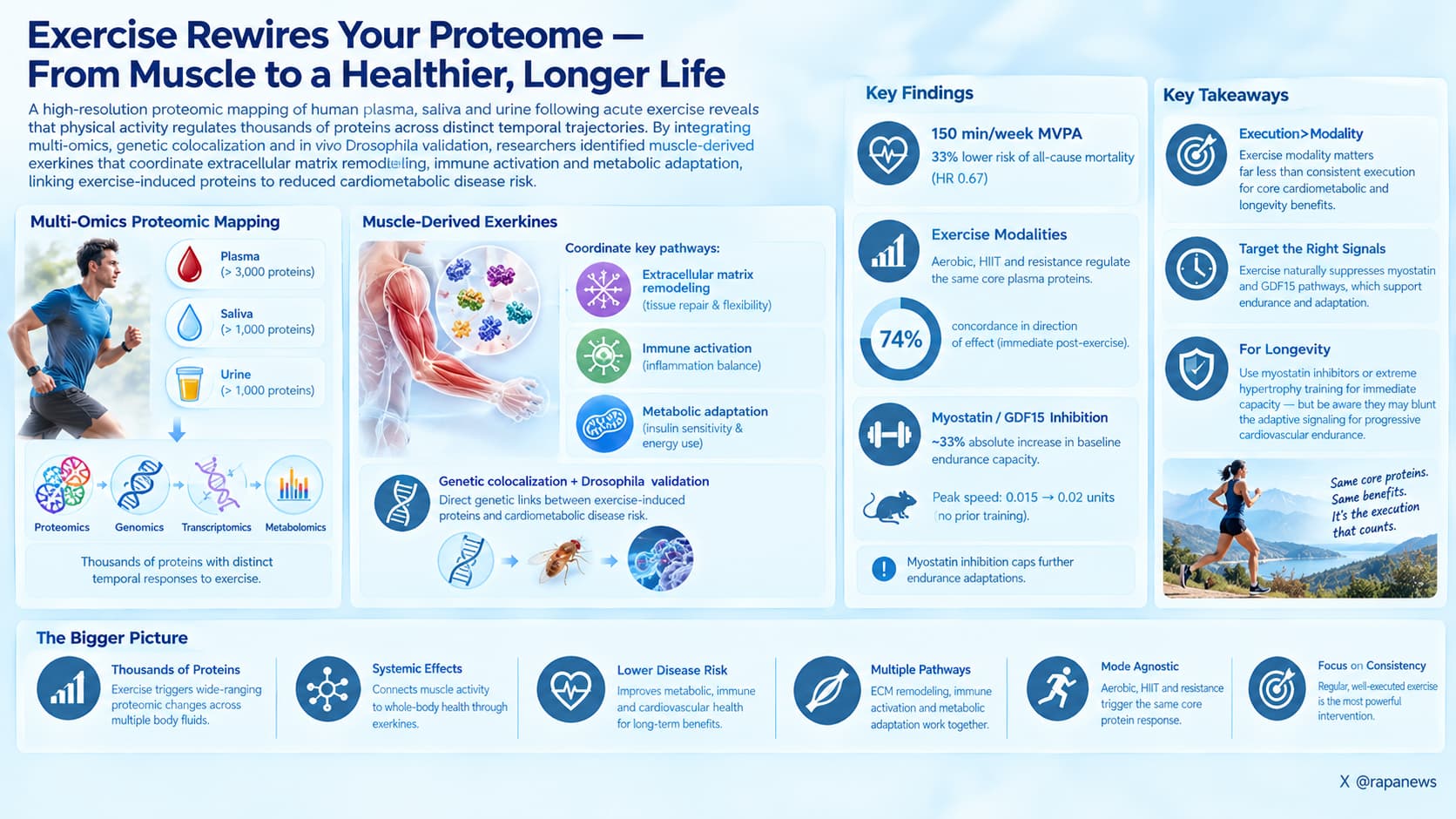
A high-resolution proteomic mapping of human plasma, saliva, and urine following acute exercise reveals that physical activity regulates thousands of proteins across distinct temporal trajectories. By combining human multi-omics with genetic colocalization and in vivo Drosophila validation, researchers identified specific muscle-derived exerkines that coordinate extracellular matrix remodeling, immune activation, and metabolic adaptation, providing direct genetic links between exercise-induced proteins and reduced cardiometabolic disease risk.
Exercise acts as a systemic stressor that confers profound longevity benefits, yet the exact molecular communication between organs remains poorly mapped. Historically, research has focused on isolated plasma biomarkers like interleukin 6. This study expands the biological scope by simultaneously profiling the proteomes of saliva, urine, and plasma in humans following an acute bout of moderate intensity cycling. The researchers identified over 3,000 proteins that fluctuate in response to exercise, revealing a coordinated molecular exchange across tissues.
The plasma proteome exhibited rapid spikes in protein secretion followed by swift clearance, characteristic of acute stress and signaling. Saliva showed prolonged and sustained protein shifts extending 24 hours into recovery. Notably, 52 of these sustained salivary proteins are linked to Type 2 diabetes risk and include 41 targets for FDA-approved drugs, suggesting the oral cavity reflects durable metabolic reprogramming. Urine displayed a transient filtration response indicating cellular shedding that resolved entirely by the following day.
Using genetic colocalization, the authors matched these exercise-regulated proteins with genome wide association studies to determine clinical relevance. They successfully mapped these secreted factors to disease traits involving cardiovascular health, lipid metabolism, and metabolic syndrome, proving that transient exercise spikes overlap with long-term genetic disease resilience.
The authors translated these human findings to an in vivo model using Drosophila to prove causation. By selectively knocking down muscle-specific orthologs of human exerkines, they established that these proteins directly drive physiological changes. Knocking down cytokines like PDGF or TNF impaired training adaptations. Conversely, inhibiting myostatin or GDF15 enhanced baseline endurance independent of prior training. This multi-compartment atlas provides a verified roadmap for discovering highly specific exercise mimetics.
Actionable Insights
The foundational metric supporting this intervention is that 150 minutes of moderate to vigorous physical activity per week yields a 33% relative risk reduction in all-cause mortality (a hazard ratio of 0.67). The data shows that aerobic, high intensity interval training, and resistance exercise modes regulate the exact same core group of plasma proteins, showing a 74% concordance in the direction of effect immediately post-exercise. The actionable takeaway is that exercise modality matters far less than execution for core cardiometabolic and longevity benefits.
Furthermore, targeted inhibition of myostatin or GDF15 signaling (pathways naturally suppressed during specific resistance protocols) results in a roughly 33% absolute increase in baseline endurance capacity, shifting peak speed in in vivo models from 0.015 units to 0.02 units without any prior training. However, myostatin inhibition caps further endurance adaptations. For longevity protocols, this indicates that utilizing myostatin inhibitors or extreme hypertrophy training will maximize immediate physical capacity but may blunt the adaptive signaling required for progressive cardiovascular endurance.
Context/Source
- Open Access Paper: Systemic proteomic dynamics of acute exercise reveal genetic links to health and disease , 2026 Oct 12.
- Institution: Novo Nordisk Foundation Center for Basic Metabolic Research, University of Copenhagen
- **Country:**Denmark
- Journal: Nature Metabolism
- Impact Evaluation: The impact score of this journal is 20.8, evaluated against a typical high-end range of 0-60 for top general science, therefore this is a High impact journal.