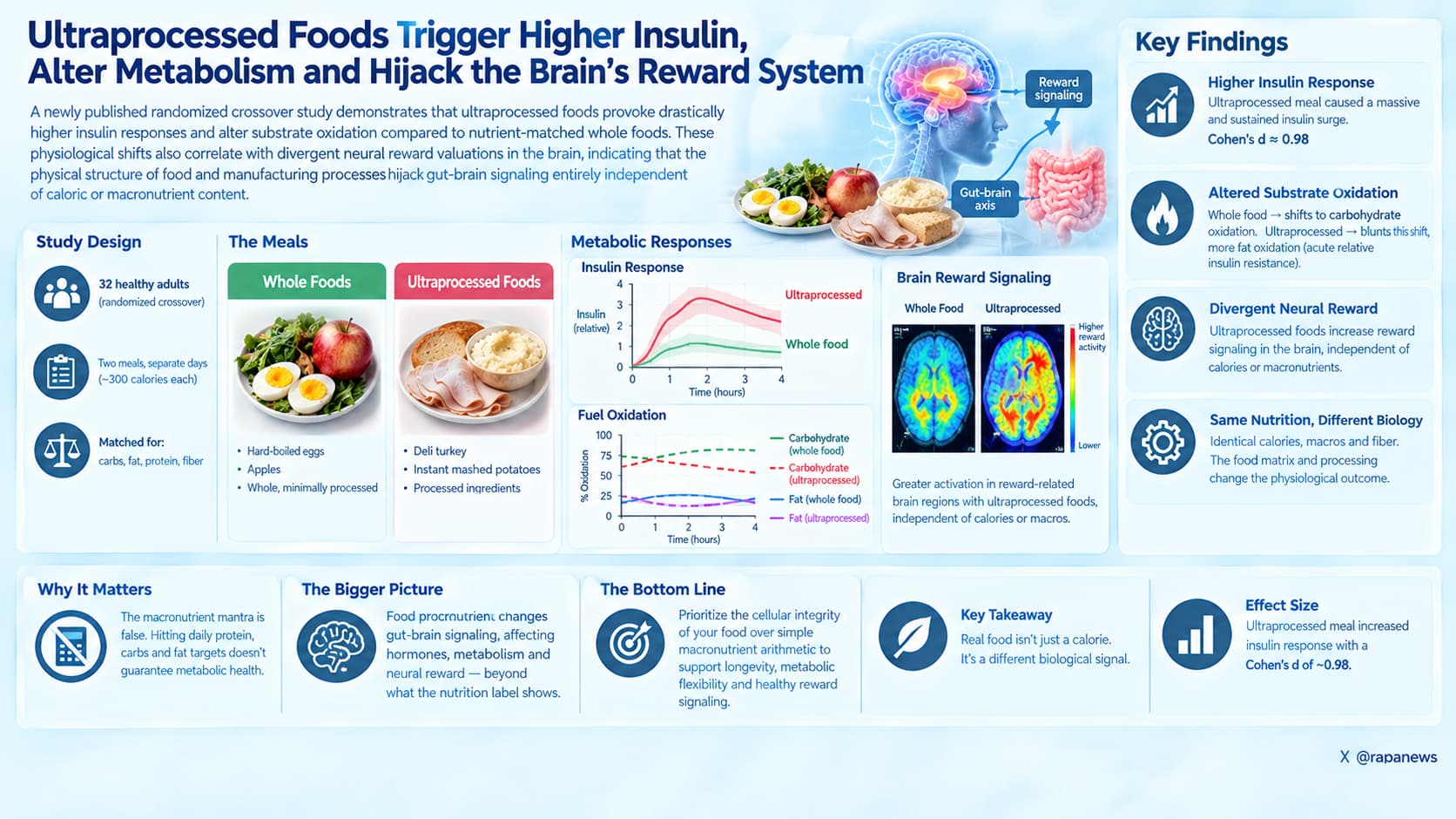
A newly published randomized crossover study demonstrates that ultraprocessed foods provoke drastically higher insulin responses and alter substrate oxidation compared to nutrient-matched whole foods. These physiological shifts also correlate with divergent neural reward valuations in the brain, indicating that the physical structure of food and manufacturing processes hijack gut-brain signaling entirely independent of caloric or macronutrient content.
The popular fitness mantra asserting that metabolic health is simply a matter of hitting daily macronutrient targets is severely undermined by this data. Researchers fed 32 healthy adults two different meals on separate days. Both meals contained approximately 300 calories and were strictly matched for carbohydrates, fat, protein, and dietary fiber. One meal was assembled from whole foods like hard-boiled eggs and apples, while the other utilized ultraprocessed items like deli turkey and instant mashed potatoes. Despite identical nutritional profiles, the human body reacted to the meals in fundamentally different ways. The ultraprocessed meal triggered a massive and sustained insulin surge. Furthermore, the whole food meal allowed the body to shift naturally into carbohydrate oxidation, whereas the ultraprocessed meal blunted this shift and left the body oxidizing more fat in the short term, implying a state of acute relative insulin resistance.
Researchers also utilized fMRI scans to observe how the participants’ brains reacted to pictures of these foods. The brain’s reward centers, specifically the striatum, fired differently based on the individual’s metabolic response to the ultraprocessed foods. The physical destruction of the food matrix during manufacturing changes digestion kinetics. This rapid breakdown aggressively spikes insulin and alters the gut-brain feedback loop, driving overconsumption and metabolic dysfunction even when the calories and macros are heavily restricted and controlled.
Actionable Insights
Relying on macronutrient tracking or flexible dieting approaches utilizing ultraprocessed foods is a flawed strategy for longevity and metabolic health. Whole foods and ultraprocessed foods are handled distinctly by the endocrine system, regardless of the nutrition label. Consuming a small ultraprocessed meal will spike your insulin significantly more than a calorically and nutritionally identical whole food meal.
The magnitude of this effect is substantial. The ultraprocessed meal increased the insulin response with a remarkably large standardized effect size, equating to a Cohen’s d of approximately 0.98. This means the average person eating the processed meal experiences a much higher insulin spike than nearly anyone eating the whole food meal. To optimize longevity, metabolic flexibility, and neural reward signaling, prioritize the cellular integrity of your food over simple macronutrient arithmetic.
Context/Source
- Open Access Paper: Metabolic and neural responses to ultraprocessed foods: a randomized, controlled, crossover study, Published: 05 October 2026.
- Institution: Virginia Tech, Roanoke, VA
- Country: USA
- Journal: Nature Metabolism
- Impact Evaluation: The impact score of this journal is 20.8, evaluated against a typical high-end range of 0 to 60+ for top general science, therefore this is a High impact journal.
Related Reading:
- Post-meal blood sugar spikes linked to increased Alzheimer's risk
- The Spike Hypothesis: Why Normal Blood Sugar May Not Be Normal Enough
- Timing Your Protein: How a Plant-Based Preload Blunts Glucose Spikes and Lowers Blood Pressure
- Rare Sugar, Real Results: Allulose and Tagatose Neutralize Postprandial Glucose Spikes