Predicting Alzheimers & Dementia (and minimizing risk)

I don’t think that an FDA approval gives any IP protection. For instance there are plenty of FDA approved BP monitors.

As it’s sound and light it’s pretty easy to record the waveforms. For the sound any phone can record a sound waveform. For light you need something to measure it but it’s very simple and low cost.

Not sure I follow - thought most of the “promotion” has been of the data from rigorous, controlled human clinical trials?

@cl-user

Still not following your different posts - do you not want universities, startups and investors to fund scientific research and clinical trials on solutions for aging related disease?

Do you not things in this context now that larger clinical trials have help better calibrate how this technology works in the context of AD and how it does not work there? And what future indication to further clinical trials might be worthwhile while in which other area if may be less worthwhile?

Does it not matter to you to have a better sense of the safety profile of routine usage?

But would a copycat be able to advertise that they were FDA approved? There would probably still be bragging rights of being the original and maybe that is worth $200 million? I mean these people aren’t stupid about money.

I am amazed the money dumping money into medical products and practices and it seems to me not worth it but what do I know?

$200+M seems like a lot of money to do a study to confirm something and it doesn’t seem to have a ROI…I don’t think anyone minds money being spent on research but could be better directed.

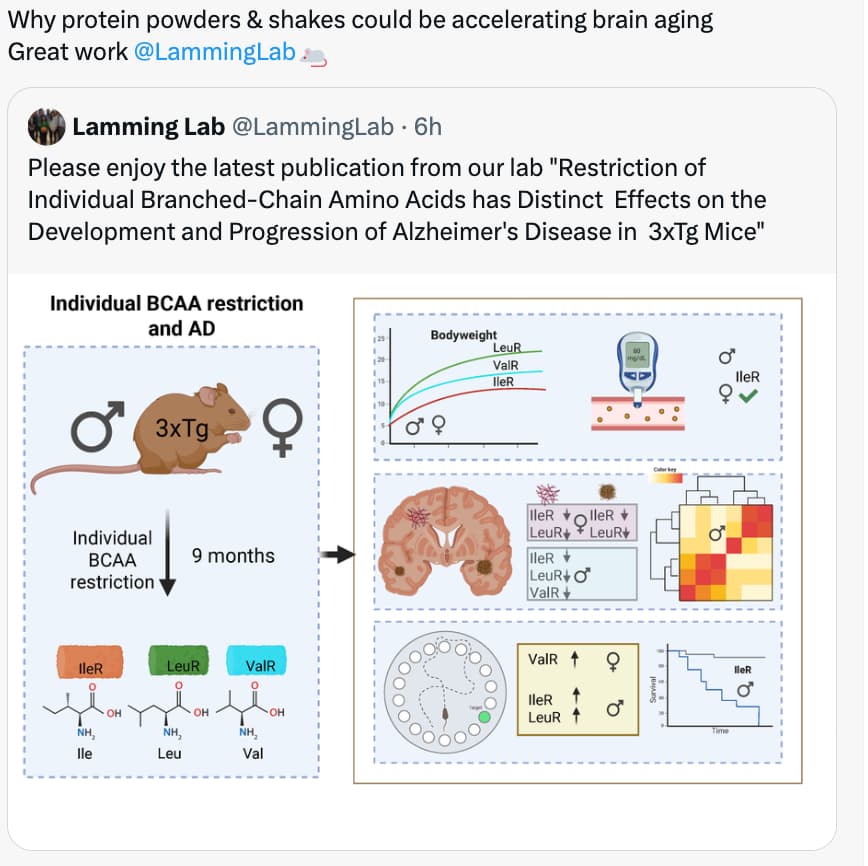
How and why mTORC 1 activation via protein powders, etc. may be bad for the brain (and perhaps why rapamycin will help)…

Full open access paper: https://advanced.onlinelibrary.wiley.com/doi/10.1002/advs.202515220

1 Like
2 Likes

From UC San Diego:

How fast are you really aging, and what could that mean for brain health? Aladdin H. Shadyab, Ph.D., explores the gap between chronological age and biological age, and why that difference matters for long-term health. Shadyab describes tools that use information from blood to estimate how quickly the body is aging, including approaches that look beyond the body as a whole to consider aging in specific systems. He connects faster biological aging with higher risk for age-related disease and declines in physical and cognitive function, and discusses how blood-based biomarkers may offer earlier signals of processes linked to Alzheimer’s disease. Shadyab also highlights lifestyle and treatment findings that may support healthier aging and longer survival

Slowing the Clock: Longevity Science Meets Alzheimer’s Prevention

I. Executive Summary

Biological aging, quantified via organ-specific epigenetic and proteomic clocks, diverges significantly from chronological age and serves as a primary, modifiable driver of neurodegeneration and all-cause mortality. Recent analyses utilizing the 30-year Women’s Health Initiative (WHI) dataset reveal that accelerated aging in specific organ systems—predominantly the heart, blood, and kidneys—strongly correlates with the progression of Alzheimer’s disease (AD) and reduced probabilities of exceptional longevity (survival to age 90).

Advancements in high-sensitivity fluid biomarkers, notably plasma p-tau217, extend beyond clinical AD diagnosis. Elevated p-tau217 levels predict incident mild cognitive impairment (MCI) and dementia up to 25 years pre-symptomatically (143% elevated risk) while concurrently serving as a broad biomarker for inverse longevity (30% reduced odds of survival to age 90). Multimarker predictive models integrating 11,000-protein SomaScan arrays, chronological age, and fluid biomarkers improve 10-year dementia prognostication accuracy to a C-index of 0.84.

Therapeutically, the randomized controlled EXERT trial demonstrated that physical activity interventions (120–150 minutes/week) in older adults with MCI, irrespective of intensity (aerobic vs. light-intensity stretching/balance), arrested cognitive decline relative to a usual-care control group. Pharmacologically, retrospective data underscores metformin’s utility; diabetic WHI participants utilizing metformin exhibited a 30% reduction in pre-90 mortality compared to sulfonylurea cohorts. However, robust clinical data for geroprotective pharmacological agents in normoglycemic populations remains insufficient. Interventions targeting foundational metabolic and vascular health, including rigorous adherence to physical activity guidelines and cardiovascular risk mitigation, stand as the most clinically validated mechanisms for decelerating biological aging and extending healthspan.

II. Insight Bullets

  1. Epigenetic Organ Clocks: Accelerated blood, heart, and metabolic epigenetic clocks in women ages 65–79 correlate with a 9–12% increased risk of incident MCI and dementia over 25 years.
  2. Plasma p-tau217 as a Prediagnostic Marker: Baseline elevations in cognitively healthy older adults predict a 143% elevated risk of MCI/dementia up to 2.5 decades later.
  3. p-tau217 as a Longevity Inverse-Biomarker: High baseline p-tau217 levels indicate a 30% reduced odds of survival to age 90, independent of dementia-specific mortality.
  4. Neurofilament Light (NfL) and Lifespan: Elevated NfL, a general fluid marker of neurodegeneration, correlates with a 25% decreased probability of living to age 90.
  5. Inhibition of Healthy Aging: Elevated p-tau217 reduces the probability of reaching age 90 without cognitive impairment by 42%.
  6. Cardiovascular Drivers of AD Biomarkers: Diabetes, long sleep (>8 hours), hypertension, obesity, and smoking actively drive longitudinal increases in plasma AD biomarkers.
  7. Alcohol’s Divergent Impact: Self-reported past alcohol consumption showed a potentially protective effect against the rapid increase of Glial Fibrillary Acidic Protein (GFAP), a neuroinflammation marker.
  8. High-Dimensional Proteomics (SomaScan): Combining 11,000-protein arrays with chronological age and AD plasma biomarkers optimizes 10-year dementia risk prediction models to a highly accurate C-index of 0.84.
  9. Proteomic Organ Clocks: Accelerated protein-based biological aging of the heart, kidney, brain, and immune system directly correlates with increased MCI and dementia incidence (e.g., an “older” heart clock increases MCI risk by 14%).
  10. Kidney Aging Limits Healthspan: Accelerated biological aging in the kidney reduces the chance of achieving healthy aging (survival to 90 without dementia) by 30%.
  11. EXERT Trial Outcomes: Both aerobic exercise and light-intensity activity (stretching/balance/range of motion) over 12 months completely prevented cognitive decline in older adults diagnosed with MCI.
  12. The Danger of “Usual Care”: MCI patients assigned to zero-intervention usual care experienced notable and rapid cognitive decline over 12 months, establishing movement as an absolute biological necessity.
  13. Exercise Volume Threshold: The therapeutic threshold for cognitive preservation in MCI cohorts is strictly defined as 120–150 minutes of weekly supervised or unsupervised movement.
  14. Metformin’s Retrospective Longevity Benefit: Type 2 diabetic women on metformin exhibited a 30% lower risk of death prior to age 90 compared to those taking sulfonylureas.
  15. Metformin’s Translational Gap: Clinical efficacy for slowing biological aging or extending lifespan in non-diabetic human cohorts remains unproven; aging is not an FDA-recognized indication.
  16. Sleep Duration Risk: Sleeping consistently in excess of 8 hours per night serves as an active risk factor correlating with elevated cardiovascular and neurodegenerative biomarker profiles.
  17. Hormone Replacement Therapy (HRT) Risks: The WHIMS trial indicated that estrogen plus progestin therapy in postmenopausal women (65+) actively increases the risk of MCI and dementia.
  18. Caloric Restriction: Clinical multi-omic data indicates systemic caloric restriction actively slows biological aging parameters.

IV. Actionable Protocol (Prioritized)

High Confidence Tier (Level A/B Evidence)

  • Structured Physical Activity for MCI: Engage in 120–150 minutes per week of targeted movement. Intensity is secondary to consistency; both aerobic activity and light-intensity stretching/balance regimens halt cognitive decline in early-stage cognitive impairment. Feldman et al., 2022 (Source unverified in live search.)
  • Cardiovascular Risk Mitigation: Aggressive clinical management of hypertension, diabetes, and obesity to blunt the upward trajectory of neurodegenerative biomarkers (p-tau217, NfL, GFAP).
  • Sleep Regulation: Restrict sleep duration to the optimal 7–8 hour window. Avoid habitual sleep exceeding 8 hours to mitigate cardiovascular and metabolic deterioration.

Experimental Tier (Level C/D Evidence - High Safety Margins)

  • Metformin (Normoglycemic Longevity): Retrospective epidemiological data strongly suggests longevity benefits (30% mortality reduction vs. sulfonylureas), but this remains off-label and experimentally unverified in healthy, non-diabetic adults pending the TAME trial. Shadyab et al., 2023 (Source unverified in live search.)
  • Caloric Restriction: Demonstrates biological age deceleration via epigenetic clocks in clinical settings, though long-term compliance and risks of sarcopenia/frailty in advanced age cohorts demand strict clinical supervision. Belsky et al., 2023 (Source unverified in live search.)

Red Flag Zone (Debunked or Safety Data Absent)

  • Asymptomatic p-tau217 Screening: FDA approval is strictly limited to symptomatic individuals for AD diagnosis. Routine screening in cognitively intact adults is biologically un-actionable, lacks preventative protocols, and carries high psychosocial risk.
  • HRT for Late-Stage Dementia Prevention: Prescribing estrogen plus progestin for the explicit purpose of dementia prevention in late postmenopausal women (65+) is actively contraindicated by WHIMS trial data. Shumaker et al., 2003 (Source unverified in live search.)
  • Direct-to-Consumer Epigenetic Aging Clocks: Commercially available biological age tests currently lack standardization, regulatory oversight, and clear clinical intervention pathways.

3 Likes

Exercise can lower Alzheimer’s risk. Scientists may have discovered why. (WaPo)

In an ambitious study, memory and learning abilities improved substantially after exercise among mice with a form of Alzheimer’s disease.

Exercise can strengthen a leaky blood-brain barrier, which may improve brain health and potentially fight dementia, according to an ambitious new mouse study of exercise and neurodegeneration published this month in Cell.

In rodents and people, the blood-brain barrier a narrow layer of cells that protects the brain from toxins and pathogens typically weakens with age, contributing to neuro-inflammation and other problems, including heightened risks for dementia. But the study’s authors found that during and after exercise, at least in mice, the liver releases a specialized protein that travels to the brain and helps repair the protective cellular barrier there.

The effects of the exercise protein were especially striking in older mice with a form of Alzheimer’s disease. Their memory and learning abilities improved substantially when levels of the protein rose in their brains.

The researchers found the same protein in the bloodstreams of physically active people.

“These results provide compelling evidence in animal models that exercise-related signals from the liver can improve brain function by acting on the blood-brain barrier,” said Michelle Voss, a professor and director of the Health, Brain and Cognition Lab at the University of Iowa. She studies physical activity and the brain but wasn’t involved in the new study.

Read full writeup: Exercise can lower Alzheimer’s risk. Scientists may have discovered why. (WaPo)

3 Likes

Thymosin β4-derived peptides alleviate neuroinflammation and neurite atrophy in both in vitro models and in vivo 5 × FAD mice: A potential therapy for memory improvement in Alzheimer’s disease

“TB500 and Ac-SDKP exert multi-targeted efficacy against AD pathology by enhancing neuronal survival, suppressing neuroinflammation, and promoting axonal regeneration, thereby emerging as promising candidates for AD intervention”

Source: https://www.sciencedirect.com/science/article/abs/pii/S1567576925020867

3 Likes

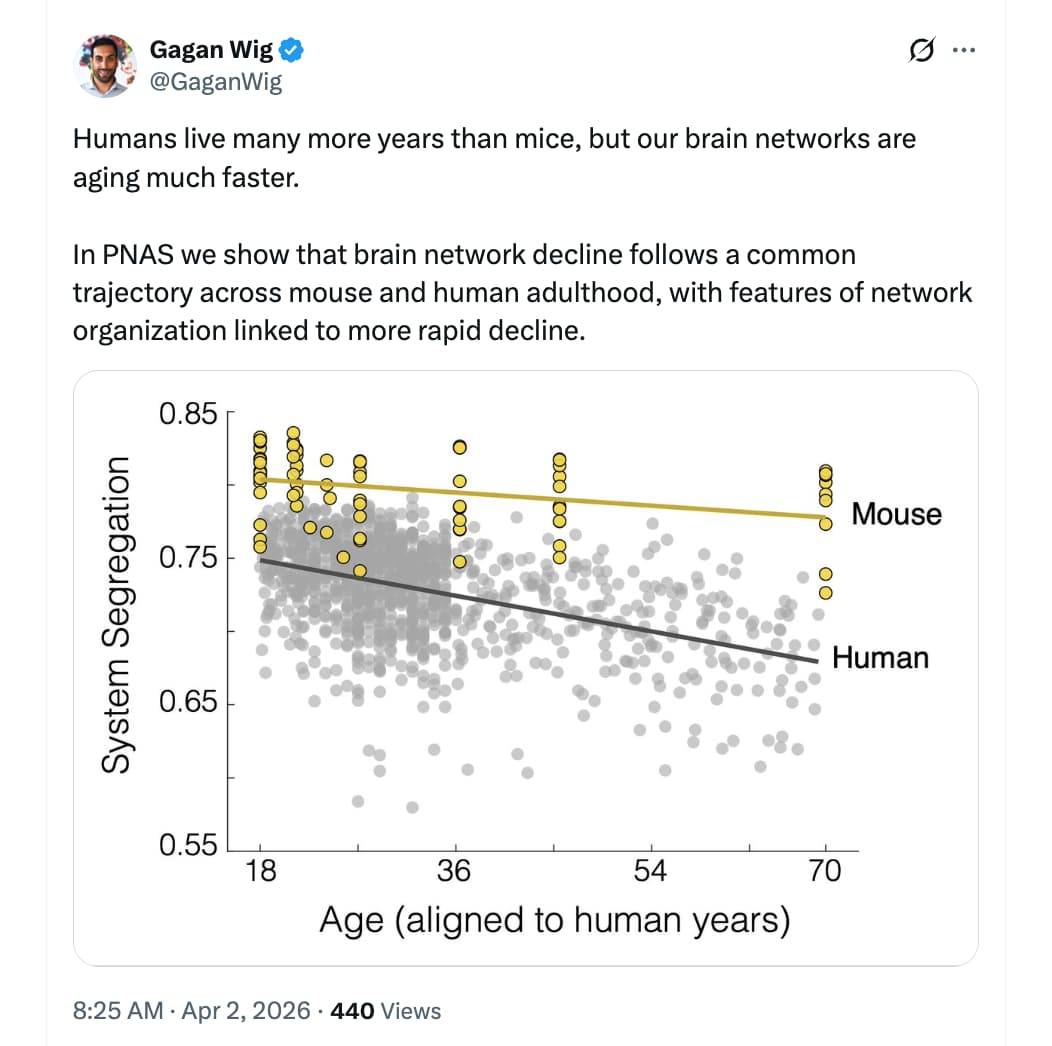
Correspondence of large-scale functional brain network decline across aging mice and humans

Human cognitive aging is characterized by a progressive breakdown in the organization of large-scale functional brain networks. Specifically, the brain loses its modular architecture—a metric known as “system segregation”—leading to functional dedifferentiation where distinct brain networks blur together. [Confidence: High]. Until now, an absence of precise imaging in unanesthetized animal models has limited our ability to cross-reference human neurological aging with the genetic and cellular tools available in mice.

Using high-density resting-state functional MRI on awake mice, researchers mapped the functional connectome across the adult murine lifespan. The data reveal that mice exhibit a conserved trajectory of brain network dedifferentiation analogous to human aging. However, the study identifies critical evolutionary divergences: mouse brains are highly segregated with limited long-range connections, whereas human brains rely heavily on metabolically expensive, long-range networks to integrate complex cognitive tasks. [Confidence: High]. Consequently, mice exhibit a slower baseline rate of network decline compared to humans.

By establishing a translatable imaging biomarker for large-scale brain network aging, this research provides a functional meso-scale bridge. It allows for the non-invasive tracking of network integrity over a mouse’s lifespan, establishing a crucial framework for evaluating the efficacy of emerging neuroprotective and life-extending therapeutics prior to human trials.

Institution: Center for Vital Longevity at The University of Texas at Dallas, Technion-Israel Institute of Technology, and Columbia University. Country: United States, Israel. Journal: Proceedings of the National Academy of Sciences (PNAS).

Impact Evaluation: The impact score of this journal is 11.1, evaluated against a typical high-end range of 0–60+ for top general science, therefore this is a High impact journal.

Open Access Paper: https://www.pnas.org/doi/10.1073/pnas.2527522123

Mechanistic Deep Dive The study evaluates meso-scale topological features (system segregation) rather than probing intracellular longevity pathways like mTOR, AMPK, or cGAS-STING. [Confidence: High]. However, maintaining system segregation emerges as a critical organ-specific aging priority for the central nervous system. The structural degradation of functional networks likely mirrors the downstream effects of mitochondrial dysfunction, synapse loss, and reduced neuronal selectivity observed at the cellular level. [Confidence: Medium]. For longevity therapeutics aimed at preserving cognitive function, demonstrating the preservation of brain network modularity via fMRI represents a highly translational efficacy endpoint.

Novelty This paper resolves the confounding variable of anesthesia in preclinical fMRI models by utilizing an awake-imaging protocol, yielding network data functionally comparable to human resting-state scans. [Confidence: High]. It quantifies the structural compromises made in human brain evolution: our reliance on long-range associative connectivity drives rapid integration but comes with an accelerated trajectory of functional dedifferentiation over time compared to rodents
2 Likes

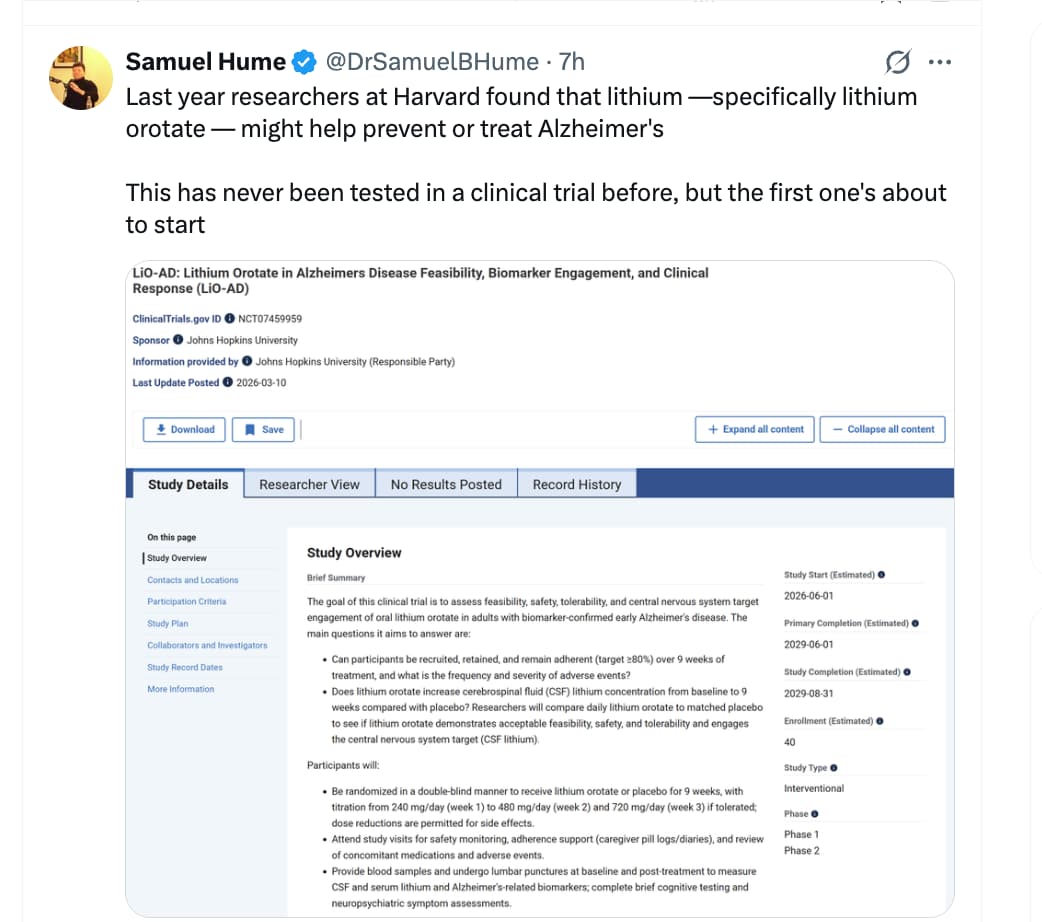
Source: https://x.com/DrSamuelBHume/status/2040369629986504844?s=20

7 Likes

Global study finds combined pollution and inequality can accelerate brain aging

An international study published across 34 countries shows that the biological age of the brain can be accelerated or delayed by environmental risk (air pollution, public housing conditions) and protective factors (socioeconomic equality, access to health care). The stronger effects arise from interactions among environmental, social, and political conditions. The paper is published in Nature Medicine .

Using data from 18,701 individuals across 34 countries, the study shows that the exposome (the cumulative set of environmental, social, and sociopolitical exposures that individuals experience throughout life) operates in a syndemic manner—when two or more health problems occur together and interact in a way that makes each other worse—with multiple co-occurring exposures having very large effects, shaping brain aging across both healthy individuals and those with neurodegenerative conditions.

The researchers quantified 73 different environmental factors measured at country level indicators spanning air pollution, climate variability, green space, water quality, socioeconomic inequality, and multiple indicators of political and democratic contexts. When modeled jointly, these factors explained up to 15 times more variance in brain aging than any single exposure alone.

This finding highlights a key shift: environmental influences on brain health are cumulative and nonlinear, with interactions across domains amplifying their biological impact.

Paywalled Paper: The exposome of brain aging across 34 countries (Nature)

1 Like

From what’sapp…

Website:

We just announced BrainYears — a clinically validated brain age clock (EEG and ERP based with MRI-grade accuracy in collaboration with the Buck Institute).

This gives clinics a new category:
→ Brain aging diagnostics
→ Measurable treatment validation
→ New revenue across testing + therapy

We’re selectively onboarding the first 10 clinics.

Watch the video for details and if you know anyone interested please have them message me directly. Thanks.

Maybe it’s been posted before…

Based on their results, the researchers hypothesise that they may have found a solution to the chicken-or-egg scenario between amyloid-beta peptides and tau tangles – although we should bear in mind that their experiments were with mixtures of purified proteins. Understanding how proteins behave inside cells is far more complicated.

If amyloid-beta peptides displace tau from its usual binding sites, as these protein studies suggest, then this might explain how tau can knot itself in tangles and microtubules become destablized, disrupting core functions of neurons and ultimately leading to cell death…

The brain’s cleaning system can be boosted to rid Alzheimer’s proteins

A duo of drugs that boosts our glymphatic system, which clears waste from our brain, also improves the removal of proteins associated with the onset of Alzheimer’s disease

Drugs that boost our brain’s waste-disposal system so it can better remove proteins associated with Alzheimer’s disease have been identified for the first time. The combination of a therapy that is commonly used as a sedative with a medicine that prevents dangerously low blood pressure seems to safely and effectively remove proteins linked to the disease, which could delay its onset by seven years.

“This is a significant step forward,” says Shiju Gu at Harvard University, who wasn’t involved in the research. “It could benefit people with neurodegenerative disease, but even for healthy people, maybe you could use it to maximise the function of the brain.”

Researchers have previously found that dexmedetomidine, a drug commonly used as a sedative during medical procedures, boosts these brain waves in mice. It also improved the brain’s ability to clear waste fluid and slowed cognitive decline in mouse models of Alzheimer’s disease.

To explore dexmedetomidine’s effects in people, Paul Dagum at pharmaceutical company Applied Cognition in Redwood City, California, and his colleagues recruited 19 adults – aged 60, on average – who were deprived of sleep for one night in a lab. The morning after, the participants – who had no chronic medical conditions or brain-specific issues – provided blood samples to act as baseline measurements.

They were then given 4 hours while they received an infusion of dexmedetomidine. They also took a drug called midodrine, which treats low blood pressure, a common side effect of dexmedetomidine. When they woke, the participants provided another blood sample.

This revealed that taking dexmedetomidine and midodrine, which the company collectively calls ACX-02, cleared two amyloid and tau proteins that are particularly prone to misfolding and forming clumps more effectively than the placebo/saline intervention.

The team estimates that if ACX-02’s effect were sustained over several years, it could delay the onset or worsening of Alzheimer’s disease by about seven years, based on levels of misfolded amyloid that are typically seen in people who go on to develop the condition, says Dagum. “That would be a significant, meaningful effect for those at risk,” adds team member Jeff Iliff at the University of Washington in Seattle.

Full story: The brain’s cleaning system can be boosted to rid Alzheimer’s proteins (New Scientist)

Related Research Paper:

Pharmacological enhancement of glymphatic function in humans increases the clearance of Alzheimer’s disease-related proteins

4 Likes

Dexmedetomidine: Dexmedetomidine - Wikipedia

Dexmedetomidine, sold under the brand name Precedex among others, is a medication used for sedation.[4] Veterinarians use dexmedetomidine for similar purposes in treating cats, dogs, and horses.[10][11] It is also used in humans to treat acute agitation associated with schizophrenia or bipolar disorder.[5] It is administered as an intravenous solution or as a buccal or sublingual film.[1]
There are no known contraindication to the use of dexmedetomidine. It has a biphasic effect on blood pressure with lower readings at lower drug concentrations and higher readings at higher concentrations.[32] Common side effects include: hypotension, hypertension, with slight decreases in heart rate, arrhythmias, and hypoxia.[33][34] Toxic doses may cause first-degree or second-degree atrioventricular block. These adverse events usually occur briefly after administering a loading dose of the drug. Thus, adverse effects may be reduced by omitting a loading dose.[34]

Midodrine: Midodrine - Wikipedia

Midodrine, sold under the brand name Proamatine among others, is an antihypotensive medication used to treat orthostatic hypotension (low blood pressure when standing) and urinary incontinence.[1] It is taken by mouth.[1]
Side effects of midodrine include hypertension (high blood pressure), paresthesia, itching (pruritus), goose bumps, chills, urinary urgency, urinary retention, and urinary frequency.[1] Midodrine is a prodrug of its active metabolite desglymidodrine.[1] This metabolite acts as a selective agonist of the α1-adrenergic receptor.[1] This in turn results in vasoconstriction and increased blood pressure.[1]

1 Like

Brain injured? Maybe avoid EPA.

Eicosapentaenoic acid reprograms cerebrovascular metabolism and impairs repair after brain injury, with relevance to chronic traumatic encephalopathy

https://www.cell.com/cell-reports/fulltext/S2211-1247(26)00213-5

1 Like

That’s a spooky graph.

What about Somatic (non-heritable) E2/2 gene editing? Is anyone working on that for prevention?


Alzheimer’s disease is one of the hardest unsolved problems in medicine, and one of the most devastating. It kills millions of people, places a huge burden on families, and still defies much of what medicine can do today. At the OpenAI Foundation, we want to change that by using advanced AI to accelerate the science of preventing and treating the disease. As a first step, we are working to finalise more than $100 million in grants this month, across six research institutions, to support and accelerate Alzheimer’s research—generating new data, helping design new drugs, and expanding possible paths to treatment…

Announced today:

3 Likes

Of course, there is always a gotcha.

"For individuals with the APOE E2/E2 genotype, lifestyle recommendations focus on managing specific metabolic profiles that differ from the more common E3 and E4 variants. While E2/E2 is often considered “protective” against Alzheimer’s, it carries a unique risk for Type III hyperlipoproteinemia, which can lead to high triglycerides and premature heart disease. "

ARUP Consult

1 Like

If money and researcher time were used for developing a non-heritable homozygous E2 gene therapy I presume any downsides and pleiotropic benefits would be thoroughly researched and how it would be modified.

The simplest answer to AD prevention seems to be this by looking at that graph.

I remember someone posted their lipid levels with E2 allele and they had like a natural apoB of 50 mg/dl, so it might even prevent ASCVD (now that I think about it, if it lowers apoB that much that might be a reason why AD decreases).

Not all E2/E2 appear to have that side effect:

However, only a minority of apo ε2 homozygotes become hyperlipidemic, often due to metabolic conditions that either increase lipoprotein production or decrease remnant clearance

Data from the UK Biobank indicate that apo E2 homozygosity is present in 0.2–1.3% of individuals, depending on genetic ancestry (23), and less than 20% of those with the apo E2/E2 phenotype develop overt hyperlipidemia (22), despite having demonstrable β-VLDL in the plasma, characteristic of dysbetalipoproteinemia.

There’s a company called Lexeo working on gene editing to get people to express apoe e2 in their central nervous system. Alzheimer’s - Lexeo Therapeutics

Phase 1/2 trial results: https://alz-journals.onlinelibrary.wiley.com/doi/10.1002/alz70859_101538

Result

Fifteen participants were dosed: 50% MCI, 14% mild and 36% moderate dementia, at baseline. Twelve months of data are available for C1-C3 and 6 months for C4. Treatment with LX1001 was generally safe and well-tolerated. No events of amyloid related imaging abnormalities were observed. Post-treatment, APOE2 was expressed in CSF in all participants in a dose dependent manner. Interim results showed stabilization in CSF Aβ42/40 and amyloid PET. There was a decrease in CSF t-tau, p-tau, and Tau PET. Full data results including 12-month data for C4 will be presented during the meeting.

3 Likes