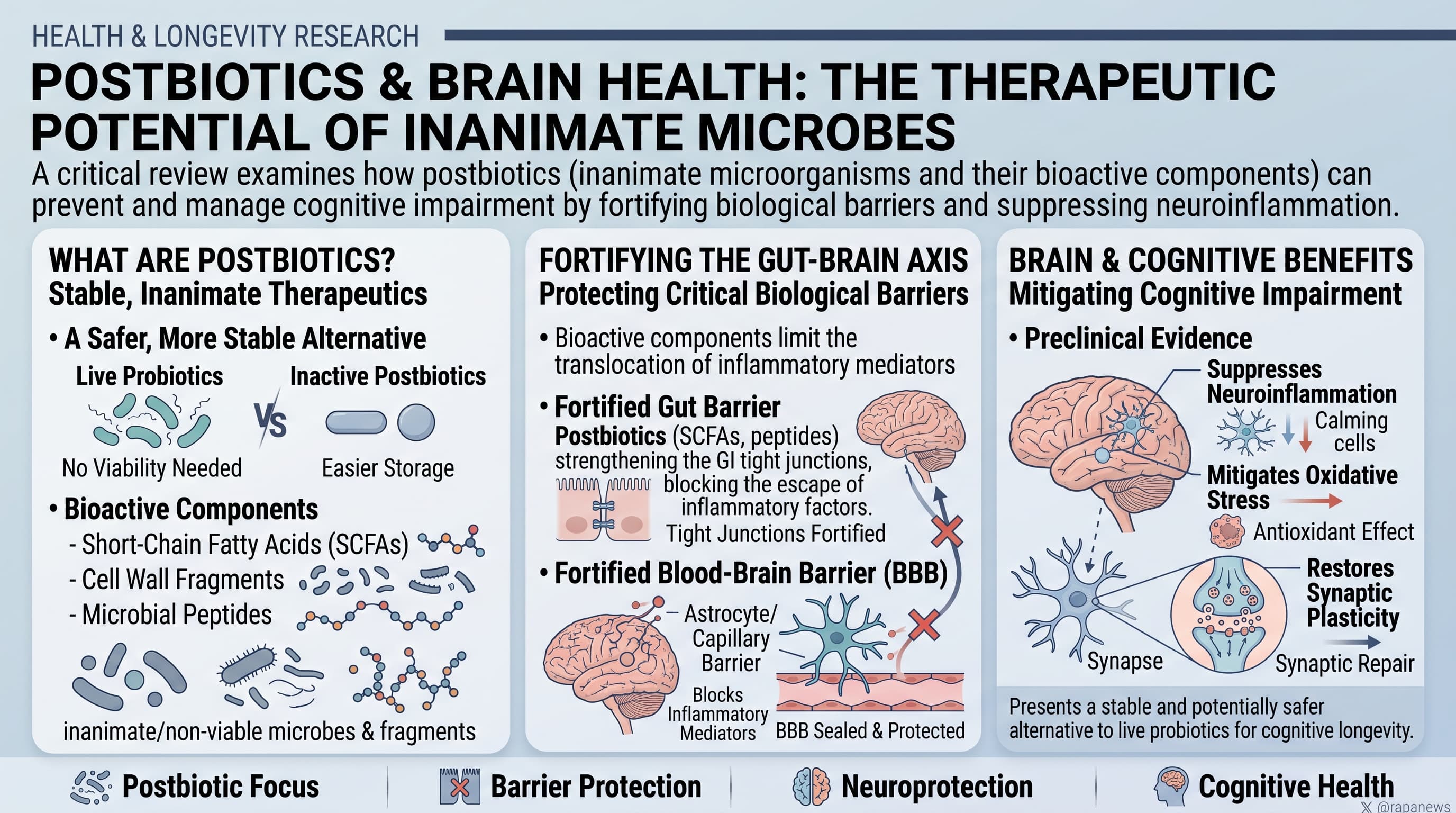
This review paper critically examines the therapeutic potential of postbiotics (inanimate microorganisms and their bioactive components) for preventing and managing cognitive impairment. The authors outline how short chain fatty acids, cell wall fragments, and microbial peptides fortify the gut and blood-brain barriers, limiting the systemic translocation of inflammatory mediators. Preclinical evidence strongly suggests these non-viable formulations suppress neuroinflammation, mitigate oxidative stress, and restore synaptic plasticity, presenting a stable and potentially safer alternative to live probiotics. The evidence underneath it is thin: seven rodent experiments, all in male animals, most using chemically induced memory loss, and no human cognitive trial is presented.
The central nervous system was once considered a pristine and isolated environment. That perspective is rapidly changing. Emerging evidence highlights a constant communication network linking the bacteria in the human digestive tract directly to the brain. When this communication breaks down, it accelerates cognitive decline and neurodegenerative diseases. While much attention has been placed on using live bacteria to fix this gut-brain communication, a new review shifts the focus to postbiotics. These are dead bacteria and the chemical byproducts they leave behind.
Live bacteria are fragile. They must survive the harsh acidic environment of the stomach and successfully compete with existing gut flora to provide any biological benefit. Postbiotics bypass these biological hurdles completely. Because they are inanimate, they are highly stable, easier to dose accurately, and carry a lower risk of causing unexpected infections in vulnerable patients.
The big idea presented by the researchers is that you do not need live bacteria to secure the neurological benefits of a healthy microbiome. The structural fragments of dead bacteria, alongside their fermented waste products like short chain fatty acids, are entirely sufficient to trigger profound protective responses across the gut-brain axis.
The cascade begins in the intestine. Age, poor diet, and chronic stress degrade the protective lining of the gut. This structural failure allows harmful bacterial toxins to leak into the bloodstream. These toxins travel to the blood-brain barrier, a specialized filter designed to protect the brain from peripheral immune threats. Chronic exposure to these circulating toxins degrades the blood-brain barrier. Once the barrier is compromised, inflammatory signals flood the brain, activating specialized immune cells called microglia. When microglia remain in a state of chronic alarm, they begin to damage synapses, disrupt energy production in mitochondria, and ultimately kill healthy neurons.
Postbiotics interrupt this destructive cycle at multiple distinct checkpoints. First, bacterial fragments and fatty acids bind to receptors in the gut lining, signaling the tissue to repair tight junctions and stop the initial leak of toxins. Second, when short chain fatty acids enter the bloodstream and reach the brain, they act as epigenetic modulators. They inhibit specific enzymes, allowing DNA to unspool and increase the production of proteins that strengthen the blood-brain barrier. Finally, these microbial molecules directly dampen the alarm systems inside the brain. They switch microglia from an active and destructive state back to a resting and protective state.
The implications for healthy aging are substantial. If postbiotics can reliably seal the gut, stabilize the blood-brain barrier, and quiet neurological inflammation, they represent a highly scalable intervention for delaying cognitive impairment. However, the current evidence relies heavily on laboratory rodents. The specific molecular signatures of dead bacteria that provide these benefits have not been fully isolated, and the exact dosages required to achieve meaningful results in humans remain completely unmapped.
Actionable Insights
For individuals interested in optimizing cognitive longevity, this research points toward a practical shift from focusing solely on live probiotics to supporting the internal production of postbiotics. Postbiotics, such as short chain fatty acids, are naturally generated when gut bacteria ferment dietary fiber. A highly actionable strategy is to consistently consume diverse, fiber rich plant foods, which acts as the raw material for your existing microbiome to manufacture these brain protecting molecules. Additionally, fermented foods and specific heat killed bacterial supplements may offer a more stable, predictable way to fortify the gut barrier compared to live probiotic capsules, which often die before reaching the lower intestine.
Despite these promising biological mechanisms, it is critical to evaluate the real world magnitude of the intervention. A rigorous review of the provided data reveals a complete omission of quantitative baseline and outcome metrics in this research paper. The source material provides only directional indicators of physiological changes. Consumers should remain cautious and view postbiotics as a foundational health practice rather than a proven cure for cognitive decline.
Context/Source
- Paywalled Paper: Postbiotics as a therapeutic target in cognitive impairment: Exploring into molecular pathways and neuroprotective effects
- Institution: ISF College of Pharmacy, Moga, Punjab
- Country: India
- Journal: Ageing Research Reviews
- Impact Evaluation: The impact score of this journal is 15.5, evaluated against a typical high-end range of 0–60+ for top general science, therefore this is a High impact journal.