I’ve been trying to learn more about peptides this week, and I just discovered this interview with Peter Magic, the guy who owns the testing lab, Janoshik.
I learned some things that I think will even shock you pros… most notably, you don’t even need bacteriostatic water! I’m curious about this one!
He said sterile water works for most things… possibly saline for others.
The take away is if you are using bacteriostatic water, best to stick with the name brands
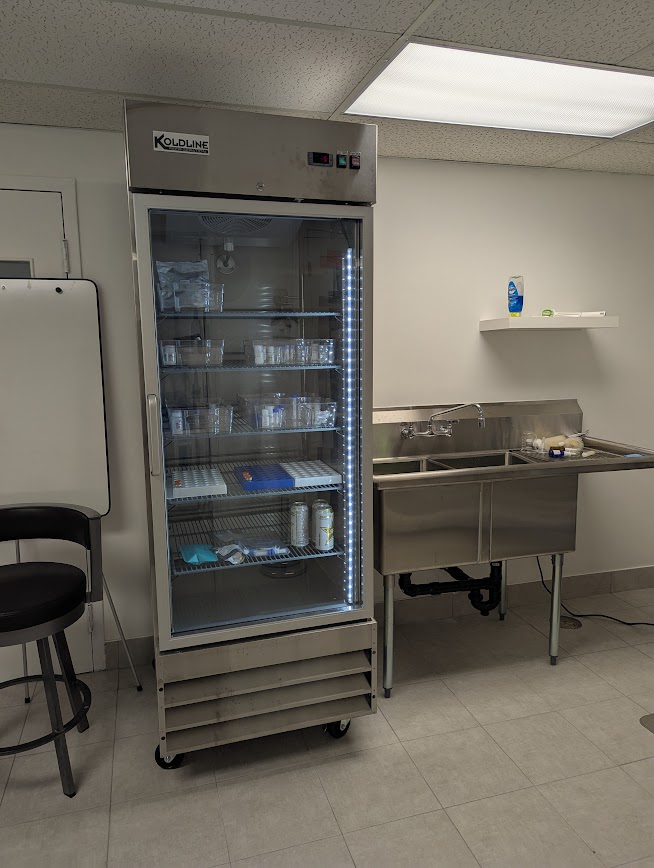
If you keep them in your fridge, they will last years.
If you keep them in your freezer, they will last a decade.
No need for a special extra cold freezer.
After you add water, he would err on the side of caution and not use them after a month. He said he doesn’t worry about degradation, but he would worry about something growing. (I use the same vial of Reta for months, ooops, and the liquid b12 for my CKD cats has a use by date of one year, so this gives me pause).
You can shake your peptides and you don’t have to be careful when you add the water
He doesn’t think people need to worry about testing for heavy metals.
I feel more comfortable about the reliability of his testing after having watched.

This interview features Peter Magic, the founder of Janoshik, which has emerged as the premier analytical laboratory for the “gray market” and research peptide industry. Originally from Slovakia and currently operating out of the Czech Republic, Magic transitioned from a med school student and self-taught chemist to running a high-volume facility that now processes approximately 100 peptide tests per day, seven days a week. Approximately 70-80% of the laboratory’s current volume is dedicated to peptides, specifically GLP-1 agonists like Tirzepatide and Retatrutide, which saw explosive growth between 2023 and 2024.
The core thesis of the discussion centers on the necessity of third-party verification in a market characterized by high regulatory hurdles and potential manufacturer opacity. Magic details the laboratory’s capabilities, including LC-MS (Liquid Chromatography-Mass Spectrometry) for purity and identification, endotoxin testing, and sterility testing. He notes a failure rate of approximately 5% for content (wrong dose or wrong compound) and a 3-5% failure rate for sterility.
A significant portion of the interview is dedicated to debunking industry myths. Magic asserts that peptides are far more resilient than commonly believed; he dismisses the notion that “shaking” or rapid reconstitution damages the molecules as a myth perpetuated by sellers of low-quality products. He further shares anecdotal evidence of human growth hormone (HGH) remaining viable after a decade of room-temperature storage in a garage.
Regarding safety and logistics, Magic emphasizes the importance of blind community testing as the ultimate check on vendor integrity. He also addresses controversial topics, such as the use of sterile water versus bacteriostatic water, suggesting that sterile water is often sufficient for short-term use in regions where bacteriostatic water is less common. Despite his proximity to performance-enhancing compounds, Magic maintains a personal policy of total abstinence to ensure the legal and professional integrity of his facility, which operates as a licensed importer of scheduled substances within the Schengen area.
Bullet Summary
Janoshik’s Evolution: Started as a “beer money” project for weightlifting friends; now a leading global lab for peptide and steroid analysis.
Market Shift: Peptides have overtaken anabolic steroids, now comprising 70-80% of the lab’s total testing volume.
Daily Throughput: The lab processes roughly 100 peptide samples daily, utilizing a specialized team for high-volume LC-MS analysis.
GLP-1 Dominance: Demand for Tirzepatide and Retatrutide testing exploded in 2023–2024.
Debunking Fragility: Magic claims the “do not shake” rule is a myth; peptides are robust enough to withstand vigorous handling and rapid water injection.
Sterility Risks: While endotoxin failures are rare, 3-5% of samples fail sterility tests, presenting a genuine risk of local infection.
The “Garage” Study: Magic tested 10-year-old HGH stored at room temperature; it showed only minor degradation and remained largely functional.
Storage Reality: Peptides are stable for years in a fridge and potentially decades in a freezer; -40°C is considered “overkill” but effective.
Testing Divergence: Differences in lab results (e.g., between Janoshik and Krauss) are attributed to equipment calibration, standards used, or procedural errors.
Heavy Metal Testing: Explicitly labeled as useless and overrated for peptides, as contamination is virtually non-existent in this sector.
Reconstitution Longevity: Reconstituted peptides are generally stable for 28 days if stored in a fridge with aseptic technique.
Water Quality: Magic warns against “no-name” Chinese bacteriostatic water, which often lacks the required benzyl alcohol.
Sterile Water vs. BAC: In Europe, sterile water or saline is often used instead of bacteriostatic water without significant degradation issues.
Vendor Integrity: Magic allows vendors to put their names on COAs only if they were the original purchasers of the test and the stock is shared.
Community Power: “Blind testing” (customers sending samples without the vendor’s knowledge) is the most effective way to keep the market honest.
Failure Profile: Most failures are due to incorrect dosage or sterility, rather than the complete absence of a compound.
Legal Compliance: Janoshik is a licensed importer of scheduled substances, necessitating strict adherence to local and international laws.
Claims & Evidence Table
Claim made in video
Evidence the speaker provides
Your assessment
Peptides are not damaged by shaking or rapid water injection.
Personal experience and 15 years of testing various handling methods.
Strong. Mechanically, small peptides are very stable; large proteins are more sensitive, but the “shaking” fear is largely unscientific.
10-year-old HGH stored at room temp is still viable.
Retested his own leftover samples from 2012/2013 and found only marginal degradation.
Speculative. While likely true for the specific samples tested, storage conditions (humidity/light) vary.
Heavy metal testing is “useless” for peptides.
Years of testing results showing zero cases of heavy metal contamination in peptides.
Strong. Peptides are synthesized chemically, not extracted from soil, making metal contamination highly unlikely.
Reconstituted peptides are safe for at least 28 days.
Testing of aged reconstituted samples showing minimal degradation of the active compound.
Strong. Supported by general pharmaceutical standards for multi-dose vials.
Peptides are stable for decades in a freezer.
Cooperation with research institutes that successfully use decades-old frozen stock.
Strong. Standard practice in biochemical research for lyophilized powders.
3-5% of tested samples fail sterility.
Internal lab data from current high-volume testing.
Strong. This matches common industry concerns regarding “underground” manufacturing.
Actionable Insights
Prioritize Sterility Over Purity: If a vendor provides a purity report but no sterility/endotoxin report, recognize that the risk of infection (3-5% failure) is statistically higher than the risk of heavy metal poisoning.
Use Blind Testing: Do not rely solely on COAs provided by a vendor. Use community-funded “blind” tests where the lab does not know the source.
Reconstitution Handling: Stop worrying about “dropping” water gently down the side of the vial or shaking the solution. The molecules are robust.
Verify Your BAC Water: If using bacteriostatic water from unknown sources, be aware it may lack benzyl alcohol. Use reputable brands like Hospira or, as suggested, consider pharmacy-grade sterile water for short-term use.
Storage Strategy: For long-term stockpiling, a standard freezer is sufficient. Professional -40°C freezers are unnecessary for maintaining peptide integrity.
Vial Size Selection: Buy the smallest vial size that fits your monthly dose to minimize the time a peptide stays reconstituted, reducing the window for microbial growth.
Ignore Heavy Metal Add-ons: When ordering private tests, save money by skipping heavy metal analysis; it is almost never a factor in peptide quality.
Technical Deep-Dive
The analytical backbone of Janoshik relies on LC-MS (Liquid Chromatography-Mass Spectrometry).
Liquid Chromatography (LC): Separates the components of the sample based on their interaction with a stationary phase. This allows the lab to identify impurities that have different “retention times” than the target peptide.
Mass Spectrometry (MS): Measures the mass-to-charge ratio of ions. This is critical for peptides because it confirms the identity of the molecule (the “fingerprint”) based on its molecular weight.
CHNS Analysis: Mentioned by Magic for “burning” new or unknown peptides. This technique (Elemental Analysis) determines the percentage of Carbon, Hydrogen, Nitrogen, and Sulfur. By measuring the combustion gases (, , ), the lab can calculate the purity and concentration of a novel compound even without a reference standard.
Endotoxin Testing (LAL): Likely uses the Limulus Amebocyte Lysate (LAL) assay, which is highly sensitive to bacterial pyrogens. Magic emphasizes that this requires a Laminar Flow Hood to prevent environmental contamination, which would otherwise produce false positives.
Fact-Check Important Claims
Claim: Peptides are stable at room temperature for years.
Fact-Check: Most lyophilized (freeze-dried) peptides are highly stable. However, stability is peptide-specific. While HGH is famously stable in powder form, others may degrade faster. Most manufacturers recommend 2-8°C for long-term storage to be safe. Source: Journal of Pharmaceutical Sciences.
Claim: Shaking does not damage peptides.
Fact-Check: For small peptides (like BPC-157 or GLP-1s), this is accurate. They lack the complex tertiary folding of large proteins (like monoclonal antibodies) that can be disrupted by shear stress. Source: Protein Science Archive.
Claim: Benzyl alcohol-free water is safe for 28 days if refrigerated.
Fact-Check: This is a high-risk recommendation. While the peptide won’t degrade, the lack of a preservative (benzyl alcohol) means any bacteria introduced by the needle will multiply. USP <797> guidelines generally recommend a much shorter shelf life for preservative-free solutions. Source: USP General Chapter <797>.
Scholarly research and pharmaceutical stability data clarify the degradation patterns of GLP-1 and GIP/GLP-1 dual agonists like Tirzepatide and Semaglutide. While Peter Magic’s anecdotal “garage” story highlights the inherent robustness of lyophilized peptides, scientific consensus provides precise timeframes and chemical mechanisms for their degradation.
Comparative Thermal Stability
Stability profiles differ significantly between the lyophilized (powder) form and the reconstituted (liquid) form.
Storage Condition
Lyophilized Powder (Unopened)
Reconstituted Liquid (Opened/Mixed)
Deep Freeze (-20°C to -80°C)
Highly Stable: Can last decades with negligible loss of potency if kept dry.
Risky: Repeated freeze-thaw cycles cause mechanical shearing and aggregation.
Refrigeration (2°C to 8°C)
Stable: Guaranteed until expiration date (typically 2+ years).
Standard: Stable for 28 to 56 days depending on the specific analog (e.g., 56 days for Ozempic).
Room Temp (up to 30°C/86°F)
Moderate: Stable for several weeks to months.
Limited: Manufacturer data for Tirzepatide (Zepbound/Mounjaro) suggests a 21-day limit.
Chemical Mechanisms of Degradation
When these peptides are exposed to heat or light, they do not simply “disappear”; they undergo specific chemical transformations that alter their ability to bind to receptors.
Oxidation: Specifically at Methionine and Tryptophan residues. Forced degradation studies using $H_2O_2$ show mass shifts of $+16$, $+32$, and $+48$ Da, corresponding to mono, di, and tri-oxidation products.
Deamidation: Occurs at Asparagine or Glutamine residues, particularly at high pH or temperature, which can change the peptide’s charge and folding.
Aggregation: Peptides may “clump” together. While the chemical formula remains the same, these aggregates cannot interact with the GLP-1 or GIP receptors, rendering the dose ineffective.
Proteolytic Cleavage: In biological environments (or if bacteria are introduced during reconstitution), enzymes like DPP-IV can cleave the N-terminal amino acids, inactivating the peptide within minutes (though synthetic analogs like Semaglutide are specifically engineered to resist this).
Knowledge Gaps & Data Needs
Long-term Room Temp Data: Most manufacturer “21-day” or “56-day” limits are based on safety margins for commercial liability. Academic “real-world” data on 6–12 month room temperature exposure for lyophilized GLP-1s is sparse.
Secondary Metabolite Toxicity: While degradation usually leads to “loss of potency,” research is needed to verify if specific degradation byproducts (like truncated peptide fragments) could provoke immune responses or localized site reactions.
Comparison of Compounding Buffers: Different compounding pharmacies use various stabilizers. Data comparing the stability of Tirzepatide in phosphate-buffered saline (PBS) vs. other proprietary buffers would be necessary for a full comparative analysis.
Verified Fact: Tirzepatide loses its manufacturer-guaranteed stability 21 days after reaching room temperature.
Informed Speculation: Based on biochemical principles, a lyophilized peptide in a vacuum-sealed vial stored in a dark, cool garage likely retains >90% potency after a year, though it would fail official pharmaceutical quality control.
Sterile water is great for single injections, no question. You are definitely more at risk of bacteria growing if you use the same vial with sterile water for 1 month vs bacteriostatic water. Also, this whole discussion came up because in Europe, it seems like it’s much harder for people to obtain bacteriostatic water vs sterile water.
The advice about using a vial no more than 1 month is a direct consequence of using sterile water. With bac water, you can go longer.
As for the use of saline, not all peptides remain stable once reconstituted with it, I would double check.
As long as you can find Hospira BAC that’s the best bet IMO. No need to even look into anything different. If that’s not available, then I guess you try and find the best next alternative.
There is an over abundance of books and videos on “Peptide’s”.
The majority calling them self’s “experts”.
The person who was truly an expert in Peptide’s was Prof. Vladimir Khavinson, MD
Read the real medical books{book that MD’s, DO’s, etc use] on Peptide’s (avoided the consumer book) Review patent’s.
There are many on line videos for MD’s, DO’s etc available at no cost, several have been posted on this forum in other threads.
There are also MD’s offering on-line training courses on Peptide’s for several thousands.{I would avoid them as I feel these over priced on-line videos are to capitalize on the growing craze in “peptides” to make a quick buck.
Yes it does but what is sterile water? and how long does it stay sterile? and what is the difference from bacteriostatic water?
Basically sterile water is single use only. Stick a syringe in a sterile water container and after that it is considered contaminated and to be used only once.
BAC water is multi-use, up to 30 days from initial puncture.
So it depends on how adverse one is to causing an “own goal” by possibly giving yourself an infection. Personally I’m sticking with BAC water.
Maybe that will add some colour to your confidence in this guy.
Key details
Bacteriostatic water for injection is sterile water with 0.9% benzyl alcohol added as a preservative to inhibit bacterial growth.
Benzyl alcohol at this concentration allows multi‑dose use (multiple withdrawals from the same vial) by suppressing bacterial growth rather than killing bacteria outright.
Because of benzyl alcohol toxicity risk, bacteriostatic water is generally not recommended for use in neonates; preservative‑free sterile water is preferred in that populatio
I thought it was an exciting development because I read there was a bacterostatic water shortage not too long ago. I’m glad all of you knew better!
On this note, it kills me to dump an almost full bottle of bacterostatic water, so I keep it in the fridge and I do use it a lot longer than 30 days. Do most people really dump it?
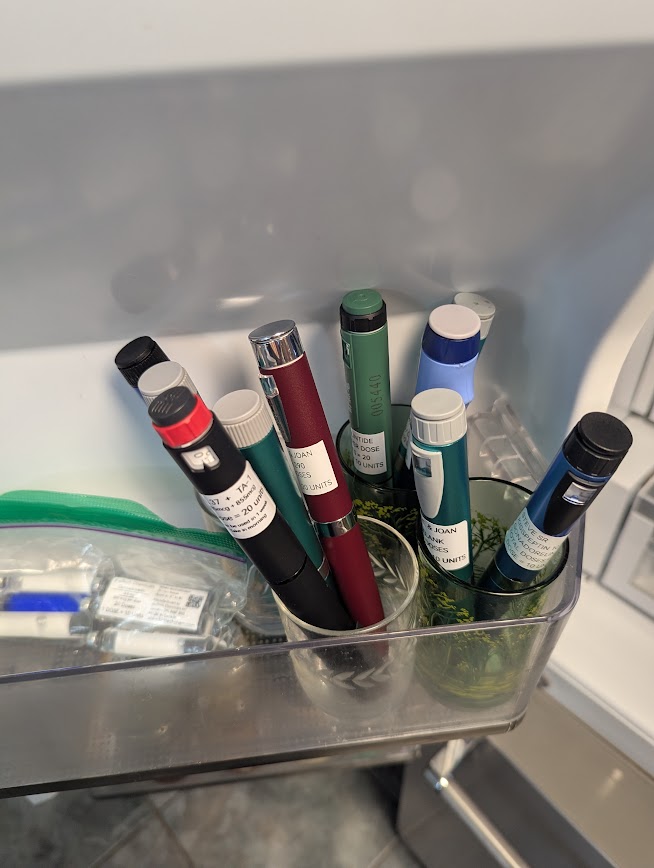
Ok, because I care about my cats more than myself (treating a sick cat would be harder than treating a human!), are there any special precautions I can take for the bottles of their various medicines I inject?
These bottles all last a lot longer than a month. I use a new needle/syringe and I use an alcohol swap before and after I puncture the rubber stopper. Until this week, it never occurred to me that I was risking an injection.
Is there a way to tell if BAC water is still good or not, other than finding out the hard way by getting an infection LOL. Reason I ask is because I have kept using BAC water well past 30 days, some cases as long as 90 days and could not tell a difference.
PGB, one my old favorites for peptides keep all lyophilized peps at room temp in the dark around 65F. Many have been stored well over a year and showed virtually no degradation. Anecdotal, but take it for what it worth.
I keep mine in the same condition and have no issues.
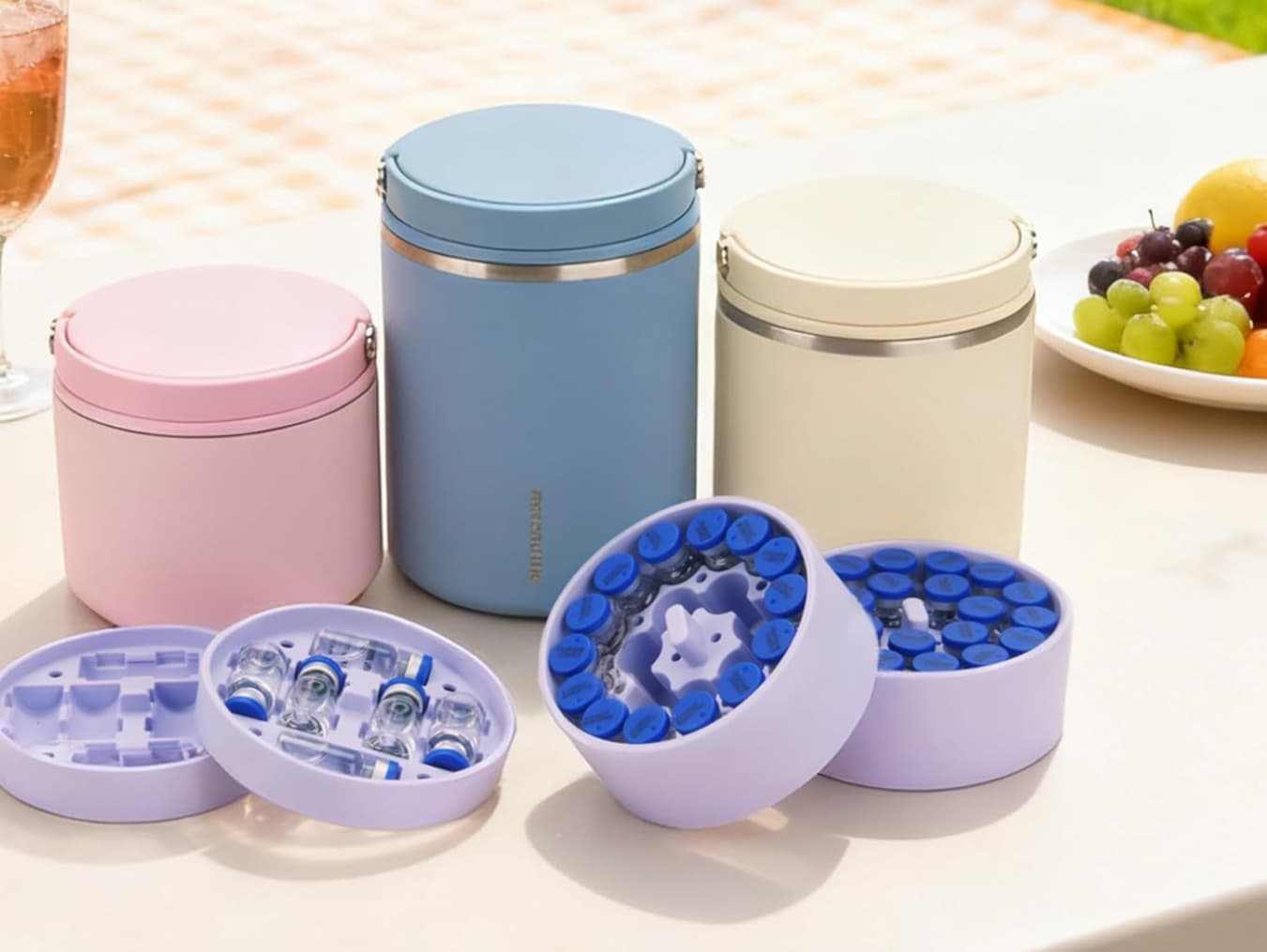
I’ve been keeping mine in the fridge, but now that I am starting to invest more heavily (vs one order every couple of years!), I got sucked into the hype and ordered a Hyrda Peak container and insert from amazon to keep the un-reconstituted bottles in the freezer. I read the thermos aspect was to keep the temp fairly steadily during the freezer cycles.
And to your point @touringsedan, in the interview, Peter said he had some peptides in his garage for a decade and they had barely degraded… I’ll consider cancelling my order, but I also kinda like the idea of having them more organized and put away neatly. Regardless, I’ll need to find something to keep them from being a jumbled mess.
The most shocking thing about this is the idea that you can “shake” the peptides when reconstituting. I had always heard that they are very delicate and the water must be added drop by drop along the inside of the vial and swirled very gently until dissolved.
Your (chest or upper ) freezer already keeps temps pretty steady, unless it’s very old. Your freezer doesn’t shut down long enough to have the kind of variations you would be worried about for peptides. Many people have stuck thermometers in their freezers, and have observed minimal variation in temperature.
But hydra peaks are good for organizing, and consolidating and keep nosy people out of your peptides