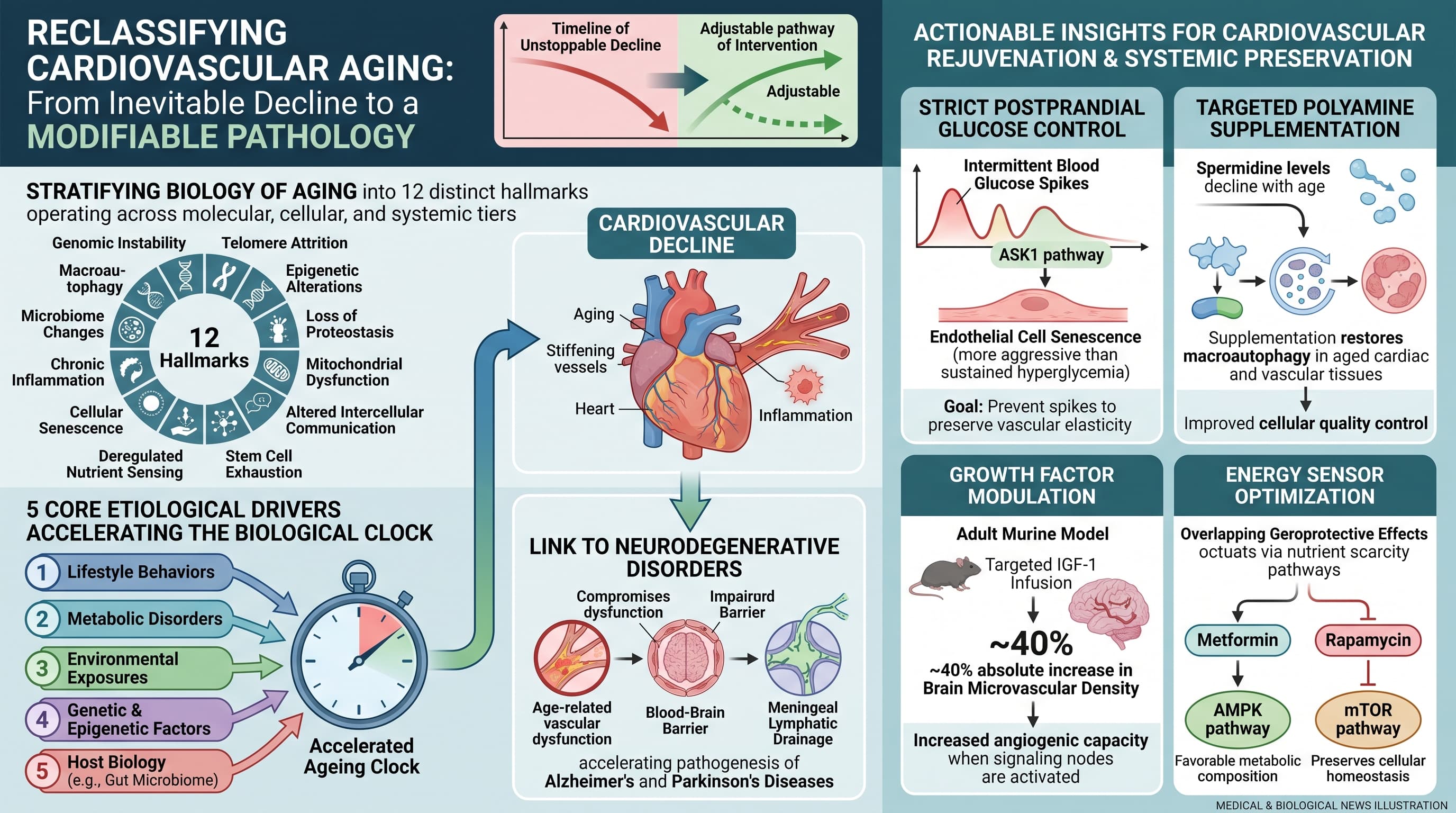
The reviewed literature establishes a comprehensive framework that reclassifies cardiovascular aging from an inevitable temporal decline into a modifiable pathology. It stratifies the biology of aging into twelve distinct hallmarks operating across molecular, cellular, and systemic tiers while identifying five core etiological drivers. By mapping established and experimental therapeutics directly to these mechanisms, the authors provide a structural roadmap for deploying targeted clinical interventions, including senolytics and energy-sensing modulators, to mitigate residual cardiovascular risk.
Cardiovascular disease is the primary driver of global mortality, and advancing age is the most significant nonmodifiable risk factor. However, recent advances in molecular gerontology indicate that the pace of cardiovascular aging is highly variable and susceptible to intervention. The authors identify five principal etiologies that accelerate this biological clock: lifestyle behaviors, metabolic disorders, environmental exposures, genetic and epigenetic factors, and host biology, including the gut microbiome. These factors collectively orchestrate the structural and functional decline of the heart and vasculature.
To systematically address this decline, the paper organizes twelve hallmarks of cardiovascular aging into three interconnected tiers. At the molecular level, genomic instability, epigenetic alterations, loss of proteostasis, mitochondrial dysfunction, and chronic inflammation drive initial tissue damage. At the cellular level, these molecular failures precipitate generalized cellular dysfunction, cellular senescence, stem cell exhaustion, and pathological metabolic changes. At the systemic level, aging disrupts critical communication networks, leading to the chronic overactivation of the renin-angiotensin-aldosterone system, beta-adrenergic signaling, growth signaling, and mechanosignaling.
A central thesis of the analysis is the profound crosstalk between these hallmarks. Senescent cells secrete a senescence-associated secretory phenotype that induces paracrine senescence in adjacent healthy cells and perpetuates systemic low-grade inflammation. This inflammation drives further genomic instability, creating a destructive feedback loop. The paper highlights that single-target interventions often yield pleiotropic benefits due to this interconnectivity. For example, activating sirtuins counteracts genomic instability via enhanced DNA repair, restores proteostasis, and ameliorates mitochondrial dysfunction simultaneously.
The clinical manifestations of these aging mechanisms extend beyond the heart. The paper explicitly links cardiovascular aging to neurodegenerative disorders. Age-related vascular dysfunction compromises the blood-brain barrier and impairs meningeal lymphatic drainage, accelerating the pathogenesis of Alzheimer’s and Parkinson’s diseases. Consequently, cardiovascular rejuvenation strategies offer the potential for systemic preservation of organ function.
Actionable Insights
-
Strict Postprandial Glucose Control: Intermittent blood glucose spikes accelerate endothelial cell senescence more aggressively than sustained hyperglycemia via the apoptosis signal-regulating kinase 1 pathway. Preventing postprandial glucose excursions is critical for preserving vascular elasticity and preventing downstream metabolic syndrome.
-
Targeted Polyamine Supplementation: Spermidine levels decline progressively with age, disrupting the synthesis of autophagy machinery. Supplementation has been shown to restore macroautophagy in aged cardiac and vascular tissues, directly improving cellular quality control.
-
Growth Factor Modulation: While systemic growth hormone declines with age, targeted infusion of insulin-like growth factor 1 has been shown to yield an approximate 40 percent absolute increase in brain microvascular density in adult murine models. This highlights a massive physiological shift in angiogenic capacity when specific growth signaling nodes are activated.
-
Energy Sensor Optimization: Metformin and rapamycin deploy overlapping geroprotective effects by acting on nutrient scarcity pathways. Metformin activates the AMP-activated protein kinase pathway, resulting in a systemic shift toward favorable metabolic composition, while rapamycin inhibits the mammalian target of rapamycin to preserve cellular homeostasis.
Context/Source
- Open Access Paper: Cardiovascular ageing: hallmarks, signaling pathways, diseases and therapeutic targets , Published: 21 April 2026.
- Institution: Zhongshan Hospital, Fudan University
- Country: China
- Journal: Signal Transduction and Targeted Therapy
- Impact Evaluation: The impact score of this journal is 39.3, evaluated against a typical high-end range of 0 to 60 for top general science, therefore this is an Elite impact journal.