Noted, but not statistically significant. That said, it is still a potential reduction which is not good. 
1 Like
I think there is a slightly better question. I think having sufficient vitamin B3 is important. The question is whether that should be through NMM NR or niacin (or simply tryptophan)
I have tried NMN and NR, but not noticed anything particularly, but I am supplementing with niacin anyway.
In the end if you are deficient in something supplementing will have more impact.
2 Likes
According to the latest study, NAD precursors plus exercise increase athletic endurance greater than either one alone.
3 Likes
FWIW I took NR briefly some years back, and it very noticeably degraded my exercise performance.
1 Like
I take niacin. I love the flush feeling. Have you noticed a glucose bump up on niacin? I’ve read it has that effect. I haven’t had a blood test since starting on niacin.
I absolutely believe this. When I started NMN I started recovering from workouts better and awash able to go harder than before. I don’t think it directly caused muscle gain but I think my ability to put in more work lifting was a turning point in my fitness for sure.
2 Likes
I haven’t tried the flush niacin as yet.
I do try multiple experimentation, but there are difficulties with that in identifying cause and effect. In the end NAD deficiencies as a result of age changes should reverse with the mitigation of those age changes. At a guess I think the kyenurine pathway is part of this some of the mRNA changes point to this.
I probably will try niacin at some stage, but probably not this year.
1 Like
I brought my NMN with me on my 25 hour flight to the other side of the world. Took it first thing in the morning and no jet lag.
That in and of itself is a terrific reason to take NMN.
1 Like
How much are you taking? Do you take it sublingually? Pills? Or do you mix it with something?
I have been taking NMN for a while and I have not seen something remarkable, maybe a bit more energy, less tiredness, but that is not always good thing as I need to remind myself to go to bed sometimes as I don’t feel tired or sleepy at all…
I take 750 mg of NMN mixed with EVOO and black pepper and tumeric. Great cure for jet lag. Normally I get pretty bad jet lag but with NMN, I don’t have any.
2 Likes
I use melatonin and Rapa to beat the jet lag. Take both when I should sleep in the new time zone, the melatonin knocks me out, and by the time I wake up the Rapa makes me very alert for the next day. Able to then fall asleep at normal bedtime the following night without taking anything.
I appreciate that probably won’t work for everyone but worth a try.
2 Likes
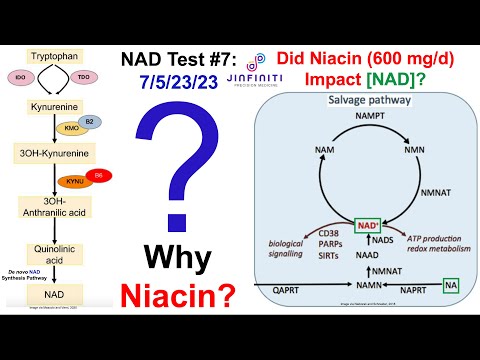
Looking forward to his next eperiments. Niacin looks promising and cheap.
2 Likes
Data from isotope-labeled compounds revealed that the majority of absorbed NMN undergoes degradation to nicotinamide and NR before being utilized for NAD+ synthesis. Nicotinamide salvage pathway for NAD+ biosynthesis was the dominant pathway in almost all tissues except for the kidney.
Dont waste your money on NMN/NR, just take nicotinamide, its cheaper
1 Like
I’ve been taking NR for close to a year now (associated with other supplements I introduced gradually after). A very clear effect is that I never, ever, get hangovers, even after drinking way too much. Not necessarily good (as it could push you to drink more), but proof, somewhat, that metabolism is working better.
I did the Morgan Levine PhenoAge test recently, and according to that test, my biological age is 12 years younger than my chronological age (44 instead of 56). But I haven’t done the test or any other bloodwork before, so no proof whatsoever this is from NR or the other supplements.
What is a bit more intriguing, is that my Garmin measured VO2max, after having stagnated at 49 for over a year, has been steadily climbing to now 52 in the last 6 months, even though I didn’t change my training in any way, and have even reduced, involuntarily, my training load a bit.
So I really don’t know what to think of NR and the rest of the supplements, but I’m doing fine, so I’m not so sure if I want to change the routine (I also fast 3 days every 2-3 months, eat a great diet, but otherwise have quiet unhealthy habits…).
2 Likes
Have you also seen an HRV (and body battery) increase in the same period?
My Garmin watch (Forerunner 245) doesn’t track HRV, even though you can get it through a third party app (but not continuously). I should upgrade to a 255, but I’m a bit broke now and can’t really justify the expense. As for Body Battery, I have never taken it seriously, so I don’t know. Yet it relies on sleep tracking, which isn’t very accurate, as, quite often, when you wake up in the middle of the night, the Garmin doesn’t realise you fell asleep again and thus calculates a much too low sleep time, and at other times, on the contrary, when you actually don’t fall asleep again, but lie still, he believes you sleep. So given that the sleep tracking has some quite fundamental errors, the more elusive “body battery” seems quite non-sensical to me.
2 Likes
Brad Stanfield on NR and NMN:
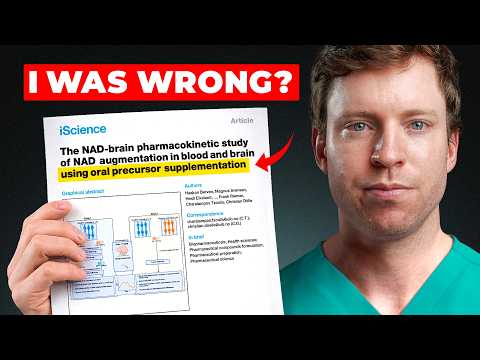
It seems they probably aren’t much better than nicotinamide, which is cheaper, and that the gut microbiome does a lot of the work.
Genetics probably influences what microbiota populate one’s gut, but they can also be influenced by diet.
1 Like
I. Executive Summary
The therapeutic paradigm of optimizing cellular longevity via oral nicotinamide adenine dinucleotide (NAD+) precursors is undergoing a critical re-evaluation driven by human pharmacokinetic and clinical trial data. For over a decade, commercial and academic factions have debated the comparative bioavailability of nicotinamide riboside (NR) and nicotinamide mononucleotide (NMN), claiming distinct cellular import mechanisms and superior phosphorylation kinetics. However, recent human trial data dismantle this commercial narrative.
A landmark 65-participant, randomized, open-label, placebo-controlled trial demonstrated that 14 days of oral supplementation with 1,000 mg/day of either NR or NMN comparably doubled circulating NAD+ concentrations, showing no statistically significant performance difference between the precursors (Christensen et al., 2026). Crucially, metabolic footprinting revealed that both oral NR and NMN are extensively catabolized by gut microbiota into inexpensive nicotinic acid (NA) before systemic absorption. This gut-dependent pathway utilizes the Preiss-Handler salvage pathway to reconstitute systemic NAD+, a mechanism corroborated by isotope-labeled tracking (Lozada-Fernández et al., 2022). Mechanistic validation indicates that even intravenous administration triggers biliary excretion into the gastrointestinal lumen, redirecting the precursors to microbial deamidation.
More significantly, the biochemical success of superloading circulating NAD+ fails to translate into objective functional or longevity benefits in humans. A comprehensive meta-analysis pooling 10 randomized controlled trials (RCTs) in adults over age 60 revealed negligible therapeutic effects on skeletal muscle mass, handgrip strength, gait speed, or physical performance metrics (Systematic Review / bioRxiv, 2026). Similarly, pooled data show no significant modulation of fasting glucose, insulin sensitivity, HbA1c, or lipid profiles. Even under severe pathological metabolic strain, such as in long COVID patients presenting with profound mitochondrial dysfunction, a 20-week trial of 2,000 mg/day NR failed to demonstrate any clinical improvement over placebo in fatigue, sleep disturbances, cognition, or mood disorders despite tripling systemic NAD+ levels (Chiropractic Economics / MGH Study). Furthermore, cross-sectional data indicate that age-related NAD+ attrition is not an absolute law of human biology; exercise-trained older adults maintain muscular NAD+ pools identical to young cohorts. Consequently, the premium pricing of synthetic precursors represents a translational gap, where basic vitamin B3 requirements can be met far more economically, and physiological NAD+ homeostatic flux is optimized via physical exercise rather than exogenous superloading.
II. Insight Bullets
- Precursor Parity in Vivo: A 65-participant parallel-group trial revealed that 1,000 mg/day of oral NR and NMN exhibit identical efficacy in doubling circulating NAD+ over 14 days, refuting claims of NMN superiority (Christensen et al., 2026).
- The Bergen Crossover Discrepancy: A small 6-person crossover trial reported a 2.3-fold pharmacokinetic advantage for NR over NMN at 1,200 mg/day, but the data are limited by an exceptionally small sample size and extreme intra-individual variability (Berven et al., 2026).
- Microbial Deamidation Rule: Isotope-labeled tracking shows that oral NR and NMN do not enter systemic circulation intact; instead, gut bacteria convert them into cheap nicotinic acid (NA) (Lozada-Fernández et al., 2022).
- The Preiss-Handler Convergence: Elevated baseline concentrations of nicotinic acid adenine dinucleotide (NAAD) confirm that both high-cost precursors rely on the Preiss-Handler pathway rather than direct cellular salvage or nucleoside transport.
- Biliary Shunting Mechanism: Preclinical data demonstrate that even when NR or NMN bypass the stomach via intravenous injection, the liver actively excretes them via bile back into the gut for bacterial degradation (Source unverified in live search).
- Fecal Validation of Degradation: Human fecal samples exposed to NR and NMN ex vivo demonstrate rapid, complete microbial conversion to nicotinic acid within hours, verifying the obligate role of the microbiome (Christensen et al., 2026).
- Failure to Treat Muscle Sarcopenia: A meta-analysis of 10 clinical trials in seniors over 60 showed zero significant improvements in skeletal muscle index, grip strength, or chair stand tests despite robust increases in blood NAD+ (Systematic Review / bioRxiv, 2026).
- No Cardiometabolic Efficacy: Pooled RCT data confirm that boosting NAD+ via synthetic precursors induces no statistically significant shifts in fasting glucose, fasting insulin, HbA1c, or lipid profiles in human cohorts.
- Long COVID Therapeutic Failure: A 20-week double-blind RCT using 2,000 mg/day of NR in long COVID patients tripled blood NAD+ but produced zero improvement over placebo in fatigue, brain fog, or sleep scores (Chiropractic Economics / MGH Study).
- The Exercise Preservation Effect: A cross-sectional study demonstrated that older adults who engage in regular physical training exhibit muscle NAD+ levels identical to young adults, showing that age-related decline is largely mediated by sedentary behavior.
- Premium Supplementation Illusory Economics: Because commercial NR and NMN are converted to nicotinic acid in vivo, paying high retail premiums achieves the same physiological end-state as supplementing with low-cost vitamin B3 variants.
- Conflict of Interest Bias: The long-running academic and public disputes regarding precursor efficacy are largely driven by competing corporate entities holding proprietary patents on NR and NMN manufacturing.
- Antibiotic Erasure of Synthesis: Depleting the gut microbiome with broad-spectrum antibiotics in animal models completely eliminates the systemic NAD+ boosting effects of oral NR, solidifying its dependence on microbial processing (Lozada-Fernández et al., 2022).
- Surrogate vs. Hard Endpoints: The longevity industry has overly relied on surrogate endpoints (blood NAD+ concentrations) while consistently failing to demonstrate hard clinical outcomes (functional strength, cognitive performance, or metabolic resilience).
- Knowledge Gaps in Tissue Flux: Current human clinical trials rely almost entirely on whole-blood or peripheral blood mononuclear cell (PBMC) measurements, leaving actual target-tissue flux (e.g., human brain, heart, and skeletal muscle parenchymal layers) unverified.
IV. Actionable Protocol (Prioritized)
High Confidence Tier (Level A/B Evidence)
- Primary Longevity Intervention: Exercise-Induced NAD+ Homeostasis: Engage in regular aerobic and resistance exercise training. Level B clinical evidence confirms that physical training fully preserves muscular NAD+ content in older age, matching youthful controls, while delivering systemic clinical outcomes that exogenous precursors fail to achieve.
- Baseline Pyridine Nucleotide Maintenance: Meet standard daily requirements for vitamin B3 using basic, cost-effective forms such as nicotinamide (NAM) or nicotinic acid (NA) to satisfy baseline cellular salvage requirements. Human clinical data indicate no measurable health span advantages of premium synthetic alternatives over basic B3 maintenance.
Experimental Tier (Level C/D Evidence)
- Gut Microbiome Optimization: Maintain a highly diverse gut microbiota via a fiber-rich diet or targeted probiotics. Because systemic NAD+ generation from oral NR/NMN is dependent on microbial deamidation to nicotinic acid, the efficiency of this pathway relies entirely on a functional gut microbiome.
- Low-Dose Equimolar Precursor Dosing: If pursuing precursor supplementation despite the lack of functional data, utilize equimolar dosing guidelines (e.g., ~1,150 mg of NMN is molar-equivalent to 1,000 mg of NR) based on head-to-head parallel trial data (Christensen et al., 2026). Expect high intra-individual variation and a lack of perceptible clinical outcomes.
Red Flag Zone (Claims Debunked or Safety Data Absent)
- Exogenous Precursor Megadosing for Sarcopenia or Metabolic Disease: Avoid purchasing or using high-dose (1,000 mg+) synthetic NR or NMN with the expectation of reversing muscular aging or treating insulin resistance. Meta-analyses of human RCTs have thoroughly debunked claims of clinical efficacy in muscle index, grip strength, and glycemic control.
- Intravenous (IV) Precursor Therapy for Bioavailability: Disregard marketing claims that intravenous NR or NMN infusions bypass gastrointestinal processing to deliver intact nucleotides to tissues. Preclinical transport data show the liver rapidly shunts systemic precursors into bile, returning them to the gut microbiome. High-dose IV safety and long-term toxicity profiles remain uncharacterized (Safety Data Absent).
- Pre-clinical Animal Data Extrapolation: Do not make health decisions based on rodent longevity models showing rapid lifespan or healthspan expansion from precursors. Human clinical trials across multiple domains (including long COVID and aging cohorts) have consistently demonstrated a massive translational gap between rodent physiology and human outcomes.
2 Likes
Thanks for this. Seeing the proof helps even though Lustgarten told us years ago.