Conclusion
“Using community-based data in Singapore, we found that mushroom consumption was associated with reduced odds or mild cognitive impairment”, the researchers summarize their findings. “Based on current evidence, we propose that mushroom consumption could be a potential preventive measure for slow cognitive decline and neurodegeneration in aging.”
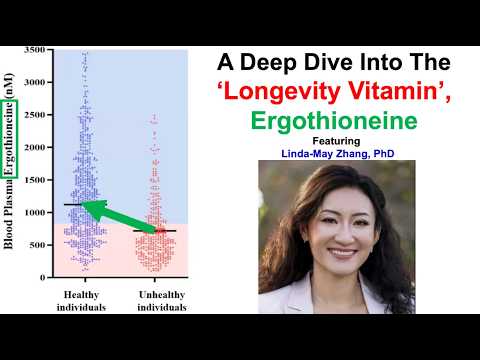
Great coincidence today Lustgarten interviewed a lady from Blue California which is a company that supplies supplement companies somehow, to talk about ergothioneine:
I take 7 grams of powdered golden oyster mushroom daily in my kefir. I think I’m taking way too much, but it’s never been tested and I’ve been doing it for a couple years at least and no problems so I think it’s ok.
Researchers at Kumamoto University have demonstrated that long-term consumption of Tamogi-take mushrooms (Pleurotus cornucopiae) prevents age-related cardiovascular decline in male mice. The primary bioactive driver is identified as Ergothioneine (EGT), a highly stable dietary antioxidant. While the study’s title claims an extension of “healthy life expectancy,” the data strictly reflects improvements in cardiovascular healthspan markers at 14 months of age, with no actual lifespan survival curve generated.
The study fed mice a mushroom-blended chow engineered to deliver an equivalent of 70 mg/kg/day of EGT for 12 months. At the macroscopic level, the mushroom-fed cohort displayed significantly preserved left ventricular systolic function, reduced cardiac hypertrophy, and vastly superior vascular endothelial relaxation compared to standard chow controls. They also exhibited lower heart-weight to tibia-length ratios, indicating a resistance to age-induced structural cardiac enlargement. Functionally, the treated mice exhibited significantly higher exercise tolerance on a treadmill exhaustion test.
Mechanistically, EGT operates by upregulating the Nrf2-HO-1 antioxidant pathway in both cardiac and aortic tissues. This upregulation effectively blunted the accumulation of reactive oxygen species (ROS) and lipid peroxidation. Consequently, the suppression of oxidative stress prevented the induction of the senescence-associated secretory phenotype (SASP), as evidenced by reduced local expression of senescence markers (p53, p21, p16) and inflammatory cytokines.
A major confounder emerged during the trial: mice fed the mushroom blend spontaneously restricted their caloric intake by 15.8 percent. To rule out calorie restriction (CR) as the primary driver, the researchers ran a secondary experiment matching the control group’s weight to the mushroom group. The cardiovascular benefits persisted in the mushroom cohort, suggesting the EGT payload, rather than mild CR, drove the biological effects.
Impact Evaluation: The impact score of this journal is 5.39, evaluated against a typical high-end range of 0–60+ for top general science, therefore this is a Medium impact journal.
Mechanistic Deep Dive
Target Pathway: Nrf2 (Nuclear factor E2-related factor 2) and HO-1 (Heme Oxygenase 1). * Mechanism of Action: EGT induces Nrf2 protein accumulation. This increases downstream HO-1, protecting the cardiovascular system from ROS-induced damage.
Senescence & Inflammation: The intervention suppressed ROS, which prevented the activation of p53, p21 (Cdkn1a), and p16 (Cdkn2a) senescence networks in the heart and aorta. It also down-regulated inflammatory chemokines (Cxcl1, Cxcl2) and cytokines (Il-1beta).
Organ-Specific Priorities: The study targets the left ventricle (preventing hypertrophy and diastolic/systolic dysfunction) and the aortic endothelium (maintaining vasorelaxation).
Novelty
It is already established that EGT is a highly bioavailable antioxidant with a dedicated transporter (OCTN-1). The novelty here is the in vivo demonstration that lifelong dietary EGT prevents physical cardiac remodeling and preserves youthful endothelial vasorelaxation in middle-aged mice.
Critical Limitations
Missing Lifespan Data: The claim of extending life expectancy is completely unsupported by survival data; the study only measured healthspan markers up to middle age (14 months).
Dose Translation Reality: The mice received 70 mg/kg/day of EGT. Converting this to a Human Equivalent Dose (HED) yields roughly 5.7 mg/kg/day (approximately 400 mg/day for a 70 kg human). Standard human EGT supplements range from 5 to 10 mg. Achieving this clinical dose via supplementation is currently cost-prohibitive, raising immediate questions about practical human translation.
Dietary Confounding (CR): The mushroom chow unpalatability led to a 15.8 percent reduction in food intake. While the researchers attempted a weight-matched calorie adjustment control group, they admitted their protocol lacked the fasting periods strictly necessary to trigger standard CR longevity pathways. [Confidence: Medium]
Sex Bias: Only male mice were utilized. Cardiovascular aging and senescence phenotypes differ significantly between sexes, requiring further data to validate efficacy in females. [Confidence: High]
Fyi, I have not been using it lately, but on @Joseph_Lavelle ’s fullscript site, you can get the real mushrooms brand for $26.24. (It’s product specific, but some of his prices can’t be beaten anywhere).
Does anyone know if any of the lower cost options are of comparable quality?
(I bought oyster mushrooms this week, but alas, they were moldy on day 2, so I’m off mushrooms at the moment)
Perplexity:
For a 60-capsule bottle of Real Mushrooms Ergo+ costing $26.24, with 10 mg of L-ergothioneine per capsule, you’re paying $1.09 per 25 mg
I’m glad to hear the prices are good. I do not set the prices. I do set the discount which I’ve set to the highest allowable. I amazed that some discounted prices are still higher than Amazon but not all.