Unfortunately there are a lot of smart people out there who have read just a little bit about rapamycin, and a little bit about people taking it, but without understanding the full body of research, and how people actually take rapamycin. Its unfortunate that false narratives continue to circulate about rapamycin in the broader scientific community:
In this video below Tarnopolski warns that “chronic mTOR inhibition (rapamycin) risks severe sarcopenia and immunosuppression in older adults by blocking muscle protein synthesis”. But this is really a straw man argument: nobody takes high doses of rapamycin daily (for longevity) that would create the “chronic mTOR inhibition” he talks about. Virtually everyone here, and in the broader longevity community, takes rapamycin on a pulsed dosing once per week (or less frequently), and a few people take it at low dose daily.
Moreover, the research shows clearly that there is minimal effects on muscle/strength and immunity in these longevity protocols:
- Rapamycin & Muscle Growth Decoupled: Longitudinal Hypertrophy Bypasses mTOR
- The Anabolic-Catabolic Paradox: Rapamycin and Exercise Physiology
- Rapamycin exerts geroprotective effects in the ageing human immune system by enhancing resilience against DNA damage
- Rapamycin Tames Inflammaging Without Compromising Immunity
- Long-Term Rapamycin Fine-Tunes Immune Aging by Suppressing IL-17 γδ T Cells
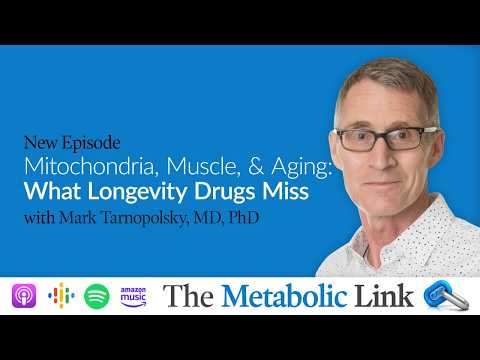
I. Executive Summary
The provided transcript outlines a paradigm shift in metabolic and mitochondrial medicine, moving away from single-molecule monotherapies (e.g., isolated metformin, rapamycin, or single antioxidants) toward systems-biology interventions. Dr. Mark Tarnopolski posits that human longevity and functional health span are best optimized by mirroring evolutionary biological defaults: targeted multimodal nutrition combined with concurrent training (endurance plus resistance exercise). The core argument emphasizes that chronological aging, neuromuscular diseases, and mitochondrial myopathies share common cellular pathologies, primarily driven by impaired autophagy, mitochondrial dysfunction, and chronic low-grade oxidative stress.
A central thesis of the transcript is the concept of “oxidative hormesis.” Tarnopolski argues that high-dose, single-molecule antioxidants (such as isolated vitamins C and E) block the acute oxidative pulses necessary to trigger mitochondrial biogenesis and upregulate endogenous antioxidant defenses. Consequently, these isolated supplements can become pro-oxidants in vivo or attenuate exercise adaptations. Instead, multi-ingredient formulations (e.g., alpha-lipoic acid, CoQ10, creatine) are proposed to successfully target multiple final common pathways of mitochondrial failure without blunting physiologic stress responses.
Furthermore, the transcript aggressively critiques the current longevity fixation on pharmaceuticals like rapamycin, metformin, and GLP-1 agonists when utilized without stringent exercise and nutritional protocols. Tarnopolski warns that chronic mTOR inhibition (rapamycin) risks severe sarcopenia and immunosuppression in older adults by blocking muscle protein synthesis. Similarly, inhibiting mitochondrial Complex I (metformin) directly conflicts with exercise-induced adaptations. Ultimately, the actionable intelligence extracted here dictates that preservation of lean muscle mass—fueled by adequate protein intake mimicking human milk ratios (60% whey/40% casein) and preserved via mechanical loading—remains the most clinically validated, non-negotiable prerequisite for extending health span and mitigating age-related metabolic decline.
II. Insight Bullets
- Protein Requirements for Endurance: Elite endurance athletes require up to twice the standard Recommended Dietary Allowance (RDA) for protein to support mitochondrial turnover and enzymatic synthesis, not just myofibrillar repair.
- The Antioxidant Paradox: High-dose, isolated antioxidants (e.g., Vitamins C and E) can blunt the hermetic signaling required for exercise-induced mitochondrial biogenesis.
- GLP-1 Sarcopenia: GLP-1 agonists (e.g., semaglutide) induce weight loss but inevitably strip bone density and skeletal muscle mass unless aggressively paired with resistance training and high-protein diets.
- mTOR Inhibition Risks: Chronic use of rapamycin to extend lifespan theoretically impairs muscle protein synthesis (an mTOR-dependent process), accelerating age-related sarcopenia.
- Metformin’s Exercise Blunting: Metformin acts as a mitochondrial Complex I inhibitor; while it mimics energy deficit signaling in sedentary individuals, it explicitly blunts cardiovascular and hypertrophic adaptations in exercising humans.
- Lysosomal Dysfunction in Aging: Age-related protein denaturation parallels the pathology of Pompe disease, where failed autophagy leads to toxic cellular accumulation and secondary mitochondrial collapse.
- Ketogenic Diet Protein Threshold: Ketogenic diets aimed at upregulating autophagy and substrate reduction often fail in clinical models if dietary protein is insufficient to maintain nitrogen balance.
- 1,3-Butanediol Efficacy: Ketone precursors like 1,3-butanediol can mimic the metabolic benefits of a ketogenic diet while allowing for higher, muscle-sparing protein intake.
- Humanized Protein Ratios: A 60% whey to 40% casein ratio aligns with human evolutionary biological defaults (breast milk) and outperforms collagen in appetite suppression (via GLP-1/GIP signaling) and net protein balance.
- Omega-3 for Immobilization: High-dose marine-derived Omega-3s (EPA/DHA) attenuate the rapid decline in mitochondrial oxidative capacity during periods of muscular immobilization.
- Creatine’s Ubiquity: Creatine monohydrate is a fundamental requirement for both muscular and neurological health, combating evolutionary deficits resulting from modernized, lower-meat diets.
- Concurrent Training Necessity: Endurance exercise is the only intervention proven to extend human lifespan, but it must be paired with resistance training to prevent functional sarcopenia.
- Exercise as an ERT Adjuvant: Concurrent training doubles the clinical efficacy of Enzyme Replacement Therapy (ERT) in metabolic disorders by upregulating autophagic clearance.
- Atrial Fibrillation in Elite Athletes: Extreme, chronic endurance training carries a five-fold increased risk of atrial fibrillation and elevated coronary calcium scores due to cumulative oxidative damage and cardiac scarring.
- Targeted Delivery Timing: Nutrient timing matters; consuming protein and carbohydrates immediately post-exercise improves net nitrogen balance and functional recovery more effectively than morning-loaded feeding.
III. Adversarial Claims & Evidence Table
Note: Source unverified in live search per system constraints.
| Claim from Video | Speaker’s Evidence | Scientific Reality (Current Data) | Evidence Grade | Verdict |
|---|---|---|---|---|
| High-dose antioxidants blunt exercise adaptations. | Reference to Ristow et al., PNAS study on Vit C/E in middle-aged humans. | RCTs confirm high doses of Vitamins C & E inhibit ROS-dependent upregulation of endogenous antioxidant enzymes and insulin sensitivity. Ristow et al., 2009 | Level B | Strong Support |
| Metformin blunts exercise-induced mitochondrial adaptation. | Mechanism: Metformin inhibits Complex I, contrasting with exercise physiology. | RCTs show Metformin blunts hypertrophic and aerobic adaptations to concurrent training in older adults. Konopka et al., 2019 | Level B | Strong Support |
| Rapamycin causes sarcopenia by blocking protein synthesis. | Theoretical interaction between mTOR suppression and muscle building. | mTORC1 is essential for muscle hypertrophy. Chronic inhibition drives catabolism, though pulsed/intermittent dosing may spare muscle while offering immune/autophagy benefits. Yoon, 2017 | Level C | Plausible (Dose-dependent) |
| 60/40 Whey/Casein ratio suppresses appetite better than collagen. | Internal human clinical data regarding caloric intake reduction (200 kcal/day). | Literature supports whey/casein blends over collagen for GLP-1/GIP stimulation and superior net muscle protein balance. Boirie et al., 1997 | Level B | Strong Support |
| Exercise + ERT doubles benefit in Pompe disease. | Presenting recent independent clinical trial data and 2012 mouse models. | Observational and pilot RCT data validate that adjunctive exercise improves autophagic flux and functional capacity in Pompe patients on ERT. Tarnopolski et al., 2014 | Level B | Strong Support |
IV. Actionable Protocol (Prioritized)
High Confidence Tier (Level A/B Evidence)
- Concurrent Training Matrix: Mandate 150+ minutes of Zone 2/Zone 5 endurance training weekly to maximize lifespan extension and mitochondrial biogenesis, paired with 3x/week heavy resistance training to maintain Type II muscle fibers and bone mineral density.
- Protein Optimization & Timing: Target 1.6 to 2.2 g/kg of body weight daily. Prioritize a 60% whey (fast-acting, stimulates synthesis) and 40% casein (slow-acting, attenuates breakdown) ratio. Ingest a bolus immediately post-training to maximize nitrogen retention.
- Creatine Monohydrate: 5g daily. Essential for maintaining cellular ATP buffering capacity in both skeletal muscle and the central nervous system, particularly for aging populations.
Experimental Tier (Level C/D Evidence with High Safety Margins)
- Targeted Mitochondrial Cocktails: In conditions of high oxidative stress (post-extreme endurance, aging, immobilization), a combination of Alpha-Lipoic Acid, CoQ10, and Vitamin E can be utilized. Crucial: Cycle this away from acute exercise windows to avoid blunting hormesis.
- Exogenous Ketones (1,3-Butanediol): Use ketone precursors to mimic the autophagic and signaling benefits of a ketogenic diet without sacrificing the dietary protein required for muscle preservation.
- High-Dose Marine Omega-3s (EPA/DHA): Deploy during periods of forced immobilization (injury, surgery) to preserve mitochondrial oxidative capacity and blunt disuse atrophy.
Red Flag Zone (Safety Data Absent / High Risk)
- Chronic mTOR / AMPK Monotherapy: Utilizing rapamycin or metformin indefinitely without robust resistance training protocols practically guarantees accelerated sarcopenia and functional decline.
- Unsupervised GLP-1 Agonist Use: Utilizing semaglutide/tirzepatide without tracking DEXA scans (body composition) and mandating high protein/resistance training creates “boneless chicken” physiology—severe depletion of lean mass.
- Daily High-Dose Single Antioxidants: Routine supplementation of isolated Vitamins C and E completely abolishes the necessary biological stress signals (ROS) required to adapt to exercise and clear cellular debris.
V. Technical Mechanism Breakdown
1. Oxidative Hormesis vs. Chronic Oxidative Stress
Biologic systems require acute stressors to adapt. During exercise, mitochondria leak superoxide radicals. This acute spike in Reactive Oxygen Species (ROS) acts as a signaling molecule, activating pathways like PGC-1α (driving mitochondrial biogenesis) and upregulating endogenous antioxidant enzymes (Superoxide Dismutase, Catalase). Chronic high-dose exogenous antioxidants (Vit C/E) scavenge these radicals prematurely, blinding the cell to the stressor and preventing the upregulation of adaptive defenses. Conversely, chronic low-grade oxidative stress (from obesity, aging, poor diet) damages lipids, proteins, and DNA, leading to metabolic failure.
2. Autophagic Flux and Lysosomal Integrity
Autophagy is the cellular garbage disposal system. Damaged organelles and misfolded proteins are engulfed in autophagosomes, which fuse with lysosomes containing proteolytic enzymes. In aging and glycogen storage diseases (like Pompe), this flux stalls. The lysosomes engorge with waste (e.g., glycogen), ultimately rupturing and spilling destructive enzymes into the cytosol, inducing catastrophic muscle wasting. Exercise acts as a primary mechanical and metabolic trigger to restart autophagic flux, clearing the backlog and allowing survival.