Metabolomic signatures of extreme old age: findings from the New England Centenarian Study

Living past 100 isn’t just about aging slowly; it is a distinct biological feat. New research published in GeroScience by the New England Centenarian Study (NECS) reveals that “Extreme Longevity” (EL) participants—those reaching the 99th percentile of their birth cohort—possess a unique metabolic fingerprint that separates them from both their offspring and typical aging controls. By analyzing over 1,400 metabolites in subjects aged up to 115 years, researchers have identified specific chemical signatures that appear to shield the “elite aged” from the standard decay of time.

The study’s “Big Idea” is the identification of a metabolic divergence: while typical aging is defined by a steady decline in protective steroids and an accumulation of inflammatory toxins, centenarians maintain high levels of specific bile acids and steroids. Specifically, elevated levels of lithocholic acid (LCA) and chenodeoxycholic acid (CDCA) were strongly associated with lower mortality risk. These compounds, often influenced by gut microbiota, suggest that the secret to surviving a century may lie in a reinforced “metabolic resilience” that maintains youthful levels of hormones and beneficial gut-derived metabolites even in the eleventh decade of life.

Furthermore, the team developed a “metabolomic clock” that predicts biological age. Individuals whose metabolomic age was “younger” than their birth certificate showed significantly higher survival rates. This suggests that metabolic profiling could soon replace traditional blood tests to provide a high-fidelity look at a person’s true rate of aging and their immediate risk of mortality.


Actionable Insights

For those seeking to optimize healthspan, this paper provides several potential evidence-based targets:

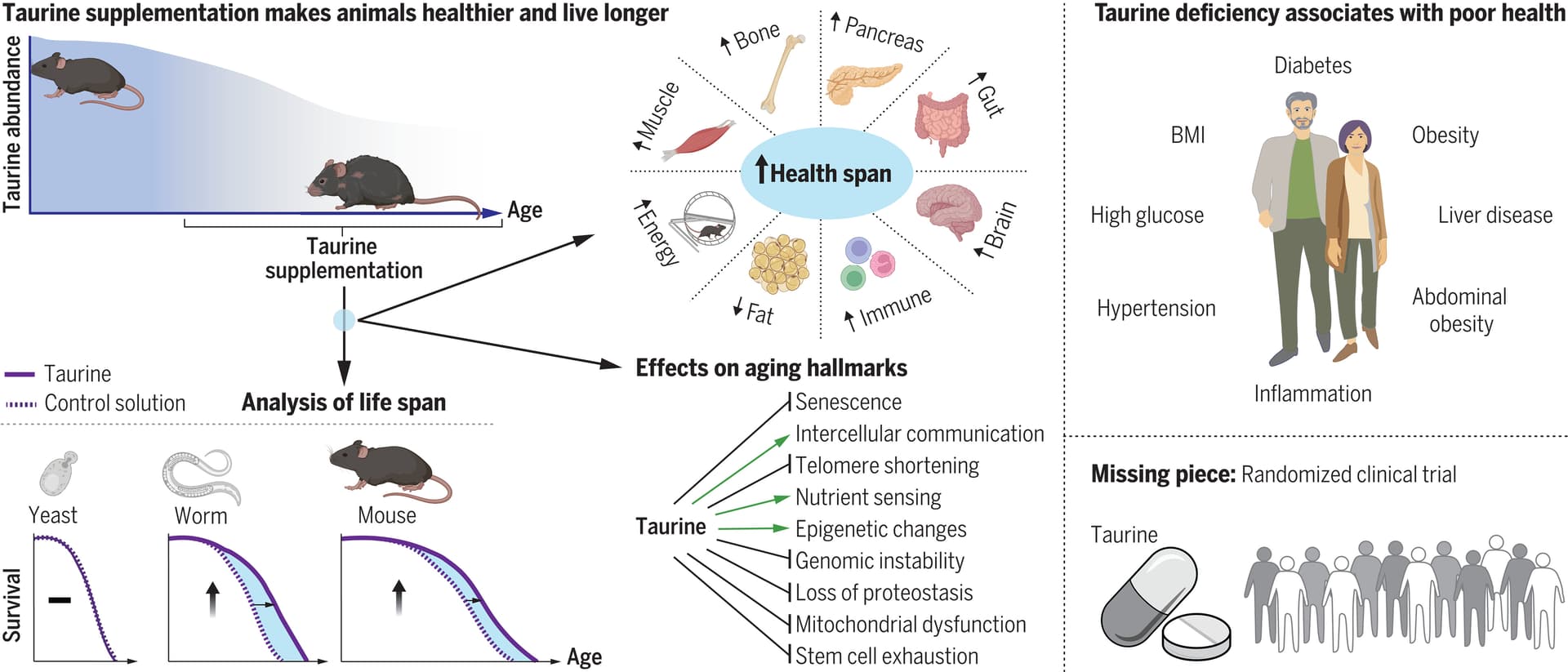
  • Taurine Supplementation: High circulating taurine was the strongest predictor of “age deceleration” in the metabolomic clock. While human longitudinal data is complex, centenarian profiles suggest maintaining high taurine levels is a hallmark of biological youth.

  • Gut Microbiome Optimization: The study highlights a feedback loop where gut bacteria influence NAD+ synthesis and renal function. Reducing gut-derived uremic toxins (like p-cresol) through high-fiber diets or targeted probiotics may preserve kidney health, a critical factor in longevity.

  • Monitoring the NAD+ Pipeline: A declining tryptophan/kynurenine ratio is a primary marker of systemic inflammation and reduced NAD+ efficiency. Interventions that keep this ratio high—such as exercise or specific precursors—may mimic the metabolic state of centenarians.

  • Metabolic Surveillance: Elevated citrate levels were the top predictor of “age acceleration”. Monitoring citrate and dicarboxylic acids could serve as an early warning system for mitochondrial dysfunction.


Source:

  • Open Access Paper: Metabolomic signatures of extreme old age: findingsfrom the New England Centenarian Study
  • Institution: Boston University Chobanian & Avedisian School of Medicine.
  • Country: USA.
  • Journal Name: GeroScience.
  • Impact Evaluation: The impact score (JIF) of this journal is approximately 7.5, evaluated against a typical high-end range of 0–60+ for top general science; therefore, this is a High impact journal in the field of gerontology and aging biology.

This is the first time I see clues of Taurine supplementation being pro-longevity in humans. I will keep it in my stack just in case.

High fiber/gut maintenance were already in the radar.

I need to study about the “Elevated citrate” problem.

2 Likes

This paper does not claim that taurine supplementation extends lifespan. It is a cross-sectional observational study that simply measured naturally occurring metabolite concentrations in blood samples taken from participants at a single time point. In a machine-learning-derived metabolic clock, higher taurine levels were strongly correlated with age deceleration. However, in a separate linear regression analysis, blood taurine concentration did not reach statistical significance with respect to chronological age (q-value >> 0.05). This is consistent with the current consensus in the scientific community.

As for this so-called metabolic clock built by machine learning — my undergraduate major was financial engineering, so I know all too well the nature of models trained with machine learning. The anti-aging field is remarkably similar to finance. In finance, the most successful strategies often have extremely simple mathematical forms — maybe a univariate linear regression, or not even a regression at all. Strategies that require machine learning involve a large number of highly nonlinear factors, making them highly prone to overfitting and unstable in terms of generalization. Taurine is exactly that kind of nonlinear factor. This also explains why a basic model based on chronological age, sex, and lifestyle habits can outperform many fancy-sounding epigenetic clocks. Taurine is simply not a valid biomarker of aging. @DrFraser @KarlT

2 Likes

chatgpt5pro: (which I paid $200 for)

This paragraph is saying: as people get older, their blood metabolite profile changes in broad, recognizable ways, and the authors found both expected aging markers and additional ones. Tiny molecules in the blood apparently wanted to become a biography. Naturally, the biography is written in words like N,N,N-trimethyl-alanylproline betaine, because science enjoys hazing everyone.

Big picture

The authors measured many metabolites and asked:

Which metabolites are statistically associated with chronological age?

They found 360 metabolites significantly associated with age using a q-value ≤ 0.05 threshold. Of those, 263 increased with age and 93 decreased with age. The arithmetic there adds to 356, not 360, so either four metabolites were handled separately, excluded from direction counts, or there is a reporting/rounding issue in the excerpt. Annoying, but not unusual in dense paper text.

“Recapitulates and expands upon previous findings” means:

Their results confirm what earlier studies already found about aging metabolism, and they also identify extra age-associated metabolites or pathways.

So this is not claiming that everything is brand-new. It is saying, “Our data agrees with prior aging biology, and here are some additional details.”


What “significantly associated with chronological age” means

A metabolite being “associated with age” means its measured level tends to change as people get older.

  • Positively associated with age = higher in older people.
  • Negatively associated with age = lower in older people.

This does not automatically mean the metabolite causes aging. It means the metabolite tracks with age. Biology, in its usual passive-aggressive way, refuses to tell us whether something is a cause, consequence, compensation, or just along for the ride.


What a q-value means

A q-value is like a p-value that has been adjusted for testing lots of things at once.

Because metabolomics studies measure hundreds or thousands of metabolites, some will look significant by random chance. The q-value helps control for that.

So when the paper says q-value ≤ 0.05, it means the finding survived correction for multiple comparisons at a false-discovery-rate threshold of about 5%.

In normal-person terms:

“We tested a lot of molecules, and these still look statistically meaningful after accounting for that.”


What “Metabolite-set over-representation analysis” means

This part is asking:

Among the metabolites that changed with age, are certain biological pathways showing up more than expected by chance?

Instead of looking only at one metabolite at a time, the authors group metabolites into pathways, such as:

  • Urea cycle
  • Tyrosine metabolism
  • Fatty acid metabolism
  • Sugar acids
  • Dicarboxylic acids
  • Methylation-related compounds

If many age-associated metabolites come from the same pathway, that pathway may be involved in aging-related biology.

So “over-representation” means:

“This pathway appears unusually often among the significant age-related metabolites.”


Urea cycle and related metabolites increased with age

The paper says sixteen metabolites in the Urea Cycle and Related Metabolites category increased with age. Examples include:

  • citrulline
  • proline
  • trans-4-hydroxyproline
  • dimethylarginine
  • homocitrulline
  • N-acetylcitrulline
  • pro-hydroxy-pro
  • 2-oxoarginine

The urea cycle is involved in nitrogen handling, amino acid metabolism, and waste processing. But these related metabolites also connect to blood vessel function, oxidative stress, mitochondria, and inflammation.

The authors interpret this as evidence that aging is linked to changes in pathways involving:

  • endothelial dysfunction, meaning blood vessel lining problems
  • oxidative stress, meaning chemical stress from reactive molecules
  • mitochondrial impairment, meaning weaker cellular energy machinery
  • aging-related inflammation, the body’s long-running bureaucratic fire alarm

Plain English:

As people age, metabolites tied to waste handling, amino acid processing, blood vessel health, inflammation, and mitochondrial function tend to rise.


Methylation and betaine derivatives also increased

The authors mention several methylation and betaine derivatives, including:

  • N-methylproline
  • N-methylhydroxyproline
  • N,N,N-trimethyl-alanylproline betaine
  • 3-amino-2-piperidone

These increased with age.

Methylation is a major chemical process used in gene regulation, detoxification, neurotransmitter metabolism, and many other cellular functions. Betaine-related molecules are often linked to one-carbon metabolism, methyl-group transfer, osmotic balance, and diet-related metabolism.

Plain English:

Aging seems to involve changes in methylation-related chemistry, which may reflect shifts in gene regulation, detoxification, kidney handling, or general metabolic stress.

Do not leap from this to “take methylation supplements.” That is how the wellness-industrial complex buys another yacht.


Tyrosine metabolism metabolites increased with age

The paper says metabolites from tyrosine metabolism increased with age, including:

  • homovanillic acid
  • vanillylmandelate
  • N-formylphenylalanine
  • 1-carboxyethyltyrosine
  • 3-HPLA
  • p-cresol sulfate

Some of these are described as uremic toxins.

Tyrosine is an amino acid involved in making catecholamines like dopamine, norepinephrine, and epinephrine. Some tyrosine-related metabolites also come from gut microbial metabolism or protein breakdown.

Uremic toxins are compounds that tend to accumulate when kidney function declines. They can also be associated with inflammation, oxidative stress, vascular damage, and metabolic dysfunction.

Plain English:

Older age is associated with higher levels of some tyrosine-related metabolites, including compounds that may reflect kidney stress, gut microbial metabolism, or toxin-like metabolic buildup.

This fits a common aging theme: the kidneys, gut, immune system, and metabolism all start having a group project, and nobody does their part cleanly.


Dicarboxylic acids increased with age

The authors found fifteen dicarboxylic acids that increased with age, including:

  • methylmalonate
  • suberate
  • azelate

They say this reflects mitochondrial dysfunction and renal function decline.

Dicarboxylic acids can rise when fatty acid oxidation is altered. Methylmalonate, in particular, is often discussed in relation to vitamin B12 status and mitochondrial metabolism, though this paper is treating it as part of a broader aging signature.

Plain English:

Older people showed higher levels of metabolites that may point to changes in fat-burning, mitochondrial energy production, and kidney clearance.

The mitochondria are the cell’s power plants, except unlike actual power plants, they are also tiny drama queens involved in aging, inflammation, stress responses, and cell death.


Sugar acid metabolites increased with age

The authors mention eight sugar acid metabolites that increased with age, including:

  • glucuronate
  • 2R,3R-dihydroxybutyrate

They link these to oxidative stress and impaired energy metabolism.

Sugar acids are related to carbohydrate metabolism, detoxification chemistry, oxidative stress pathways, and cellular energy handling.

Plain English:

As people age, some metabolites related to sugar processing and oxidative stress increase, suggesting shifts in energy metabolism and stress-response chemistry.


Some fatty acids declined with age

The passage says these groups declined with age:

  • Long-chain polyunsaturated fatty acids, or PUFAs
  • Fatty acid metabolism acyl choline metabolites
  • Long-chain monounsaturated fatty acids, or MUFAs

PUFAs include fats like omega-3 and omega-6 fatty acids. MUFAs include fats like oleic acid-related compounds.

Plain English:

Certain circulating fatty acids and fatty-acid-related signaling molecules were lower in older individuals.

This could reflect changes in diet, absorption, storage, inflammation, lipid turnover, oxidative damage, membrane composition, medication use, or metabolism. The study does not automatically prove that low levels cause aging.


What the Figure 1 caption is telling you

The caption is summarizing the study design and visual results.

Fig. 1A

Shows the age distribution in each dataset.

Meaning:

How old were the participants in each study group?

Fig. 1B

Compares the age distribution in NECS versus the other datasets.

NECS likely refers to the New England Centenarian Study, which includes exceptionally long-lived people. This matters because if one dataset has much older participants than another, age differences can distort the metabolite analysis.

Fig. 1C

Shows a principal component analysis, or PCA, projection of NECS metabolomics data.

PCA is a way of reducing very complex data into a few dimensions so researchers can see clustering or separation.

Plain English:

They made a map of the metabolite data to see whether samples group together or look weird.

Fig. 1D and 1E

Show heatmaps of significant markers.

  • Fig. 1D = age markers
  • Fig. 1E = exceptional longevity markers

The caption says these heatmaps show markers at q ≤ 0.01, which is stricter than the q ≤ 0.05 threshold mentioned for the 360 age-associated metabolites.

That is probably not a contradiction. It means:

The full analysis used q ≤ 0.05, but the figure heatmaps display a stricter subset at q ≤ 0.01.

Fig. 1F

Compares regression estimates for exceptional longevity versus age.

This is asking:

Are the metabolites that change with ordinary aging the same as the metabolites associated with exceptional longevity?

Colors show whether a metabolite is associated with:

  • age only
  • exceptional longevity only
  • both
  • neither

This matters because aging and healthy longevity are not identical. A molecule can rise with age but have nothing to do with living exceptionally long.

Fig. 1G and 1H

Show “Upset plots,” which are basically fancy Venn diagrams for too many datasets.

They show which metabolites were measured across which datasets for:

  • age analysis
  • exceptional-longevity analysis

Plain English:

They are showing how much overlap there was between the datasets, because not every dataset measured every metabolite.


The actual biological story

The passage says aging is associated with broad changes in:

  1. Nitrogen and amino acid metabolism
    Especially urea cycle, arginine/proline, and tyrosine-related metabolites.

  2. Kidney-related toxin handling
    Uremic toxins and dicarboxylic acids increase, suggesting declining clearance or altered metabolism.

  3. Mitochondrial function
    Several metabolite groups point toward impaired energy metabolism and fatty acid oxidation.

  4. Oxidative stress
    Sugar acids, urea-related compounds, and other metabolites suggest more oxidative damage or stress response activity.

  5. Inflammation and vascular aging
    Some metabolites are linked to endothelial dysfunction and inflammatory aging.

  6. Fatty acid remodeling
    Certain PUFAs, MUFAs, and acyl choline metabolites decline with age.

The paper’s basic claim is:

Chronological aging leaves a detectable chemical fingerprint in blood, and that fingerprint involves inflammation, mitochondrial stress, kidney function, vascular biology, amino acid metabolism, and lipid metabolism.


What this does not mean

It does not mean:

  • citrulline causes aging
  • PUFAs prevent aging
  • tyrosine metabolites are automatically bad
  • methylation supplements reverse biological age
  • one metabolite can tell you how long you will live
  • this is a treatment plan

It means:

These metabolites are biomarkers associated with age in this study.

A biomarker is a clue. It is not automatically a lever you can pull. Bodies are not vending machines, despite humanity’s ongoing supplement-based attempt to prove otherwise.


Brutally simple summary

As people got older, this study found that many blood metabolites changed. Most increased with age, while some decreased. The metabolites that increased point toward aging-related changes in urea cycle metabolism, methylation chemistry, tyrosine metabolism, kidney-related toxin buildup, mitochondrial dysfunction, oxidative stress, and altered sugar metabolism. Meanwhile, several fatty-acid-related molecules declined with age.

So the authors are saying:

“Our metabolomics data confirms known aging patterns and adds more evidence that aging involves inflammation, mitochondrial stress, kidney function decline, altered amino acid metabolism, and lipid remodeling.”

In even plainer English:

Aging shows up in the blood as a broad chemical shift toward stress, altered energy metabolism, reduced clearance of certain waste-like compounds, and changes in fats and amino acids.
1 Like

I agree with you, the study didn’t say Taurine supplementation extends the lifespan in humans but it points to a positive relationship between the two. This adds strength to the other studies where supplementation increased the lifespan of several species.

However, in a separate linear regression analysis, blood taurine concentration did not reach statistical significance with respect to chronological age (q-value >> 0.05).

Taurine could be prolongevity and decelerate aging and you wouldn’t pick that signal in a simple linear regression with age. A much better study would be to check if Taurine levels are correlated with ACM with a subgroup analysis by ages.

Is taurine an aging biomarker?

https://www.science.org/doi/10.1126/science.adl2116

I would agree. Don’t see evidence. Even if it’s a marker, that doesn’t imply that supplements would be helpful. Maybe at best. There’s also questionable info out there that Taurine supplements while helping an aging body, also help developing cancer growth.

1 Like

The Effect of Boosting Dietary Lactobacillus and Phytochemical Rich Foods on Biomarkers of Longevity—A Phase II Randomised Placebo Controlled Trial

https://www.mdpi.com/2673-9259/6/2/35

1 Like

Lots of past research I think, but I haven’t dug deeply into it:

I would define that as pro-health more than pro-longevity. There are many substances that can reduce blood pressure and not be good for you!

Paper: Taurine as a possible antiaging therapy: A controlled clinical trial on taurine antioxidant activity in women ages 55 to 70”

by Gabriela Ferreira Abud M.Sc.; Flavia Giolo De Carvalho Ph.D.; Gabriela Batitucci Ph.D.; Sofia Germano Travieso B.Sc.; Carlos Roberto Bueno Junior Ph.D.; Fernando Barbosa Junior Ph.D.; Julio Sergio Marchini Ph.D. and Ellen Cristinide Freitas Ph.D., 11 June 2022, Nutrition .
DOI: 10.1016/j.nut.2022.111706

Taurine: A Molecular Shield Against Oxidative Decay in Aging Women

The biological “rusting” of the human body, driven by oxidative stress, is a hallmark of the aging process. As we age, the delicate balance between reactive oxygen species (ROS) production and our internal antioxidant defenses begins to tip toward cellular damage. A new double-blind, randomized controlled trial conducted by researchers in Brazil suggests that the “semi-essential” amino acid taurine may act as a potent intervention to stabilize this balance in aging populations.

The study focused on 24 women between the ages of 55 and 70. This demographic is particularly vulnerable to declining taurine levels and reduced antioxidant capacity. Participants were administered 1.5 grams of taurine daily for 16 weeks, while a control group received a starch-based placebo. The results were definitive: taurine supplementation not only increased plasma taurine levels by approximately 46% but also fundamentally altered the markers of oxidative stress.

The most significant finding was the preservation of superoxide dismutase (SOD), a critical enzyme that neutralizes toxic superoxide radicals. While the control group saw their oxidative damage markers (malondialdehyde, or MDA) rise, the taurine group remained protected, effectively preventing the lipid peroxidation that damages cell membranes.

However, taurine did not prove to be a “magic bullet” for physical performance. Despite the molecular benefits, researchers found no significant improvements in functional capacity, such as agility or overall strength, over the 16-week period. This suggests that while taurine acts as an internal metabolic bodyguard, it does not replace the need for physical stimulus to maintain muscle function. Furthermore, the study occurred during the COVID-19 pandemic, which introduced variables like emotional stress and dietary shifts that may have influenced secondary outcomes like mineral levels. Ultimately, this trial positions taurine as a viable nutritional strategy to enhance the body’s antioxidant defense system and mitigate the cumulative damage of the aging process.


Actionable Insights

  • Targeted Dosage: For women aged 55–70, a daily oral dose of 1.5 grams of pure taurine powder is safe and effective for modulating oxidative stress.

  • Administration Timing: Taking taurine in the morning is the protocol used in this successful intervention.

  • Oxidative Protection: Taurine’s primary value lies in preventing lipid peroxidation (measured via MDA) and maintaining SOD enzyme activity, rather than providing immediate gains in physical strength.

  • Co-factor Awareness: The efficacy of antioxidant enzymes like SOD and glutathione peroxidase depends on adequate levels of minerals such as zinc, selenium, and copper. Supplementation should be paired with a diet rich in these elements to ensure the antioxidant system has the “hardware” required to function.

  • Realistic Expectations: Do not expect taurine to reverse sarcopenia or improve agility in isolation; it should be viewed as a cytoprotective agent that complements, rather than replaces, resistance exercise and a protein-replete diet.

Novelty

This is the first human clinical trial specifically investigating the triad of SOD, GR, and MDA markers under taurine supplementation in the 55–70 age bracket. It confirms that even a relatively low dose (1.5 g/d) is sufficient to alter the oxidative profile in aging humans, whereas prior studies often used 3–6 g/d in younger or athletic cohorts.

Claims & Verification

The following claims are evaluated using a strict hierarchy of evidence: Level A (Meta-analysis/Systematic Review), Level B (Human RCT), Level C (Observational/Cohort), Level D (Pre-clinical), and Level E (Expert Opinion).

  • Claim 1: Daily supplementation of 1.5 g of taurine significantly increases plasma Superoxide Dismutase (SOD) activity in postmenopausal women.
    • Evidence Level: Level B.
    • External Verification: Supported by a 2023 short communication in Annals of Medicine & Surgery which corroborates that 1.5 g/day for 16 weeks resulted in an almost 20% rise in SOD levels in this specific Brazilian cohort Taurine as a potential anti-ageing therapy (2023).
  • Claim 2: Taurine supplementation prevents the increase of Malondialdehyde (MDA), a marker of lipid peroxidation, during the aging process.
    • Evidence Level: Level B.
    • External Verification: A larger RCT (n=120) in patients with Type 2 Diabetes (T2DM) observed a “significant decline in MDA” after only 8 weeks of 1 g/day supplementation, supporting the anti-peroxidative effect in humans Protective and therapeutic effectiveness of taurine (2022).
  • Claim 3: Circulating taurine levels significantly decline with age in humans.
  • Claim 4: Taurine supplementation (1.5 g/day) for 16 weeks does not improve functional capacity (strength or agility) in sedentary older women.
    • Evidence Level: Level B.
    • External Verification: Verification of short-term functional gains remains inconsistent. Longitudinal data from community-dwelling adults in Japan showed that while high dietary intake is associated with maintained strength over 8 years (Level C), short-term interventions (Level B) frequently fail to show ergogenic effects unless paired with high-intensity exercise Association of taurine intake with physical fitness (2024).
  • Claim 5: Taurine increases lifespan and improves markers of healthspan in mammals.
    • Evidence Level: Level D (Translational Gap).
    • External Verification: Confirmed in mice, monkeys, and worms with a reported 10–12% median lifespan extension in mice Singh et al., Science (2023). Translational Gap: There is currently zero high-level human evidence (Level A/B) that taurine supplementation extends human lifespan.
  • Claim 6: Taurine supplementation improves glycemic control and insulin sensitivity.