It refers to melatonin stimulating complexes I and IV of the Electron Transport Chain and how a deficiency results in lower ATP production.
3.8 Melatonin
A study in mice has demonstrated that melatonin rescued mitochondria from oxidative stress-induced mitochondrial dysfunction and may prevent subsequent cell death of muscle cells [[132]]. Several in vitro and in vivo studies demonstrate that melatonin affects mitochondria by increasing the activity of the electron transfer system and ATP production, increasing mitochondrial membrane potential and membrane fluidity and by closing the mitochondrial permeability pore [71, 112, 133, 134, 135].
Several small studies measured melatonin levels in critically ill patients. Circadian rhythm of melatonin secretion was disturbed and melatonin secretion low in almost all critically ill patients investigated [136, 137, 138, 139]. Low levels of melatonin were associated with more severe illness in septic patients, but not in patients admitted for coronary syndrome, intoxications, gastrointestinal bleeding, pneumonia or stroke [[136]]. Melatonin supplementation was also found to reduce oxidative stress and inflammation in new-borns with sepsis [[140]]. No published studies were found on the effect of melatonin supplementation on mitochondrial function and clinical outcomes in critically ill patients. However, the study of Mistraletti and co-workers showed a good bioavailability of exogenous melatonin in critically ill patients [[141]].
Earlier in this thread I said I use the biovea brand. Recently I have become concerned at its sugar content (which is not that high, but does mean some sugar). I have therefore tried Carlyle’s 12mg which has mannitol in it. Because mannitol is poorly absorbed the energy from multiple tablets is less.
I am also experimenting with some of the 60mg tablets in the market. There seem to be quite a few providers in the USA.
This seems to be really good value as well as it provides 300 12mg tablets.
Based on your posts, I decided to try a high-dose melatonin regimen back in June of this year.
I normally use NatureBell Melatonin 20 mg, 365 Fast Dissolve Tablets - Natural Strawberry Flavor, mainly because it is cheap. They work sublingually and have a medium dissolve time and use sorbitol as a sweetener,
Do you think there is a significant difference as to which is worse, sorbitol or mannitol?
I take one at bedtime along with a Healthfare Melatonin 60 mg Vegetarian Formula | Non-GMO | Gluten-Free | Unflavored | Made in The US tablet. These are fairly small non-favored tablets.
Usually, I have to get up once in the middle of the night to empty my bladder, and that is the time I take the 20 mg tablet to make a total of 100 mg nightly. I have been on this regimen since June 21st of this year. So far; zero negative effects. Surprisingly it doesn’t produce any daytime drowsiness. Positive effects? Don’t know but I have had no indication of developing any cancers, and that is my main purpose for the larger doses.
@desertshores How many hours between 2nd dose and waking, to get no daytime sleepiness? I’m always dancing with the devil on “is there enough time left” ? My cutoff rule-ish is 330am for a 1mg dose. I’ll then wake between 5am and 7am. I can’t image what a huge dose would do. I did just buy 10mg melatonin tablets, so I may just find out about medium dose effects.
I tried, twice, taking 60mg in the 1am timeframe. Had to write off the following day both times. I didn’t sleep all day, just felt lousy and non-functional.
Right now I am going to bed at 10 pm and getting up at 6 a.m. If I wake up during the night, which is most nights, it is usually between 3 and 4 a.m. When I first started this routine I was using a 1 mg sublingual dose. I ran out of the 1 mg pills and happened to have the 20mg around so I tried that. It made no difference in how I felt. I have been taking high-dose melatonin of 3 or more mg nightly since the 1980s so my body has just become accustomed to it.
Thanks. I’ve been taking melatonin since the 90s. Low doses only. I’m going to see how LDN works (if it ever shows up), and try high dose melatonin of LDN goes bye bye.
I have not reviewed the research. My protocol includes large amounts of melatonin. Hence i am really interested in any research as to why this is wrong, but otherwise that protocol is set.
Sorbitol and mannitol are isomers. They are different metabolically, but i picked the tablets using mannitol as a first one to try. I might get some of the sorbitol ones and see what happens.
I dont know the reasons for this. It could be slow metabolism or that your nervous system is shifted from sympathetic to parasympathetic. It may be worth working out what dose works if any.
What I think happens with sleep cycles is that at the end of a sleep cycle the body either starts up the cortisol awakening response (CAR) or keeps in parasympathetic mode in which people tend to be sleepy. The thing that decides this is melatonin levels. If they are decreasing (remembering melatonin has a shortish half life of around 30 mins, but this will vary) then the body shifts into CAR/Sympathetic mode. I have tried measuring this with the elite HRV and a polar H10 and that tends to agree.
Hence it should not make any difference between taking 1mg of melatonin or say 2mg. There will come a point at which your body cannot metabolise it that quickly and then it will hang around a bit. However, what you could do is to experiment wiith varying doses at that time (3am) and record waking time. I hypothesise that your waking time is defined by a sleep cycle and the metabolism of melatonin.
It would be interesting to have a database of how different people respond to different doses of melatonin at 3-4am in different circumstances. That would be something that would be good data to collect via the rapamycin.news forum. Clearly different people respond in different ways to melatonin. The fact that (IMO) it has an effect via the ultradian cycle (HPA/Sleep Cycles) means it otherwise seems a bit random, but actually isn’t.
I think what happens with megadoses is that a large proportion passes via osmosis (or some other mechanism) into cells and is drawn up into the mitochondria. Hence the rate of metabolism would if measured appear to be particularly high. However, I have not had a mechanism in place to measure this although I would happily run some experiments on megadose pharmokinetics.
It is also important to remember that levels of melatonin in the Cerebrospinal Fliud are much higher than blood serum. A material proportion (may be all) of pineal melatonin is injected directly into the third ventrical of the CSF. That is then used to clean up the brain. Obviously if you have some melatonin in the serum it will get into the CSF, but normally the proportion in the CSF is much higher. This would also imply that the pineal switches off earler than people think and the melatonin supply in blood serum is actually then coming from the pool of melatonin in the CSF. This is why I would suggest that supranormal serum levels are required to have the same effects as normal (young animal) levels in the CSF. A lot of researchers seem to have missed this key aspect of melatonin processing.
@John_Hemming Thanks for the information. I will think about this at length. Clearly the problem is complex. There are many variables at play but melatonin (amount and change) and stress (sympathetic > parasympathetic) are at the heart of it.
Ideally you need to use a sleep tracker and try to spot the sleep cycles which are something around 90 minutes long. My experience is that if I wake and my system is sympathetic mode then getting back to sleep is nigh on impossible until the next cycle. There are things that can be done such as NDSR/Yoga Nidra that encourage your body to switch into parasympathetic state.
If I were you I would keep detailed notes of the outcomes with varying doses of melatonin.
Explains a bit about the CSF being used to wash the brain. I have no idea whether melatonin in CSF is better for getting access to brain cells or melatonin in serum. However, if you take enough melatonin for enough time you can push up the CSF levels. CSF turns over about every 5 hours.
I don’t think melatonin in the CSF metabolises the same way as that in serum. However, some will get absorbed into cells.
In the end, however, as melalonin levels go down all of this goes wrong. Much that it is best to get things to work better and produce more endogenous melatonin, more melatonin as far as my own personal experience is concerned, is a good thing.
Interestingly if I have a slight hangover (which is slight because of use of DHM/Pantethine/Bae) I find I can clear almost all of it with a wodge of melatonin. (as far as I feel which is IMO a key test).
One of my tricks to get back to sleep is to use my sleep tracker to work out when the last sleep cycle ended. That is likely to be when I last woke, but sometimes it isn’t. I then estimate when the next sleep cycle starts and start taking melatonin about 30 minutes before that. I have a partial objective of increasing CSF levels to assist in maintaining melatonin levels. Hence I may take melatonin 30 minutes before my estimated start time, then 15 minutes, then at or around the time. This does not always work and when I am particularly drunk the alcohol rebound can cause an additional problem. However, it works a lot of the time. That also gives me a dose of melatonin that helps with everything else.
This peer review and clinical intelligence extraction evaluates the evidence presented by Dr. Brad Stanfield regarding the clinical boundaries, therapeutic misapplications, and neuroendocrine safety profile of exogenous melatonin supplementation. The core thesis of the analysis states that melatonin is a highly specialized chronobiotic agent whose clinical utility is strictly bounded by threshold-dose constraints and narrow chronological windows, rendering its widespread use as an indiscriminate over-the-counter sedative biologically unsound. Stanfield dissects the profound structural shift in public consumption, where users increasingly exploit the molecule for its purported systemic antioxidant and anti-inflammatory mechanisms while ignoring its primary physiological classification as a powerful neurohormone.
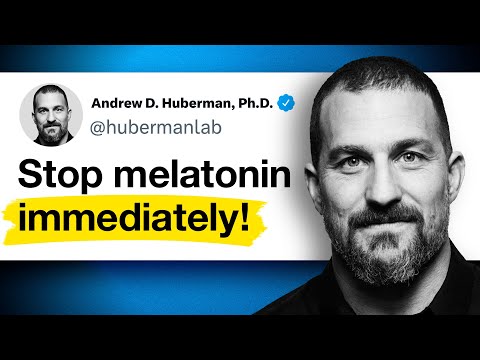
A major focus of the review explores the neuroendocrine safety parameters brought to light by Stanford neurobiologist Dr. Andrew Huberman. Specifically, it examines the potential for exogenous melatonin to cross-react with peripheral endocrine axes, detailing the hypothetical suppression of the hypothalamic-pituitary-gonadal (HPG) axis governing pubertal timing, alongside clinical concerns regarding adult menstrual cycle disruption and prolactin overproduction. Stanfield contextualizes this risk by reviewing high-level 2020 and 2022 meta-analyses, demonstrating that while immediate-release low-dose configurations (300 to 500 micrograms) provide a statistically significant reduction in sleep onset latency for phase-delayed individuals, the compound yields a negligible, clinically irrelevant impact on overall sleep quality for those with intact sleep architecture.
Furthermore, the review exposes a critical translational gap regarding the popular longevity strategy of using low-dose, prolonged-release melatonin to correct the structural tenfold decline in native pineal secretion associated with chronological aging. While pre-clinical single-cell and rodent models suggest that restoring youthful nocturnal melatonin kinetics counters systemic oxidative stress and industrial cellular degradation, Stanfield notes that robust human randomized controlled trials (RCTs) verifying hard clinical endpoints—such as reductions in myocardial infarction, stroke, or all-cause mortality—remain entirely non-existent. Ultimately, this analysis deconstructs the commercial mega-dosing trend (5 mg to 10 mg), framing immediate-release micro-dosing as an effective, time-restricted tool for biological clock resynchronization, while establishing a firm clinical warning against high-dose chronic supplementation due to unquantified homeostatic risks and a lack of verified therapeutic superiority.
II. Insight Bullets
A staggering 58% of the modern adult population experiences chronic pathological difficulties relating to sleep onset or sleep architecture fragmentation [00:00].
Modern consumer adoption of melatonin supplements is increasingly accelerated by popular science reporting on its systemic antioxidant and anti-inflammatory properties [00:07].
High-profile neurobiologists, including Stanford Professor Dr. Andrew Huberman, have issued strict public warnings against the indiscriminate use of over-the-counter melatonin [00:17].
Documented clinical side effects of exogenous melatonin administration include severe nightmares, protracted morning somnolence, grogginess, dry mouth, and psychological dependency [00:24].
Because melatonin is a highly potent systemic neurohormone, exogenous introduction poses distinct risks to baseline homeostatic endocrine networks [00:24].
Potential hormonal complications stemming from unmonitored melatonin usage include disrupted pubertal maturation, altered menstrual cycle regularity, and hyperprolactinemia [00:33].
Endogenous melatonin is synthesized natively by the pineal gland, exhibiting a rigid circadian secretory profile governed by the master suprachiasmatic nucleus clock [01:02].
Physiological melatonin levels are systematically suppressed during daylight hours and undergo a sharp, synchronized escalation during the nocturnal dark phase [01:08].
Melatonin mediates its primary chronobiotic and cytoprotective mechanisms by activating two distinct G-protein coupled receptors, designated MT1 and MT2 [01:08].
The MT1 and MT2 receptor cascades coordinate downstream pathways governing sleep gating, circadian phase-shifting, mood stabilization, memory consolidation, and neuroprotection [01:16].
Melatonin acts fundamentally as the master chemical “conductor” of human chronobiology, aligning peripheral tissue clocks with central neuroendocrine pathways [01:24].
Uninterrupted, high-quality sleep is biologically mandatory for macromolecular cellular repair, glymphatic metabolic clearance, and cognitive memory consolidation [01:31].
Primary sleep onset insomnia frequently arises from a structural desynchronization wherein the endogenous nocturnal melatonin surge is delayed or blunted [01:37].
A comprehensive 2020 meta-analysis evaluating multiple randomized controlled trials confirmed that exogenous melatonin drives a statistically significant reduction in sleep onset latency [01:45].
A targeted clinical trial utilizing a 500-microgram dose administered one hour before bed demonstrated a 34-minute reduction in sleep onset latency over a four-week period compared to placebo [01:59].
Controlled pediatric dose-escalation trials reveal a strict therapeutic ceiling, demonstrating zero additional sleep latency benefits when comparing high-dose regimens to low-dose configurations [02:20].
Melatonin is classified pharmacologically as a chronobiotic agent, meaning its primary action is resetting the phase of the core circadian pacemaker rather than inducing classical sedation [02:34].
The clinical efficacy of exogenous melatonin is entirely dependent on precise temporal scheduling relative to the individual’s dim-light melatonin onset (DLMO) window [02:34].
Administering immediate-release melatonin exactly one to two hours before the target sleep window optimizes the desired circadian phase-advance shift [02:42].
Administering melatonin supplements late in the night or during the habitual sleep phase provides zero objective clinical benefit for sleep architecture resynchronization [02:48].
The optimal, physiologically appropriate starting dose to achieve a chronobiotic phase shift without inducing receptor desensitization is approximately 300 micrograms [02:56].
For individuals possessing normal sleep latency parameters, exogenous melatonin supplementation offers little to no objective clinical utility [03:03].
A definitive 2022 meta-analysis examining individuals without primary sleep onset latency issues found that melatonin’s effect on general sleep quality is exceedingly small [03:15].
High-level clinical trials evaluating melatonin for broad sleep quality optimization display profound statistical disagreement, heterogeneity, and conflicting conclusions [03:23].
Retail over-the-counter supplement marketplaces routinely sell supraphysiological melatonin formulations ranging from 5 mg to 10 mg per single dose [03:37].
There is an absolute absence of long-term human safety trials evaluating the systemic physiological consequences of chronic high-dose melatonin supplementation [03:43]
Pre-public children and infants maintain elevated, tonic baseline concentrations of native melatonin throughout a 24-hour cycle [04:14].
The chronic, tonic presence of high endogenous melatonin in pediatric populations operates as a vital physiological brake that actively suppresses premature pubertal onset [04:14].
Exogenous mega-dosing in children risks cross-reacting with the kisspeptin and gonadotropin-releasing hormone pathways, potentially altering natural pubertal timing [04:49].
In adults who have achieved complete sexual maturation, supraphysiological melatonin intake can still cause aberrant alterations in downstream sex hormone pulsatility [04:57].
Escalating exogenous melatonin dosages is directly correlated with an increased incidence of side effects, including morning cephalalgia (headaches) and daytime somnolence [05:23].
Human chronological aging is characterized by a profound, structural tenfold decrease in native pineal melatonin synthesis and nocturnal secretion [05:55].
The age-associated loss of nocturnal melatonin peaks results in a significant attenuation of the body’s natural anti-inflammatory and antioxidant microenvironments during sleep [05:55].
Healthy human sleep architecture naturally produces an estimated endogenous melatonin secretory rate of approximately 80 micrograms per hour during the nocturnal peak [06:15].
A prominent longevity hypothesis suggests older adults use low-dose, prolonged-release melatonin to restore circulating nocturnal concentrations to a youthful state [06:15].
Dr. Stanfield exposes a critical translational gap, noting that the anti-aging and cytoprotective claims for prolonged-release melatonin are based strictly on single-cell and rodent data [06:29].
No high-level human clinical evidence exists proving that low-dose prolonged-release melatonin reduces hard clinical endpoints like myocardial infarction, stroke, or type 2 diabetes [06:36].
Dr. Brad Stanfield configures his personal clinical regimen by consuming a targeted 300-microgram dose exclusively when encountering acute travel-induced or situational sleep latency disruptions [06:50].
High-dose over-the-counter melatonin formulations should be clinically avoided due to an unfavorable risk-to-benefit ratio and unquantified long-term neuroendocrine safety risks [07:41].
The fundamental axiom of rational longevity medicine requires that any supplemental molecule demonstrate verified long-term human safety data before clinical adoption [07:55].
III. Adversarial Claims & Evidence Table
Claim from Video
Speaker’s Evidence
Scientific Reality (Current Data)
Evidence Grade (A-E)
Verdict
Exogenous melatonin supplementation in children suppresses the neuroendocrine axis and delays the onset of puberty.
Cites a video clip and theoretical neurobiological mechanisms presented by Stanford Professor Dr. Andrew Huberman regarding tonic melatonin release and pubertal brakes.
Rigorous, large-scale sequential target trial emulations (e.g., the Adolescent Brain Cognitive Development study analyzing thousands of children over 38 months) demonstrate that when controlling for time-varying confounding, long-term melatonin use exhibits no causal effect on pubertal onset or menarche timing in human children [Oxford Academic / AJE, 2025]. The claim represents an unadjusted baseline correlation or animal-model extrapolation.
Level C (Target Trial Emulation)
Speculative / Unsupported by Causal Trial Emulation
Cites a 2020 meta-analysis of RCTs and a specific trial of 116 patients demonstrating a 34-minute reduction in sleep latency compared to placebo.
Extensive meta-analyses confirm that low-dose exogenous melatonin (<3 mg) serves as a highly effective chronobiotic agent, driving a statistically significant reduction in sleep onset latency (SOL) and advancing circadian phase settings in Delayed Sleep-Wake Phase Disorder (DSWPD) [Sleep Medicine Research, 2022; ResearchGate, 2013].
Level A
Strong Support
For individuals who can already fall asleep quickly, exogenous melatonin provides a negligible, very small effect on overall sleep quality.
Cites a 2022 meta-analysis displaying minimal standardized mean effect sizes and high statistical disagreement between individual studies.
Meta-regressions and systematic reviews of primary sleep disorders reveal that while melatonin excels at phase-shifting and reducing sleep latency, its overall effect size for improving generalized sleep quality in non-phase-delayed individuals is exceedingly modest (~0.22), accompanied by pronounced inter-study heterogeneity [ResearchGate, 2013; Drugs.com, 2026].
Level A
Strong Support
Restoring the youthful tenfold deficit of melatonin via low-dose prolonged-release formulations in older adults prevents hard endpoints like myocardial infarction or stroke.
Acknowledges that this strategy is purely a longevity hypothesis backed strictly by single-cell and mouse models, noting a total lack of human clinical trials.
Systematic data confirm that prolonged-release melatonin (2 mg) is effective and highly safe for managing age-related insomnia over 6–12 months without tolerance or withdrawal [AAFP / AFP, 2021; Neurim PMC, 2011]. However, as Stanfield accurately asserts, there are zero completed prospective human RCTs proving that this chronobiological restoration lowers hard macrovascular events or extends human lifespan [Consensus, 2026].
High Confidence Tier (Backed by Level A/B Human Clinical Evidence)
Physiological Chronobiotic Micro-Dosing: For individuals suffering from primary sleep onset latency issues or jet lag, administer a strict low dose of 300 micrograms (0.3 mg) to 500 micrograms (0.5 mg) of immediate-release melatonin exactly 1 to 2 hours prior to the target sleep window [[Dr. Stanfield, 00:02:56], Sleep Medicine Research, 2022].
Targeted Clinical Application Only: Restrict melatonin utilization exclusively to states of documented circadian misalignment or sleep latency prolongation. If baseline sleep onset latency is normal (less than 15–20 minutes), omit melatonin entirely, as it provides no objective clinical benefit to sleep quality and increases the risk of receptor desensitization [[Dr. Stanfield, 00:03:03], ResearchGate, 2013].
Age-Dependent Insomnia Management: Adults aged 55 and older experiencing age-related pineal calcification and sleep fragmentation should utilize 2 mg of a verified prolonged-release melatonin formulation (licensed clinically to mimic the native 80 mcg/hour nocturnal secretion curve) for 6 to 12 months to safely enhance sleep architecture without inducing dependency or suppressing residual native production [AAFP / AFP, 2021; Neurim PMC, 2011].
Experimental Tier (Backed by Level C/D Evidence or Mechanistic Plausibility)
Nocturnal Antioxidant Restoration Hypothesis: Older adults seeking to empirically counter the age-associated tenfold reduction in circulating melatonin may implement a low-dose, prolonged-release protocol (300 mcg to 2 mg) at bedtime to restore youthful nocturnal serum profiles, while strictly acknowledging that hard longevity benefits (e.g., stroke or myocardial infarction risk reduction) remain clinically unproven in humans [[Dr. Stanfield, 00:06:15], Consensus, 2026].
Red Flag Zone (Claims Lacking Safety Data or Clear Clinical Contraindications)
Forceful Rejection of Over-the-Counter Mega-Doses: Cease all routine oral intake of over-the-counter 5 mg to 10 mg melatonin formulations for sleep management. Supraphysiological mega-dosing provides zero additional efficacy over micro-dosing for sleep latency, while significantly increasing the clinical incidence of morning grogginess, cephalalgia, and unquantified neuroendocrine receptor cross-reactivity [[Dr. Stanfield, 00:05:10], Drugs.com, 2026].
Pediatric Hormone Interventions: Avoid administering unregulated over-the-counter melatonin supplements to healthy children as a primary behavioral control for bedtime management. While recent target trial emulations show no direct causal link to pubertal delay, the absolute lack of long-term prospective safety data on pediatric HPG axis cross-reactivity renders chronic pediatric mega-dosing clinically irresponsible [Oxford Academic / AJE, 2025].
Unregulated Product Labeling Variability: Avoid purchasing unverified, non-GMP certified retail melatonin brands. Independent analyses confirm that up to 71% of over-the-counter melatonin supplements fail to match their exact label claims, exhibiting up to a 465% batch-to-batch variation, which completely undermines precise clinical chronobiotic scheduling [Drugs.com, 2026]…
Brad Standfield says he only takes small doses of melatonin.
Andrew Huberman says avoid melatonin because it acts to hold back puberty. That it acts to hold back puberty in chidren is I think confirmed. My personal experience is that it makes me less smelly (in terms of body odour) which is symptomatic of it having anti-puberty effects. My sense of smell, however, has not been harmed.
Having taken doses over 30mg for 4 years and mega (strictly deci/hecto) doses for over a year I am not unhappy with the broader effects of everything I do.
For complex reasons I have more recently been really chugging the melatonin with dose one night over a gram (1.077) and on average taking more than 0.5g.
I am wondering whether there are clearly identifiable shifts in biomarkers from this and whether there is anyone in the same dosing territory. I have started dropping it right down to see what that results in terms of biomarkers (If anything can be spotted).
The time of CSF collection is another important factor impacting CSF melatonin levels. Melatonin levels in CSF, as in the blood, exhibit a circadian rhythm with a peak at night and basal levels during the day [18]. For most human studies, the CSF is collected during the daytime and invariably the nighttime rise is missed. The highest nighttime melatonin concentration in CSF has been reported in sheep; in this case, the levels were 19,934 ± 6,388 pg/ml [71]. These levels are several hundred-fold higher than the melatonin concentrations measured in simultaneously-collected blood samples. For a comparison of melatonin concentrations in human CSF, the results of several studies are summarized in Table 11 .
I knew CSF levels were higher than serum, but had only heard the figures of 5-20 times not 100 times. There is also the issue of melatonin attached to protein all of which goes to strengthen the arguments that the paranoia about melatonin doses in the establishment is not scientifically well founded.
If the brain wants a high concentration of melatonin at night then we should aim to provide this.