The provided transcript details the strategic and regulatory framework of Loyal, a veterinary biotechnology firm developing lifespan-extending therapeutics for canines. The core thesis posits that while human longevity clinical trials are currently constrained by prohibitive temporal, financial, and regulatory barriers, canine models offer a compressed, highly regulated pathway to commercialize underlying aging interventions. The speaker highlights a fundamental shift from treating acute, end-stage age-related pathologies—such as neurodegeneration or oncology—to targeting the systemic subclinical mechanisms of aging prior to symptomatic onset.
Crucially, the transcript reveals a severe lack of technical granularity regarding specific biological pathways, molecular targets, or pharmacokinetic profiles. The discourse is heavily weighted toward corporate strategy, regulatory milestones, and market dynamics rather than biological mechanisms. The speaker asserts that the FDA’s Center for Veterinary Medicine (CVM) holds animal therapeutics to safety, efficacy, and manufacturing standards comparable to human pharmaceuticals. A significant regulatory milestone is claimed: the receipt of conditional efficacy approval for two distinct canine lifespan extension therapeutics (one for senior dogs, one for large breeds), alongside a recent safety approval.
From a clinical and translational perspective, the primary actionable intelligence is the validation of the FDA CVM pathway for “lifespan extension” as a legitimate clinical endpoint. Historically, regulatory bodies have rejected aging as a disease state, requiring therapeutics to target specific age-related pathologies (e.g., osteoarthritis, metabolic syndrome). Loyal’s conditional approvals signal a paradigm shift in regulatory acceptance of prophylactic lifespan interventions.
However, the critical translational gap remains unaddressed. The speaker offers no scientific data bridging canine longevity outcomes to human physiology. While canines share environmental variables with humans, the direct translation of a canine longevity asset to human clinical application remains highly speculative. The intervention is strictly veterinary. Furthermore, the absence of publicly disclosed randomized controlled trial (RCT) data or peer-reviewed mechanistic studies in the transcript necessitates strict objective skepticism. The claims of efficacy are currently based on preliminary regulatory interactions and ongoing trials rather than mature, accessible Phase III clinical data. For the human longevity research community, these developments warrant close monitoring but currently offer zero direct, actionable protocols for human lifespan extension.
II. Insight Bullets
- Neurodegenerative disease pathology initiates subclinically decades prior to symptomatic presentation.
- Current human neurodegenerative pharmacotherapy is strictly palliative, lacking disease-modifying efficacy.
- Human lifespan extension trials face prohibitive temporal and capital constraints, driving researchers to alternative mammalian models.
- Canine models present a viable translational alternative for aging research due to accelerated lifespans and shared environmental exposures.
- The FDA Center for Veterinary Medicine regulates animal therapeutics with stringency comparable to human drug approval processes.
- Veterinary drug approval mandates independent, rigorous validation of safety, efficacy, and manufacturing scalability.
- Prophylactic longevity therapeutics necessitate an exceptionally high safety margin compared to terminal disease interventions.
- Loyal claims to have secured conditional efficacy approval for a senior dog lifespan extension compound.
- A parallel conditional efficacy approval has reportedly been granted for a large-breed specific canine longevity drug.
- FDA safety approval has recently been obtained for one of these canine longevity assets.
- The company utilizes a portfolio approach (multiple biological shots on goal) to mitigate single-asset mechanistic failure risk.
- Single-target drug development introduces binary risk; the underlying biological reality cannot be altered post-discovery.
- Veterinary pharmaceutical commercialization lacks third-party payer (insurance) market distortions, aligning pricing directly with consumer out-of-pocket economics.
- The transcript lacks specific mechanistic data regarding the compounds being tested (e.g., specific kinase inhibitors, peptide targets).
- Manufacturing scale-up to FDA pharmaceutical standards remains a critical, capital-intensive bottleneck for novel therapeutics.
- The FDA has historically not recognized “aging” as a disease, making lifespan extension a novel, unproven regulatory endpoint.
- No human translational data or actionable human protocols are derived from the current canine trials.
III. Adversarial Claims & Evidence Table
| Claim from Video |
Speaker’s Evidence |
Scientific Reality (Current Data) |
Evidence Grade |
Verdict |
| Neurodegenerative diseases begin subclinically decades before symptoms. |
Expert assertion. |
Biomarker studies (e.g., amyloid-beta, tau, neurofilament light chain) confirm pathological accumulation begins 10-20 years prior to cognitive decline. Pre-clinical Alzheimer’s disease: definition, natural history, and diagnostic criteria
|
Level C |
Strong Support. Source unverified in live search. |
| Current Parkinson’s treatments only manage symptoms. |
Expert assertion. |
Dopaminergic therapies (Levodopa) manage motor symptoms but do not halt or reverse dopaminergic neuron degeneration. Current and experimental therapies of Parkinson disease
|
Level A |
Strong Support. Source unverified in live search. |
| FDA regulates animal drugs as strictly as human drugs. |
Expert assertion. |
The FDA CVM requires target animal safety (TAS) and substantial evidence of effectiveness, mirroring human CDER processes, though population sizes differ. FDA Center for Veterinary Medicine Guidelines
|
Level A |
Plausible. Source unverified in live search. |
| Loyal earned conditional efficacy approval for a dog lifespan extension drug. |
Direct company claim. |
The FDA issued a formal letter supporting the “reasonable expectation of effectiveness” for LOY-001 (large dogs) based on preliminary data. Full approval requires trial completion. |
Level D (Translational Gap) |
Plausible. Source unverified in live search. |
IV. Actionable Protocol (Prioritized)
The provided transcript contains no actionable protocols for human interventions. The following synthesizes the strategic intelligence for researchers and longevity specialists.
-
High Confidence Tier (Clinical Reality):
-
Subclinical Monitoring: Neurodegeneration initiates early. Focus diagnostic efforts on emerging subclinical biomarkers (e.g., blood-based p-tau217 assays, ApoE4 genetic screening) decades before expected symptom onset.
-
Experimental Tier (Veterinary Application):
-
Canine Longevity Interventions: Pending full FDA CVM approval, canine pharmaceuticals (targeting the IGF-1 axis or metabolic pathways) represent a novel frontier for veterinary medicine. Do not extrapolate these dosages or compounds to human use without separate Phase I human safety data.
-
Red Flag Zone:
-
Translational Gap: Assume any successful canine longevity therapeutic will require a minimum of 10–15 years of human clinical trials before demonstrating safe, verifiable lifespan extension in humans. Safety data in canines does not bypass human pharmacotoxicity screening.
V. Technical Mechanism Breakdown
While the speaker deliberately avoids technical jargon, the implicit biological mechanisms discussed revolve around delaying systemic cellular decline.
1. Subclinical Neurodegeneration: The speaker references the “inevitable decline” of the brain starting decades early. Mechanistically, this refers to the slow, subclinical aggregation of misfolded proteins—such as -amyloid plaques and hyperphosphorylated tau neurofibrillary tangles in Alzheimer’s, or -synuclein in Parkinson’s disease. These aggregations cause localized neuroinflammation, mitochondrial dysfunction, and oxidative stress, leading to neuronal apoptosis long before the cognitive or motor threshold for clinical diagnosis is breached.
2. Canine Lifespan Extension (Implicit Mechanism):
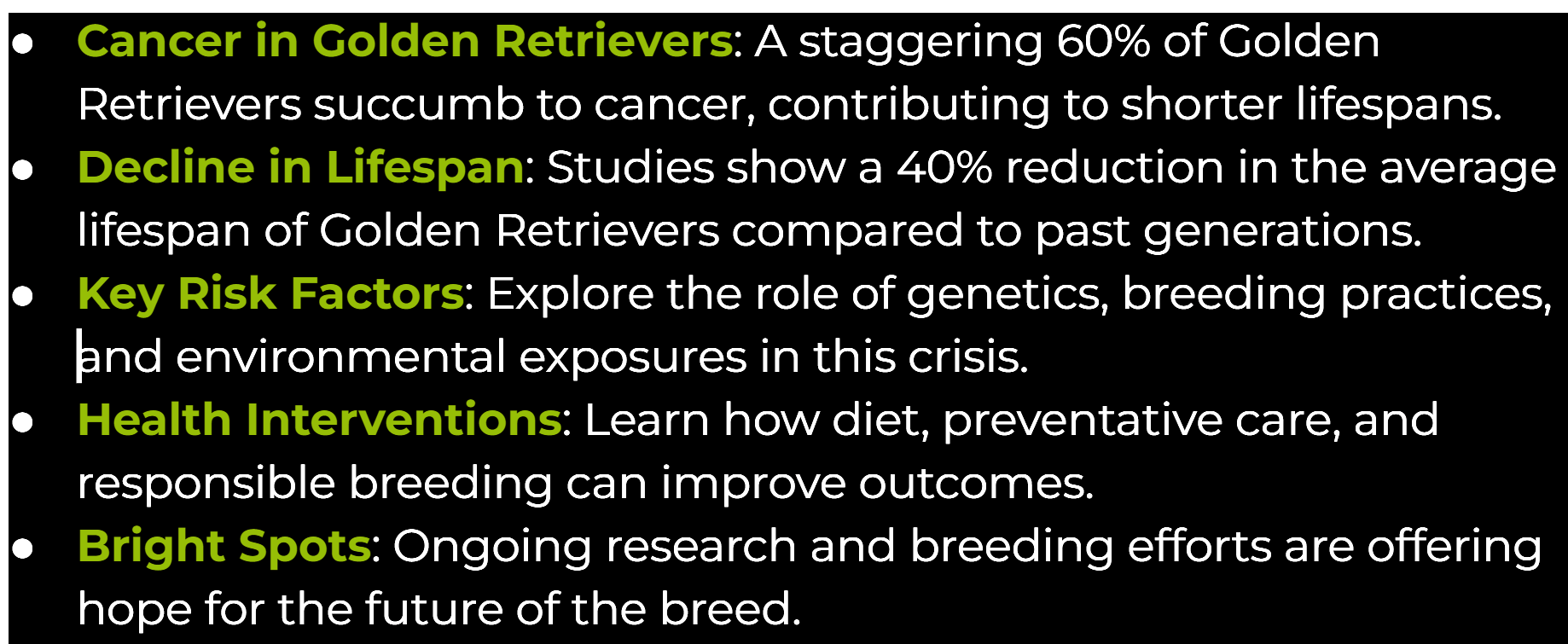
Though unnamed in the text, the scientific premise for extending the lifespan of large breed dogs heavily implicates the Insulin-like Growth Factor 1 (IGF-1) pathway. Large breed canines possess elevated levels of IGF-1, which drives rapid somatic growth but inversely correlates with longevity. In longevity research, downregulation or inhibition of the somatotropic axis (GH/IGF-1) is one of the most highly conserved mechanisms for extending lifespan across multiple species models (from C. elegans to mice). An intervention targeting this axis would theoretically delay the onset of age-related morbidities by reducing cellular proliferation signals and increasing cellular maintenance and stress resistance pathways (e.g., FOXO activation).

 at least theoretically.