Novartis Says Closely Watched Cholesterol Study Failed to Meet Goal
The Phase 3 study found a drug didn’t reduce the risk of cardiovascular events such as heart attacks and strokes
2 Likes
This probably means you don’t need to worry about Lp(a) if ldl is already well controlled. Negative result for Novartis, that we all benefit from.
4 Likes
My very simplified understanding of Lpa is that it is mainly genetic and artificially lowering it doesn’t mean much, as it is only an indicator which foretells (somewhat) if people are in high risk category or not. In other words, if your LPa is optimal (naturally) you can do relatively better even if your LDL-c is somewhat high as opposed to someone whose LPa is naturally high but has same LDL-c as you.
1 Like
And now we have a trial result that seems to confirm that.
2 Likes
Let’s wait for the subgroup analysis and see if there’s any gold in there.
But I think this trial failure is completely normal. These patients were already on standard statin therapy, so it was always going to be hard to get further benefit. I suspect we might find some gold in the subgroup analyses stratified by baseline LP(a). There is currently no drug that specifically lowers LP(a), so I’m really looking forward to seeing this type of drug get approved. It would give biohackers who chase perfect numbers some more options.
4 Likes
That’s a bit of relief for someone like me with high Lpa
2 Likes
Both Lp(a) and ApoB count and should be considered in a weighted totality for ASCVD risk. Lp(a) is 6.6 times more atherogenic than ApoB but the latter is 20 to 50 times or more plentiful in the lipid matrix. You can plug in your numbers and do the math or use the Risk-adjusted ApoB formula discussed here.
Also keep in mind that the Lp(a) distribution in humans is heavily right-tailed. If your Lp(a) is at the midpoint in the distribution, your Lp(a) is significantly elevated above the most.
I have two cousins who have very high Lp(a). I have encouraged both of them to try whichever of these three trial drugs hits the market first. From what is known, they have virtually no side effects. I believe the cumulative effect of these two particles is very long term. I would not put too much stock in the fact that the Novartis Phase III did not meet short term CV outcomes.
5 Likes
Other trials from Lilly et al are coming, with a better population profile: high ldl (ldl>100) and Lp(a)>175 nmol. I suspect there will be some good MACE data there to justify reducing Lp(a).
In the Novartis trial, patients were on statins and average LDL was under 70, with Lp(a)>150nmol. Trial duration was 7 years, whic seems plenty enough to me to assess some effects. Seems to me that if you have LDL<70 and Lp(a)~150nmol, benefits of lowering Lp(a) are not present.
6 Likes
Those with genetically elevated Lp(a) levels presumably have average LDL-c levels, if that’s the case it’s interesting if it’s harmful in the context of average LDL-c levels. Or the drug itself might’ve just not worked and not the target.
1 Like
Unfortunately, that presumption cannot be made. There is an analytic artifact that can erroneously show a slight correlation. Cholesterol constitutes approximately 30–45% of an Lp(a) particle by mass. Standard clinical assays do not isolate native LDL particles. Because Lp(a) consists of this LDL-like core encapsulated by apolipoprotein(a), its internal cholesterol ester payload is co-quantified as “LDL-C.” Also, Mendelian randomization shows the two biometrics to be independent.
More importantly, LDL-C is not atherogenic where as Lp(a) is highly atherogenic when compared to ApoB on a particle-by-particle basis.
3 Likes
What I meant with that presumably they don’t have LDL-c that is 70 mg/dl (5th percentile or so).
1 Like
Rob,
Lipidology is a painfully complex topic. You have have done a fine job putting stuff in some simple terms.
Coincidentally, Eric Topol just published more on this and related topic at Substack.
3 Likes
BTW, this thread should probably be merged with the earlier thread that first addressed the results of this trial (I wish people would check to see if a thread reporting on a result was already created before making a new one - otherwise we have fragmentation of comments here).
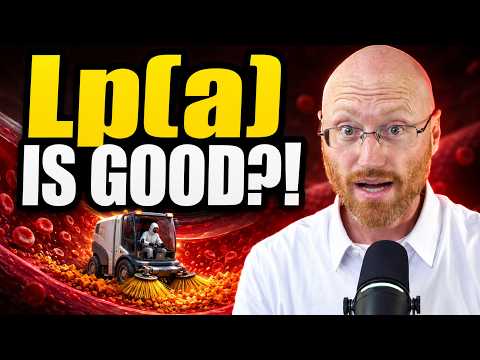
Anyhow, funny timing - just before these Lp(a) results were announced, Dr. Anthony Jay made a highly inflammatory (see what I did there  ) video on Lp(a), where he of course has nothing but praise for this particle and sees a big pharma conspiracy in “demonizing” Lp(a) so they can sell upcoming Lp(a) inhibitors. For those who don’t know, Dr. Jay is a vociferous statin skeptic, seed oil enemy and general conspiracy pusher.
As always I’m posting this video below - like I do with any video or paper - not because I necessarily endorse any of the claims made in the video/paper, but because I think it’s healthy to see what articulate critics or endorsers of your beliefs have to say. It may be good fodder for discussion, and we can never have too much of that, as long as the arguments are kept at a high level - this can be educational for all, whether you agree or disagree. It is always healthy to re-examine your core beliefs, to see if they still hold up if subjected to articulate critique. Incidentally, he also posted a follow up video on Lpa) which I’m not putting in this post not to crowd it, but it’s easy to find on his yt channel for those interested. Enjoy!
Lp(a) Isn’t a Disease - It’s Your Body’s Street Sweeper (via Dr Anthony Jay)
2 Likes
The YouTuber argues that conventional medical consensus on cardiovascular health is fundamentally flawed and financially compromised by pharmaceutical interests.
- Lipoprotein(a) [Lp(a)] as a Protective “Street Sweeper”: Instead of viewing Lp(a) as a harmful, genetically predetermined pathogen, the speaker claims it functions physiologically to bind and clear oxidized debris—primarily oxidized phospholipids from dietary seed oils.
- Rejection of the Lipid Hypothesis: Paralleling their stance on LDL, they argue Lp(a) is merely present at the “scene of the crime” (damaged arterial walls) rather than causing plaque or cardiovascular disease.
- Root Causes of Cardiovascular Disease: Arterial damage, insulin resistance, high hemodynamic stress, and dietary seed oils (polyunsaturated fats) are identified as the actual drivers of cardiovascular pathology. Animal fats and omega-3s are characterized as beneficial.
- Critique of Epidemiological Risk Data: The speaker contends that human outcome data show only weak associations (hazard ratios around 1.5 even at very high levels) between Lp(a) and cardiovascular endpoints like myocardial infarction or stroke, which pale in comparison to risks driven by diabetes or hypertension.
- Pharma-Driven Narratives: They claim that medical organizations (like the AHA) and pharmaceutical companies push “Lp(a) demonization” primarily to prepare the market for newly patented RNA and PCSK9-lowering therapies as older statin patents expire.
1 Like
It is a fascinating story in the unwinding, isn’t it. I have looked at Topol’s and others takes on the reported “bad” news and, related, I believe we discussed here the reasons why making much of the colchicine trials is unwarranted with respect to root causes and progression. Mechanistically, I have been heartened (sorry) to see – finally – the overdue shift to what I think is inflammation’s central role.
Speaking more practically, aggressively reducing inflammation is potentially the most robust intervention available to those of us who are at an advanced age and whose arteries reflect that age. The recent emphasis I see on ApoB (or LDL-P) is encouraging but only in the context of equal or greater emphasis on arterial inflammation.
From Sam Tsimikas: Sam Tsimikas, MD on X: "Hi all, The Lp(a) HORIZON trial has released topline data and, quite shockingly, missed its primary endpoint. In other words, lowering Lp(a) in patients with prior MI, stroke or peripheral arterial disease, who were otherwise very well treated for LDL-C, blood pressure, diab… / X
3 Likes
Your criticism of adding to another thread is well warranted.
It isnt for lack of trying. Lack of trying harder…may be!
I am huge proponent of indexed catalog and searching.
I tried to find the thread but as you can see it gave me 50+ threads. Anyways, found and reposted the link. May be admin can do the magic!
1 Like
If Lp(a) is a beneficial street sweeper and not a highly atherogenic particle, we should see negative associations between Lp(a) levels and AD and a host of expected disease states. Do we?
So, how do we frame the research question? The problem we have in answering this question is that every Lp(a) particle contains one ApoB molecule, so assessing any risk and benefit of Lp(a) independent of ApoB must mean added risk beyond the rest of the ApoB particle burden.
I’m not sure about all the ways to frame the research questions but one key inferential logic seems clear enough. If all ApoB particles were equally atherogenic, knowledge of the Lp(a) fraction should add nothing after total ApoB is known. Is that true?
We know some things that illuminate this issue, including:
-
Genetic analysis suggests that Lp(a) levels are mostly determined a small number of SNPs and are established long before clinical disease. Therefore, the usual explanation that “inflammation or arterial disease raises Lp(a) as a protective response” cannot explain the genetic findings. (NB: This is not a proof but a contribution.)*
-
Data from the 40,000+ Copenhagen participants, indicated an association between increased Lp(a) and a graded increase in myocardial infarction. The highest likely Lp(a) cohort had an adjusted MI hazard ratio of approximately 1.5 versus the lowest likely Lp(a) cohort, with concordant results in two independent samples. The analyses corrected total cholesterol for its Lp(a)-cholesterol component and adjusted for smoking, diabetes, blood pressure, triglycerides, adiposity, and lipid treatment. I would note many possible sources of contamination that can slip into this kind of design but the directionality was strong. (In all of this, I omitted considerable genetic detail about Lp(a) inference for clarity.) *
-
A separate genome-wide study identified two genetic variants strongly associated with both Lp(a) concentration and coronary disease; the two-variant genotype score produced an OR of 1.51 for coronary disease. Because several independent variants and structural variation all point in the same direction, simple pleiotropy becomes a relatively implausible complete explanation.
-
Coronary CT imaging of patients with high Lp(a) showed progression of low-attenuation, necrotic-core plaque despite similar baseline plaque burden. In one study, each 50-mg/dL higher Lp(a) was associated with approximately 10% greater low-attenuation plaque progression.
Here I paste in a summary of the 2021 Trinder-Natarajan study. It combined UK Biobank observational data with genetic associations from UK Biobank, the Million Veteran Program, CARDIoGRAMplusC4D, and other consortia.
Before apoB adjustment:
** Genetically predicted 50-mg/dL higher LDL-C: CAD OR 1.78.*
** Genetically predicted 50-mg/dL higher Lp(a): CAD OR 1.33.*
After conditioning on apoB:
** The LDL-C association fell to OR 1.00.*
** The Lp(a) association was essentially unchanged.*
=============
In other words, ApoB particle number explained the LDL-C association but did not explain the Lp(a) association. That is direct evidence that Lp(a) carries additional pathogenic properties beyond merely being another ApoB particle.
I think the “street sweeper” analogy might also fail on its face but experts would need to weigh in on this. It is true that Lp(a) preferentially binds oxidized phospholipids but it deos not follow that it’s “role” is to remove or detoxify them. If higher Lp(a) were predominantly protective through “clean-up,” then the alleles that raise Lp(a) should produce less coronary disease (or at least no excess after accounting for conventional ApoB). I think the evidence trends fairly strongly in the opposite direction.
2 Likes
No problem Nick1, it’s all good - the search function here is not optimal, but we do what we can. My personal approach is that if there is a result/paper that was published recently (1-2-3 days ago), I don’t use the search function at all, but instead simply scan the first couple of Forum pages, because threads created most recently will all be featured there, and if the paper was published in the last few days, it’ll pop up reliably with minimum of searching. The search function will simply return everything connected with the terms specified and it’s chaos  .
.
To me, this endpoint all but guaranteed a borderline to negative outcome. Isolating Lp(a) from ApoB is admittedly difficult (see below) but evidence to date suggests that it does its damage over a lifetime. Going into this question in the first place, I would never have expected to see short terms gains from Lp(a) reduction in an already very sick population.