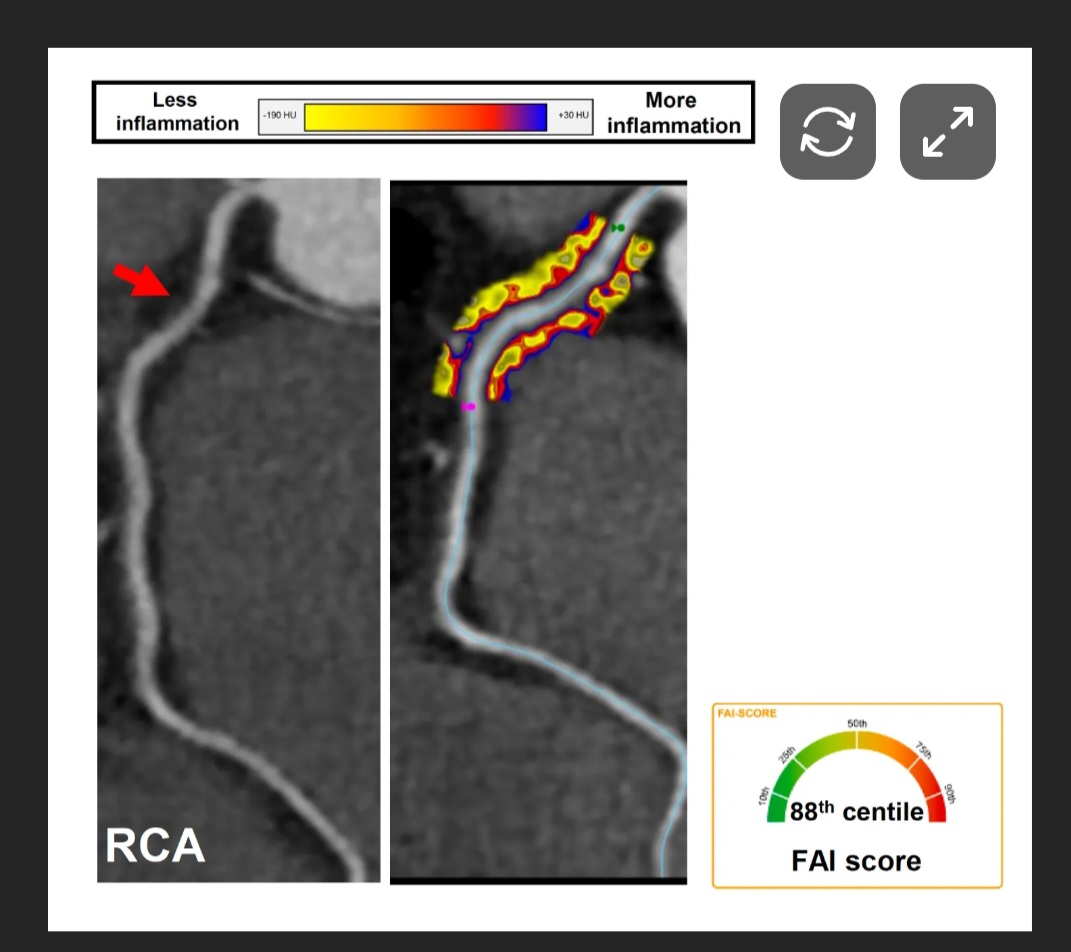
Speaking of inflammation, Caristo Diagnsotics recently received FDA approval. They are a spun off of Oxford and operatimng Cari Heart Care centers through out UK. Anyone from UK had it done??
Their Fat Attenuation Index (FAI) definitely is superior to flawed coronary angiogram and perhaps Calcium Scoing as you can see below.
2 Likes
N = 1 from a general surgeon.
https://jamanetwork.com/journals/jamainternalmedicine/article-abstract/647525
" I am a 53-year-old woman with a significantly elevated level of Lp(a) (27 mg/dL), but I found that I had to stop taking niacin primarily because of headaches. Thus, after a thorough review of the literature, I began to follow the advice of Linus Pauling. For individuals who have an Lp(a) level higher than 25 mg/dL and a family history of heart disease, the recommendation is to take 3 g/d of both ascorbic acid and L-lysine monohydrochloride.5 After 6 months of this regimen, with no adverse effects, my Lp(a) level decreased to 14 mg/dL, a reduction of 48%. The Lp(a) testing was done by the highly reliable Lawrence Berkeley National Laboratory/Berkeley HeartLab Department Technology Transfer program. The theory is that lysine is an Lp(a)-binding inhibitor and thus blocks the Lp(a) attachment to the arterial blood vessel wall and that ascorbic acid helps to repair the collagen injury to the blood vessel and acts as an antioxidant."
3 Likes
Re: inflammation - if the issue is specific to vascular inflammation that compromises the endothelium kicking off the CVD cascade, and this inflammation being highly localized can therefore be missed by nonspecific inflammatory biomarkers like IL-6 and hsCRP, then we can make more sense of the hypothesis that the protective mechanism by which statins work is lowering inflammation (in addition to lowering ApoB/LDL) - the idea being that what is lowered is specifically the pathological vascular inflammation (thus protecting the endothelium). It is because of this specificity of statins’ impact on vascular inflammation that they are effective whereas more general anti-inflammatories that simply impact global inflammation are not effective against CVD. That’s all and good, but it does pose a bit of a puzzle. Because on the one hand we say that IL-6 and hsCRP don’t capture this specific vascular inflammation, and you can have low IL-6 and hsCRP and still have vascular inflammation and subsequent CVD, as well as general anti-inflammatories lowering IL-6 and hsCRP numbers and yet not being protective. In this scenario these inflammatory numbers are not at all informative vs CVD in general. On the other hand, we know well and good that in general statins do seem to lower inflammatory markers such as hsCRP. And some LLT agents too can have this effect - bempedoic acid lowers hsCRP. But then again, not all of them do: PCSK9i and ezetimibe don’t reliably lower these markers.
Bottom line, there is still a lot more to be learned about the nexus of LLT-inflammation-CVD.
2 Likes
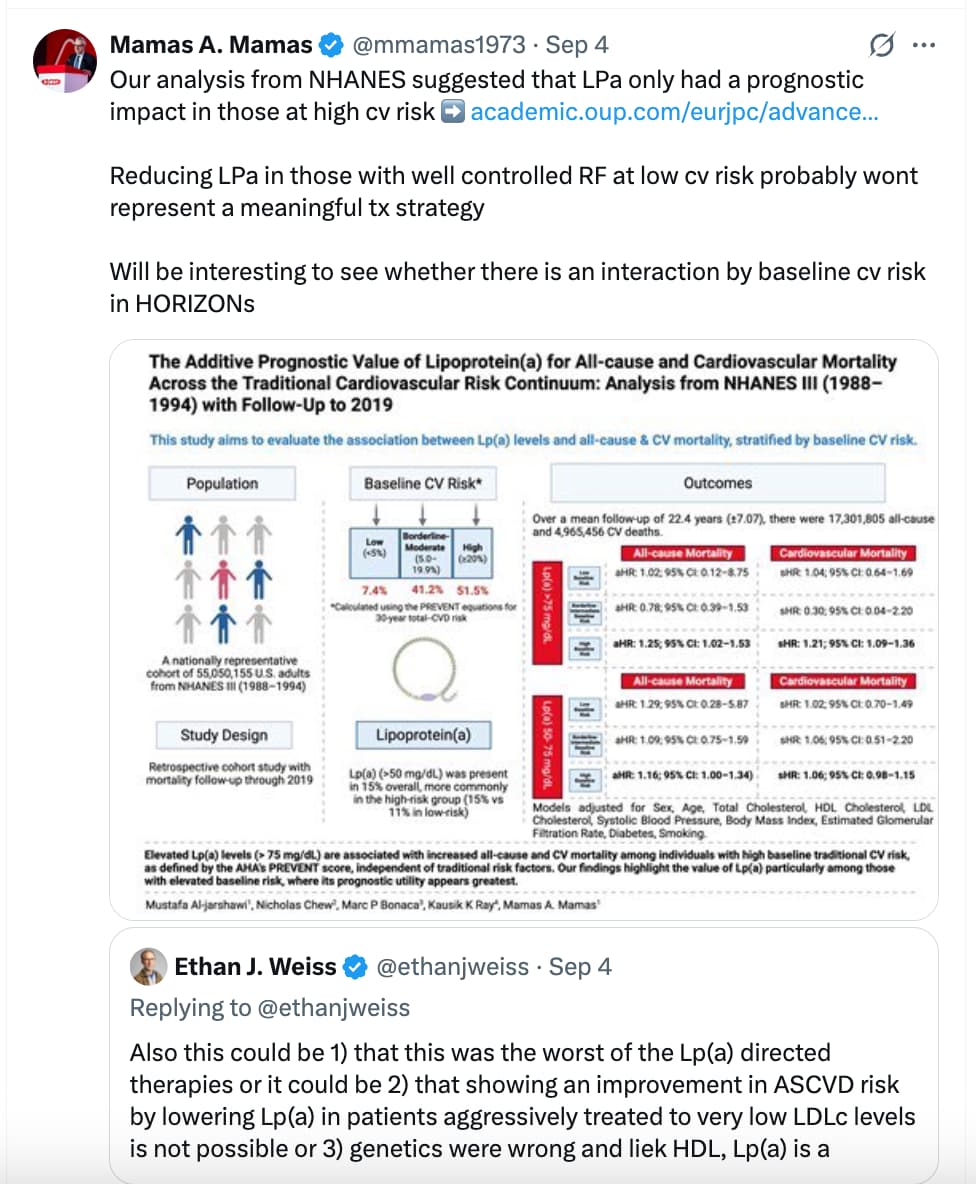
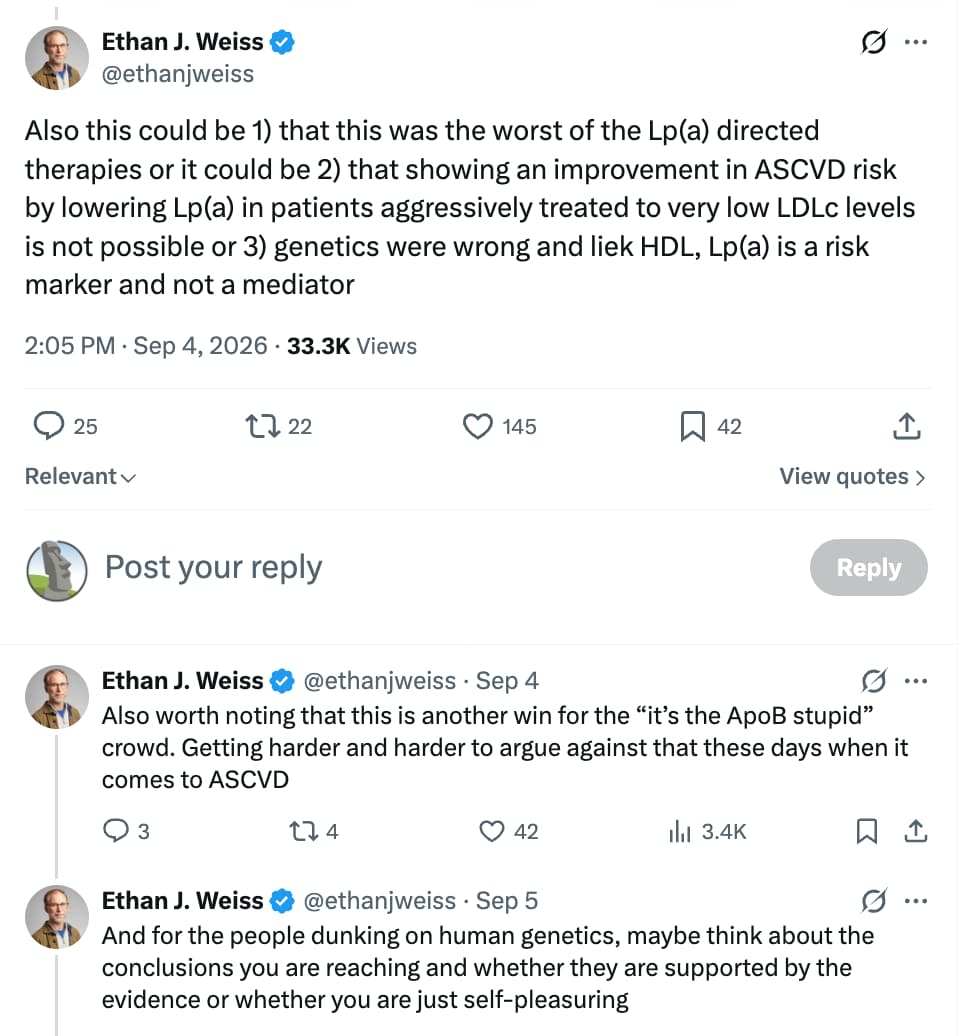
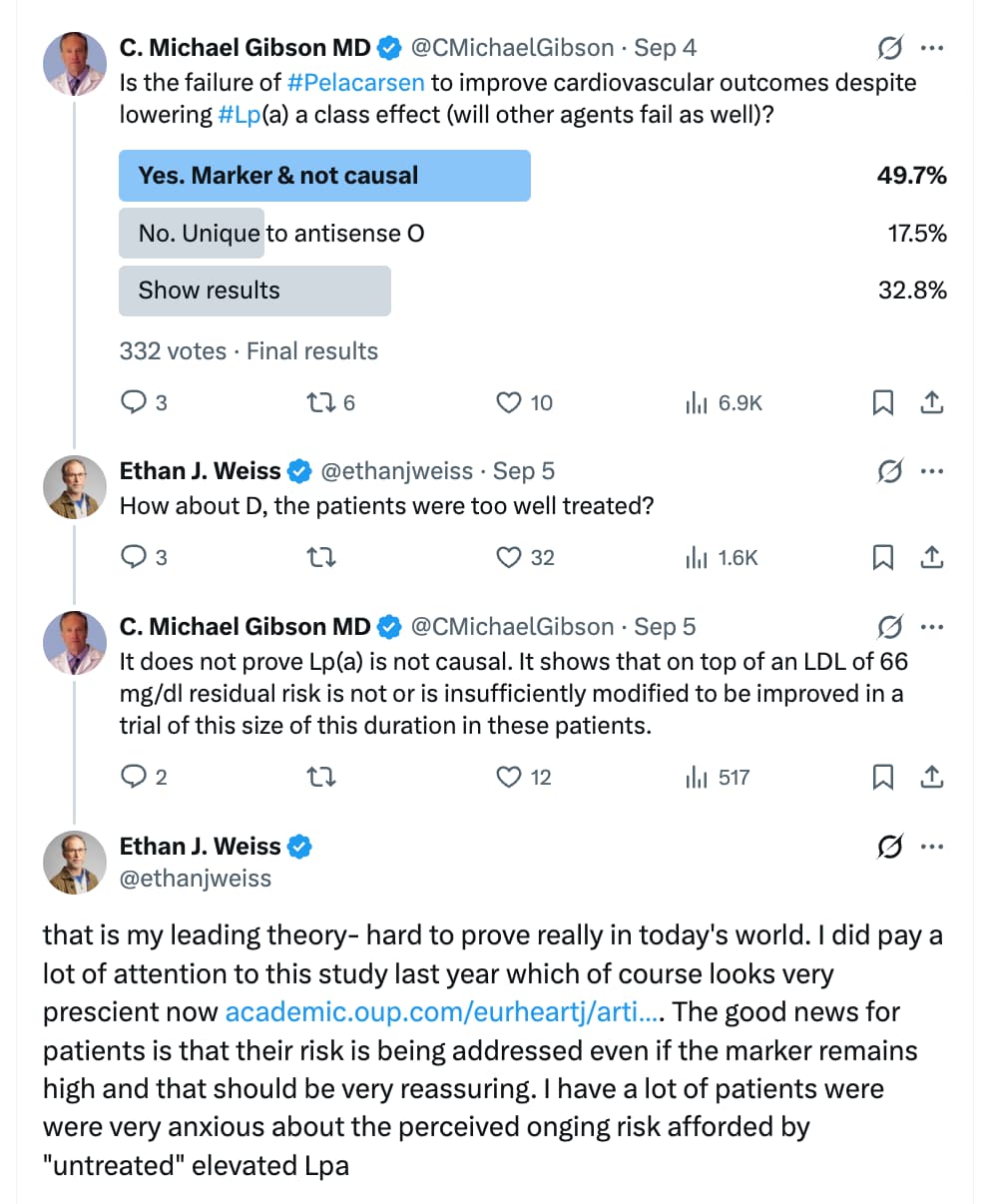
3 Likes
The study that Ethan Weiss (UCSF Cardiologist) just pointed to as perhaps foreshadowing this new negative result:
Lipoprotein(a) and recurrent atherosclerotic cardiovascular events: the US Family Heart Database
A study of 273,770 US adults who already had cardiovascular disease found that the higher their lipoprotein(a), the higher their chance of a second heart attack, stroke, or artery-opening procedure, with no upper limit where the risk stopped climbing. People in the top 5 percent of lipoprotein(a) values carried roughly 39 to 45 percent more risk than people in the bottom third, and that relationship held equally in women and men and in Black, Hispanic, and White participants. Lipoprotein(a) levels themselves differed sharply between these groups, but the risk carried per unit did not. A secondary and much weaker finding suggested that aggressive LDL cholesterol lowering may blunt some of that excess risk, though the study design cannot separate this from prescribing patterns.
Lipoprotein(a) has been a recognized cardiovascular risk factor for decades and has been largely ignored in clinical practice because nothing could be done about it. That is changing. Several drugs that cut lipoprotein(a) by 80 to 98 percent are in late-stage trials, and those trials need to know who stands to benefit. An analysis of US medical claims covering 340 million people offers the largest answer so far.
Researchers at the Family Heart Foundation, working with colleagues at Copenhagen University Hospital and Stanford, pulled 273,770 adults who already had atherosclerotic cardiovascular disease and who had a lipoprotein(a) test on file. They tracked them for a median of 5.4 years. In that time 41,687 of them, about 15 percent, had another cardiovascular event: a heart attack, an acute coronary syndrome, an ischemic stroke, or a procedure to reopen or bypass a blocked artery.
The pattern was clean. Risk rose with lipoprotein(a), and it kept rising. People above 300 nmol/L, the top 5 percent of the distribution, had 39 to 45 percent higher risk of a repeat event than people below 15 nmol/L, depending on how heavily the model adjusted. There was no ceiling. The curve continued climbing past 1000 nmol/L, where risk was roughly two and a half times baseline. This matters because an earlier and much smaller cohort had suggested the risk leveled off around 150 to 200 nmol/L in people with established disease. In a cohort sixteen times larger, it does not.
Two other findings stand out. Lipoprotein(a) levels differed markedly by group, running higher in women than men and higher in Black participants than in Hispanic or White participants. But the risk per unit of lipoprotein(a) was statistically indistinguishable across all of them. So the disparity in outcomes appears to come from carrying more of the particle, not from the particle behaving differently in different bodies. That argues against applying separate risk thresholds by sex or ancestry.
The second finding is the one that will get quoted, and it is the shakiest. Among people on aggressive LDL cholesterol lowering, the lipoprotein(a) signal shrank. In people taking no lipid drug, the top lipoprotein(a) category carried 57 percent excess risk. In people on high-intensity statins plus ezetimibe, that excess fell to 15 percent. In the small group on PCSK9 inhibitors it vanished, though only 397 events occurred in that entire subgroup and the confidence interval runs from a 30 percent benefit to a 46 percent harm.
The authors are candid that this is not a controlled comparison. Physicians prescribe the strongest drugs to the sickest patients, and it shows: absolute event rates were highest, not lowest, in the aggressively treated group. Whether lowering LDL genuinely blunts lipoprotein(a) risk, or whether the statistics are being pushed around by who gets which prescription, cannot be settled with claims data.
What the study does establish is scale. Roughly one in five adults carries clinically meaningful lipoprotein(a), most have never been tested, and in this population the risk it carries did not stop climbing.
Actionable Insights
Get tested once. Lipoprotein(a) is more than 90 percent genetically fixed and stable across adult life, so a single measurement in nmol/L settles the question permanently. It is not part of a standard lipid panel and you have to ask.
Understand the magnitude honestly. Over 5.4 years, 14.0 percent of people with lipoprotein(a) below 15 nmol/L had a repeat cardiovascular event, versus 19.9 percent of those above 300 nmol/L. That is a gap of 5.9 percentage points, meaning about 1 additional event for every 17 high-lipoprotein(a) people over five years. Expressed as a standardized effect size, this is a Cohen’s d of roughly 0.18, which statisticians call small. Small effects still matter at population scale, and this one applies to a fifth of adults.
Roughly, each additional 100 nmol/L is associated with about 11 percent more relative risk, with no plateau observed. Note the units: nmol/L and mg/dL are not interchangeable and cannot be reliably converted.
If yours is high, your siblings, parents, and children each have roughly a 50 percent chance of also being high. Cascade testing of first-degree relatives is the highest-yield thing you can do with the result.
There is no approved drug that lowers it. If yours is high, the practical response is to drive everything else down harder: LDL cholesterol, blood pressure, smoking, glycemic control. This study is consistent with that approach helping, but does not prove it.
Context and Source
- Open Access Paper: Lipoprotein(a) and recurrent atherosclerotic cardiovascular events: the US Family Heart Database
- Institutions: Family Heart Foundation (Fernandina Beach, FL); Copenhagen University Hospital Rigshospitalet and University of Copenhagen; Stanford University; BIA Clinical Group (Ann Arbor, MI); Flourish Research (Apex, NC); Copenhagen University Hospital Herlev and Gentofte
- Countries: United States and Denmark
- Journal: European Heart Journal (Oxford University Press, on behalf of the European Society of Cardiology), 2025;46:4762-4775, doi 10.1093/eurheartj/ehaf297. Published in the FastTrack Clinical Research section.
- Impact evaluation: The impact score of this journal is 45.3, evaluated against a typical high-end range of 0 to 60+ for top general science, therefore this is an Elite impact journal.
4 Likes
5 Likes
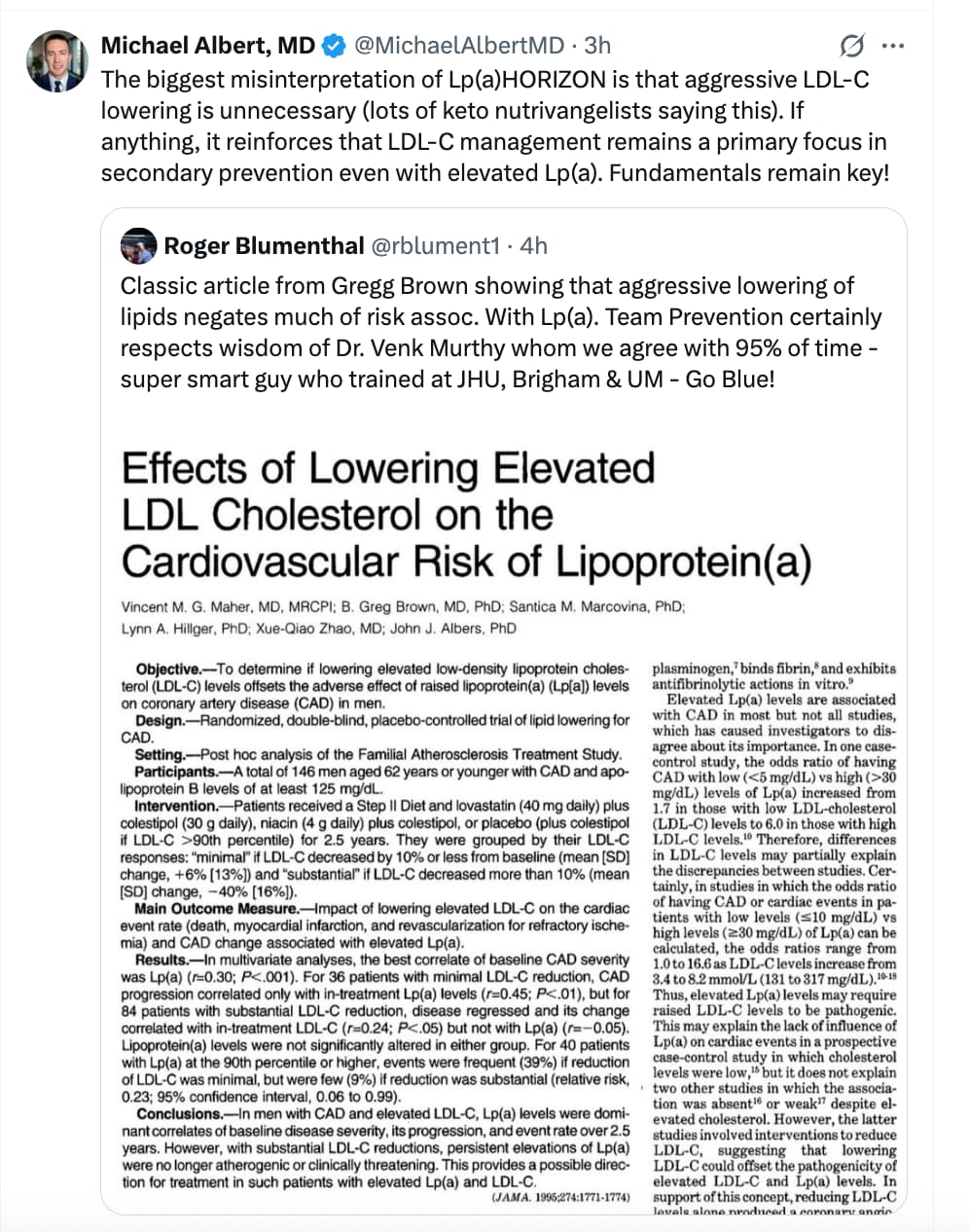
Effects of Lowering Elevated LDL Cholesterol on the Cardiovascular Risk of Lipoprotein(a): https://www.scilit.com/publications/68b5cd3a9bcd495ae1391e344d8eab76
For 40 patients with Lp(a) at the 90th percentile or higher, events were frequent (39%) if reduction of LDL-C was minimal, but were few (9%) if reduction was substantial (relative risk, 0.23; 95% confidence interval, 0.06 to 0.99). Conclusions. —In men with CAD and elevated LDL-C, Lp(a) levels were dominant correlates of baseline disease severity, its progression, and event rate over 2.5 years. However, with substantial LDL-C reductions, persistent elevations of Lp(a) were no longer atherogenic or clinically threatening.
3 Likes
Lp(a)-Reducing Agent Pelacarsen Misses the Mark in Phase 3—Now What?
1 Like


I. Executive Summary
The top-line failure of the Phase III Lp(a)HORIZON trial (NCT04023552; Novartis), announced in September 2026,marks a pivotal inflection in cardiovascular medicine. The trial evaluated pelacarsen, an antisense oligonucleotide developed in collaboration with Ionis Pharmaceuticals that inhibits hepatic apolipoprotein(a) mRNA translation. Across 8,323 participants with established cardiovascular disease (CVD) and baseline lipoprotein(a) [Lp(a)] levels at or above 149 nmol/L (70 mg/dL), pelacarsen failed to achieve a statistically significant reduction in its primary four-point major adverse cardiovascular event (MACE) composite: cardiovascular death, non-fatal myocardial infarction, non-fatal stroke,and urgent coronary revascularization. This outcome occurred despite pelacarsen demonstrating robust 70% to 80% pharmacodynamic reductions in circulating plasma Lp(a), directly challenging the assumption that selectively lowering circulating Lp(a) in secondary prevention cohorts yields proportional reductions in ischemic events.
This failure echoes the historical CETP inhibitor trials, where pharmacologically elevating high-density lipoprotein cholesterol (HDL-C) failed to confer clinical protection despite strong observational correlations. However, unlike HDL-C, which lacks causal validation in Mendelian randomization (MR), lifelong genetically elevated Lp(a) is causally linked to both atherosclerotic cardiovascular disease (ASCVD) and calcific aortic valve stenosis (CAVS). The translational breakdown observed in Lp(a)HORIZON can be explained by four interrelated pharmacological and trial-design factors:
- Residual Absolute Risk Attenuation: The enrolled secondary prevention cohort was heavily pretreated with guideline-directed medical therapy. When background apolipoprotein B (ApoB) and low-density lipoprotein cholesterol (LDL-C) are aggressively suppressed, the residual cardiovascular risk mediated by Lp(a) in late-stage stabilized plaques is markedly attenuated.
- Exposure Duration Disparity: The trial was powered to detect an ambitious ~20% MACE reduction based on lifetime genetic MR models. Because Lp(a) reaches adult concentrations by age 5, short-term (3- to 5-year) antisense lowering in older patients cannot reverse decades of accumulated intimal oxidized phospholipid burden and arterial calcification.
- Endpoint Dilution: Secondary analyses from the FOURIER and ODYSSEY OUTCOMES trials indicate that Lp(a) tracks primarily with coronary atherothrombosis rather than cerebrovascular ischemic stroke, meaning the inclusion of stroke in the composite endpoint diluted the signal.
- Magnitude of Mass Reduction: Pelacarsen’s 70% to 80% suppression may have been insufficient; genetic models indicate that a therapeutic reduction of at least 100 mg/dL (approx. 215 nmol/L) of Lp(a) is required to mirror the clinical benefit of a 1 mmol/L (38.7 mg/dL) drop in LDL-C.
Consequently, clinical management must pivot: clinicians should not await single-target Lp(a) therapies. Instead, patients with elevated Lp(a) (>125 nmol/L) must undergo aggressive global ASCVD risk eradication, driving ApoB below 50 mg/dL using high-potency statins, ezetimibe, and PCSK9 inhibitors, while monitoring for calcific aortic valve progression.
II. Insight Bullets
- The Phase III Lp(a)HORIZON trial conducted by Novartis in 8,323 patients across 42 countries failed to demonstrate a statistically significant reduction in major adverse cardiovascular events using the hepatocyte-targeted antisense oligonucleotide pelacarsen (Healio 2026 Trial Report).
- Pelacarsen, developed in partnership with Ionis Pharmaceuticals, consistently reduced circulating plasma lipoprotein(a) concentrations by 70% to 80% in Phase II and Phase III cohorts, demonstrating a clinical efficacy failure rather than a target-engagement failure.
- Lipoprotein(a) consists of an apolipoprotein B-100 containing low-density lipoprotein particle covalently linked via a disulfide bond to the polymorphic, thrombogenic glycoprotein apolipoprotein(a).
- Serum concentrations of Lp(a) are greater than 90% genetically determined through autosomal codominant inheritance at the LPA gene locus on chromosome 6q26–27.
- Plasma Lp(a) concentrations achieve stable adult phenotypic levels by approximately age 5, creating lifelong vascular exposure that contrasts with the progressive age-associated elevation observed in LDL-C.
- According to the European Atherosclerosis Society consensus statement (Kronenberg et al., 2022, Eur Heart J),Lp(a) levels under 75 nmol/L represent baseline low risk, 75 to 125 nmol/L indicate an intermediate “gray zone,” and concentrations exceeding 125 nmol/L (~50 mg/dL) denote high atherogenic risk.
- An Lp(a) concentration exceeding 125 nmol/L confers an approximately 40% increased relative risk of coronary heart disease, while levels above 250 nmol/L confer a doubled relative risk.
- Historical prospective observational data from the Framingham Heart Study (Gordon et al., 1977) demonstrated an inverse correlation between HDL-C and coronary mortality, which failed to translate into therapeutic efficacy during pharmaceutical intervention trials.
- Pharmacological trials of cholesteryl ester transfer protein (CETP) inhibitors, such as torcetrapib in the ILLUMINATE trial (Barter et al., 2007, N Engl J Med), demonstrated that intentionally elevating HDL-C failed to reduce cardiovascular events and, in certain formulations, increased all-cause mortality.
- Mendelian randomization studies confirmed that genetic variants specifically raising isolated HDL-C do not decrease myocardial infarction risk, classifying HDL-C as an epidemiological surrogate marker rather than a causal pathogenic driver.
- In contrast to HDL-C, Mendelian randomization studies published in JAMA Cardiology by Burgess et al., 2018establish a causal, dose-dependent relationship between genetically determined Lp(a) levels and coronary heart disease.
- Patients enrolled in the Lp(a)HORIZON trial received intensive baseline secondary prevention pharmacotherapy,which suppressed background ApoB and substantially diminished the modifiable residual atherothrombotic risk attributable to Lp(a).
- The 20% relative risk reduction targeted in the statistical design of Lp(a)HORIZON was extrapolated from lifetime genetic exposure models that overestimate the therapeutic impact of a 3- to 5-year pharmacologic intervention initiated late in life.
- Subgroup analyses from landmark PCSK9 inhibitor trials demonstrated that baseline and achieved Lp(a) levels correlated with incident coronary events and myocardial infarction, but showed minimal association with ischemic cerebrovascular events, diluting composite endpoints that incorporate stroke.
- Next-generation small interfering RNA (siRNA) therapies, such as lepodisiran (Eli Lilly and Company) and zerlasiran (Silence Therapeutics), achieve greater than 90% to 95% sustained hepatic suppression of Lp(a),outperforming first-generation antisense oligonucleotides.
- Independent of coronary atherogenesis, elevated Lp(a) acts as a primary genetic driver of calcific aortic valve stenosis (CAVS) by delivering oxidized phospholipids that trigger valvular interstitial cell osteogenic differentiation.
- Randomized controlled trials evaluating statin therapy in established calcific aortic stenosis—including SALTIRE (Cowell et al., 2005), SEAS (Rossebo et al., 2008), and ASTRONOMER (Chan et al., 2010)—demonstrated that lowering LDL-C does not attenuate hemodynamic or anatomical valve calcification once stenosis is established.
- A post-hoc analysis of the FOURIER trial (Bergmark et al., 2020, J Am Coll Cardiol) showed that PCSK9 inhibition with evolocumab (Amgen) lowered Lp(a) by approximately 27% and was associated with an exploratory 50% relative risk reduction in clinical aortic stenosis events after the first year of therapy.
- International clinical guidelines recommend a universal, once-in-a-lifetime serum Lp(a) measurement for all adult patients to stratify baseline atherosclerotic cardiovascular risk.
- In patients confirmed to carry high Lp(a), standard primary and secondary clinical risk mitigation mandates aggressive reduction of systolic blood pressure to below 120 mmHg in non-frail cohorts.
- Dr. Stanfield advocates for an intensive ApoB clinical target below 50 mg/dL in patients with elevated Lp(a),exceeding current standard guideline recommendations of 55 mg/dL for extreme-risk secondary prevention.
- Dual lipid-lowering therapy combining high-intensity statins with the Niemann-Pick C1-Like 1 (NPC1L1) inhibitor ezetimibe serves as the first-line oral backbone to downregulate hepatic cholesterol synthesis and upregulate LDL receptor expression.
- In July 2026, the U.S. Food and Drug Administration approved enlicitide (Lipfendra; Merck & Co.), the first once-daily oral macrocyclic peptide PCSK9 inhibitor (PubMed PMID: 42604807), which reduces LDL-C by approximately 50% to 60% and lowers Lp(a) by up to 25% to 30% at a lower price point than injectable monoclonal antibodies.
- The failure of pelacarsen to meet its primary composite endpoint in secondary prevention does not invalidate the causal role of circulating ApoB-containing lipoproteins in atherogenesis, as ApoB particle clearance remains proven to prevent recurrent coronary events.
- Aortic valve calcification represents an active, fibrocalcific biological cascade that becomes self-sustaining and independent of systemic lipid-lowering once severe valvular calcium deposition has commenced.
III. Adversarial Claims & Evidence Table
| Claim from Video | Speaker’s Evidence | Scientific Reality (Current Data) | Evidence Grade (A-E) | Verdict |
|---|---|---|---|---|
| The Phase III Lp(a)HORIZON study failed because lowering Lp(a) late in life cannot reverse decades of accumulated arterial damage within a short trial window. | Extrapolation from Mendelian randomization lifetime exposure versus short-term intervention timelines. | Mendelian randomization modeling (Burgess et al., 2018, JAMA Cardiol) proves that an absolute reduction of ~100 mg/dL (215 nmol/L) in Lp(a) is necessary to achieve the same clinical benefit as a 38.7 mg/dL (1 mmol/L) drop in LDL-C. In secondary prevention cohorts with established calcified fibroatheromas, acute short-term (3- to 5-year) clearance of Lp(a) produces minimal structural regression relative to lifetime genetic absence. | Level A | Strong Support |
| The primary trial endpoint was diluted because Lp(a) tracks with coronary events but does not cause ischemic stroke. | Subgroup and post-hoc data from large PCSK9 inhibitor cardiovascular outcomes trials (FOURIER / ODYSSEY). | Large meta-analyses and prospective cohorts (EAS Consensus / Kronenberg et al., 2022) confirm that while Lp(a) is strongly and linearly causal for coronary artery disease and calcific aortic stenosis, its association with ischemic stroke is non-linear, modest, and confined largely to large-artery atherosclerotic stroke subtypes, showing no association with cardioembolic or lacunar strokes. Including all-cause stroke in a 4-point composite MACE endpoint dilutes statistical power. | Level A | Strong Support |
| PCSK9 inhibitors slow or reduce calcific aortic valve stenosis events by lowering circulating Lp(a) levels by 25%. | Post-hoc exploratory analysis of the FOURIER trial (Bergmark et al., 2020). | The FOURIER post-hoc analysis evaluated only 63 total aortic stenosis events (HR 0.48 after 1 year), representing an underpowered, hypothesis-generating retrospective observation. Large randomized trials dedicated to lipid lowering in established aortic stenosis (SEAS, SALTIRE, ASTRONOMER) were completely neutral. Prospective RCT data proving PCSK9 inhibition slows hemodynamic progression of aortic stenosis are currently lacking. | Level B | Plausible |
| In patients with high Lp(a), clinicians should aggressively drive ApoB down to an absolute clinical target below 50 mg/dL. | Dr. Stanfield’s personal clinical protocol for managing high-risk cardiovascular patients. | The 2019 ESC/EAS dyslipidemia guidelines and 2026 ACC/AHA multi-society guidelines establish an ApoB target of <55 mg/dL (and LDL-C <40–55 mg/dL) for extreme-risk secondary prevention patients (Circulation 2026 Dyslipidemia Guideline). Driving ApoB strictly below 50 mg/dL is biologically consistent with post-hoc trial analyses (e.g., FOURIER, ODYSSEY) showing progressive MACE reduction down to very low atherogenic particle concentrations without an apparent floor effect, though formal RCTs targeting <50 vs. <55 mg/dL specifically have not been conducted. | Level B | Strong Support |
| Pelacarsen’s 70% to 80% Lp(a) reduction was insufficient, whereas newer siRNA agents achieving >90% reduction will succeed in outcomes trials. | Phase II data comparing pelacarsen against next-generation siRNAs (e.g., lepodisiran, olpasiran, zerlasiran). | While siRNAs (such as olpasiran in OCEAN(a)-DOSE, O’Donoghue et al., 2022, N Engl J Med, and lepodisiran, Nissen et al., 2025) achieve >95% sustained suppression, the absolute mass reduction of Lp(a) dictates clinical efficacy. If a patient enters with a baseline of 150 nmol/L, an 80% drop lowers levels by 120 nmol/L, which MR models indicate may be beneath the threshold of clinical detection for MACE reduction over 4 years. Whether >90% reduction translates to reduced MACE awaits ongoing Phase III trials (e.g., OCEAN(a)-Outcomes, NCT05581303). | Level C | Plausible |
| Elevating HDL-C is entirely non-causal for cardiovascular risk reduction and serves merely as a surrogate marker. | Historical failure of CETP inhibitors (torcetrapib, dalcetrapib, evacetrapib) despite huge HDL-C elevations. | Robust human Mendelian randomization studies (Voight et al., 2012, Lancet) and comprehensive meta-analyses show that genetic polymorphisms that selectively alter plasma HDL-C without altering ApoB or triglycerides do not modify myocardial infarction risk. The cholesterol content of HDL reflects reverse cholesterol transport flux poorly and is clinically non-causal. | Level A | Strong Support |
IV. Actionable Protocol (Prioritized)
High Confidence Tier (Level A/B Evidence)
| Domain | Clinical Action | Dosing / Target | Primary Endpoint |
|---|---|---|---|
| Universal Lp(a) Risk Stratification | Order a quantitative serum Lipoprotein(a) assay reported in molar units (nmol/L). | Once in a lifetime adult measurement; identify threshold: >125 nmol/L (>50 mg/dL). | Identification of independent genetic ASCVD risk enhancer and calcific aortic stenosis liability (Kronenberg et al., 2022). |
| Aggressive Atherogenic Particle Depletion | Initiate high-intensity statin therapy combined with ezetimibe to downregulate systemic ApoB. | Rosuvastatin 20–40 mg or Atorvastatin 40–80 mg daily PLUS Ezetimibe 10 mg daily; titrate to serum ApoB <55 mg/dL (or <50 mg/dL in extreme risk) and LDL-C <55 mg/dL. | Maximized regression of the non-calcified fibroatheroma lipid core and reduction of recurrent MACE (HR 0.78–0.85 per 1 mmol/L LDL-C drop) (Circulation 2026 Guidelines). |
| Hemodynamic Vascular Offloading | Optimize blood pressure via dual-mechanism antihypertensive pharmacotherapy. | Achieve resting clinic blood pressure <120/80 mmHg using ACEi/ARB (e.g., Telmisartan 40–80 mg) plus Dihydropyridine CCB (e.g., Amlodipine 5–10 mg). | Attenuation of trans-endothelial shear stress, preventing endothelial cell disruption and intimal entry of ApoB and Lp(a) particles. |
| Valvular Structural Surveillance | Order transthoracic echocardiography (TTE) in patients with Lp(a) >125 nmol/L presenting with dyspnea or systolic murmur. | Baseline TTE; repeat every 3–5 years if aortic valve sclerosis is identified, or annually if moderate calcific aortic stenosis develops. | Early identification of progressive valvular leaflet thickening, peak transvalvular aortic jet velocity (Vmax), and mean pressure gradient prior to irreversible left ventricular decompensation. |
Experimental Tier (Level C/D Evidence - High Safety Margin)
- PCSK9-Directed Dual Particle Clearance: In patients with established ASCVD and Lp(a) >125 nmol/L whose ApoB remains >55 mg/dL despite statin plus ezetimibe, add a PCSK9 inhibitor: injectable monoclonal antibodies (Evolocumab 140 mg SC biweekly or Alirocumab 75/150 mg SC biweekly) OR oral macrocyclic peptide (Enlicitide 20 mg PO daily). Mechanism: Upregulation of hepatic LDL receptors enhances LDL clearance and modestly augments Lp(a) catabolism (~20–30% Lp(a) reduction). Monitoring: Serial ApoB, LDL-C, liver enzymes,and high-sensitivity troponin at 6 and 12 weeks.
- Pre-emptive Calcification Screening: Perform non-contrast chest computed tomography to quantify Coronary Artery Calcium (CAC) and Aortic Valve Calcium (AVC) scoring in asymptomatic individuals with Lp(a) >125 nmol/L. Mechanism: Quantifies anatomical calcific burden induced by oxidized phospholipids and autotaxin-mediated lysophosphatidic acid production. Monitoring: AVC score (>300 AU in women, >700 AU in men indicates severe progression).
- Anti-Inflammatory Modulation (Targeting Residual Inflammatory Risk): Consider low-dose colchicine (0.5 mg daily) in patients with elevated Lp(a) and persistent high-sensitivity C-reactive protein (hs-CRP >2.0 mg/L) despite target ApoB suppression. Mechanism: Direct inhibition of the NLRP3 inflammasome, which is activated by oxidized phospholipids carried on Lp(a). Monitoring: Complete blood count (CBC) and serum creatinine every 6 months.
Actionable Execution & Verification Schedule
- Step 1: Baseline Lipidome and Risk Calibration (Week 0): Draw a comprehensive fasting lipid panel along with direct assays for Lipoprotein(a) (reported in nmol/L), Apolipoprotein B (mg/dL), and high-sensitivity C-reactive protein (hs-CRP) . Review historical family pedigrees for early-onset myocardial infarction (first-degree male relative <55, female <65) or premature surgical valve replacement.
- Step 2: First-Line Pharmacotherapy Optimization (Weeks 1–6): If Lp(a) is >125 nmol/L, initiate high-intensity oral lipid lowering immediately: Rosuvastatin 20 mg plus Ezetimibe 10 mg daily. Simultaneously initiate aggressive antihypertensive titration to achieve clinic blood pressure <120/80 mmHg. Schedule a baseline Transthoracic Echocardiogram (TTE) to quantify aortic valve velocity, morphology, and pressure gradients.
- Step 3: Therapeutic Endpoint Verification (Week 8): Re-evaluate ApoB, LDL-C, and liver transaminases. If serum ApoB remains above the target threshold of 50–55 mg/dL:
- Add a PCSK9 inhibitor: Initiate either an oral macrocyclic peptide (Enlicitide 20 mg PO once daily) or an injectable monoclonal antibody (Evolocumab 140 mg SC biweekly).
- Note: Do not wait for dedicated Lp(a)-clearing antisense/siRNA therapeutics; optimize current clearance pathways immediately.
- Step 4: Longitudinal Maintenance & Valvular Surveillance (Month 6 and Annually): Confirm stable suppression of ApoB (<50 mg/dL) and LDL-C (<55 mg/dL). If initial TTE revealed aortic valve sclerosis or calcification, repeat echocardiography every 24 months to monitor the rate of transvalvular hemodynamic acceleration (VmaxVmax progression >0.3 m/s per year indicates rapid disease advancement requiring cardiothoracic surgical consultation).
Produced by Gemini 2.5 Pro