A new narrative review published in the Dentistry Journal highlights the potential of kefir—a traditional fermented drink—as a powerful biological tool for oral health. Researchers from the Autonomous University of Baja California compiled evidence suggesting that daily consumption of kefir may significantly reduce the risk of the two most common oral pathologies: dental caries (cavities) and periodontal (gum) disease.
The review details how kefir, rich in diverse probiotic strains like Lactobacillus and Bifidobacterium, works through competitive exclusion—essentially crowding out harmful bacteria such as Streptococcus mutans (the primary driver of cavities) and red-complex pathogens like Porphyromonas gingivalis (linked to gum disease). Key mechanisms identified include the production of antimicrobial organic acids, the modulation of inflammatory pathways, and the elevation of salivary pH, which helps remineralize tooth enamel. One cited study notably found that kefir consumption reduced S. mutans levels as effectively as a sodium fluoride rinse.
While the authors emphasize that kefir should not replace standard hygiene, they conclude it serves as a promising, low-cost adjuvant therapy. By modifying the oral microbiome landscape, this fermented beverage could offer a dual benefit: protecting teeth from acid attacks and reducing the chronic inflammation associated with gum disease.
Journal Status: The Dentistry Journal is an open-access, peer-reviewed journal published by MDPI.
Indexing & Reputation: It is indexed in major databases like PubMed, Scopus, and Web of Science.
Impact: While reputable, it is considered a mid-tier specialty journal (CiteScore ~2.3). MDPI journals are known for rapid publication, which sometimes invites scrutiny regarding the depth of peer review, though the indexing confirms it meets standard scientific criteria.
Results & Conclusions
Support for Conclusions: The cautiously optimistic conclusions (“promising adjuvant”) are well-supported by the cited evidence. The authors avoid claiming kefir is a “cure,” instead focusing on its role in modulation and prevention.
Objectivity: The interpretation is balanced. The authors explicitly acknowledge gaps, such as the need for standardized dosages and the lack of studies specifically distinguishing between milk and water kefir efficacy in the oral cavity.
Actionable Insights for the Longevity Biohacker
Protocol – The “Swish and Swallow”: Don’t just drink kefir; use it as a functional mouth rinse. Swish 30–50ml of kefir for 60 seconds after meals before swallowing to maximize contact time with oral biofilms.
Biomarker Tracking:
Salivary pH: Use pH strips to ensure your saliva remains neutral/alkaline (>7.0) after the kefir “rinse,” counteracting post-meal acidity.
Plaque Disclosing Tablets: Use weekly to visualize if plaque accumulation (biofilm load) is decreasing.
Bleeding on Probing (BOP): Monitor gum health by flossing; a reduction in bleeding is a proxy for reduced periodontal inflammation.
Stacking Strategy:
Xylitol: Combine kefir consumption with xylitol gum. Xylitol disrupts the energy cycle of S. mutans, potentially synergistic with kefir’s competitive inhibition.
Prebiotic Fibers: If making water kefir, ensure residual sugars are low, but consider adding inulin to feed beneficial oral commensals.
Strain Specificity: If brewing DIY kefir, look for grains confirmed to contain Lactobacillus reuteri and Lactobacillus rhamnosus, as these specific strains have the strongest evidence for oral health benefits.
Timing: Optimal timing is likely post-dinner. Salivary flow decreases during sleep, making teeth most vulnerable at night. A kefir coating (post-brushing, if non-acidic/low sugar) or pre-brushing rinse could seed beneficial bacteria for the overnight fast.
Feasibility & ROI:
Sourcing:
Tier 1 (Best):DIY Milk Kefir using live grains (highest diversity, no added sugar). Note: Must manage hygiene to prevent mold.
Tier 2: Commercial Plain Kefir (Check label for “Live Active Cultures” and Zero Added Sugar). Avoid “Strawberry/Vanilla” versions which fuel S. mutans.
Cost:
DIY: <$5/month (cost of milk).
Commercial: ~$20–$30/month.
ROI: High. Low cost for potential reduction in dental costs and systemic inflammation.
Open access paper: Evaluating the Impact of Kefir Consumption on Dental Caries and Periodontal Disease: A Narrative Review
I’ve been using kefir for decades and my experience agrees with the idea presented. Back when I milked the goats I made it daily and basically lived on the stuff. I had cultures that lasted 5 or 6 years. Now we only milk maybe 9 months of the year and so I end up buying new cultures about every year. They’re all different. Probably a good idea if you’re using raw goat milk to get it from somebody that used raw goat milk. The last batch I got was like a pile of sand instead of a mother sponge type. It gets hard to filter out the small stuff, much easier to deal with a big blob. Yes, they grow a little and change over time, but while you may achieve something good over several months, you could have spent another $10 and got a good one in the first place.
I would use whole milk at least. Waste the first batch. Use glass only, or wood or plastic even but never metal. I screen with plastic, much as I hate the idea just because metal will kill the culture. Good Luck,
I remember reading on consumer lab a few years ago that a lot of labels on Kefir bought at stores were dishonest, which made me think twice about continuing to drink it every day.
Make your own. That way you know exactly what you get. I bought kefir grains off amazon 15 years ago, and they are still going to this day. However I only drink kefir twice a week, because all I’m looking for is a probiotic shot, and I don’t need daily kefir for that. I personally make it with fat free milk, and I think it’s a pretty healthy drink. Easy to maintain too - you can keep the grains in the fridge and go on vacation for a few weeks, no problem. I’m still on the very first grains I bought 15 years ago, there were two envelopes of grains, and I’m still on the first one, lol!
I don’t know about how much living bacteria survive in kefir you buy in the store in the U.S., but they do at least list the strains they use on the product label – as do all the different brands of yogurt.
Kefir probably also works to exfoliate the skin since it contains AHAs (Alpha-Hydroxy Acids).
Not really. Raw milk and raw kefir is available in California. Our local sprouts carry it. They have original, vanilla and turmeric flavors. They all taste really great.
Here is their website and list of stores that carry.
Still kefir generates a generous insulin spike I assume? At least milk does due to lactose and whey protein. So have to be careful with timing if you are optimizing metabolism
I’m sharing a source of non dairy kefir that has a super high cfu count for those who are intolerant of dairy and who are not negatively affected by sat fat.
I think this stuff is beyond yummy but unfortunately the sat fat raised my apob (I had heard fermented fat didn’t do that).
I’m currently consuming a little Forager Project kefir ‘style’ drink, but I’m not recommending that one as a dairy kefir substitute as it only has 20 billion cfu vs trillions
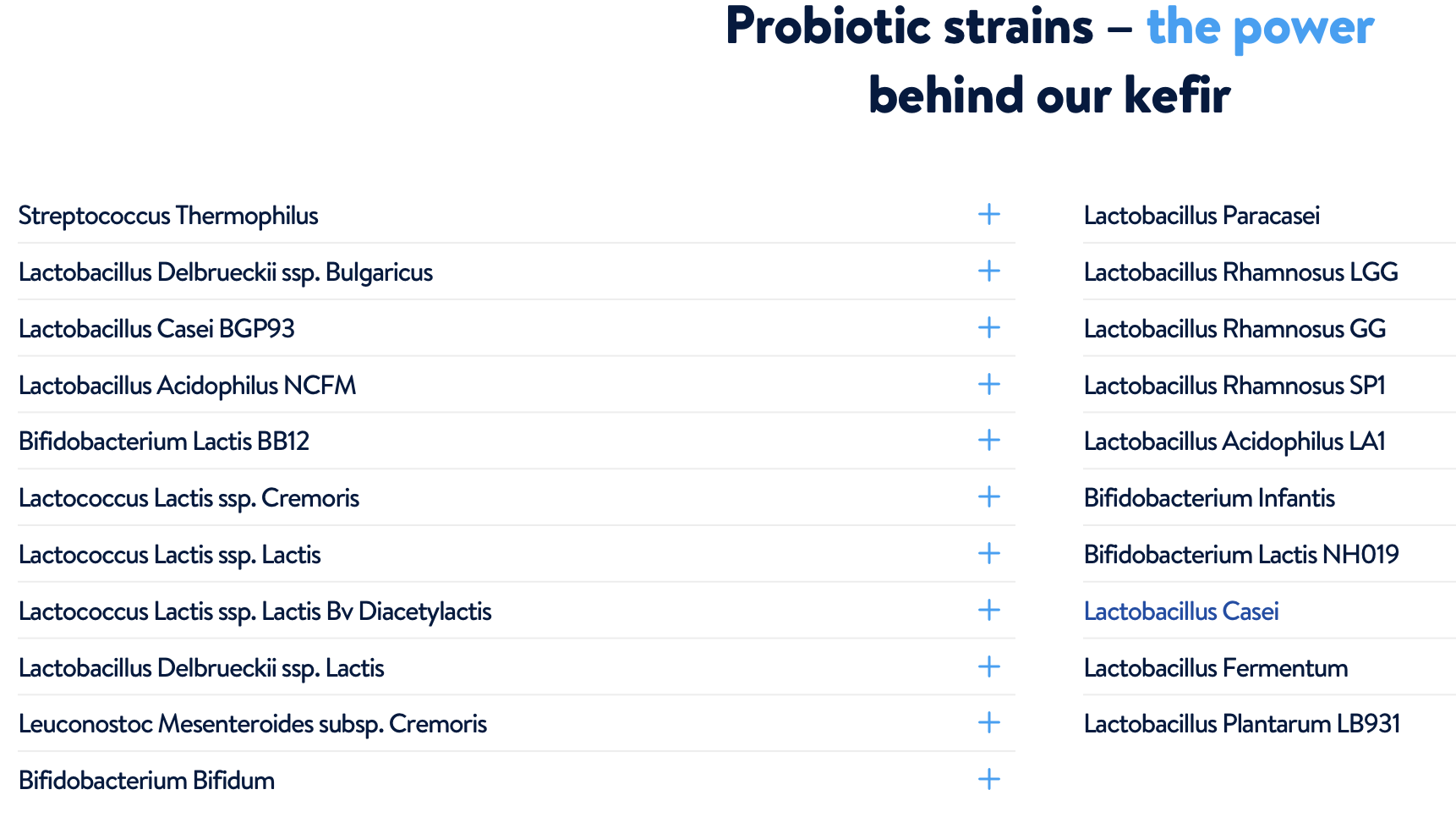
Yes, real kefir has 50+ strains of bacteria and yeasts while yogurt has a only a few strains of bacteria.
BTW What is sold as kefir in the USA and in France has very often only a few yogurt strains and no yeast at all making it a drinkable yogurt and not a kefir.
The best only way to have good yogurt and kefir with hundred of billions of probiotics is to make them at home which fortunately is really easy.
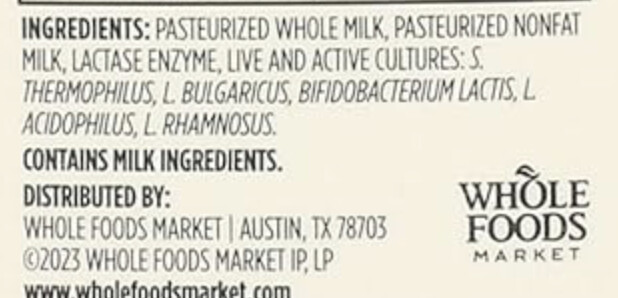
As an example here is the 365 kefir from WholeFoods showing only 6 types of yogurt bacteria and no yeast.
Well that’s probably a yummy drink but it’s not a kefir as it has only bacterial strains and no yeasts.
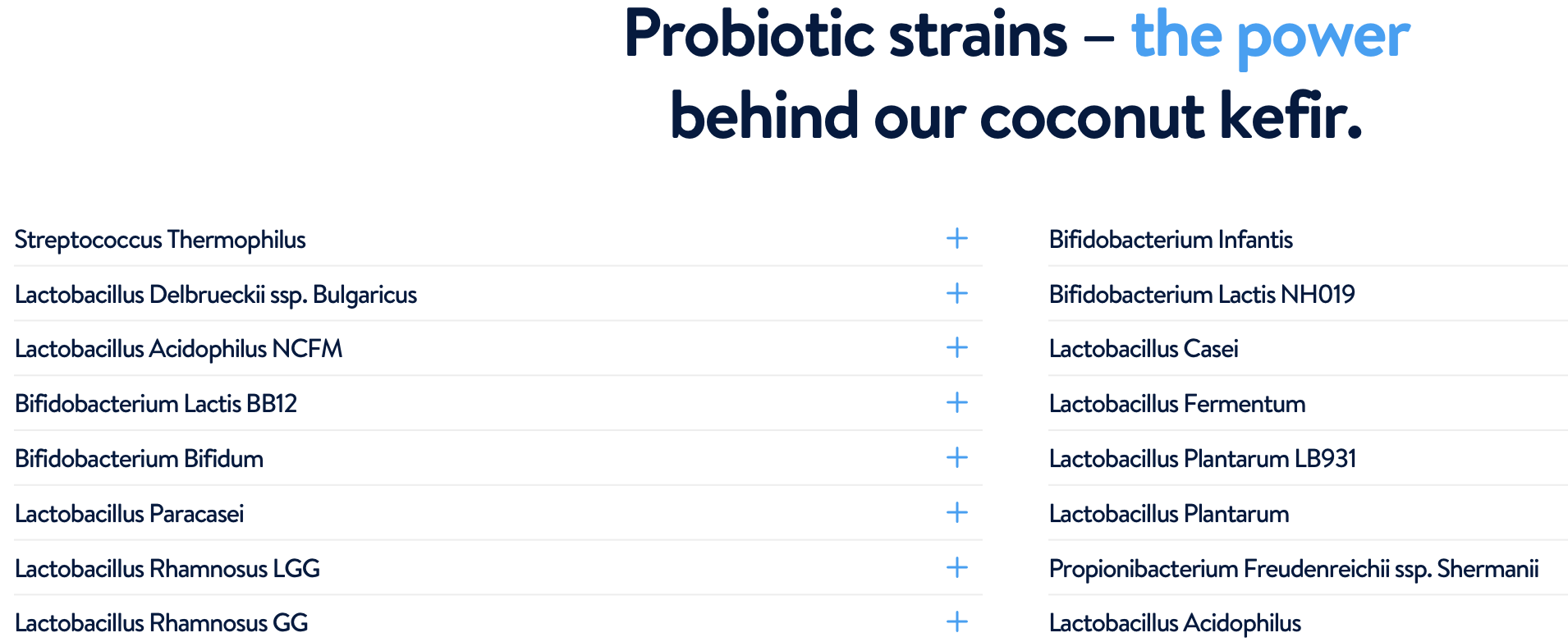
Basically their coconut kefir is as much a kefir as their coconut milk is a milk.
BTW there are water kefirs if you don’t want milk but this one isn’t one of them.
I use an oral probiotic by Great Oral Health. It can be purchased on Amazon (what can’t be?)
I also use a skin probiotic which is sprayed on (Amazon.) Gut probiotics are very complicated. Currently I use 3 different ones.
@cl-user , @CronosTempi I like the idea of making kefir but don’t know where to begin. It is like yogurt where you buy the culture and then follow the instructions? What are some good “starters” - anyone familiar with Kefir making, please chime in!