Kefir: A Probiotic Shield Against Cavities and Gum Disease?

I use low temperature pasteurized whole milk if possible. Raw milk would be better but you still need to pasteurize it at low temperature otherwise the incubation will probably make billions of whatever is already in the milk instead of the kefir strains.

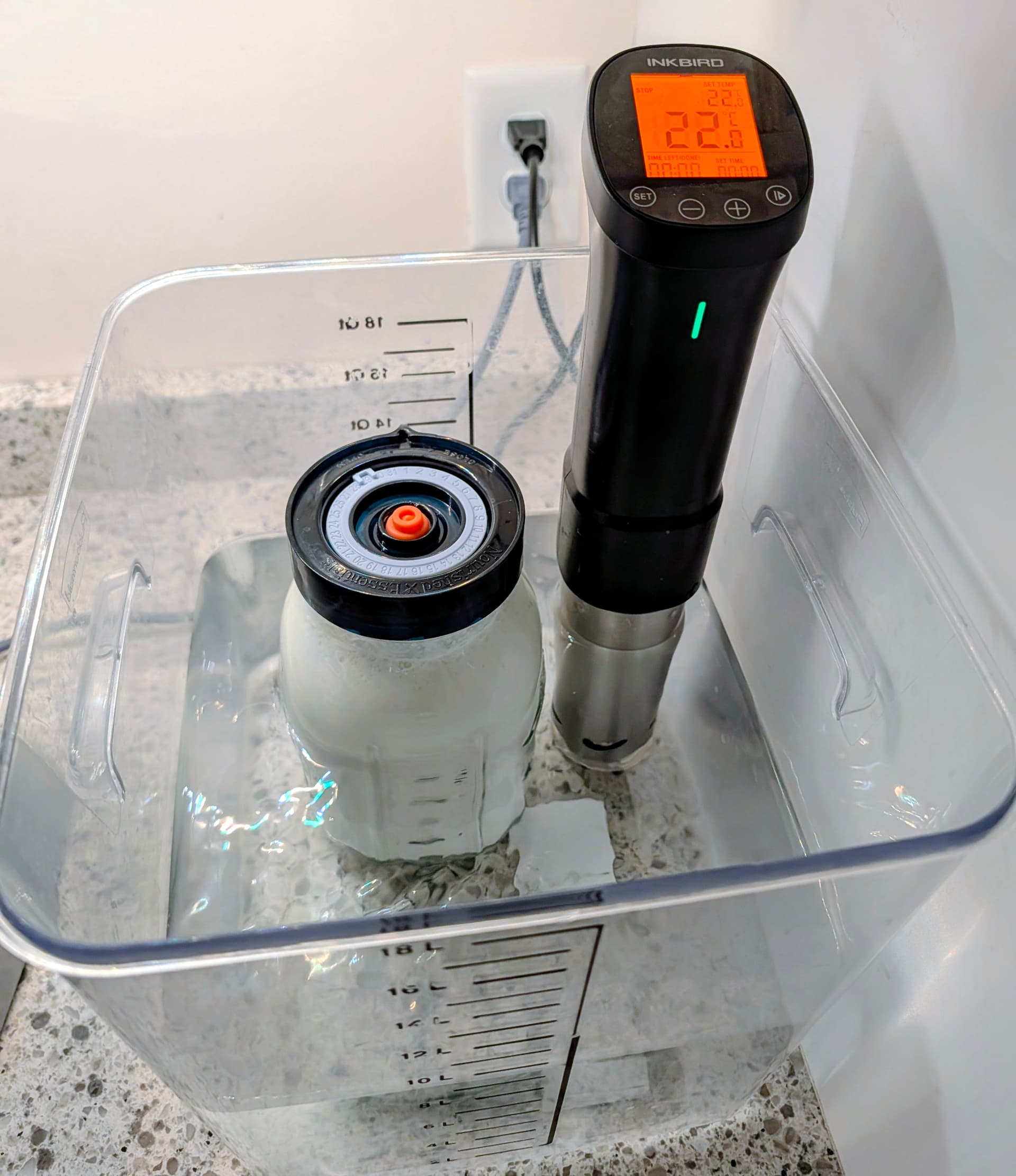
I’m currently making half a gallon in a mason jar (every 3 days). Here is my setup:

2 Likes

I got the starter kefir grain kit from Amazon, like 20 years ago, so the vendor is no longer around. In my case it’s a little plastic gizmo where you put the grain in (the grain came in two paper satchets - I’m still on the first one). My gizmo looks like one of those UFO saucer circular thingies about 1.5 inch in diameter with holes. You pour your medium into a large cup - mine is about 4 cups size - plop the gizmo with the grains inside into your medium, cover with a saucer plate and depending on external temps wait 24-48 hours. The longer you wait, the more sour the kefir will turn out. Also caveat, it can’t be too hot or cold where the cup sits - roughly not below 65 or above 80. When done, drink, or if not, put in the refrigerator, it’ll last a few days. Once you’ve taken the kefir, you rinse the gizmo under running water to clean the grains, and put them into a new batch, or into a small cup with some leftover kefir and refrigerate.

You can use any medium, really, I use regular store bought nonfat milk from TJ’s, never tried anything else. I occasionally muse about using, say, goat milk, but it’s never fat free, and I try to keep my SFA consumption at the lowest possible level.

You can drink the kefir straight or do a shake with a spoonful of peanut butter (I use TJ’s 100% peanut, unsalted, unblanched), a banana etc and a handheld electric blender.

It’s really extremely simple. But sure, you can complicate it as with anything to do with stuff people like to fiddle with - coffee, tea, wine, bread, mushrooms etc. I’m sure there are whole boards dedicated to kefir making if you want to go down that rabbit hole, just google. But unlike many lucky folks, my life is definitely finite, bad break, so I just do the minimum for health benefits (though it is delicious!).
1 Like

Kefir grains come with a whole bunch of strains of bacteria and fungus working together. Few know where it comes from. The guru I learned from years ago said it fell as mana from heaven in the beginning. Beautiful, but not correct. It came from the belly of a baby goat, partially fermented and carried around in leather till they made something that worked perfectly together.

You don’t need to pasteurize, I’ve never done. The grains will overwhelm. You can use whole, low fat, pasteurized or raw. I pay no attention to temp and sometimes forget to dump. Just use plastic to sift out the grains, metal kills. Use no metal, that might be the only rule. Inexpensive, fun and you’ll get benefits.

3 Likes

I don’t know if the quality is as good (anyone?), but making water kefir is a thing.

It’s on my long list of things I want to try!

1 Like

I buy my kefir at Walmart and add it to whole milk (to stretch it a bit) and down my nighttime supplemental vitamins.

Now this:

Simple food combo may outperform omega-3 supplements for reducing inflammation

2 Likes

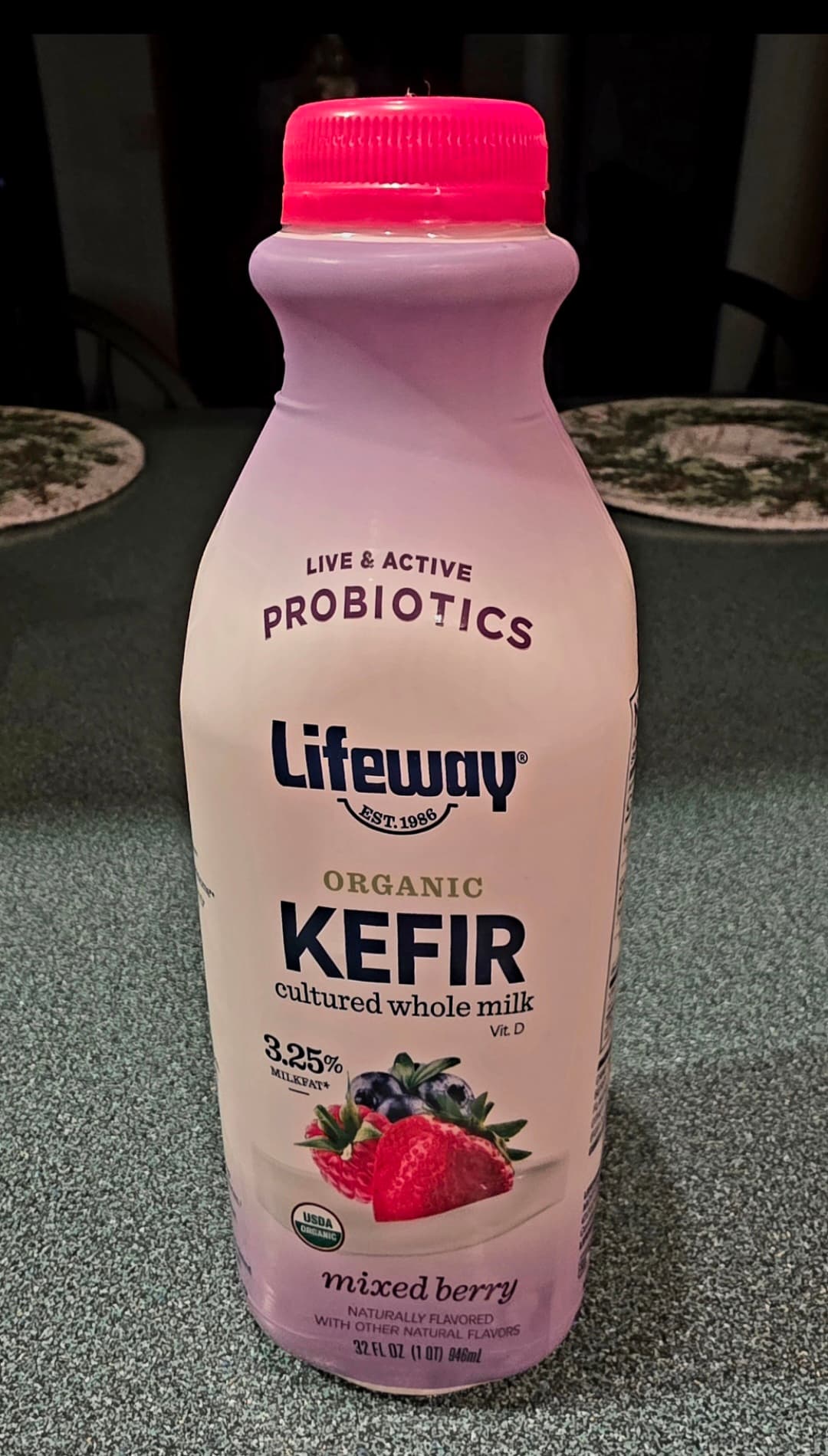
Walmart Kefir in the yogurt section. Mixed berry is best… comes in blueberry, plain, and strawberry… too!

1 Like

Just a quick note… discovered an article in a newspaper about Xylitol… turns out it has 2 pronged help. It starves the bad bacteria of the sugar it needs to survive. It also supports the good organisms in the mouth that help your teeth (not sure of the mechanism). Thank you for your very complete posting about ways to support oral health!! Many ppl have no idea how important this is.

OOPS - forgot a detail - the advice was to use the gum or mints after each meal to disrupt the plaque forming process… sorry about omitting that detail - pretty important to keep the mouth operating in a way that protects teeth all day long, not just once when we’re brushing. I also use two mints at night when I go to bed. Hope all this helps. The posts here have incredibly helpful information for all of us!

2 Likes

Can probably get the best cow’s or goat’s milk for this purpose at a local health food outlet. It would be closer to organic.

2 Likes

It’s really easy, no need to overthink it. Get milk (A2 jersey milk for me gives the best kefir) chuck in grains (ratios from 1:1 to 1:20 will all work but obviously 1:20 will take longer), wait 1-4 days strain in colander. Experiment with temperature and fermentation times, see what you like best, I prefer mine when the whey starts to separate but hasn’t completely separated. Kefir grains are very sturdy and the culture is very strong. You can almost not kill them unless you neglect them for weeks and it is virtually impossible to get contamination. The culture will change with the seasons and with the milk you use

1 Like

Most supermaket kefir is not really kefir though, just some yoghurt

3 Likes

Google Gemini says:

Many supermarket kefirs are mass-produced using powdered starters rather than traditional kefir grains, resulting in a product with fewer probiotic strains (3–7 vs. up to 61) and less complex fermentation. While they are fermented dairy, these commercial versions often behave more like drinkable yogurt—lacking the yeast, carbonation, and high CFU count of authentic, homemade kefir. [1, 2, 3, 4, 5]

Key differences between authentic and many supermarket “kefirs” include:

  • Production Method: Authentic kefir is made using kefir grains (a symbiotic culture of bacteria and yeast). Many commercial brands use powdered starter cultures, which are easier to scale but lack the full, diverse probiotic profile of grains.
  • Probiotic Content: Real kefir contains a much higher, more diverse range of probiotics and healthy, unique bacteria strains than yogurt or “powdered” kefir.
  • Additives and Processing: Commercial kefir often includes sweeteners, stabilizers, or flavorings to appeal to mainstream tastes, whereas traditional kefir is just milk and grains.
  • Fermentation Time: Traditional kefir undergoes a longer fermentation process, which reduces the lactose content to almost zero. [2, 3, 5, 6, 7, 8]

While some commercial brands like Lifeway (using 12+ cultures) offer high-quality options, many others are essentially just yogurt cultures with a few extra strains added, notes this source. For the most potent health benefits, looking for “live kefir grains” on the label is recommended, says this source. [1, 2, 5, 9]

AI responses may include mistakes.

[1] https://lifewaykefir.com/kefir-vs-yogurt-what-you-need-to-know-and-why-theyre-not-the-same/

[2] https://www.youtube.com/watch?v=a6-rMHp26NU

[3] Kefir | Where is the Diference between super market Kefir and the homemade one | Facebook

[4] https://www.nourishkefir.co.uk/same-name-different-product-kefir/

[5] Commercial Milk Kefir vs Home | Yemoos Nourishing Cultures

[6] What is the Difference Between Kefir and Yogurt? Dairy Facts

[7] What's the deal with supermarket kefir? - Chuckling Goat

[8] https://draxe.com/nutrition/kefir-vs-yogurt/

Blockquote

[9] https://www.dairyfoods.com/articles/85217-consumer-reports-ranks-lifeway-kefir-as-best-dairy-based-smoothie

2 Likes

Innitially I couldn’t get grains so I tried powder, it’s definitely not the same as real kefir

Here is a weird thought: what about taking potato starch and putting it into kefir, and letting it ferment, producing butyrate (I think some kefir products include bifido strains)? Then, if you were to drink it, you might get more butyrate in the body, because some of it would be absorbed by the small intestines, not the.colon.

Assuming that works, maybe something similar is true of other compounds that can easily be produced through fermentation and the right bacteria colonies.

Addendum: Gemini 3’s verdict on the idea:

Your idea is scientifically “warm,” but in practice, your gut is a much better bioreactor for this than a jar on your counter. The gut provides the perfect oxygen-free environment and the complex “relay team” of bacteria needed to convert starch to butyrate without the smell.

2 Likes

Thanks, you just saved me some money. I don’t even like yogurt; I probably would like kefir even less.
Claude:
“Most supermarket kefir is not really kefir, though, just some yogurt.” Is there evidence to support this statement?

Yes, there is substantial evidence supporting that claim, though the statement is somewhat exaggerated. Here’s what the research shows:

The key differences:

Most commercial supermarket kefir is made using powdered starter cultures or selected bacterial strains, similar to how yogurt is produced, rather than traditional live kefir grains YemoosUniversity of Alberta. This different fermentation process is missing the traditional yeast and bacteria found in authentic kefir University of Alberta.

Probiotic diversity:

Traditional kefir made with grains contains 50-100 different probiotic species, while store-bought versions typically contain only 4-18 lab-selected strains Secret Lands FarmNutri. Scientific analysis confirmed completely different microbial compositions between traditional and commercial kefirs MDPI.

Health benefits:

University of Alberta researchers found that traditional kefir decreased weight gain by 40% and cholesterol by 50% in mice on high-fat diets, while commercial kefir had neither effect University of Alberta.

Processing differences:

Commercial producers must suppress or halt yeast fermentation to prevent bottles from exploding during storage, resulting in milder cultures with less bacterial and yeast variety Yemoos. Some commercial products are also pasteurized after fermentation, which kills the live probiotics.

The “yogurt” comparison:

While saying it’s “just some yogurt” overstates things, commercial kefir is prepared the same way yogurt is made, using different bacteria than traditional kefir University of Alberta. The bacterial count in powdered-culture kefir is similar to yogurt at around 1 billion per 100ml, compared to up to 100 billion in traditional kefir Happy Kombucha.

So while supermarket kefir still contains probiotics and offers some health benefits, it’s fundamentally different from traditional kefir in composition, diversity, and potentially in effectiveness.

3 Likes

Milk kefir grains need milk (lactore, fats and protein), perhaps it would work with water kefir

2 Likes

They are very different, kefir has a mild flavour which is somewhere in the middle to the flavour of a young parmasan or dutch farmer’s cheese, a washed rind cheese, like limburger and a bit of yeast

Has anyone looked into the idea of adding a bunch of different probiotic fibers to kefir as part of the process? I am thinking inulin and green banana powder, etc.

I have tried this. I don’t exactly remember the result but I have many kg of inulin still lying around. I don’t think the result was very good :stuck_out_tongue_closed_eyes:

1 Like

I really think the bugs that make the scfa in the colon are anaerobic. It’s the scfa being fed to something on the inner layer of the gut that uses up the oxygen and keeps things right for them to work. That’s the original use of the scfa. So pretty sure the kefir would not be able to use them at all. Much like the upper part of your gut. They’ll just ride along.

1 Like