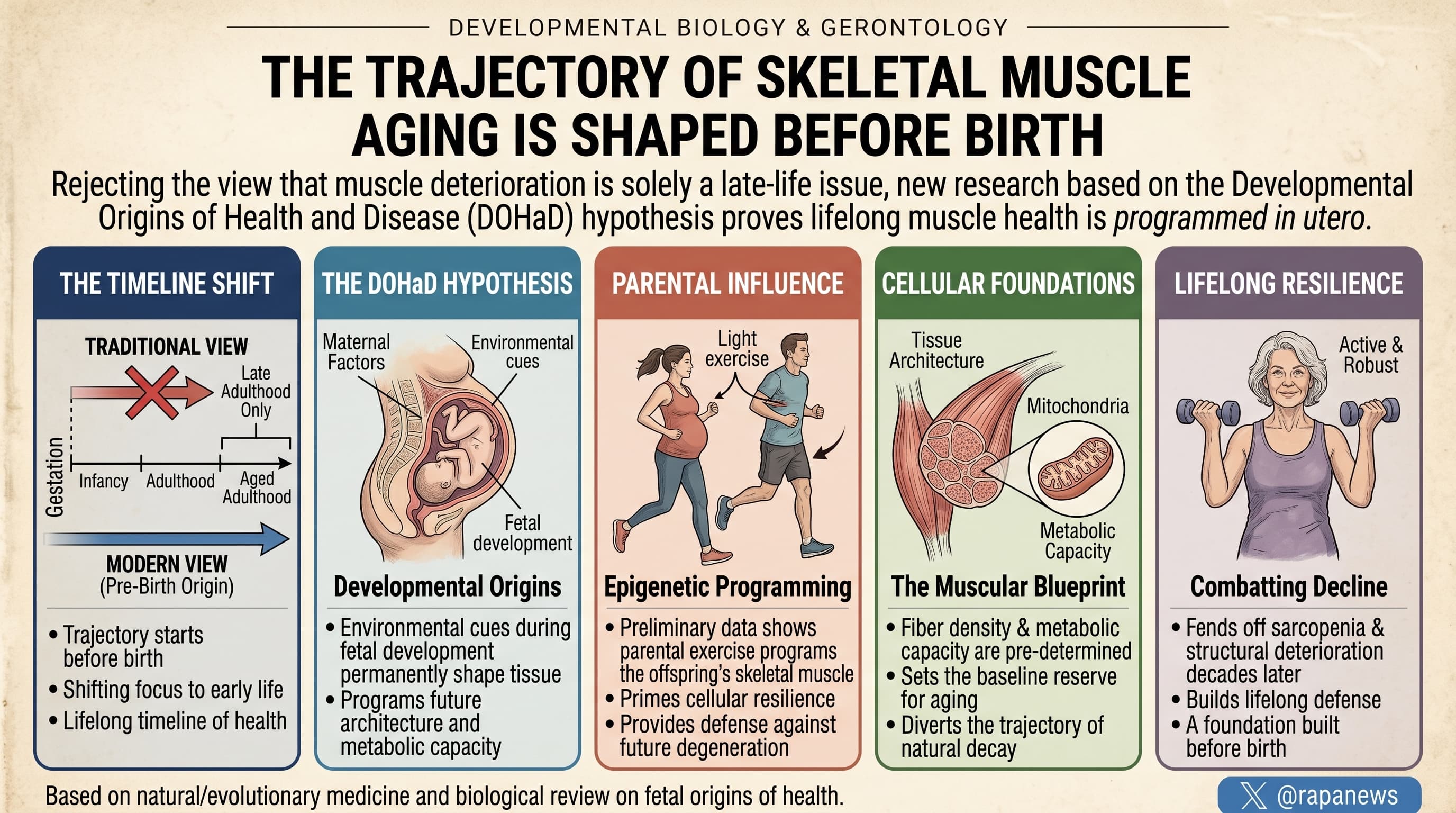
This review paper synthesizes preclinical evidence indicating that maternal and paternal exercise before and during reproduction permanently shapes the skeletal muscle development of offspring. By modifying the embryonic structural baseline and mitochondrial capacity, parental exercise may establish a larger physiological reserve that protects against age related muscle decline and metabolic dysfunction later in life.
The deterioration of skeletal muscle with age is usually viewed as a problem that begins and ends in late adulthood. This review fundamentally shifts the timeline, proposing that the foundation of lifelong muscle health is actually built before birth. Relying on the Developmental Origins of Health and Disease hypothesis, the authors argue that environmental cues during fetal development permanently shape tissue architecture and metabolic capacity. The researchers compile preliminary data showing that parental exercise programs the offspring’s skeletal muscle to resist age related decline.
Maternal exercise influences fetal development primarily through the placenta and circulating factors. Gestational physical activity improves placental vascular density and nutrient transport, optimizing the environment for muscle growth. Systemically, maternal exercise increases apelin and thyroid hormone signaling, which drives muscle progenitor cells to form a more robust cellular reserve. This early molecular stimulation leads to a higher proportion of slow twitch oxidative muscle fibers and significantly increased mitochondrial density in the offspring. These structural adaptations provide offspring with greater metabolic flexibility, enhanced glucose tolerance, and a stronger biological defense against obesity and insulin resistance later in life.
Paternal exercise operates through an entirely different biological channel. Preconception endurance training alters small non-coding RNAs and DNA methylation patterns within sperm. When these epigenetic markers are transmitted during fertilization, they actively alter the genetic expression of the embryo. Specifically, paternal exercise suppresses NCoR1, a protein that usually inhibits mitochondrial growth. The suppression of this inhibitor leads to offspring with enhanced endurance capacity and highly efficient oxidative metabolism, effectively inheriting the father’s exercise adaptations without training themselves.
The central premise of this research is that sarcopenia might simply be the eventual erosion of this initial developmental reserve. If parental exercise creates a higher baseline of muscle mass, stem cell abundance, and mitochondrial efficiency, the offspring start their biological clock from a structurally superior position. While physiological aging will inevitably degrade tissue function over time, starting with a larger physiological reserve strongly suggests a delayed onset of clinical frailty and loss of independence.
Despite the compelling biological mechanisms presented, the review reveals distinct knowledge gaps. The vast majority of the preclinical data cited is derived from juvenile rodents or animals subjected to artificial metabolic stress, rather than models of natural physiological aging. Furthermore, there is an absolute lack of longitudinal human studies to confirm whether these developmentally programmed benefits actually persist into advanced age. The researchers conclude that epigenetic memory likely drives this long term biological protection, but they explicitly acknowledge that direct evidence of extended healthspan in naturally aged offspring remains unproven.
Actionable Insights
For future parents looking to optimize the long term health of their children, this research suggests that exercise habits before and during pregnancy provide biological benefits that may last a lifetime. Paternal and maternal exercise can establish a stronger metabolic foundation for offspring, potentially delaying muscle aging and metabolic diseases decades later. Moderate cardiovascular and resistance training improves placental function and alters sperm genetics in ways that favor mitochondrial health in children.
The practical takeaway is to treat preconception fitness as a non-pharmacological tool to improve your child’s biological baseline, even though the exact degree of future muscle preservation cannot currently be measured.
Context/Source
- Paywalled Paper: Developmental programming of skeletal muscle aging by parental exercise: Intergenerational mechanisms and implications for lifelong muscle health.
- Institution: South China Normal University.
- Country: China.
- Journal Name: Ageing Research Reviews.
- Impact Evaluation: The impact score of this journal is 15.5, evaluated against a typical high-end range of 0-60+ for top general science, therefore this is a High impact journal.