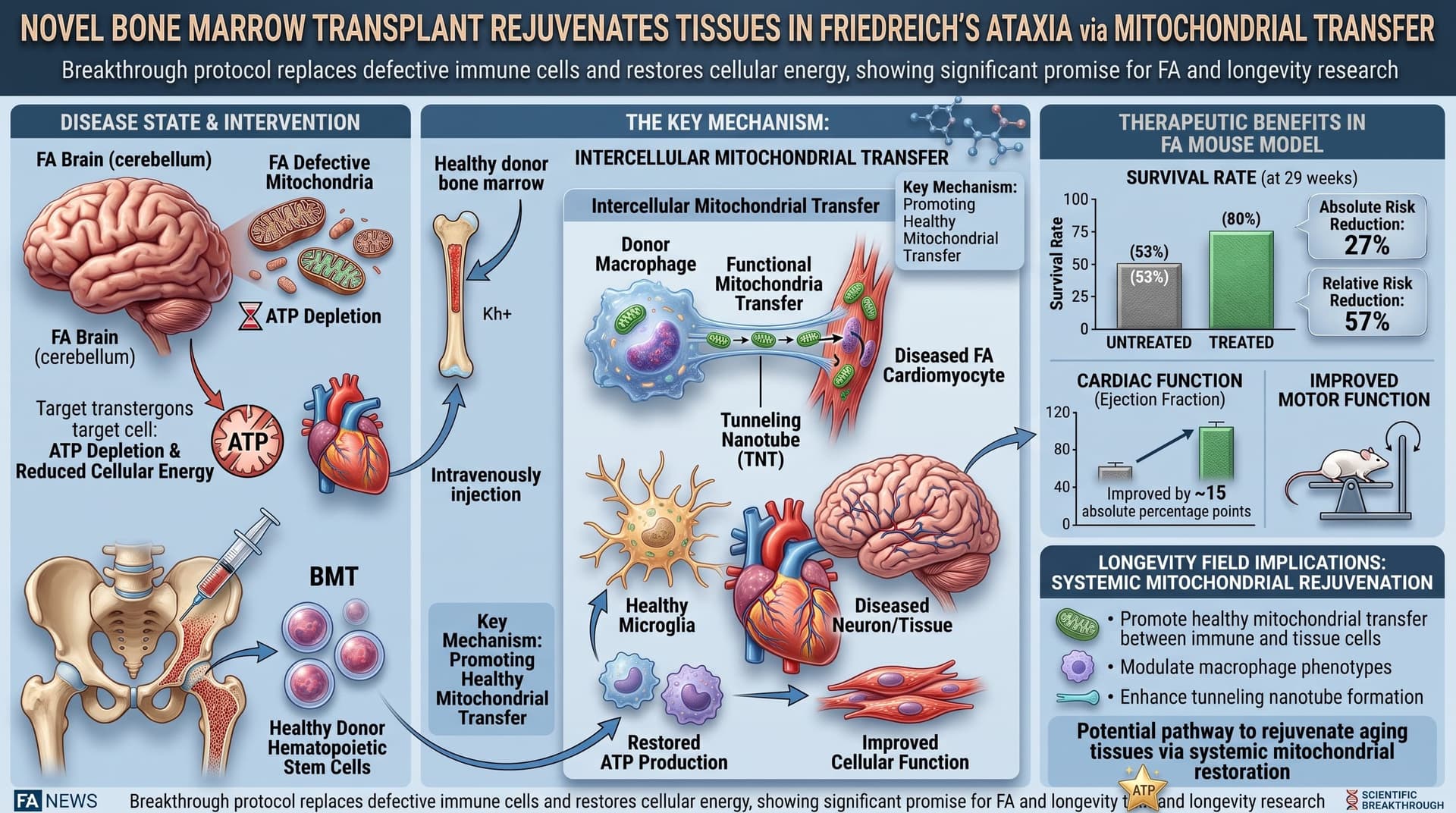
A novel bone marrow transplant protocol replaces defective microglia and macrophages with healthy donor cells in a Friedreich’s ataxia mouse model. These donor cells directly transfer functional mitochondria to diseased brain and heart tissues, restoring cellular energy, extending survival, and improving motor function.
Friedreich’s ataxia is a fatal mitochondrial disease driven by a genetic deficiency in the protein frataxin. This deficiency impairs mitochondrial respiration and generates severe oxidative stress, leading to neurodegeneration and cardiomyopathy. Existing experimental gene therapies struggle with delivery efficiency and long-term toxicity. This study introduces an optimized bone marrow transplant protocol using the chemotherapy drug busulfan and a CSF1R inhibitor named PLX3397 to achieve near-total replacement of host microglia in the brain and macrophages in the heart.
The data reveal that these new immune cells do not just reduce tissue inflammation. Instead, they physically donate healthy mitochondria to host neurons, astrocytes, and cardiomyocytes through actin-dependent tunneling nanotubes. This intercellular mitochondrial transfer acts as an organelle-level transfusion. Single-cell transcriptomics confirm that recipient cells ramp up gene expression for oxidative phosphorylation and ATP synthesis. Treated mice exhibited a 50 percent recovery in weight loss, increased overall survival, and measurable functional improvements in motor coordination and cardiac output. The findings indicate a paradigm shift in cell therapy, moving from simple immune replacement to targeted, contact-dependent metabolic rescue.
Actionable Insights
While a myeloablative bone marrow transplant is too severe for general anti-aging applications, the mechanism of intercellular mitochondrial transfer is highly actionable for the longevity field. Promoting healthy mitochondrial transfer between systemic immune cells and tissue-resident cells might offer a new pathway to rejuvenate aging tissues. Modulating macrophage phenotypes or enhancing tunneling nanotube formation could be developed as a future longevity intervention. The therapeutic effect size in this disease model is substantial. Treated mice increased their survival rate from 53 percent to 80 percent at 29 weeks of age. This represents an absolute risk reduction of 27 percent and a relative risk reduction of 57 percent. Cardiac ejection fraction improved by approximately 15 absolute percentage points compared to untreated controls.
Context/Source
- Open Access Paper: Myeloid cell replacement induces intercellular mitochondrial transfer and restores metabolism in a mouse model of mitochondrial disease, Published: 15 August 2026.
- Institution: Stanford University
- Country: USA
- Journal Name: Nature Communications
- Impact Evaluation: The impact score of this journal is 14.8, evaluated against a typical high-end range of 0–60+ for top general science, therefore this is a High impact journal.