Imeglimin. A new and novel drug thats better than Metformin

Here is my N=1 data regarding my Imeglimin dosage optimization.

I am currently taking a total of 3g daily, split evenly into three doses throughout the day:

  • 1g at ~7:00 AM
  • 1g between 2:30 PM and 3:00 PM
  • 1g at 10:00 PM

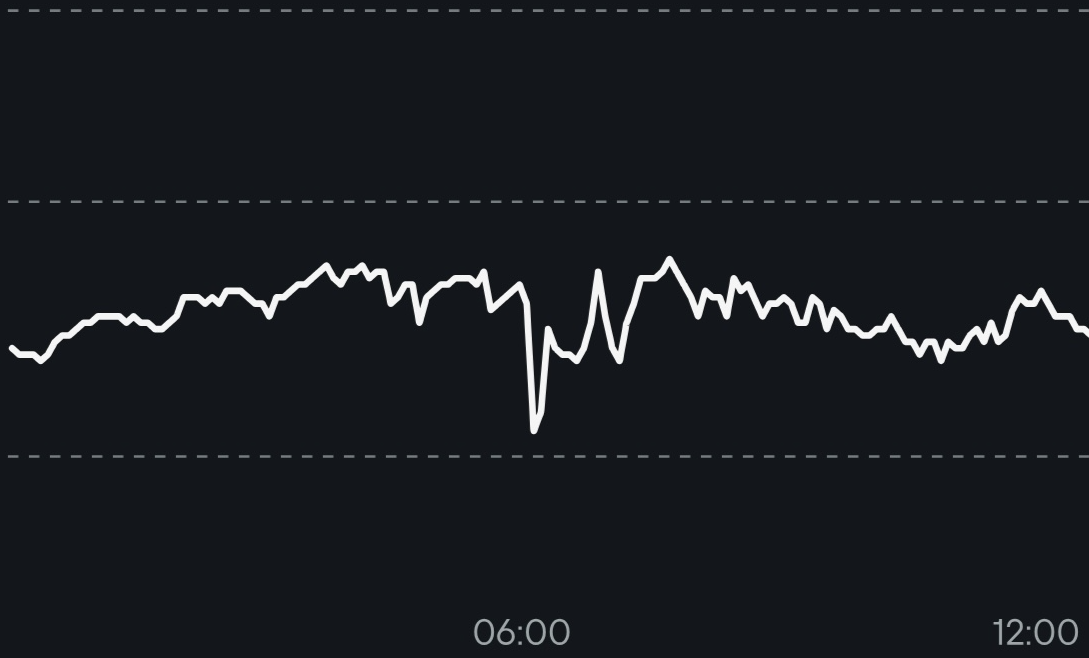
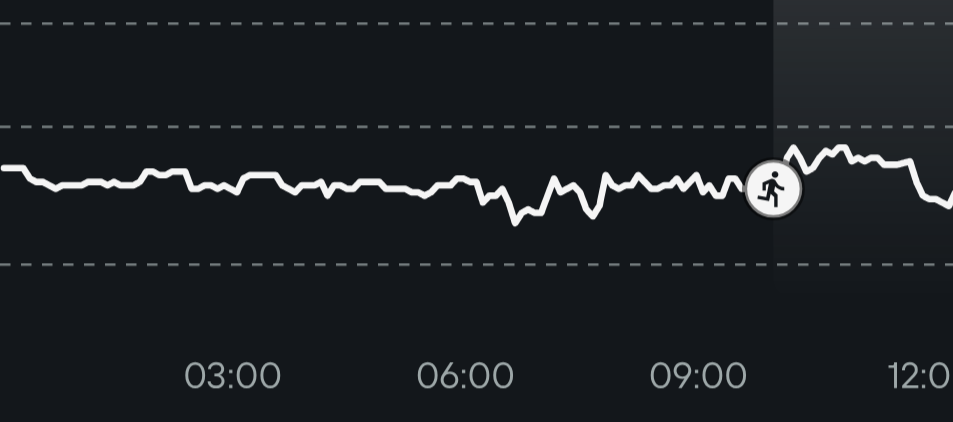
Previously, my last dose was at dinner around 6:00 PM. I moved this dose to bedtime to better manage the dawn effect, when the liver tries to be helpful and releases glucose before waking. Taking the final dose right before bed has been much more effective at keeping my liver in check overnight.

I tracked this using a Stelo CGM. Though these sensors cannot be calibrated and are often off by ±20 mg/dL, they still provide a useful trend.

Below is the glucose from midnight to noon when taking the 1g dose at 6:00 PM the day before, where the dawn effect is clearly visible:

And here is the glucose over the same timeframe with the 1g dose taken at 10:00 PM:

[Edit] I also eat low carbs at dinner and only take some carbs from after my morning workout to 4PM.

4 Likes

Great information! Thanks for posting. I’m going to try the same protocol. I will try this in the next month and report back. I encourage others to do the same.

1 Like

Fantastic information. Taking 1g before bed seems like a good move - that was my plan as I gamed it out. My situation is a bit more complicated, in that I only consume 2 meals a day - a brunch around 2 pm, and dinner anywhere between 6-8pm, usually around 7. So if I want to take 3g/day, it means one dose away from food (I don’t snack). From reading the insert on imeglimin, it doesn’t seem to matter much, but what do most people do? Empty stomach - right before meal - with meal - right after meal? My preliminary plan is 1g sometime 7-9 am, 1g somewhere 3-4pm and 1g 10-11pm. That last one would join my night stack I usually take around 10-11 pm : pitavastatin 4mg, bempedoic acid 180mg + ezetimibe 10mg, telmisartan 80mg, melatonin 0.3mg +[imeglimin 1g] all chased with a small amount of tea with teaspoon of glycine dissolved.

I don’t use a CGM, instead I use an ordinary glucose monitor, so I’ll check the dawn effect impact. From what I understand it takes about 5 days for the imgelimin to reach full effectiveness for most people, so whatever shows up about a week later is the effect you can expect going forward.

One thing I intend to do before that is to trial acarbose - I’ll give it about 3 months (so I can get an A1c reading) and then go on imeglimin - likely beginning of February 2027.

3 Likes

Same here. Metformin worked quite well until I developed an intolerance to it.

My experience with Imeglimin at 1 gram twice daily + 25 mg empagliflozin once daily does not move the needle as much as 500 mg metformin alone (N=1).

The Imelimin definitely moves the needle, but the amount that empagliflozin moves the needle is within measurement error of my glucose monitoring strips.

I am switching to dapagliflozin to see if that makes any difference; perhaps my empagliflozin is counterfeit, as I got it from India. The brand I bought was manufactured by MSN Laboratories.

The brand of dapagliflozin I bought is made by AstraZeneca. I also may switch to 3 grams of Imeglimin, as suggested by @cl-user, split into two doses.

Oddly, Imeglimin does not cause me any gastric distress as metformin did, even on an empty stomach. I take Imeglimin in the morning on an empty stomach and just before my evening meal.

3 Likes

Thanks for the detail. I had read that you can’t spilt individual Imeglimin tabs due to the potential for GI upset issues, from your and @cl-user’s experience, you wouldn’t want to anyway. I was thinking of starting with 1,000 mg/day but no one seems to be taking that little. Let us know what happens when you switch to Dapa. Argh! I just stocked up on an 18 month supply of Empa.

1 Like

Great information. Thanks. Can’t wait to get my first order. Current projections are 20 days in the queue followed by 10 days US side customs and travel to the door.

1 Like

No reason to regret the empagliflozin order. Empa is a fantastic SGLT2i, with a great profile. Dapagliflozin is a very close second and the differences between the two are clinically not super meaningful. So while there are subtle differences in effects, do keep in mind that there are also practical considerations - empagliflozin is very expensive stateside, whereas dapagliflozin is not. Therefore you are much better off having saved a bundle in case you want to go back on it.

1 Like

I bought half SR, which is sustained release. I was thinking of taking these before bed and the others in the morning. I’m going to start checking my BG in the morning for a while here to get a base, then I’ll start and see if it does anything.

2 Likes

Did you take sustained-release (SR) form of imeglimin? What’s your does? How did you feel compared with regular immediate-release (IR) form?

Thank you.

1 Like

what about retatrutide? or even tirzepatide if its simplier

I bought from india Empagreat by Future Mankind Pharmaceutical (or something like this, it has “Mankind” in the name for sure), 25mg. No counterfeight. Its easy to understand - just make a whole day urine test (when collecting 24h urine in a big bottle). It showed glucose in urine for me. Which shouldn’t be there if no flozines work.

1 Like

Yes, I did the urine test. The empagliflozin I bought from India undoubtedly contains a flozin. I have no way of knowing how much empaglaflozin each tablet contains. Mainly I am surprised such a highly touted drug has so little effect on my fasting glucose levels.

1 Like

I am not on any GLP-1RA - it takes me a very long time to research any drug before I take it, and I have been looking into this class of drugs, but I’m very far from a decision. I will likely not be ready for at least another couple of years.

1 Like

I’ve plan to write it into related topic but I can answer here - I divide 25mg of empa by 4 with a cutter. Just for saving and less frequent mailing (complicated) process. And it still works. My AI researches said its effective even on as low as 1mg(!!!) dose. And I mean really effective, comparable to 25 and even 100(!) mg. 6,25 (just 5,5-6 if crumbs count) is about 70% of 25mg, which is pretty good.

But frankly I can’t say what effect it has on my BG level. Too many other medications with a lowering effect in play. Metformin and GPL-1 included. (and 700mg berberine). A1c is 5,2 though.

So maybe its not depend greatly on how much of empa is in a tablet… It should show some decent effect anyway if its in it.

I think I’ve read that you are 67 and don’t have much time for decisions to set your metabolism in order - or it was not you maybe?
Anyway, GLPs are no-brainers now. They are so extremely beneficial, that it looks like a medical miracle now. Last RCTs showed that reta does not just preserves kidney’s FRS (as previous GLPs does), but increases it! Sema increases knee joint’s cartilage thickness (not just preserves also). Reta eliminates visceral fat and so on and so on. Can recommend Brad Stanfield’s videos about these molecules.

Ofcourse they also have benefits for insulin sensitivity, blood sugar, lipids, triglycerides, blood pressure and more.

1 Like

Yes, I did say that (and I’m 68 now), so not much time. Yes, a lot of research seems to show benefits of GLP-1RA, I’ve read a lot of the literature. But here’s a principle I pay attention to: just because some agent is beneficial, doesn’t mean you have to take it. If you have already achieved a particular health goal, there is no need to keep adding drugs to address a resolved issue. For example, we are constantly reading that this or that drug or supplement “lowers inflammation” - but if your inflammation is already rock bottom, jumping on every new “anti-inflammatory” agent is not only unnecessary, but might be counterproductive. In the business I worked in, we called that approach “a hat on a hat” - you already are wearing a hat, putting on another hat is worse. There is a tendency for many biohackers to read about some drug/supplement showing “benefits” and immediately taking it without asking if they specifically need that supposed “benefit” - a hat on a hat on a hat on a hat. I try to avoid that. It takes a ton of research and a lot of evidence and thinking before any drug or supplement is included in my stack - the bar is high, not low.

Now, my blood sugar control has not been resolved so far. However, I am carefully implementing a plan to do so. In addition to empagliflozin 25mg/day I am taking, I will next trial acarbose to see if there is an effect, and then imeglimin. Both before any GLP-1RA. Why? Acarbose is a narrower MOA, and therefore more transparent to me (than GLP-1RA). It also has a longer track record including life extension in animal models (ITP) - no GLP-1RA has been tested for that. So I want to go with the sure small gray bird in the hand (acarbose) than the two very loud and colorful birds in the bush (GLP-1RA).

Here one thing is critical: in order to fix-correct-enhance your health situation, you must have as full an understanding of your condition as possible. Diabetes is characterized by some common symptoms and biomarkers, but you can get to that state (prediabetes is just a mild form of diabetes - it’s along a spectrum with an arbitrary cutoff point in A1c 5.7) in many different ways. There is one or more defect in your glucose handling chain. And the defect can be anywhere along the chain of glucose handling. That’s why one anti-diabetic medication works in one patient but not in another. Just taking a GLP-1RA doesn’t mean you will get the statistical average effect you see in studies - you are an individual. GLP-1RA might not be for you - or it might be a miracle drug for you. Nothing is guaranteed. If you look up Ralph DeFronzo he describes more than 8 different defects that can cause diabetes or insulin resistance. You need to address the one you have, and not simply gobble up any drug that says “anti-diabetic”. It might not be for you.

The user @cl-user has posted extensive genetic analysis of his prediabetes and the possible defect areas responsible. His situation is very similar to mine. He found that imeglimin addressed his glucose handling problem where many other drugs failed. I have looked at the MOA of imeglimin and I think it might be helpful in my case too. I also have additional reasons for going with imeglimin - its impact on mitochondrial health especially in pancreatic beta cells; the reason is that I also take rapamycin and rapamycin is definitely toxid to pancreatic beta cells - I want to ameliorate this rapamycin side effect if possible - and GLP-1RA is an unknown here.

So, I have reasons to try acarbose and imeglimin before reaching for a GLP-1RA. And if one or both of these drugs fix my problem, I would have to think long and hard if I need to put a hat on a hat and take a GLP-1RA. It is possible that a GLP-1RA would also fix my issues and in addition have more benefits than imglimin +/- acarbose - but I don’t know that. To establish that, I need to research GLP-1RA a lot more, which takes time. Meanwhile, I - at 68 - am not sitting still with my poor glucose handling - I have a plan I thought out pretty carefully and am implementing it. That doesn’t mean that one day I may not reach the conclusion that GLP-1RA are the bees knees and switch to that, but as I said, it takes me a long time to gain confidence that I know enough about the drug to gamble on it… like making sure that I know enough about poker/roulette or any gambling game before I put my chips down. Right now, I don’t feel I know enough to spin the wheel on GLP-1RA. YMMV.
2 Likes

@CronosTempi Taking time to take a drug even an OTC is a good thing.

Only my views, these drugs are low side effect, wide benefit (JMO).

And GLP1’s at low dose, in the range for glucose control, <1mg/wk or even less is also very low risk and wide benefits nose to toe including organs and the brain. I put taking 50:50 retatrutide / tirzepatide at 1mg/wk in the same league as HRT, a lifetime permanent protocol.

Also, the peptide MOTSC at 1-3mg 3x a week improves insulin sensitivity.

https://www.google.com/search?client=opera&q=peptide+MOTSC+improves+metabolic+function

"• Improves Insulin Sensitivity: It enhances glucose uptake in skeletal muscle cells and helps counter insulin resistance.
• Enhances Fat Metabolism: It promotes the oxidation of fatty acids (fat burning) and helps the body switch smoothly between burning carbs and fats (metabolic flexibility).

Curt

2 Likes

It came but I’ve only taken one dose of the regular form. I’ve decided to check blood sugar for a while and establish a base to see whether this drug does anything for me. We’re in the middle of a hectic harvest here.