Executive Summary
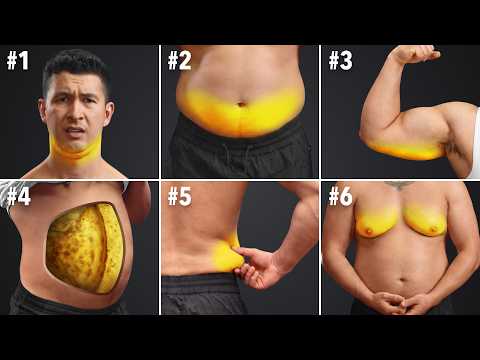
Adipose tissue distribution, metabolic activity, and mobilization kinetics exhibit pronounced anatomical heterogeneity governed by vascularity, sexual dimorphism, and local adrenoceptor subtype density. The presentation classifies regional adiposity across a six-tier hierarchy of lipolytic resistance: visceral fat (least stubborn, most metabolically hazardous), facial fullness, upper body regional depots (brachial and pectoral regions), flank/love handle depots, and lower abdominal fat (most stubborn).
Visceral adipose tissue (VAT), localized intra-abdominally around vital organs, displays elevated metabolic turnover, high capillary perfusion, and robust beta-adrenergic sensitivity. Consequently, it mobilizes rapidly under negative energy balance, high-intensity interval training (HIIT), and concurrent aerobic exercise, alongside the substitution of saturated fatty acids and refined sugars with unsaturated lipids. Conversely, acute facial soft-tissue changes frequently stem from osmotic fluid shifts induced by excessive dietary sodium, resolving rapidly with nutritional normalization, while true facial subcutaneous fat mobilizes early during caloric restriction due to low overall volume.
Upper-body fat patterns diverge sexually: females preferentially accumulate brachial subcutaneous fat, whereas males store higher deposits in the pectoral region. Both respond aesthetically to targeted hypertrophy of underlying musculature—specifically the triceps long head and clavicular pectoralis major—which increases structural tension and muscular volume under negative energy balance.
Severe regional stubbornness in the flanks and lower abdomen is mediated by receptor-level biochemistry: a predominance of anti-lipolytic alpha-2 adrenergic receptors relative to lipolytic beta-adrenergic receptors, compounded by poor microvascular blood flow. Mobilizing these depots requires reducing systemic body fat below strict physiological thresholds (sub-20% for males and sub-30% for females for flanks; 10% to 12% for males for lower abdomen). To prevent fat-free mass (FFM) catabolism and mitigate adaptive thermogenesis during late-stage leanness, weekly weight loss must be constrained to a maximum rate of 0.7% of total body mass. Localized spot reduction remains a physiological impossibility; systemic energy deficits, macronutrient optimization, targeted hypertrophy, and calibrated rates of loss govern regional aesthetic outcomes.
Insight Bullets
- Regional adipose depots mobilize at distinct rates determined by anatomical depth, microvascular perfusion, and local adrenoceptor subtype density rather than uniform systemic depletion.
- Visceral adipose tissue wraps internal organs and secretes pro-inflammatory cytokines linked to atherogenic dyslipidemia, insulin resistance, cardiovascular disease, and all-cause mortality.
- External anthropometric appearance does not reliably reflect visceral adiposity, as individuals with low subcutaneous fat can harbor clinically elevated intra-abdominal fat stores.
- Individuals of Asian descent have a higher genetic susceptibility to visceral fat accumulation, manifesting as elevated cardiometabolic risk at lower body mass index thresholds.
- Diets rich in refined carbohydrates and saturated fatty acids preferentially promote visceral and hepatic ectopic fat deposition compared to diets higher in mono- and polyunsaturated fats.
- Visceral fat is the most metabolically labile depot (rated 1/10 on the stubborn scale), mobilizing rapidly in response to caloric restriction even prior to significant total body weight loss.
- Adding cardiovascular exercise to resistance training more than doubles visceral fat reduction compared to resistance training alone.
- High-intensity interval training and rigorous endurance exercise elicit greater rates of visceral fat oxidation than low-intensity training modalities (de Oliveira et al., 2023).
- Eliminating hyperpalatable, high-sugar, and high-saturated-fat foods while adding regular cardiovascular exercise can reduce visceral fat volume by more than half within months.
- Facial fat comprises only 1% to 2% of total body adipose stores but exerts a disproportionate aesthetic impact on visible leanness.
- Acute facial swelling is frequently driven by sodium-mediated extracellular water retention under the skin rather than de novo adipogenesis.
- Eliminating high-sodium restaurant meals and ultra-processed foods facilitates the rapid clearance of interstitial facial fluid within 24 hours.
- Subcutaneous facial fat mobilizes early in an energy deficit, scoring a 3/10 on the stubbornness scale.
- Eliminating caloric beverages like sweetened teas and specialty coffees provides an immediate, friction-free mechanism to establish a caloric deficit.
- Body fat distribution exhibits sexual dimorphism, with females carrying higher relative adiposity in the arms and males storing excess depots across the chest.
- The “skinny-fat” phenotype is primarily driven by an absence of underlying skeletal muscle volume rather than excessive total adipose mass.
- Hypertrophy of the long head of the triceps via overhead extensions provides structural tension that reduces the visual laxity of posterior upper-arm fat.
- Targeted hypertrophy of the clavicular head of the pectoralis major through incline pressing and forward-leaning flyes elevates the upper chest to visually offset lower pectoral fat.
- Consuming one fist-sized portion of lean protein at every meal enhances satiety, preserves nitrogen balance, and suppresses spontaneous energy intake.
- Accumulating 8,000 to 10,000 daily steps elevates non-exercise activity thermogenesis (NEAT) to sustain energy expenditure without generating excessive central fatigue.
- Adipocyte lipolysis is biochemically regulated by the balance between lipolysis-promoting beta-adrenergic receptors and lipolysis-inhibiting alpha-2 adrenergic receptors (Mauriège et al., 1987).
- Flank adipose tissue (love handles) contains a higher density of anti-lipolytic alpha-2 adrenoceptors (~60% alpha to 40% beta) relative to deep visceral fat, making it highly resistant to lipolysis (rated 8.5/10).
- Hypertrophy of the lateral deltoids and latissimus dorsi creates a wider upper-body V-taper that visually narrows the waistline before flank fat is fully oxidized.
- Mobilizing stubborn flank fat generally requires reducing total body fat below 20% in males and below 30% in females.
- Setting an initial energy intake target between 10 and 13 kcal per pound of total body weight provides a reliable baseline for fat loss tracking.
- The Built With Science digital platform automates caloric adjustments and progressive resistance training programming to navigate stubborn fat plateaus.
- Lower abdominal fat represents the most resistant adipose depot (rated 10/10) due to high alpha-2 adrenoceptor density, lower blood flow, and male-specific storage patterns.
- Achieving complete lower abdominal definition typically requires males to reach 10% to 12% body fat—a level achieved by fewer than one in 9,000 men in analyzed normative DEXA datasets.
- Advancing to extreme leanness downregulates basal metabolic rate and NEAT, requiring lower caloric intakes (<2,000 kcal/day) and higher step volumes (>10,000 steps/day) to sustain fat loss.
- Excessive caloric deficits during late-stage dieting risk accelerating muscle protein catabolism rather than mobilizing stubborn lower abdominal fat.
- Restricting the rate of weight loss to a maximum of 0.7% of body weight per week protects lean body mass and muscular strength during aggressive cuts (Garthe et al., 2011).
- Progressive resistance training targeting the rectus abdominis increases muscle thickness, enhancing visible abdominal definition through remaining subcutaneous adipose layers.
IV. Actionable Protocol (Prioritized)
High Confidence Tier (Level A/B Evidence)
-
Calibrated Energy Deficit & Rate of Loss: Establish an initial energy intake of 10–13 kcal/lb of body weight. Cap weekly weight loss at 0.5% to 0.7% of total body mass (calculated as
Body Weight in lbs × 0.007) to preserve lean mass and neuromuscular performance (Garthe et al., 2011). - High-Protein Satiety Anchor: Ingest a minimum of 1.6–2.2 g/kg/day of dietary protein, operationalized as one fist-sized serving of lean protein at every major meal to optimize muscle protein synthesis and control appetite.
- Concurrent Training Paradigm: Combine progressive resistance training (3–5 days/week) with 15–30 minutes of post-workout cardiovascular exercise, integrating 1–2 high-intensity interval training (HIIT) sessions weekly to maximize visceral fat oxidation and cardiovascular fitness (de Oliveira et al., 2023).
- Baseline NEAT Maintenance: Maintain a daily volume of 8,000–10,000 steps to prevent compensatory declines in non-exercise activity thermogenesis as caloric intake drops.
- Fat Quality Reallocation: Replace dietary saturated fatty acids and simple sugars with mono- and polyunsaturated fatty acids (e.g., extra virgin olive oil, cold-water fatty fish, nuts, avocados) to suppress intra-abdominal and hepatic lipid accumulation.
Experimental Tier (Level C/D Evidence)
- Regional Hypertrophic Framing (Optical V-Taper): Prioritize overhead triceps extensions (targeting the long head) and clavicular pectoral movements (incline presses, forward-leaning cable flies) alongside lateral raises and pull-ups to build structural tissue tension beneath loose subcutaneous skin.
- Acute Extracellular Water Flushing: Restrict sodium from hyper-processed and restaurant foods while maintaining hydration to clear facial puffiness and subcutaneous water retention within 24–48 hours.
- Direct Abdominal Hypertrophy: Train the rectus abdominis under progressive mechanical tension (e.g., weighted cable crunches, hanging leg raises) to thicken the abdominal wall and project muscular definition through thin subcutaneous fat depots.
Red Flag Zone (Debunked or Lacking Safety Data)
- Spot Reduction Training: Performing localized muscular endurance exercises (e.g., hundreds of daily sit-ups or side bends) to burn overlying lower abdominal or flank fat is biologically invalid; lipolysis is systemically mediated by circulating catecholamines and local receptor affinity (Mauriège et al., 1987).
- Aggressive Crash Dieting (>1.0% Body Weight Loss/Week in Lean Individuals): Severe caloric deficits at low body fat percentages trigger significant skeletal muscle breakdown, endocrine disruption (suppressed testosterone, elevated cortisol), and metabolic adaptation.
- Unregulated Pharmacological Adrenoceptor Agonists/Antagonists: Using off-label compounds (e.g., unprescribed yohimbine or clenbuterol) to target alpha-2 receptors carries substantial risks of cardiac arrhythmia, severe hypertension, and central nervous system overstimulation (Safety Data Absent / High Risk).