Hazel Szeto, SS-31 and the World's First FDA-Approved Mitochondria-targeted Drug (Longevity Summit, 2025)

There are a lot of other vendors with the exact same pens on Alibaba, just search around and you will find them.

As far as “sterile”, these are reusable devices that use replaceable cartridges

The pen is not sterile, doesn’t need to be.
The cartridge is sterile
You have to fill the cartridge yourself.
The needles for these pens are sterile.

1 Like

Thanks Steve,
I do realize I need sterile needles and cartridges, so I was looking for a source for those.

1 Like

I don’t know of any peptide that is supposed to make you “fly” if that was your expectation, you read too many influencer blogs and watched too many videos :slight_smile:

Peptides are life, you cannot exist without them.
Like many things they decline as we age so I choose to “supplement” my declining peptides.

With regard to how they make me “feel”…

I take Vit C - don’t feel anything
I take Vit D - don’t feel anything
I take proteins - don’t feel anything
I take… a long list of things that don’t make me “feel” anything including prescription BP meds and Statins. Should I stop taking those because I don’t feel anything? That would be illogical.

If “feeling” is the only criteria for deciding to use something, there would be a lot of things I’d stop doing and some I would start back up again. Nothing made me feel better than hauling down a twisty road at 200kph on one of my bikes, but that made my wife feel nervous so based on her feeling I had to sell my last bike this past summer :frowning:

With regards to PED’s they are much different and way more powerful in their actions than peptides. There are no anabolic peptides but there are a lot of anabolic drugs that work for the intended purpose and will make you “feel” all the good feels :slight_smile:

1 Like

The initial reason for me trying peptides was based on 100’s of reviews I read on various forums (and some in here, including yourself if I’m not mistaken) saying that oh I felt this and I felt that, so I tried and waited for those “feels” but there was ZERO feels, so I stopped them. The reason why I even mention my experience is to let people know that most if not all “feels” that you read or hear somewhere are actually placebo. From your message above it seems you are agreeing that even yourself don’t have many feels :slight_smile: which is refreshing to hear because it gives people the unfiltered truth.
At least this way they will know not expect an immediate response from using them.

As for the prescription meds don’t know about you, but I do feel a difference with most, and also you get the results from blood work, so you know they are doing what they are supposed to be doing.

Now, is there a good case to be made for peptide use, maybe but I have no clue because I have not researched them much. My opinion is that some of them might probably be beneficial, especially in long run, but I simply haven’t had the time to dig deep enough into the subject, whereas all the meds I’m taking I have researched and concluded that they are the right ones for health, disease prevention and most likely for longevity. In my experience with peptides, I merely proved (to myself) that all the claims about peptides fixing this and being such life changing substances was not the case and likely those claims were based on placebo effect.

I’ll eventually do more digging into the subject (when I have more free time) and most likely than not might end up finishing the current stash I have (and maybe, big maybe reorder some) but I am NOT going to pin myself 20 times per day just because some random dude somewhere on internet had a great placebo effect LOL.

Again, I have absolutely no credentials on the subject to tell you nor anyone if they work or not. I simply shared my experience. To each their own but I’m with @DrFraser where he had an excellent post about his stack, and this is the summary:

So my focused stack is:
Rapamycin cyclically with blood monitoring
SGLT2-i
Low dose GLP if tolerated
Telmisartan if needed
+/- items like Methylene Blue/NAD agents/NAC Ethyl ester
Statin
Ezetimibe
Low dose doxycycline and lithium
Dasatinib + Quercetin/Fisetin q2-3 months
Omega 3 optimization with agents that get into the brain
Homocysteine/Vitamin D optimization

I suspect that list gets 90% of any benefit on prevention based upon what I know right now.

Each of these agents has rationale, risks/benefits, and will be working through somewhat different pathways.

Apparently, I don’t see a peptide in his stack so if he includes one in the future I’ll be first to follow suit LOL

3 Likes

This is getting slightly off topic but, if you need pens, supplies, this guy is US Based and ships fast:

https://www.undergroundsupply.shop/

Regarding peptides, I’ve experimented with several (BPC-157, retatrutide, SS-31, TA-1, GHK-CU injectable).

Reta and GHK are the only ones I’ll really continue.

And Reta is completely a class of its own. It demolished my cholesterol, made it impossible for my blood sugar to rise past 130 on CGM (even while eating pure white rice), and made me shredded.

5 Likes

4 posts were merged into an existing topic: Retatrutide - better than semaglutide b/c WAY lower nausea/side effect profile

Amazon sells peptide pens.

https://www.amazon.com/s?k=peptide+pens&crid=1CMBP4X10M4Y6&sprefix=peptide+pens%2Caps%2C170&ref=nb_sb_ss_p13n-expert-pd-ops-ranker_1_12

1 Like

Incase this helps anyone else… someone generously shared with me that if you inject deeper, you’ll have a lower chance of ISR.

So, today I injected aprox 3mg and I inserted my insulin syringe deeper. While it’s a little red, it’s much less red and significantly less itchy than when I previously injected a much smaller amount. I could have even gone deeper, but I don’t know what is under there and just too nervous to hit something I’m not supposed to!

A method to get deeper but avoid doing an intramuscular shot is to pinch up the skin to make a “tent” and then inject diagonally into the far end of the tent.

1 Like

I’ve had the cleanest injections into the glutes, with 1/4" insulin needles. No reaction even from GHK-cu, which has been in my experience the most irritating peptide.

2 Likes

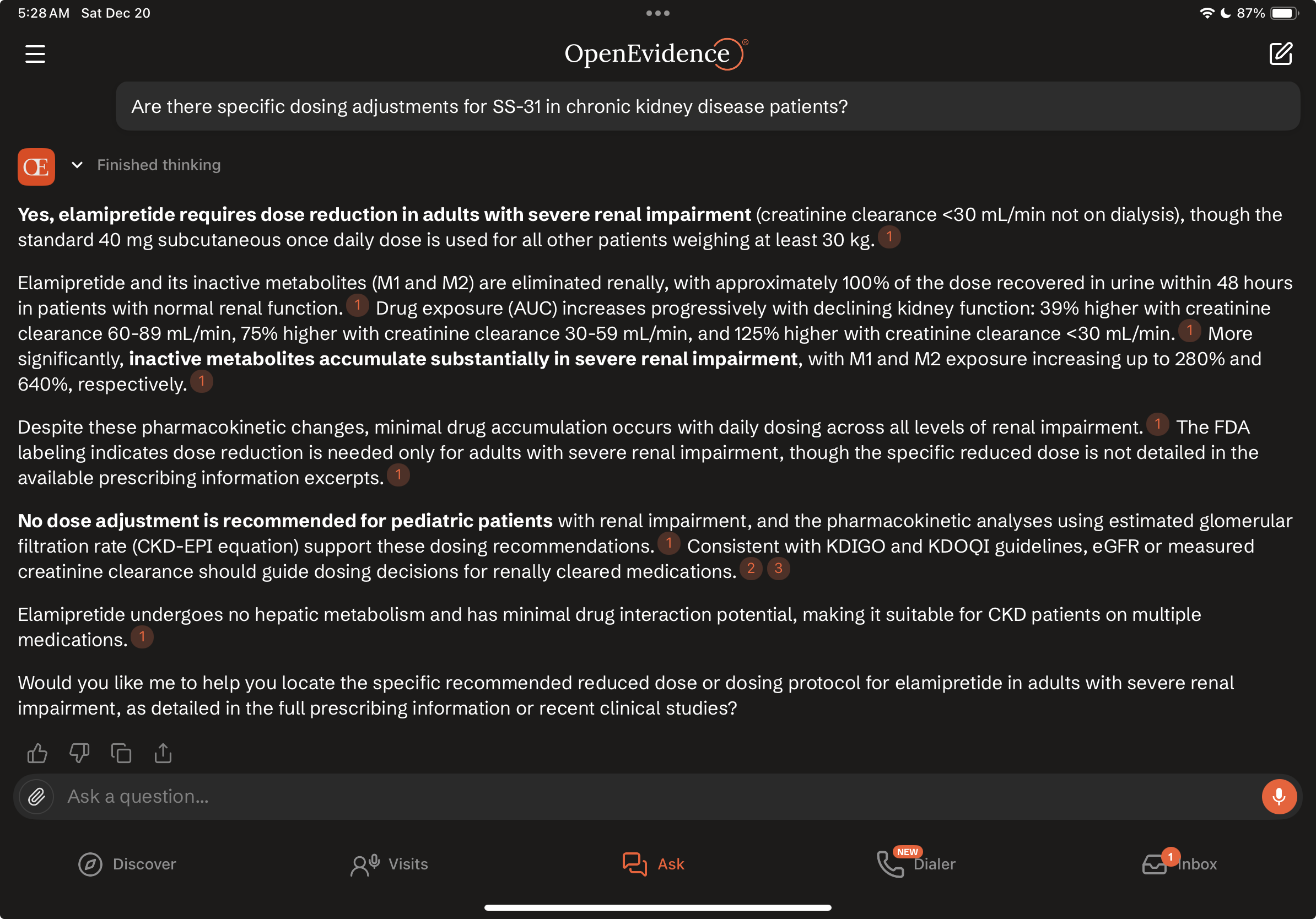
Please ask Hazel if she would inject a relative with kidney disease. If so, at what dose and for how long?

Thanks

1 Like

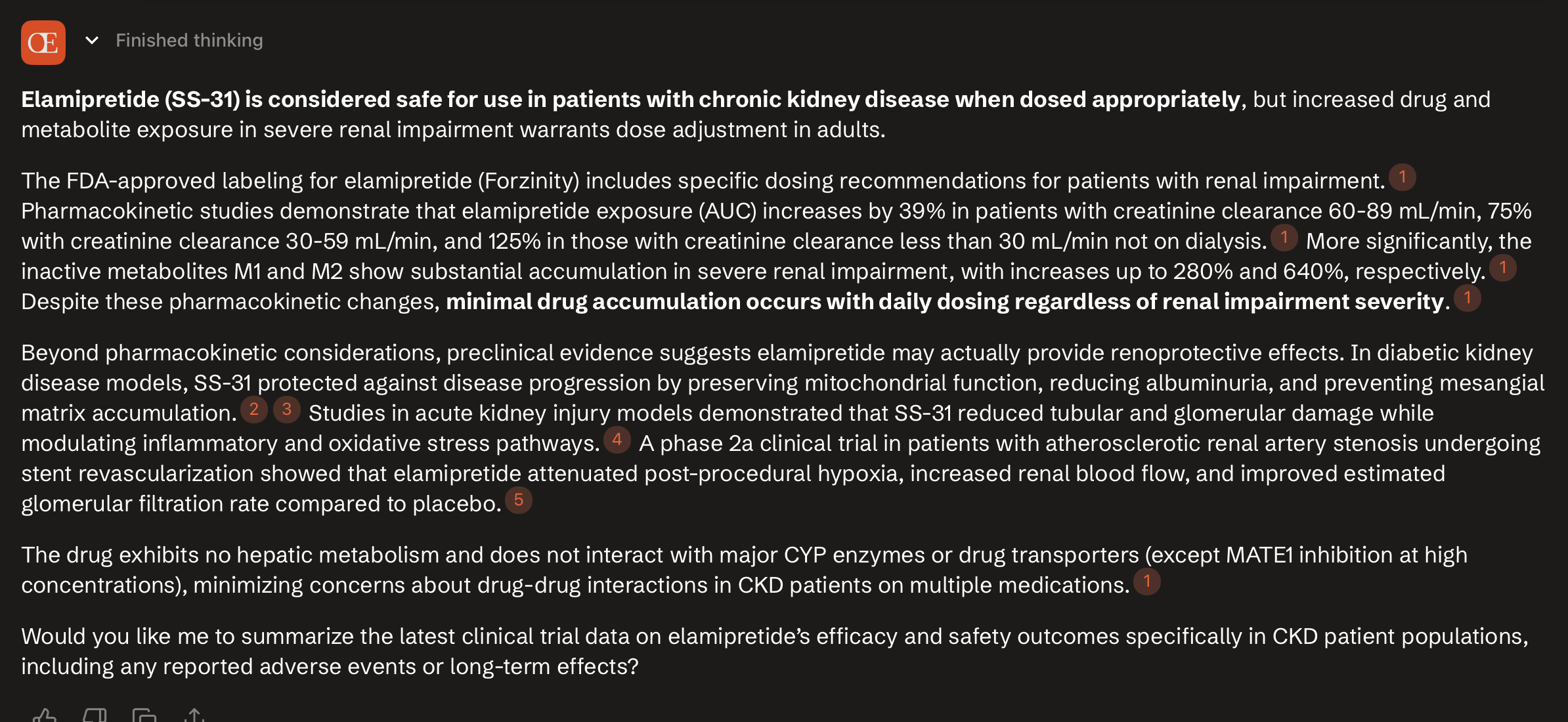
I just found this on Open Evidence

I looked after going down a rabbit hole and seeing someone mention it might be good for kidney disease (from an unreliable source)

Edit:
And

1 Like

Well, peptides have the potential to be incredibly powerful.
There is peptide on that list, the GLP-1’s, 9 are FDA approved, there are also 3 growth hormone related peptides FDA approved (Sermorelin, Tesamorelin, CJC-1295 analogs), there are some in the oncology and rare disease areas also. Naturally, the first FDA approved peptide was insulin and all of the variations thereof.

Most recently for myself, I’ve driven up my deep sleep from 12%, up to 30% with almost all being >20% in the last week, after 2 weeks for DSIP. It’s pretty hard to fake that - similar results in my wife. As this is the sleep phase where glymphatic activation occurs - I’m pretty happy with that one!

7 Likes

@DrFraser
Great job on extra deep sleep!!

I am curious as to what you think a good deep sleep number is for total time, or, as it appears, you mostly look at % of time?

I usually get between 45-90 minutes (mostly aprox 1 hour), so I thought I was pretty good (according to Oura), but today was the first time I looked at the %… I get a lot of REM %, so I see my deep sleep % is never that great…

1 Like

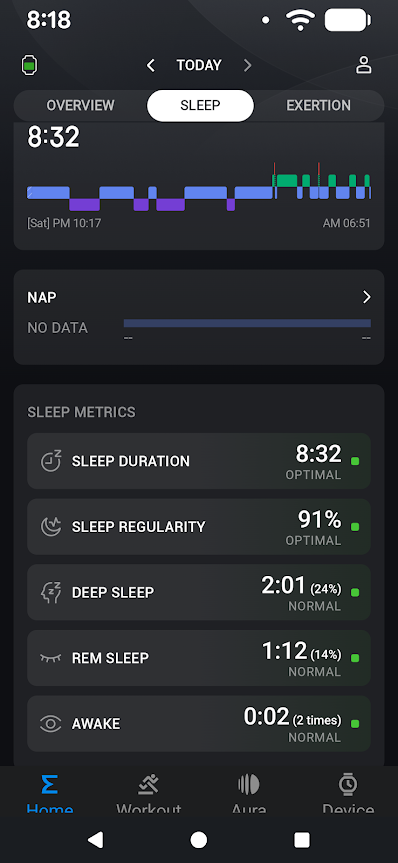
I’m averaging 1:48 a night with DSIP, the app says mine is greater than 82% of people using this app.

2 Likes

@Steve_Combi , you are a deep sleep Rockstar!! Is this Oura, and if so, where did you find comparison info?

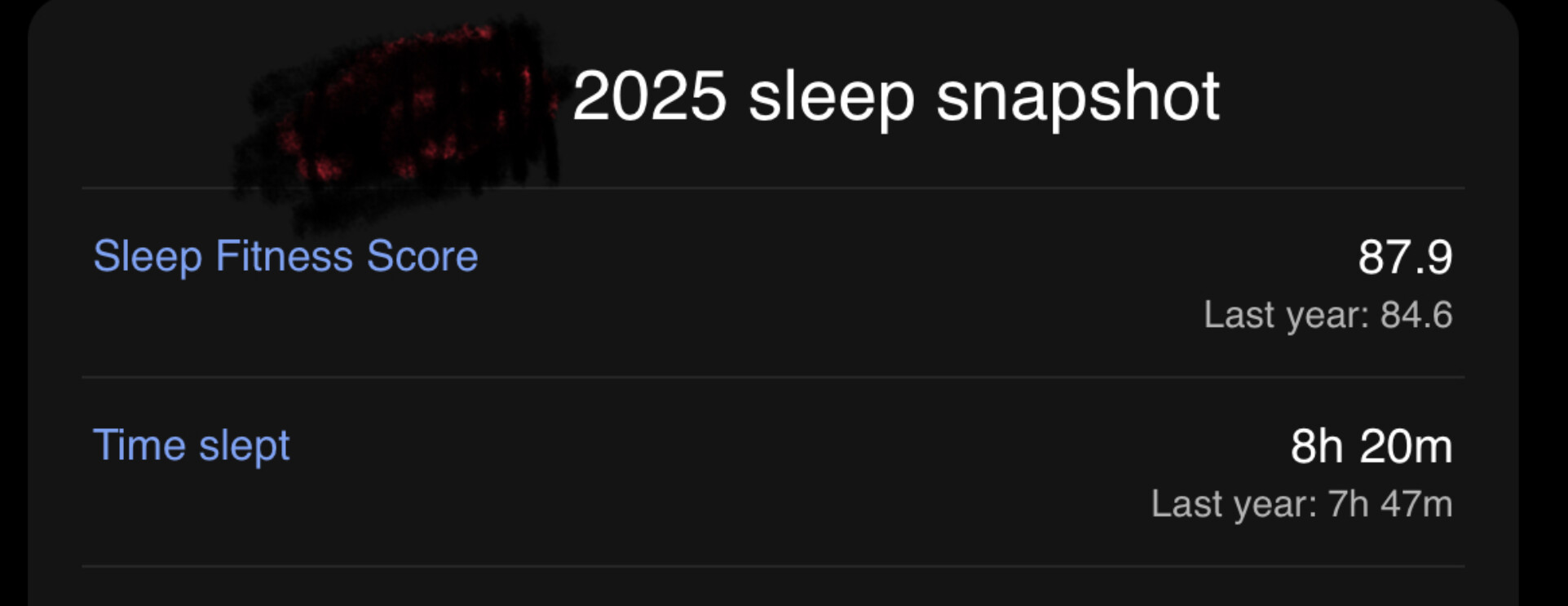
Eight Sleep sent me a 2025 summary…. I’ll brag because my results are due to everyone here!!

(And 2024 was already better than 2023!)
It says I’m in the top 10%!!!

Sincerely,
a lifelong insomniac… or should I say former insomniac

3 Likes

Congrats on the improvements in your sleep!!

I looked for a tracker that did not require a subscription for the data I was interested in and settled on the AmazeFit brand. I have their BIP 5 smart watch, $119, and no sub. required for all the data. You can subscribe for more “analysis” but I don’t need that.

I was not concerned about duration of sleep but curious about the phases of sleep, Deep (delta wave) and REM. Getting enough Deep sleep is an important metric to track from what I’ve been reading about glymphatic activity.

The app provides the “group” comparison.

This is my result from last night.

Screenshot_20251221-081803

2 Likes

On the glymphatic activity, if I’m remembering it correctly, you felt oxytocin might help with that as well.

I’ll report back if DSIP helps my deep sleep.

My REM is crazy long… usually 2-3 hours. Do you have any thoughts on the REM subject? I ask because Google has told me it’s a negative, but I don’t know if it’s always a bad thing if it’s not at the expense of other good sleep metrics.

Digging deeper into SS-31:

The Bioenergetic and Structural Restoration of Mitochondria via the Szeto-Schiller-31 Peptide (Elamipretide): Mechanisms, Clinical Applications, and Epidemiological Relevance in the Aging Population

Executive Summary

The progressive decline of mitochondrial function constitutes a fundamental pillar of biological aging and is a central pathogenic driver in a spectrum of chronic diseases ranging from cardiovascular failure to neurodegeneration. As the global population ages, the prevalence of conditions rooted in bioenergetic failure—specifically heart failure, sarcopenia, chronic kidney disease, and age-related macular degeneration (AMD)—is reaching epidemic proportions. Current therapeutic strategies largely address the downstream symptoms of these pathologies, often ignoring the upstream cellular bioenergetics that precipitate organ dysfunction. In this context, the Szeto-Schiller-31 peptide (SS-31), also known as elamipretide, has emerged as a first-in-class therapeutic candidate with a mechanism of action distinct from traditional pharmacological agents. Rather than acting on protein receptors or enzymes directly, SS-31 functions as a biophysical stabilizer of the inner mitochondrial membrane (IMM), specifically targeting the phospholipid cardiolipin (CL).

This report provides an exhaustive analysis of the functional benefits of SS-31 to mitochondria, identifying the precise biophysical and biochemical mechanisms by which it restores cellular respiration. The analysis demonstrates that SS-31 does not merely act as an antioxidant but functions as an “electrostatic switch,” modulating surface charge density to optimize electron transport chain (ETC) efficiency and maintain cristae architecture. The report further delineates the specific clinical conditions where this mechanism has shown efficacy, juxtaposing the promising data in rare genetic disorders like Barth syndrome—which received FDA accelerated approval in late 2025—against the complex, heterogeneous landscape of common age-related diseases. Finally, it quantifies the frequency of these conditions in the aging human population, highlighting the immense public health potential of targeting mitochondrial dysfunction. By integrating molecular biophysics with clinical epidemiology, this document establishes a comprehensive framework for understanding the role of SS-31 in the future of geroscience and medicine.

Full Gemini Deep Research Report: https://gemini.google.com/share/a455888733fe

1 Like

Follow-on Prompt:

What supplements, foods, or drugs are reasonably likely to be complimentary or synergistic to SS-31 in improving mitochondrial function?

Gemini Response:

Introduction: The Paradigm Shift in Mitochondrial Therapeutics

The therapeutic landscape for mitochondrial dysfunction has historically been characterized by a reliance on generic antioxidants and symptomatic management, strategies that have largely failed to alter the trajectory of complex metabolic diseases. The emergence of Elamipretide (SS-31), a first-in-class mitochondria-targeting peptide, represents a fundamental paradigm shift. Rather than acting as a stoichiometric scavenger of reactive oxygen species (ROS) in the bulk cytosol, SS-31 localizes to the inner mitochondrial membrane (IMM), stabilizing the organelle’s architecture at the molecular level. However, the complexity of mitochondrial physiology—encompassing bioenergetics, membrane dynamics, biogenesis, and mitophagy—suggests that monotherapy, even with an agent as potent as SS-31, may not address all facets of mitochondrial decline. This is particularly true in the context of aging and multifactorial pathologies such as heart failure, neurodegeneration, and metabolic syndrome.

This report provides an exhaustive analysis of the pharmacological, nutritional, and lifestyle agents that demonstrate mechanistic complementarity or direct synergy with SS-31. By interrogating the “Repair, Replace, and Refuel” axes of mitochondrial medicine, we identify specific interventions that amplify the efficacy of SS-31. The analysis is grounded in a nuanced understanding of mitochondrial biochemistry, positioning SS-31 not merely as a drug, but as the foundational “stabilizer” upon which a comprehensive mitochondrial rejuvenation protocol can be built.

Summary Table of Synergistic Agents

The following table summarizes the key synergistic agents, their mechanisms, and the supporting evidence for their combination with SS-31.

Agent Class Specific Compound Mechanism of Synergy Evidence Strength Key Reference
Lipid Substrate Linoleic Acid (LA) Precursor for Tetralinoleoyl Cardiolipin (L4CL). SS-31 stabilizes L4CL; LA provides the raw material. High (Mechanistic/Animal) 8
NAD+ Booster NMN / NR Restores substrate (NADH) availability. SS-31 restores ETC efficiency. Combined, they improve both systolic and diastolic function. High (Direct Synergy Data) 5
Biogenesis Resveratrol / Quercetin Activates PGC-1 alpha / SIRT1. Increases mitochondrial mass while SS-31 maintains quality. Moderate (Parallel Mechanisms) 21
Mitophagy Urolithin A Induces clearance of defective mitochondria. Complements SS-31’s rescue of stressed mitochondria. Moderate (Theoretical/Alzheimer’s) 24
Metabolic Buffer Creatine Buffers ATP via CK system. SS-31 improves ANT sensitivity and ATP generation. Moderate (Mechanistic) 16
Pharmaceutical SGLT2 Inhibitors Reduces cardiac workload and alters fuel use. SS-31 protects mitochondria during stress. High (Clinical Context) 28
Pharmaceutical Entresto (ARNI) Inhibits RAS/Neprilysin. Synergizes with SS-31’s RAS modulation to reduce fibrosis/inflammation. High (Direct Animal Data) 3

Full Gemini Deep Search Report: https://gemini.google.com/share/987fee3ad0e8

4 Likes