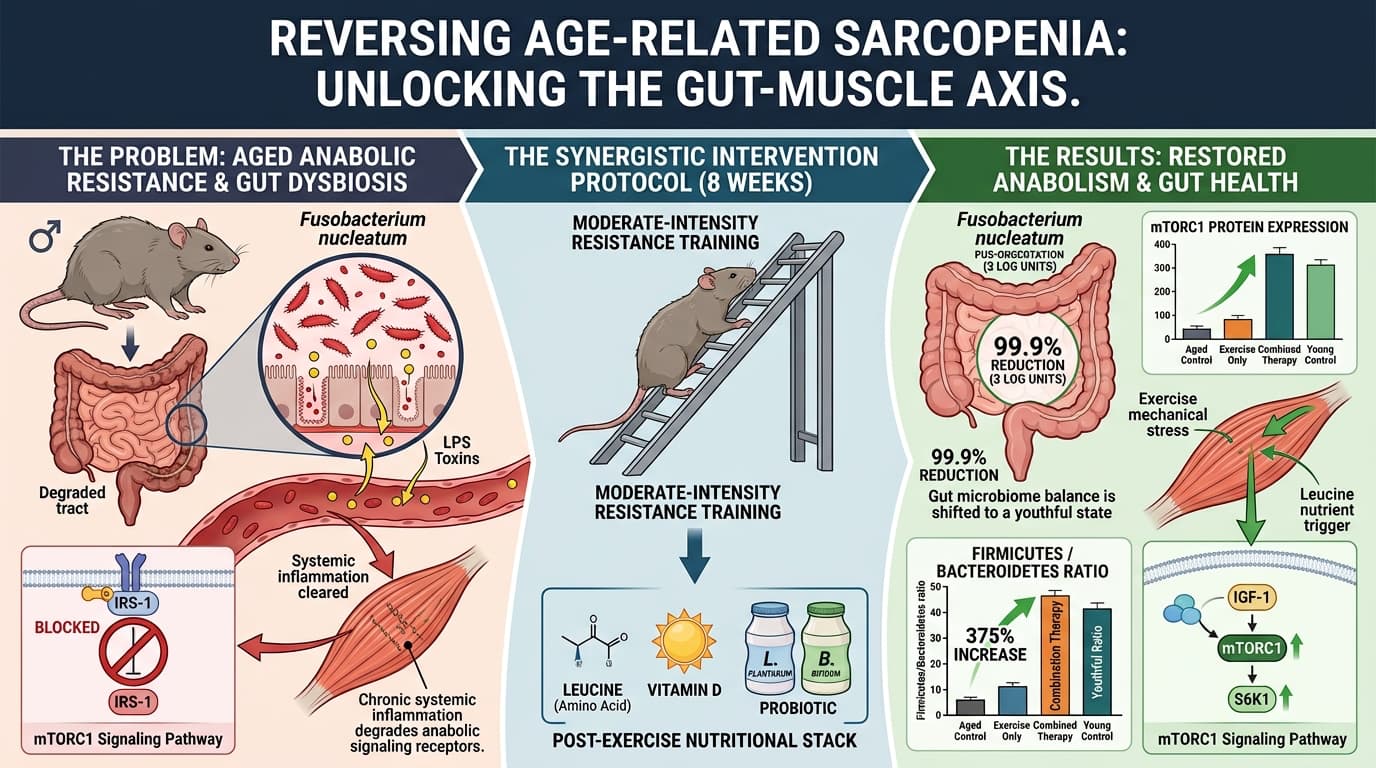
A synergistic intervention combining moderate-intensity resistance training with a targeted nutritional stack containing leucine, vitamin D, and specific probiotic strains profoundly upregulated anabolic mTOR and IGF-1 signaling in aged male rats. The combination protocol simultaneously eradicated the pro-inflammatory gut pathobiont Fusobacterium nucleatum, restoring the gut microbiome ratio to youthful baseline levels. This research provides preliminary in vivo evidence linking targeted microbiome modulation directly to the reversal of age-related anabolic resistance, offering a novel gut-muscle axis pathway for treating sarcopenia.
Sarcopenia presents a significant hurdle for longevity, characterized by the progressive loss of skeletal muscle mass and functional strength. A fundamental paradox in aging physiology is that the mechanistic target of rapamycin complex 1 (mTORC1) often becomes hyperactive as organisms age, yet this activation fails to translate into effective muscle protein synthesis. This phenomenon is known as anabolic resistance. Research into the gut-muscle axis strongly suggests that intestinal dysbiosis contributes to this systemic failure. Specifically, age-related shifts in gut bacteria increase intestinal permeability and systemic inflammation, which biochemically blocks muscle growth pathways.
This study sought to break that inflammatory blockade. Researchers subjected aged male Wistar rats, equivalent to 60 to 70 human years, to an eight-week protocol of moderate-intensity ladder climbing. Crucially, they paired this physical stimulus with a precise nutritional intervention delivered after exercise. The stack included Lactobacillus plantarum, Bifidobacterium bifidum, vitamin D, and the amino acid leucine.
The results demonstrated a powerful synergistic effect. Administering either the resistance training or the nutritional supplement alone yielded only modest improvements in anabolic signaling markers. However, the combined intervention radically transformed the biochemical environment. The combination group experienced massive increases in the protein content and gene expression of IGF-1, mTORC1, and S6K1, rivaling the levels seen in young, healthy control rats.
The mechanism behind this restoration appears rooted in the gut microbiome. The combination therapy effectively suppressed Fusobacterium nucleatum, an inflammatory pathobiont known to produce lipopolysaccharides that trigger systemic inflammation. This inflammation normally degrades insulin receptor substrate 1, crippling downstream anabolic signaling. By clearing this bacterial burden and reducing the Firmicutes to Bacteroidetes ratio, the combined intervention removed the inflammatory brake on the mTORC1 pathway. This allowed the mechanical stress of exercise and the nutritional trigger of leucine to effectively stimulate muscle growth pathways.
Actionable Insights
For individuals looking to maximize healthspan and counteract sarcopenia, this paper indicates that resistance training alone may be insufficient if underlying gut dysbiosis and inflammation are present. To overcome age-related anabolic resistance, the data supports consuming a synergistic stack of leucine, vitamin D, Lactobacillus plantarum, and Bifidobacterium bifidum within two hours of completing resistance training.
The effect size of this specific combination is massive compared to exercise alone. In the study, the combination group saw an approximate 375 percent increase in mTORC1 protein content over the aged control baseline, whereas exercise alone yielded a much smaller fractional improvement. Furthermore, the inflammatory gut bacteria Fusobacterium nucleatum was reduced by roughly 3 log units, translating to a 99.9 percent absolute reduction in bacterial DNA replication. This combination of targeted probiotics, a key amino acid, and vitamin D alongside mechanical overload appears necessary to fully unlock the body’s muscle-building potential in older age.
Context/Source
- Paywalled Paper: mTOR-Gut Microbiome Interaction in Aging: Fusobacterium nucleatum, Resistance Training and Multi-nutrient Supplementation Effects in Aged Male Rats.
- Institution: University of Guilan and Ferdowsi University of Mashhad.
- Country: Iran. Journal: The FASEB Journal.
- Impact Evaluation: The impact score of this journal is 4.4, evaluated against a typical high-end range of 0 to 60+ for top general science, therefore this is a Medium impact journal.