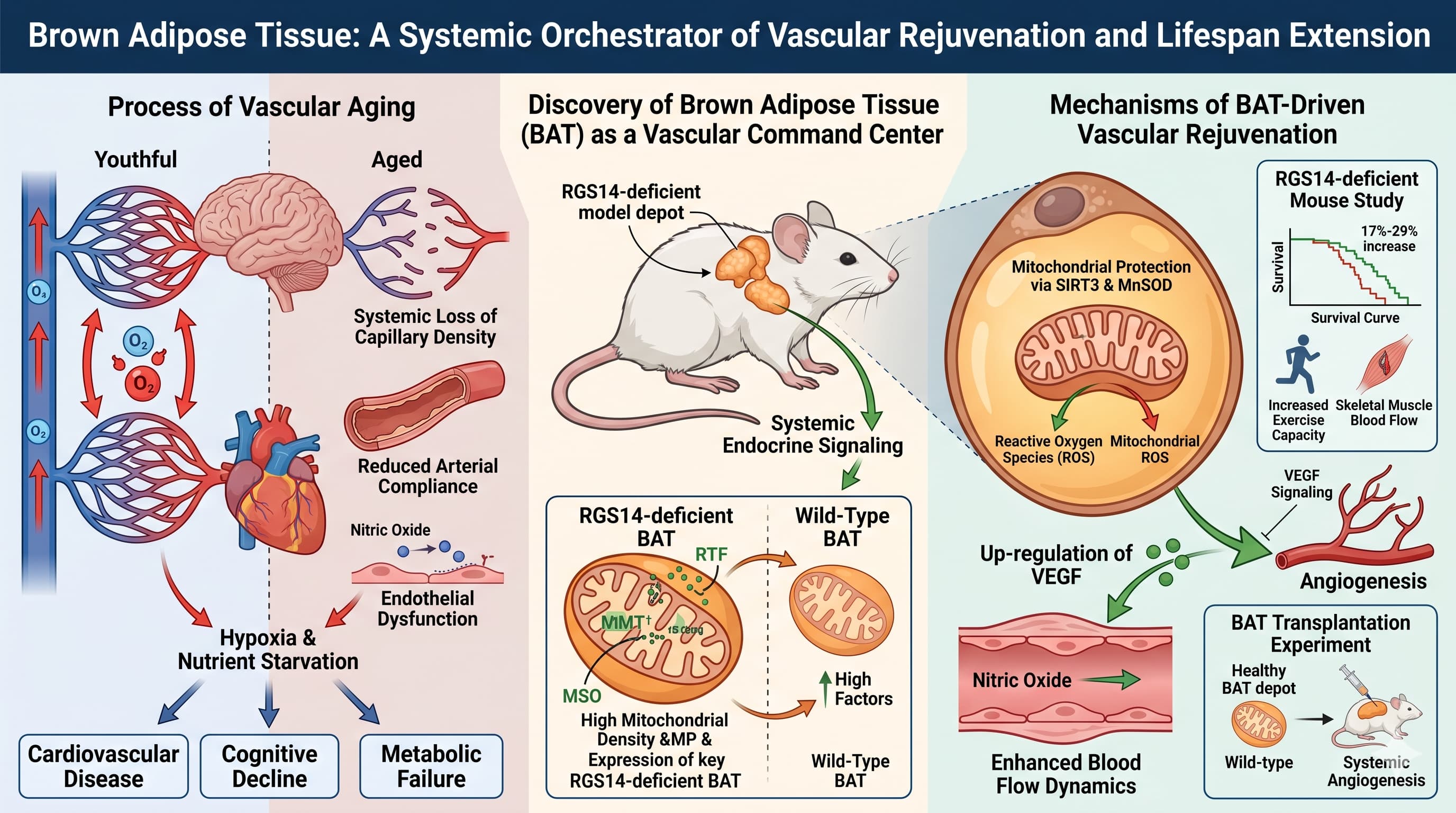
While the longevity field has spent decades focusing on the microscopic, cell-autonomous hallmarks of aging—such as genomic instability and protein misfolding—a crucial macro-physiological reality has been largely left in the dark. As organisms grow old, their internal plumbing breaks down. The systematic loss of capillary density, arterial compliance, and endothelial function starves vital organs of oxygen and nutrients, directly precipitating cardiovascular disease, cognitive decline, and metabolic failure. A comprehensive review of 25 rodent longevity models reveals that maintaining robust tissue perfusion via angiogenesis (the formation of new blood vessels) and sustained blood flow is a foundational, yet understudied, pillar of healthspan extension.
The standout revelation of this analysis is the unexpected role of brown adipose tissue (BAT) as a systemic vascular command center. Traditionally viewed merely as a metabolic heater that burns fat for warmth, BAT has been unveiled as an endocrine organ capable of orchestrating body-wide vascular rejuvenation. In a premier example, mice lacking the scaffolding protein Regulator of G Protein Signaling 14 (RGS14) exhibited an exceptional 17% to 29% increase in lifespan, accompanied by a massive surge in exercise capacity and skeletal muscle blood flow. Strikingly, when researchers surgically removed BAT from these long-lived mice, their superior physical performance and vascular enhancements vanished. Conversely, transplanting RGS14-deficient BAT into completely normal, wild-type mice fully transferred these advanced vascular benefits, stimulating local and systemic blood vessel growth.
This systemic vascular remodeling is primarily driven by the up-regulation of Vascular Endothelial Growth Factor (VEGF) alongside robust mitochondrial protection via antioxidants like SIRT3 and manganese superoxide dismutase (MnSOD). These pathways clear out destructive reactive oxygen species, allowing nitric oxide to properly dilate vessels and maintain youthful blood flow dynamics. The biological reality is clear: long-term survival demands optimized plumbing, and manipulating tissues like brown fat offers a novel target to keep the network flowing.
Actionable Insights
-
Prioritize Endothelial Nitric Oxide Bioavailability: Engaging in regular physical exercise is vital, as it directly increases nitric oxide production and up-regulates pro-angiogenic factors, ensuring robust blood flow to skeletal muscle and organs during aging.
-
Implement Modest Calorie Restriction: Adopting a practical, ~12% reduction in daily caloric intake can significantly enhance vascular health by boosting endothelium-dependent vasodilation, improving flow-mediated dilation, and reducing systemic oxidative stress without causing malnutrition.
-
Target Adipose Tissue Browning and Vascular Growth Factor Secretion: While direct RGS14 inhibitors are still confined to experimental pipelines, utilizing lifestyle or therapeutic strategies that promote BAT activation and increase local VEGF expression can preserve microvascular density in the heart, brain, and peripheral tissues.
-
Incorporate Longevity Therapeutics with Vascular Protective Profiles: For translationally minded clinicians and biohackers, optimizing pathways via compounds like rapamycin or metformin holds strong promise; these agents act to preserve eNOS activity, clear arterial mineral density, and substantially reduce circulating biomarkers of age-related endothelial decline.
Source:
-
Paywalled Paper: Blood flow and angiogenesis: Major mechanisms mediating
healthful longevity - Affiliated Institutions: Department of Cell Biology and Molecular Medicine, Rutgers, New Jersey Medical School, Newark, New Jersey, USA; Victor Chang Cardiac Research Institute, Darlinghurst, Australia; School of Clinical Medicine, St Vincent’s Hospital Healthcare Clinical Campus, Faculty of Medicine and Health, University of NSW Sydney, Kensington, Australia.
- Journal Name: Ageing Research Reviews.
- Impact Evaluation: The impact score of this journal is not explicitly provided in the source text, evaluated against a typical high-end range of 0–60+ for top general science, therefore this is a High impact journal based on its established standing as a premier review vehicle in gerontology.