GLP-1 micro dosing - Strategies and Tactics?

2 Months Semaglutide Experiment. A Cautionary Tale.

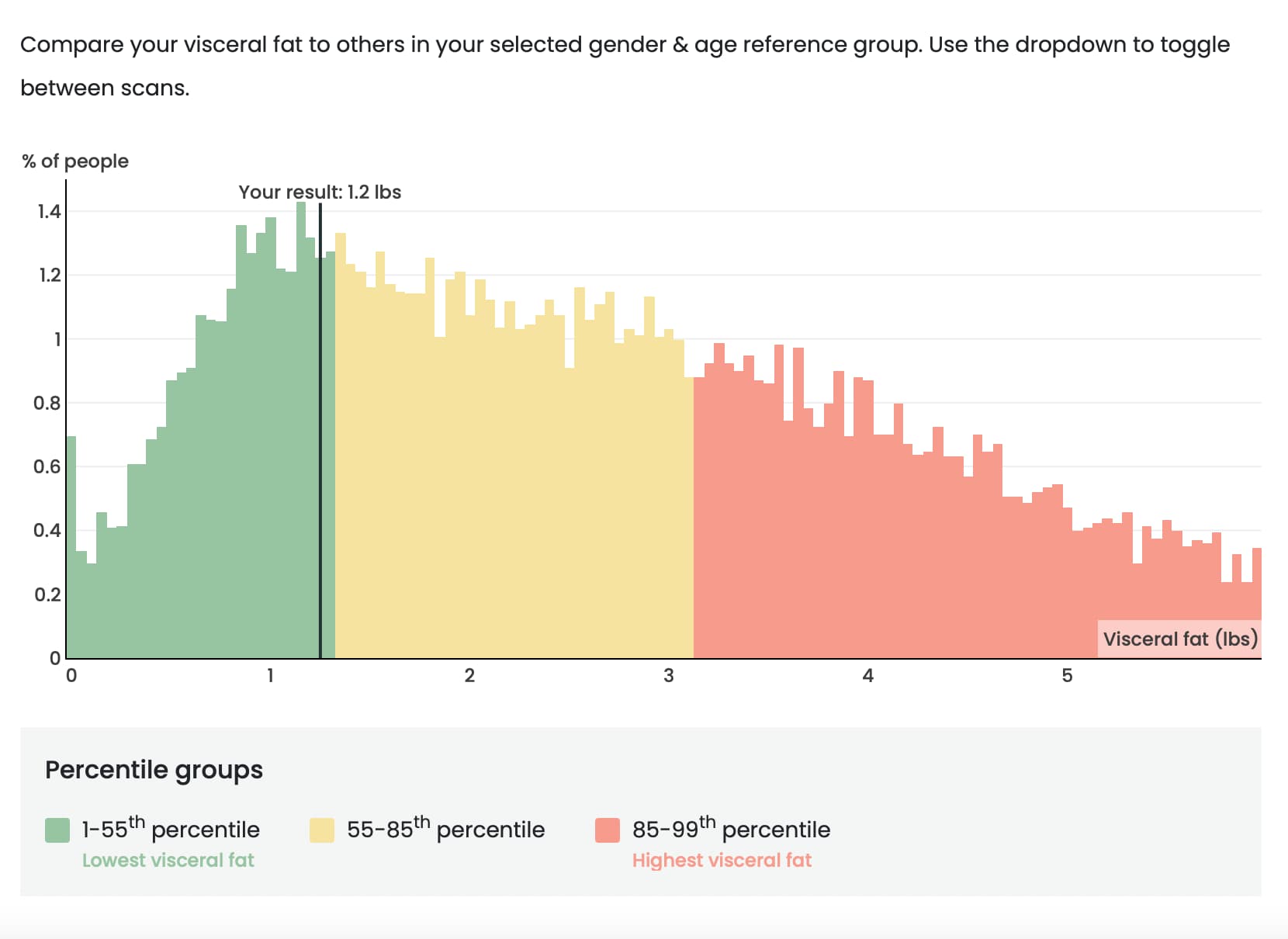
I wanted to provide an update on my Semaglutide experiment.

I’ve used semaglutide oral for about two months. The first month I took a single pill each morning (7mg) and exercised 4 or 5 days a week, then the second month I took 14mg per day and exercised much less because I was traveling for most of that month and did not have access to a gym (though did lots of hiking, swimming, etc.).

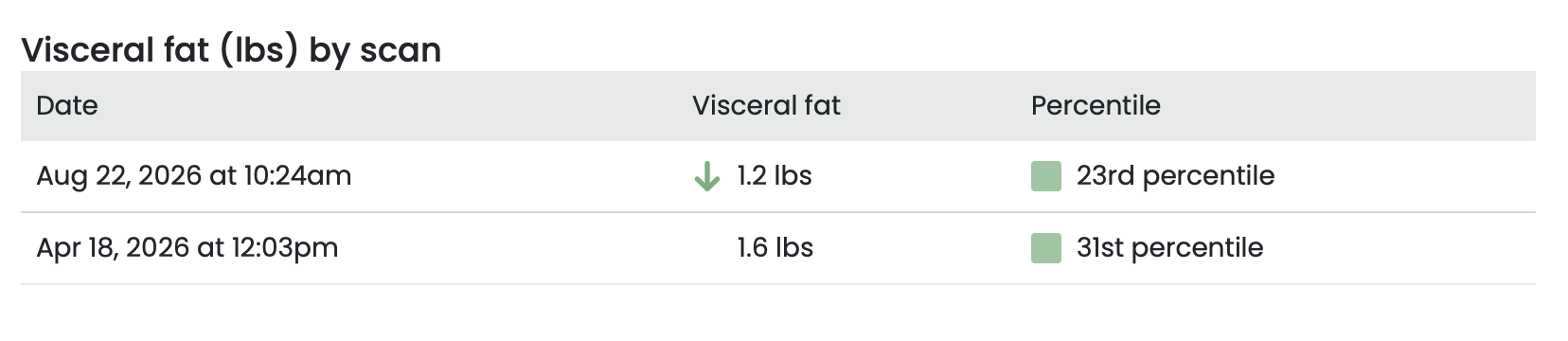
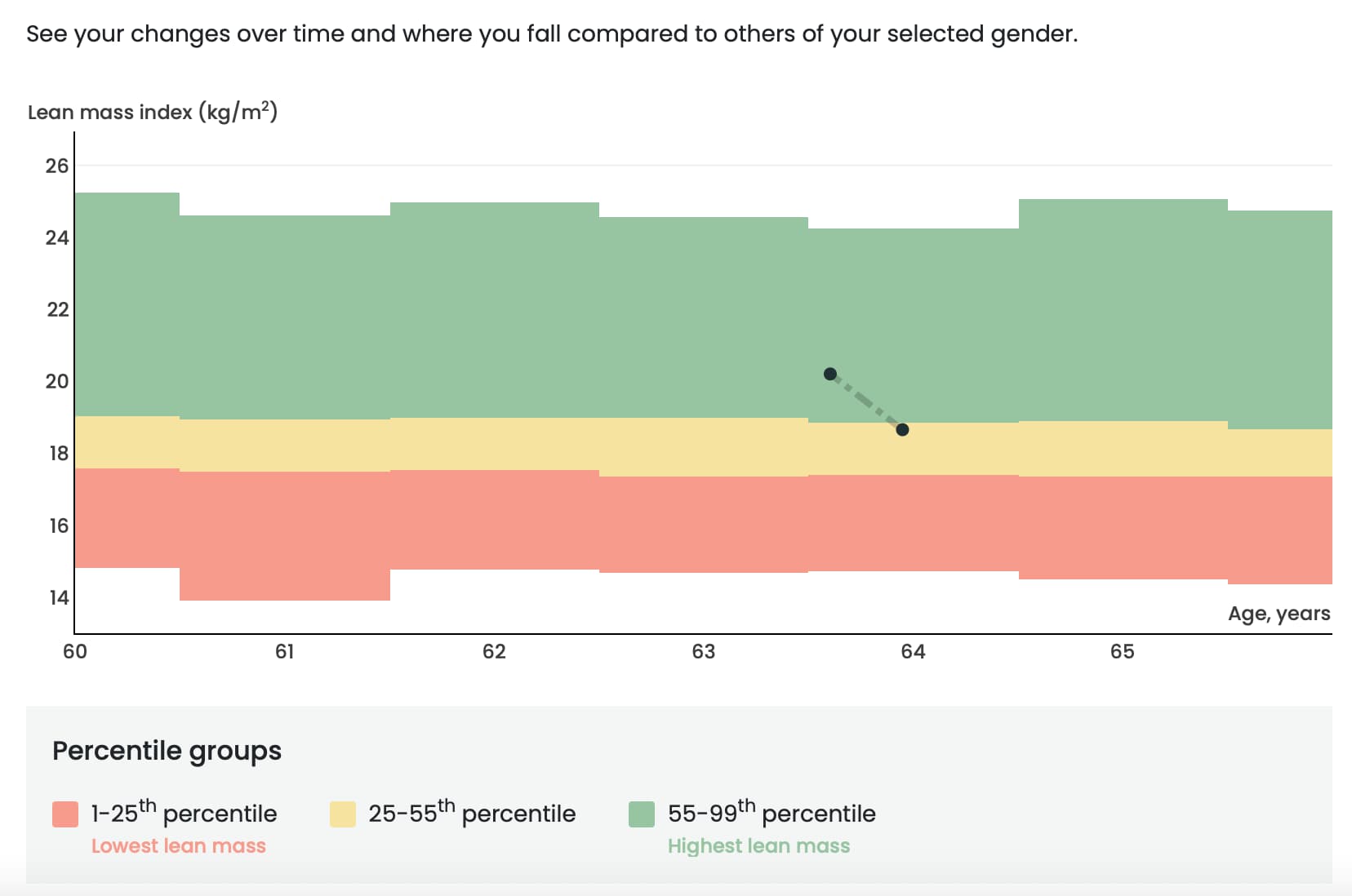
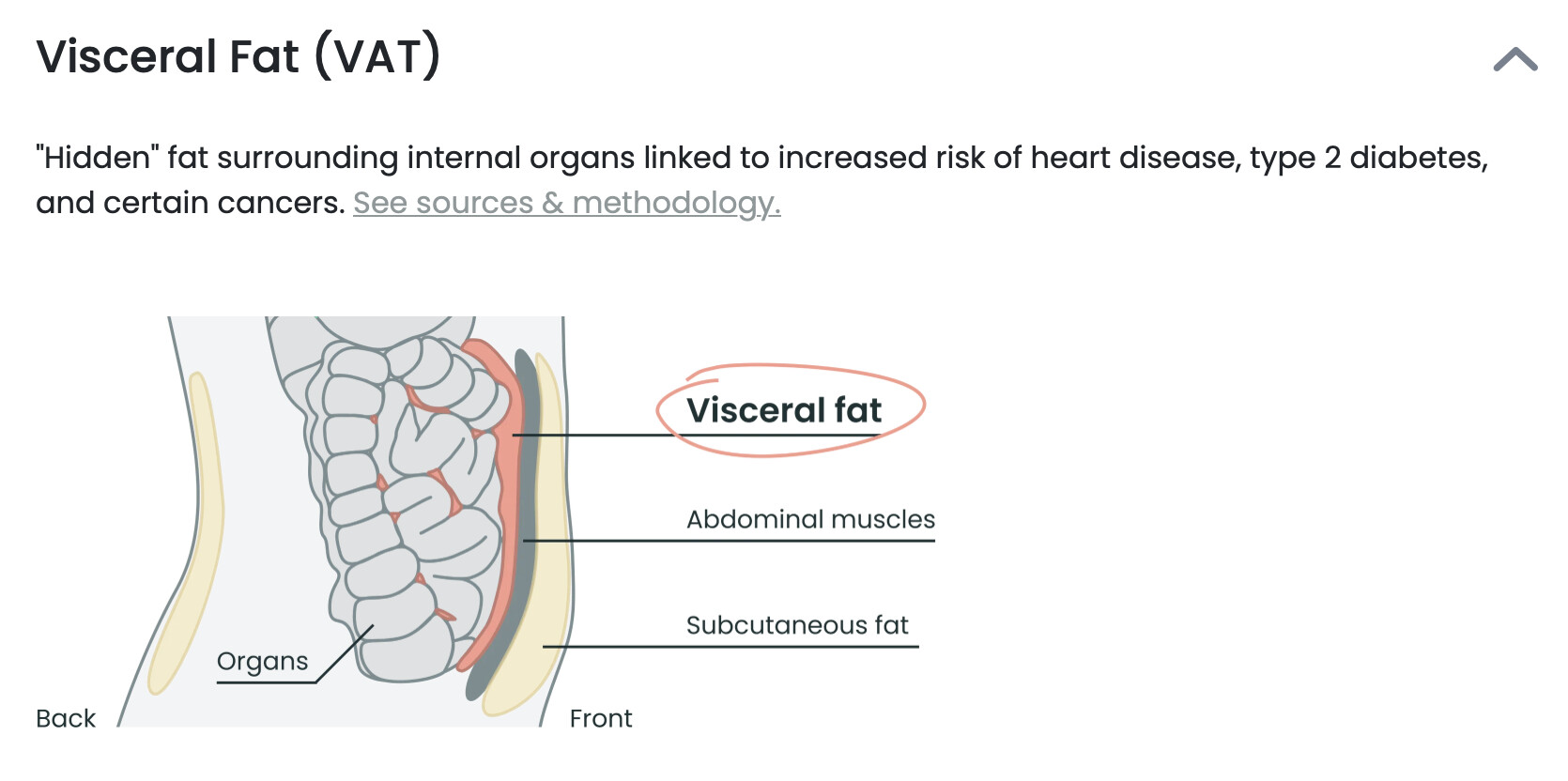
Results were extremely mixed - as you can see below from my two DEXA scans (pre and post semaglutide). My goal was primarily around reduction of fat and specifically visceral fat.

The good news - weight and fat are down. Bad news: most of my weight loss was muscle (Lean mass) ! Of the 13.7 lbs of total weight I dropped, only 3.3 lbs was fat — roughly 77% of the loss was lean tissue.
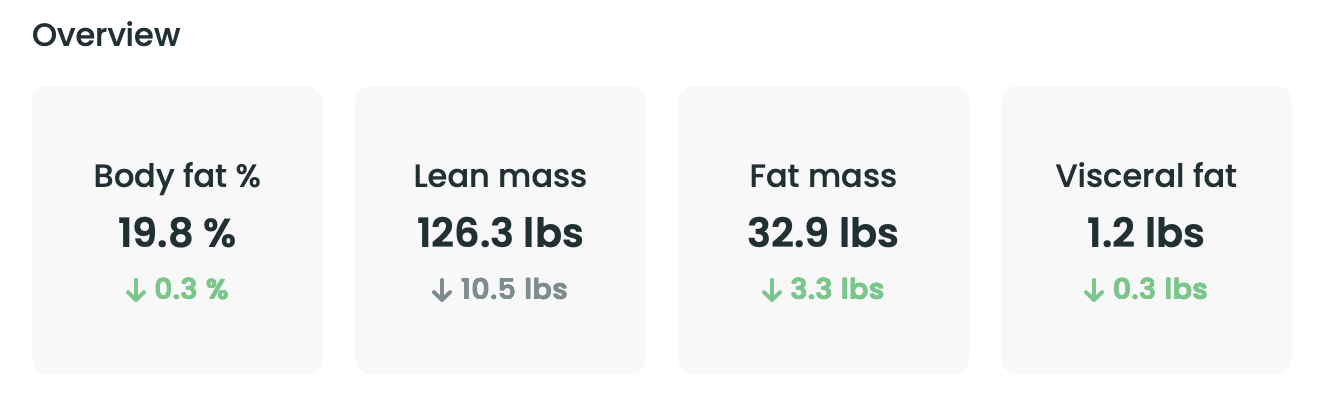

But Muscle Loss!

The issue is the muscle loss. I used Claude to evaluate exactly where, and how much, muscle I lost in each area of the body. Here are the results:

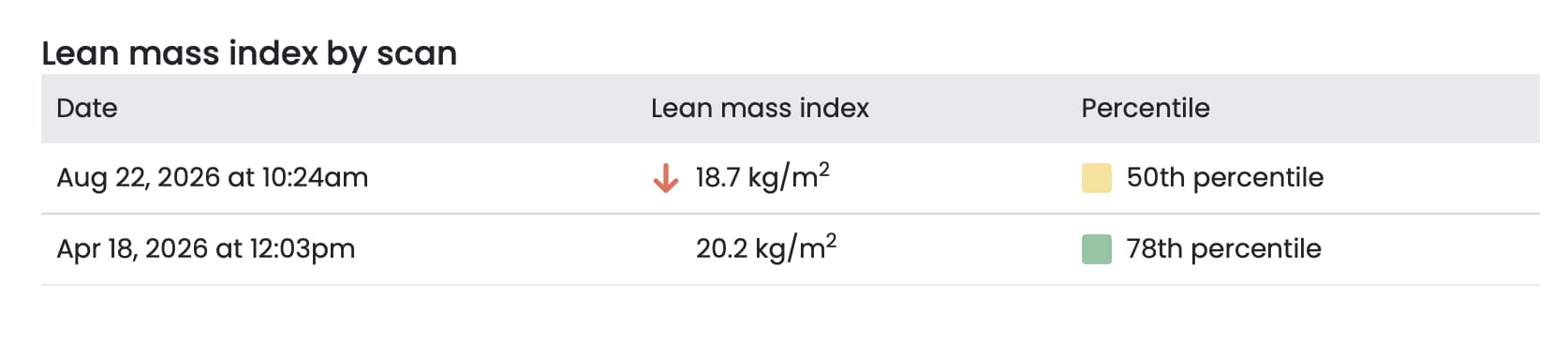
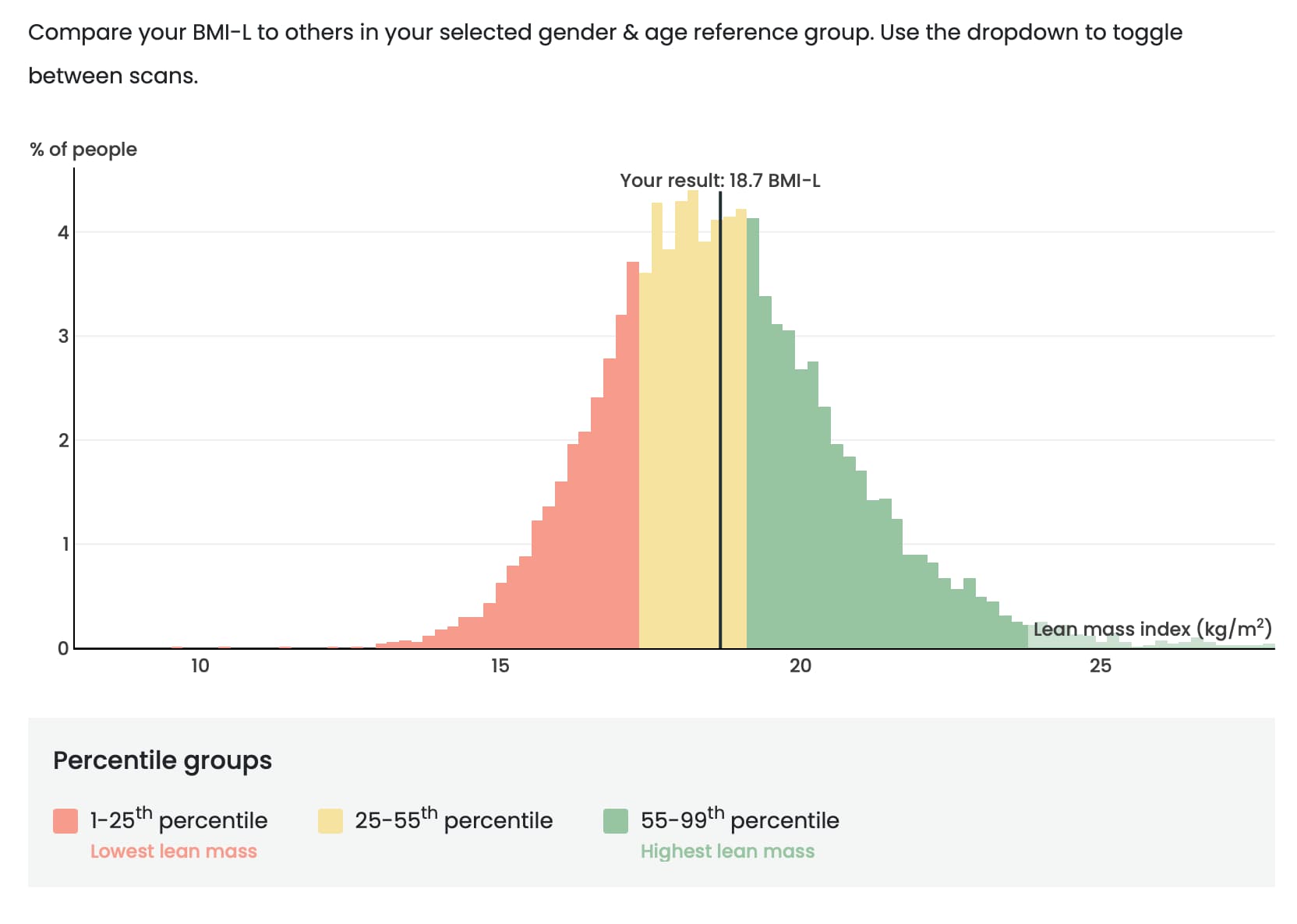
Every region lost lean mass between April 18 and August 22 — there were no gains anywhere.

Lean tissue change (Apr 18 → Aug 22, 2026)

Region April August Change
Arms (total) 18.1 lbs 15.9 lbs −2.2 lbs (−12.2%)
— Right arm 9.3 8.1 −1.2 (−12.9%)
— Left arm 8.7 7.8 −0.9 (−10.3%)
Legs (total) 47.7 lbs 43.7 lbs −4.0 lbs (−8.4%)
— Right leg 23.8 22.3 −1.5 (−6.3%)
— Left leg 23.9 21.4 −2.5 (−10.5%)
Trunk 63.3 lbs 59.2 lbs −4.1 lbs (−6.5%)
Head (derived) ~7.7 lbs ~7.5 lbs −0.2
Total 136.8 lbs 126.3 lbs −10.5 lbs (−7.7%)

Overlapping sub-regions: Android (abdomen) 10.4 → 9.2 lbs (−1.2, −11.5%); Gynoid (hips/upper thighs) 20.9 → 19.4 lbs (−1.5, −7.2%).

Where it hit hardest: the trunk and legs lost the most absolute mass (−4.1 and −4.0 lbs), but the arms lost the largest share of what they had (−12.2%), with the right arm the single worst-affected limb proportionally. Two other things stand out — your legs were symmetric in April (23.8 vs 23.9 lbs) and are now 0.9 lbs apart because the left leg lost nearly twice what the right did; and of the 13.7 lbs of total weight you dropped, only 3.3 lbs was fat — roughly 77% of the loss was lean tissue.
A caveat on reading this: DEXA lean mass includes water, so hydration differences between scan days can swing these numbers by a pound or two.
Take Home Message

I’m going to have to ramp up my resistance training a lot more in the near future to make up for the loss, and will keep this in mind for future trials of semaglutide.

7 Likes

In terms of what you are capable of doing in the gym, are you actually any weaker as a result of lean muscle loss?

1 Like

It doesn’t seem like it. Spent an hour and a half in the gym today and I am lifting the same amounts after a month if traveling and not lifting. I guess thats good

1 Like

So i wonder if you have just been stripping out the fat that accumulates in the muscles. I don’t think the DEXA can see “inside” the muscle hence it thinks you have muscle loss whilst your physical capability is suggesting otherwise.

2 Likes

I can’t fathom any way you lost that percentage of muscle. It is such an outlier. Particularly if your strength holds.

Get up on the pull-up bar. You might set a new record. Notice the gait in your runs. Feeling a little lighter (you should of course!) and faster?

The big worry is the metabolic decline as a reaction to that weight loss. So regaining weight fast is a big problem. And perhaps equally worrisome from an injury perspective is ligament/tendon decline. You have a new body structure similar to fancy sports car - faster but vulnerable to mechanical injury.

I saw a video of a researcher’s perspective that doing a 2nd and 3rd round of using these weight loss drugs means accelerated muscle loss each time. If I find the video I will repost - but probably worth considering.

Enjoy your new upgrade body! Take your shirt off when you run :slight_smile: And take advantage of this post drug window to reset - I think this is when the “magic” happens.
*Consider taking some whey powder mixed with low-fat yogurt an hour before bed.

2 Likes

Since dexa cannot identify muscle mass reliably, the best one can talk about is lean mass, not muscle mass. Your scan was always going to show lean mass loss, just from glycogen depletion alone.

Lean mass includes the liver, and other organs which can undergo significant reduction in size (from glycogen and fat depletion). If you look at some of the regions that accounted for weight loss (trunk and android region), they correspond to where these organs live, so no surprise. The appendicular lean mass losses likely are from glycogen depletion, and internal fat, like indicated by @RPS .

You mentioned that you feel you have the same strength, which is another data point that hints at no significant muscle loss. Baseline dexa scan before a GLP1 is not useless, but you do have to keep in mind that a GLP1 will shrink your stored glycogen a lot. What you should is get another dexa scan in 3-6 months, and see if you still have further, significant lean mass loss. I suspect you will not.

One other tip on dexa scans: the fat mass number is probably the most accurate one when it comes to body composition. Lean mass is somewhat accurate, but ultimately of limited practical value since the thing you care about is muscle. Fat % is not as useful, since it depends on lean mass, which itself is flawed.

3 Likes

Yep, it’s probably not much muscle mass loss. Much more likely other “lean mass” such as glycogen stores, etc.

That said, a baseline of protein intake and resistance training is critical for maintaining muscle mass during weight loss

2 Likes

Can’t be glycogen cause the most body stores is about 600grams. His dexa showed a nice fat 10lbs muscle loss LOL That is huge, and that’s why I say whoever invented GLP1’s needs to be hanged LOL

Also, it would be interesting if you get another one to see if the results are consistent……

I say that because at our last dexa, it showed my husband gained something like 13 pounds of muscle in over the year. He’s very lean with a good amount of muscle, so if he gained THAT much more, one of us would have noticed!!

1 Like

Weigh yourself after a day or two of fasting and then let’s talk again.

I’d say DEXA yourself after a day or two or three of fasting. Weighing doesn’t mean much, because it could be that you lose fat, and obviously you lose some water also initially.

Did he also gain weight though, and was he trying to gain muscle? i.e. exercising and loading on protein etc.

He has no weight to loose and didn’t gain a pound which is why it was very suspect!!

He most likely replaced 2-3 pounds of fat with muscle (just a guess)… 13 seemed implausible

FWIW, it’s 13-ish, I can’t remember the exact number, but it was big for someone who gained no weight and generally looks the same. He does workout hard and is super fit, so gaining some muscle made sense.

2 Likes

1.5 years of mostly body recomposition

After 1.5 years on a GLP1, I consider myself at my goal body weight, and more importantly, at goal body fat percentage (around 15%). When I started, I had about 20 pounds to lose.

I made a concerted effort to supplement with protein, and prioritize weight lifting. That ended up looking like only lifting 3 times a week at first, then as I got more energy, adding cardio sessions after my weight lifting sessions. I also changed my lifting routine to unilateral lifts to help balance, which allowed me to lift more on a per-limb basis.

I’ve been on the same GLP1 dose for close a to year now, with weight loss averaging about 1 pound/month.

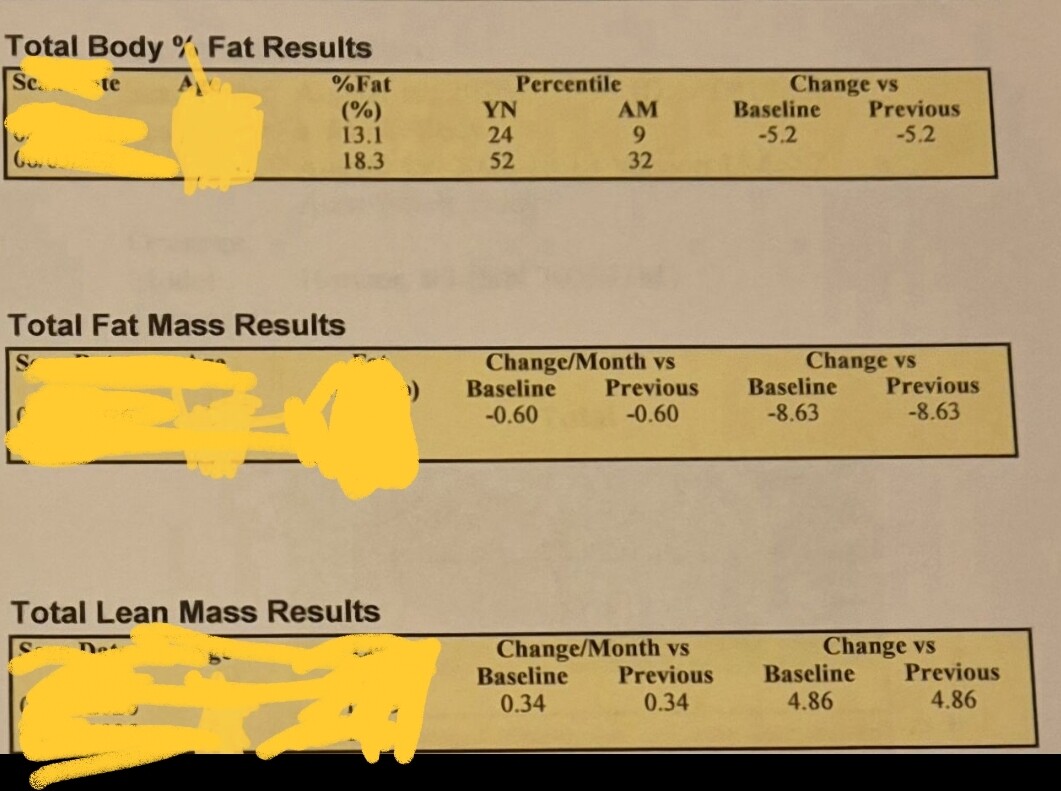
Results have been good. Compared to 1.5 years ago, body fat went from 18% to 13%, I lost 8 pounds of fat, and gained 4+ pounds of lean mass.

I’m pretty sure this lean mass is mostly muscle:

  • I’m lifting higher weights even while losing weight
  • because I did the previous DEXA scan while already on a GLP1, I dont’ have to worry about excess water weight confounders

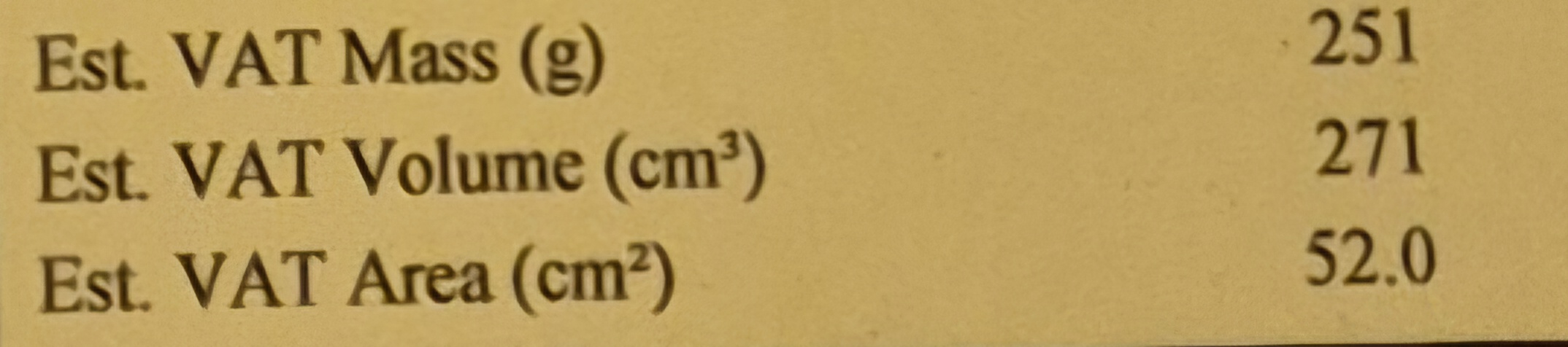
I’ve lost more visceral fat and numbers are well under the optimal range

Measurement Metric Unit Optimal / Normal Range
Visceral Fat Area (VFA) cm² < 100 cm²
Visceral Fat Mass g (lbs) < 500 g (< 1.1 lbs)
Visceral Fat Volume cm³ < 500–600 cm³
Visceral Fat Rating Index Score (1–59) 1–9

Really good results overall, and I can barely tell I’m on a GLP1 at this point as I’ve had no annoying side effects, and I’m not food averse.

3 Likes

Are you still using sembolic?

I must be a hyper responder because after taking 3.5 mg of Rybelsus every other day for about two weeks (I know I need to titrate everything very carefully) I lost about 10% of my bodyweight.

It has taken two years since that little experiment and a whole lot of leg press to get my butt back. Similar with arms. One of the lasting effects was decreased appetite – though that might be largely age related. Before rybelsus I would usually eat those last few bites just to clean the plate. No more. Have remained much more sensitive, ad obedient, to satiety signals. Weight is back to where I started but body composition is slightly but noticeably better.

1 Like

How has the experiment panned out?

There is a particularly relevant piece of evidence. In PIONEER-1, the old Rybelsus 3 mg/day dose produced essentially no extra weight loss versus placebo at 26 weeks: only about 0.1–0.2 kg placebo-adjusted, while still producing a measurable glucose-lowering effect in people with type 2 diabetes. � That makes the lowest exposure quite different from obesity-dose semaglutide, where substantial weight loss drives appreciable lean-tissue loss.

Some suggested logic: low dose allows one to lower glucose and inflammation, improve diet through better psychological control and therefore lose some visceral fat It could also potentially provide some of the non-weight-loss glp1 longevity benefit. You wont lose much/any weight but it might have a visceral fat/longevity benefit

another thought is that the half-life of these is very long it seems to indicate that twice weekly dosing could work quite well

1 Like

No - stopped due to the weird taste. Moved to Semaglutide by NovoNordisk.