I’ve been experimenting with microdozing for over a year now (ozempic 0.25-0.5 weekly or biweekly) for weight maintenance during perimenopause.
I don’t lose weight on this dose; however, my Perplexity in deep research always tells me I’m going to lose facial fat (i.e. get the ozempic face) and there’s no guarantee even if my weight is stable.
I very much don’t like this response, but Perplexity is persistent. There’s no way I can measure that, and I don’t know if it would’ve retained more facial volume otherwise.
This is because social media influencers and rag papers like the Daily Mail describe it as “Ozempic face” The thing is when you lose weight, it is never specific. If you lose belly fat, you will also lose some facial fat.
As I posted before, weight loss will rarely make you look younger, at least not at first. If you are young, your skin will bounce back. If you are older, it takes a lot longer, maybe never. I am sure you have seen pictures of people with dramatic weight loss and all of the sagging skin that results. Long ago, weight loss gurus suggested that if you lose a lot of fat, reward yourself with surgical procedures to get rid of the loose skin.
On tirz and now reta I’ve lost fat all across by body but somehow my face isn’t leaning out yet, even deep into normal weight territory. For me I don’t think GLP1 have had any impact on fat distribution except for visceral fat which got decimated.
I was taking 10mg tirzepatide last year and lost about 60 lbs. I had to switch to semaglutide this year due to changes in insurance coverage. My weight loss has plateaued so I am now adding 1mg of retatrutide weekly. I am also interested in the additional benefits of activating the glucagon receptor, even on a smaller scale than full dosing. There is evidence that weekly dosing makes more sense than smaller daily dosing when you consider the half-life of the drugs, and how they build up more in your system with higher weekly dosing after about a month of steady use.
It has to do with the PK of how long acting GLP1’s work.
Taken together, the mechanistic and clinical data support that for long‑acting GLP‑1 RAs, 1×/week dosing at the approved weekly dose is already effectively “continuous,” and there is no evidence that cutting that weekly dose into 2–3 injections improves weight loss, HbA1c, side‑effect profile, or anything else.
Using 1 mg Tirzepatide weekly. Any higher and my RHR goes up by 10-20 points. No side effects with this lower dose, and (as intended) no meaningful weight loss. I hope it will reduce inflammation and visceral fat. Haven’t done a DEXA since I started so we’ll see. One unexpected (side) effect is that alcohol cravings are meaningfully lower. No more mental chatter and negotiating with myself over that glass of wine. I still drink occasionally but it’s not a thing anymore.
Deep research mode is not supposed to use Daily Mail and the “ozempic face” references; it refers itself to peer-reviewed sources and that’s tightened in its system prompt.
I’m not losing weight on my dose, it’s not the goal. However, it keeps saying that it doesn’t mean I’m not losing the facial fat, even though the weight stays stable. And provides references.
I check every once in a few months, in hopes there’s new research contradicting these statements
You need to train any AI you use what level of BS is acceptable to you.
If you don’t use “guardrails” it will fill its response with internet BS. Use a guardrail often enough and it will learn your expectations as to what is acceptable information.
I use this one and my sub to Perplexity Enterprise Pro is way more discerning in the sources it uses. I add this to the end of every search… it makes a huge difference
"use only animal, preclinical, clinical studies published in reputable journals, NO influencers, NO youtube, NO clinics.
The way micro dosing works with long acting injectable compounds is something that I first used and heard of in recent history (25 yrs ago)with TRT. The main esters of testosterone used for trt is cypionate and enanthate. Both have half lives well past 1 week.
To understand what you are achieving you have to see the plasma concentrations from intial dosing piont. On just about every injectable compound you get a 8ntial spike in plasma levels then dip followed by a slow linear decline. Th3se are general trends.
So first you have to reach the average median baseline from the over lapping dosing based on their half lives. So if you injected say 1/d and it has a total life of say 7 days. It will take a estimated 7 days to reach that point. So how you would have fairly even blood level average concentration. So we will call this your baseline concentration. But every time you dose you get that initial spike be it 12 hrs 2rhrs whatever. So by pulsing you are creating a daily spike but one that declines to that badel8ne each day.
For TRT it creates a more natural pulsing while keeping a certain base level. To put it in total T numbers it’s like having a daily peak of say 800-900ng/do with a daily low of say 500-600ng/dl.
The issue I see is natural glp1 has a half life measured in a few minutes but you can have multiple of those peaks thru a day. Testosterone you get a more singular pulse curve per 24hr in men.
Still it may offer benefits by allowing a overall lower amount to be used to achieve a peak of the curve concentration and lower back to the baseline thus lower total area under the curve vs the huge amount in typical 1/wk dosing and slow decline towards the end of that 7 day period.
I experimented with the new Wegovy pill 1.5 mg for 5 weeks. There was a reasonable amount of weight loss but too much of it was, IMHO, loss of muscle mass. Main good news was an 11% loss of visceral fat.
Thanks for this thread I’ve been thinking about this for a while as studies are showing microdosing has improved symptoms in some with fibromyalgia/chronic fatigue.
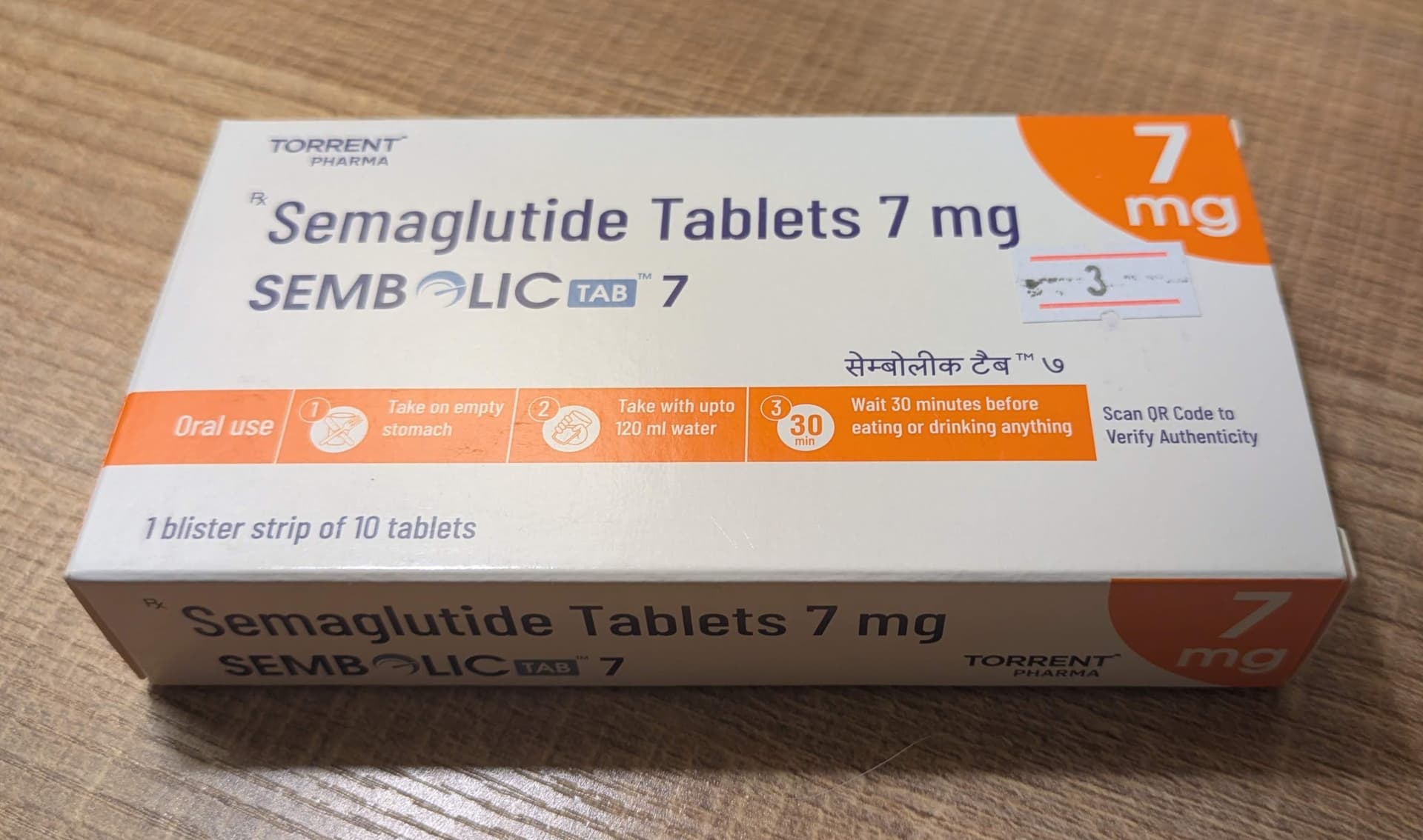
I received my Semaglutide oral last week and started on Monday dosing 7mg/day. I take it first thing in the morning with a few ounces of water. The need to delay 30 minutes before eating or drinking is not a big issue for me. Zero side effects. Great effect on my feelings of hunger. I’d estimate an 70% reduction… I grab a small breakfast now, then a snack in the afternoon, then dinner around 6pm. I’m down 6lbs from Sunday evening (which is not an apples to apples comparison because I normally weigh myself in the morning… so in reality perhaps a few lbs down. I was not expecting much in the first few weeks.
The day before I started, I did some research and suddenly realized that normally they start a person on 3mg/week for a month, before they move the person up to a therapeutic dose of 7mg (or 14mg). I don’t have any 3mg tablets, so just went ahead with starting at 7mg. For me, it was no issue at all. I felt a little “off” that first morning (but that could have been placebo as I was expecting some GI issues), but then no other issues at all since that first morning. No GI issues at all. If you didn’t tell me I’d think I’m taking some regular vitamin, the difference is so minimal. It’s just a decrease of hunger later in the day, and that just feels good.
My plan is to lose that 1lb of visceral fat, as measured by DEXA, then to move to a pulsed dosing schedule to keep my weight steady (or perhaps go off entirely).
The price for this new generic version of semaglutide from India is about $1.80 per 7mg tablet. It just came out, so I expect this price will go down over time, but you have the countervailing effect of the whole supply chain disruptions caused by Trump’s war, and that seems to be just beginning… so who knows what will happen with pricing?
advise about training AI. I use Claude.AI when I told to use only what was recommended here was Claude’s response: Now let me add that memory so it’s locked in.