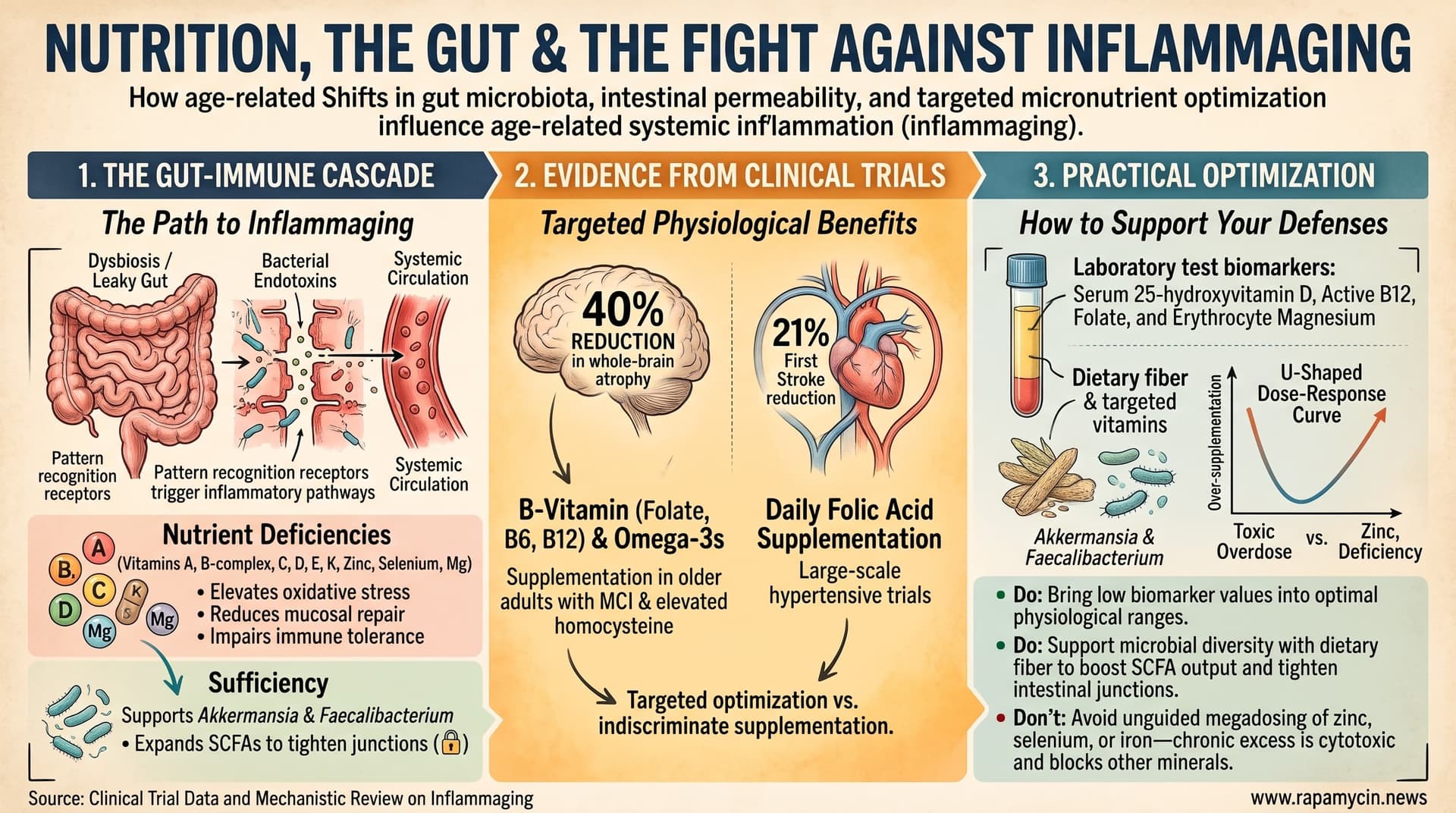
As humans age, chronic low-grade systemic inflammation, termed inflammaging, drives functional decline,immunosenescence, and multimorbidity. This narrative review explores the mechanistic interplay between micronutrient status, gut microbiota dysbiosis, and immune competence. The authors synthesize biological pathways demonstrating that age-related shifts in gut flora increase intestinal permeability, permitting bacterial endotoxins to enter systemic circulation and trigger inflammatory signaling via pattern recognition receptors. Deficiencies in vitamins A, B-complex, C, D, E, and K, as well as essential minerals including zinc, selenium, and magnesium, exacerbate this cascade by impairing mucosal repair, reducing regulatory immune responses, and elevating oxidative stress. Conversely, physiological sufficiency of these nutrients supports microbial diversity, stimulates short-chain fatty acid synthesis, reinforces epithelial tight junctions, and maintains hematopoietic stem cell integrity.
Chronic, low-grade inflammation quietly accelerates almost every major disease of aging, from cardiovascular decay to neurodegeneration. Rather than viewing this immune breakdown as an untreatable consequence of time, a comprehensive review in Immunity & Ageing positions the human digestive tract as ground zero for systemic immune deterioration.
The central concept hinges on what happens to the gastrointestinal ecosystem over decades of life. In youth, a diverse microbial community lives in symbiosis with the host, separated by an intact intestinal barrier. As the body ages, this microbial population shifts unfavorably. Beneficial bacteria that produce protective short-chain fatty acids, such as acetate and butyrate, begin to decline. In their place, opportunistic, inflammatory bacteria proliferate.
This microbial imbalance damages the intestinal architecture. Proteolytic enzymes and oxidative stress degrade structural proteins, including E-cadherin and epithelial tight junctions. The physical lining of the gut becomes increasingly porous,establishing a condition often termed a leaky gut. When this barrier fails, bacterial fragments like lipopolysaccharides and flagellins slip out of the intestine and infiltrate the bloodstream.
Once in circulation, these microbial components act as persistent warning signals. Immune cells recognize them via toll-like receptors, activating broad inflammatory cascades. Circulating inflammatory proteins, such as interleukin-6 and tumor necrosis factor-alpha, spread throughout the vasculature. This digestive inflammation sets off a damaging chain reaction: it forces hematopoietic stem cells in the bone marrow into skewed myeloid production, exhausts mature immune cells, and impairs the body’s ability to clear damaged, senescent cells.
Essential micronutrients serve as primary regulators of this defensive perimeter. Vitamins A, C, D, E, and the B-complex,along with trace minerals like zinc, selenium, and magnesium, are not simple radical scavengers. Instead, they operate as biological cofactors required to sustain cellular repair, modulate genomic stability, and regulate immune signaling.Vitamin D and retinoic acid reinforce tight junctions and promote immune tolerance, while minerals such as zinc and magnesium preserve mucosal integrity and suppress aberrant inflammasome activation.
Crucially, this relationship operates in two directions. While adequate micronutrients nurture beneficial bacteria like Akkermansia and Bifidobacterium, a healthy microbiome is required to synthesize vitamins and facilitate mineral absorption. When the gut becomes inflamed, nutrient transport breaks down, establishing a vicious cycle where malnutrition accelerates gut permeability, and gut permeability deepens nutritional depletion.
The review notes that simply taking massive doses of supplements will not solve the problem. Several essential trace elements display narrow safety windows where excessive intakes accelerate oxidative stress or interfere with normal cellular defense. The real scientific priority is achieving physiological sufficiency. By identifying subclinical deficiencies,restoring mucosal integrity, and re-establishing microbial balance, targeted nutritional interventions offer a direct,practical route to calm systemic immune activation and protect biological vitality.
Actionable Insights
Maintaining baseline micronutrient sufficiency is essential to prevent intestinal barrier breakdown and quell chronic systemic inflammation. A critical clinical takeaway is that nutritional interventions demonstrate measurable, practical effect sizes primarily when correcting subclinical deficits rather than pushing supra-physiological levels.
In clinical trial data reviewed, specific targeted corrections yielded substantial absolute and relative gains. In adults with mild cognitive impairment and elevated homocysteine, combined B-vitamin supplementation (folate, B6, B12) alongside adequate omega-3 fatty acid levels reduced the annualized rate of whole-brain atrophy by up to 40 percent compared to placebo. Similarly, in large-scale hypertensive trials, daily folic acid supplementation achieved a 21 percent relative risk reduction for first stroke.
Practically, individuals should assess their serum 25-hydroxyvitamin D, active B12, folate, and erythrocyte magnesium, bringing low values into optimal physiological ranges. Supporting gut microbial diversity through dietary fiber and targeted vitamins fosters populations of Akkermansia and Faecalibacterium, expanding short-chain fatty acid output to tighten intestinal junctions. However, people must avoid unguided megadosing of zinc, selenium, or iron. These trace elements follow non-linear, U-shaped dose-response curves, where chronic excess promotes cellular toxicity, blocks competitive mineral uptake, and increases long-term morbidity.
Context/Source
- Open Access Paper: Inflammaging and the role of micronutrients as immunomodulators: a pathway to healthy aging
- Institutions: Haleon (Singapore); WNS Global Services (Gurugram, India); Centre for Environmental Life Sciences, Nanyang Technological University (Singapore)
- Countries: Singapore and India
- Journal Name: Immunity & Ageing
- Impact Evaluation: The impact score of this journal is 6.5 (Journal Impact Factor) / 9.8 (CiteScore), evaluated against a typical high-end range of 0–60+ for top general science, therefore this is a High impact journal.