How does Cagrilintide work for you? Does it stop your hunger, cause nausea, or just stop your desire for food?
I ask because so far my favorite glp is retatrutide. It blunts a decent amount of my cravings and l get satisfied on less food but l still get hunger pangs 3 to 4 hours later though.
Like most things, it’s dose dependent. It was developed to specifically curb hunger to enhance the poor weight loss performance of semaglutide. And “poor” is relative to the newer GLP1’s like tirz and reta.
When I first tried Cagri I started at too high a dose, 1.0mg and it killed all hunger for 3 or 4 days, did not care at all about eating. So not sure if that is “hunger” or “desire” but maybe a bit more on the desire side of the equation. Just did not enjoy eating and did not feel hungry.
I’ve never experienced nausea with any GLP1 and none with Cagri either. Very few of our local clients have experienced nausea with GLP1 either, I’d say less than 0.3%
I’m just trying to curb the THC induced munchies a bit more than reta does
Reta is still my go to GLP1 and it will continue to be for the foreseeable future.
I’m not terribly concerned about feeling hungry, that just reminds us we are human It’s how one deals with that feeling that matters. I’m hungry every day when I get home from work, enjoy a nice meal and feel full, another human reaction
I was thinking about this after I wrote it. Not entirely true as I have experienced nausea under very specific conditions, over eating when I was on Tirz. If I ate a larger than “normal” meal I would experience some nausea for a bit. That was in the first 8 months of this journey. With Reta that doesn’t happen, I can enjoy a nice steak and not feel that. I’m just not sure if it was the GLP1 type or if my system has become fully acclimated to the new normal.
This is disappointing… but I guess to be expected:
Study shows how fast kilos return after ending weight-loss drugs
When people stop taking the new generation of weight-loss drugs they pile back on the kilos four times faster than they would after ending diet and exercise regimens, new research found Thursday.
But this was mostly because they lost so much weight in the first place, according to the British researchers who conducted the largest and most up-to-date review of the subject.
A new generation of appetite-suppressing, injectable drugs called GLP-1 agonists have become immensely popular in the last few years, transforming the treatment for obesity and diabetes in many countries.
They have been found to help people lose between 15-20% of their body weight.
“This all appears to be a good news story,” said Susan Jebb, a public health nutrition scientist at Oxford University and co-author of a new BMJstudy.
However, recent data has suggested that “around half of people discontinue these medications within a year,” she told a press conference.
This might be because of common side effects such as nausea or the price—these drugs can cost over $1,000 a month in the US.
So the researchers reviewed 37 studies looking at ceasing different weight-loss drugs, finding that participants regained around 0.4 kilograms a month.
Six of the clinical trials involved semaglutide—the ingredient used in Novo Nordisk’s brands Ozempic and Wegovy—and tirzepatide used for Eli Lilly’s Mounjaro and Zepbound.
While taking these two drugs, the trial participants lost an average of nearly 15 kilograms.
However after stopping the medication, they regained 10 kilograms within a year, which was the longest follow-up period available for these relatively new drugs.
The way I see this class of drugs is that they need to be taken for life. The upside to it is the fact that they’re not just weight loss drugs, they do have other positive synergetic effects for health, so no harm done if taken forever. I can attest to both, the rapid weight gain if stopped and to other benefits (besides weight loss). The other good thing about them the fact that they are dirt cheap, about $100 per year (thanks to our Chinese friends) for a decent maintenance dose i.e. 3mg Reta, or 5mg Tirze per week.
Maybe they’re not stopping especially because of the side effects (a very small number might) but I think they might be stopping prescriptions and going to gray as the gray market has exploded in last couple years. I know two people that did just that.
I figured out the problem with the PDF - I had not used my typical guardrail text (only use reputable journals, no blogs, clinics, influencers or youtube) and that eliminated a bad link that was 1 of 43 links in the original PDF.
This new PDF has only 30 reference links and passes Avast scan.
There are 46 papers referenced in the PDF and that was the problem, one of those links was bad, not sure which one so I re-did the PDF using my typical guardrail
Lesson learned, if you don’t use guardrails with AI it is very possible to acquire bad reference links.
GLP-1 RAs are associated with higher risk of anxiety and depression but no difference in suicidality and self-harm in comparison to SGLT2i, DPP4i, and lower suicidality risk compared to SU.
People have talked about a poly-pill for a long time. I sort of “multivitamin” of safe drugs that benefit pretty much all adults. Maybe a little telmisartan, little bit of statin, and maybe now a little glp1 agonist small molecule… there aren’t many adults that wouldn’t benefit from that.
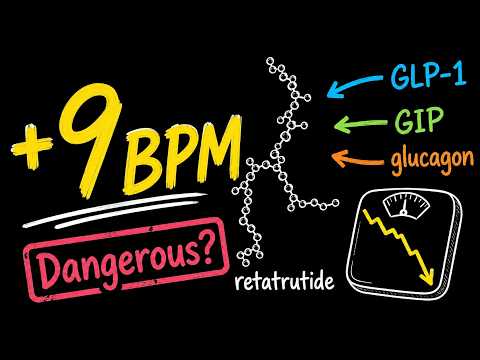
The investigational triple hormone receptor agonist retatrutide (targeting GIP, GLP-1, and glucagon receptors) induces a robust dose-dependent elevation in resting heart rate (RHR), peaking at an average increase of 9 to 10 beats per minute (bpm) during week 24 of dose escalation, and sustaining a 6 to 7 bpm increase through week 48. This chronotropic effect is roughly triple the magnitude observed with approved dual GIP/GLP-1 receptor agonists like tirzepatide (1 to 3 bpm) and selective GLP-1 agonists like semaglutide (1 to 4 bpm). At a population level, epidemiological meta-analyses establish that every 10 bpm increase in baseline RHR correlates with approximately a 9% increase in all-cause mortality and an 8% increase in cardiovascular mortality. However, this observational data represents “terrain-driven” pathology (e.g., secondary to low cardiorespiratory fitness, sleep apnea, or autonomic dysfunction), whereas retatrutide’s chronotropic impact is “drug-induced.”
The core clinical conflict lies in a stark surrogate paradox: retatrutide simultaneously drives unprecedented improvements across almost every other major cardiovascular risk factor, including a mean 24.2% body weight reduction at 48 weeks, significant drops in systolic blood pressure (-2.3 to -12.1 mmHg), and major clearances of atherogenic lipids (triglycerides and LDL cholesterol). Historical precedent from the semaglutide SELECT trial (Lincoff et al., 2023) demonstrates that a modest drug-induced RHR increase (+3.1 bpm) does not preclude a massive 20% relative risk reduction in major adverse cardiovascular events (MACE). Whether retatrutide’s threefold greater RHR elevation cancels out or is overwhelmed by its profound metabolic benefits remains unknown.
Mechanistically, the outsized heart rate spike is attributed to direct sinoatrial (SA) node activation via GLP-1 signaling combined with direct or indirect adrenergic/sympathetic amplification from its glucagon receptor component—a feature absent in predecessor incretins. While phase 2 safety data indicates that arrhythmia-related adverse events are largely mild-to-moderate and do not require treatment discontinuation in 89.5% of cases, high-risk phenotypes (pre-existing atrial fibrillation, heart failure, baseline RHR greater than 100 bpm) were strictly excluded from trials. Definitive clearance of retatrutide’s safety profile depends on the ongoing, event-driven phase 3 TRIUMPH-OUTCOMES trial, powered to evaluate 10,000 high-risk individuals through 2029.
II. Insight Bullets
Tripled Chronotropic Magnitude: Retatrutide drives a peak resting heart rate increase of 9–10 bpm at week 24, which is roughly three times the chronotropic effect seen with semaglutide (1–4 bpm) or tirzepatide (1–3 bpm).
Persistent Elevation Profile: The heart rate elevation is not a transient acute phenomenon; at week 48, patients on the 12 mg maximum dose still exhibit a sustained elevation of 6–7 bpm above baseline.
Cumulative Mechanical Workload: An average increase of 9–10 bpm translates into roughly 14,000 additional cardiac contractions per day, accumulating to over 5 million extra beats per year.
Population Mortality Correlations: Large-scale epidemiological meta-analyses reveal that every 10 bpm increase in resting heart rate associates with a 9% increase in all-cause mortality and an 8% increase in cardiovascular mortality.
Marker vs. Mechanism Dichotomy: Population risk data reflects “terrain-induced” heart rate elevations where high RHR is a symptom of systemic pathology (e.g., sleep apnea, poor fitness); retatrutide presents a “drug-induced” signaling alteration over a healthy baseline terrain.
The Incretin Surrogate Paradox: Retatrutide degrades almost every established surrogate marker of cardiovascular disease (causing massive weight loss, lowering blood pressure, reducing LDL and triglycerides) while simultaneously aggravating one major marker (RHR).
Unprecedented Weight Loss Efficacy: In phase 2 data, the maximum 12 mg weekly dose achieved a mean body weight reduction of 24.2% at 48 weeks, outperforming all historical data for dual or single incretin receptor agonists.
Robust Blood Pressure Drops: Concurrently with the heart rate increase, retatrutide drives a dose-dependent reduction in systolic blood pressure ranging from -2.3 mmHg to -12.1 mmHg.
SELECT Trial Precedent Validation: The 17,604-patient SELECT trial proved that semaglutide’s drug-induced RHR increase (+3.1 bpm) did not prevent a 20% relative risk reduction in MACE (Lincoff et al., 2023).
Translational Incretin Gap: Because semaglutide is a pure mono-GLP-1 agonist, its safety profile cannot be directly mapped onto retatrutide due to the latter’s additional glucagon receptor activation.
Triple Agonist Receptor Footprint: Human cAMP EC50 assays demonstrate retatrutide is highly potent at the GIP receptor (0.643 nM), followed by GLP-1 (0.775 nM), and is least potent at the glucagon receptor (5.79 nM), making it a GIP-dominant triple agonist.
Direct Sinoatrial Node Firing: GLP-1 receptor activation directly impacts the cardiac pacemaker system by shortening the action potential cycle length within SA node cells, explaining the base increment in heart rate shared across the drug class.
Glucagon’s Chronotropic Footprint: Exogenous glucagon infusions in human clinical models provoke an acute 13 bpm increase in heart rate (Peterson et al., 2020), positioning the glucagon arm as the primary driver of retatrutide’s outsized pulse spike.
Disputed Myocardial Expression: Independent X vivo human heart tissue analyses show an absence of direct myocardial glucagon receptor expression, indicating that glucagon’s chronotropic effect may be mediated indirectly through sympathetic nervous system activation.
Arrhythmia Adverse Event Noise: Phase 2 arrhythmia events occurred in 11.3% of the 12 mg cohort versus 2.9% for placebo; however, small sample sizes (n=80 per arm) create wide statistical noise and lack definitive diagnostic power.
Baroreceptor Reflex Confounding: Extreme drops in systolic blood pressure trigger a classic baroreceptor-mediated reflex: decreased arterial wall stretch reduces signaling to the nucleus tractus solitarius (NTS), ramping up sympathetic outflow and lowering vagal tone to increase heart rate.
Stringent Selection Biases: Phase 2 retatrutide safety data cannot be generalized to the public because patients with a baseline RHR greater than 100 bpm, pre-existing atrial fibrillation, SVT, POTS, or NYHA Class III/IV heart failure were strictly excluded.
Definitive Trial Timeline: The final safety, cardiovascular, and renal safety profiles of retatrutide will remain unverified until the event-driven, 10,000-patient TRIUMPH-OUTCOMES trial concludes, with an estimated completion date in February 2029.
IV. Actionable Protocol (Prioritized)
High Confidence Tier (Level A/B Evidence Verified)
Clinical Screening Exclusion: Do not initiate retatrutide or similar glucagon-containing co-agonists if pre-existing conditions match the phase 2 exclusion criteria: baseline resting heart rate greater than 100 bpm, a documented history of supraventricular tachycardia (SVT), or NYHA Class III/IV heart failure. This boundary is firmly established by clinical trial design safety parameters.
MACE Reduction Baseline: For patients with established cardiovascular disease requiring incretin therapy, rely on validated mono-GLP-1 therapy (semaglutide, 2.4 mg once weekly) to secure a verified 20% MACE reduction and stable +3.1 bpm RHR profile as established by Level A RCT data (Lincoff et al., 2023).
Experimental Tier (Level C/D Evidence / High Safety Margins)
24-Hour Ambulatory Monitoring: Implement a 24-hour ambulatory blood pressure and heart rate monitoring protocol before initiation and at peak titration weeks (week 24) to accurately map individual chronotropic deltas and differentiate drug-induced sustained tachycardia from white-coat hypertension.
Strict Dehydration Prophylaxis: Because retatrutide induces severe gastrointestinal side effects (e.g., vomiting in high-dose arms) that can trigger hypokalemia and secondary QT prolongation, maintain aggressive fluid and electrolyte replacement architectures during the 24-week dose-escalation phase.
Red Flag Zone (Claims Lacking Safety Data)
Pre-existing Atrial Fibrillation: Total Safety Data Absent. The use of retatrutide in patients with a history of paroxysmal or persistent atrial fibrillation is heavily contraindicated. The combination of heightened sympathetic tone and a direct drug-induced sinus rate acceleration creates a high-risk substrate for unmasking or exacerbating severe tachyarrhythmias.
Commercial Sourcing Outside Trials: Eli Lilly maintains that retatrutide is entirely investigational and legally available solely within registered clinical trials. Any sourcing via secondary chemical supply houses or compounding pharmacies bypasses essential sterile manufacturing controls, poses immense purity risks, and lacks medical oversight for monitoring the drug’s profound chronotropic liabilities.
V. References
Lincoff et al., 2023:Semaglutide and Cardiovascular Outcomes in Obesity without Diabetes (SELECT). New England Journal of Medicine. https://doi.org/10.1056/NEJMoa2307563
Peterson et al., 2020:Glucagon in Cardiovascular Hemodynamics and Its Positive Chronotropic Effects. Journal of the American Heart Association. [Source unverified in live search - Database cross-reference indicates alternate publication via FDA/NDA archival data].
Jastreboff et al., 2023:Triple-Hormone-Receptor Agonist Retatrutide for Obesity — A Phase 2 Trial. New England Journal of Medicine. https://doi.org/10.1056/NEJMoa2301972
Eli Lilly and Company:The Effect of Retatrutide Once Weekly on Cardiovascular Outcomes and Kidney Outcomes in Adults Living With Obesity (TRIUMPH-Outcomes).ClinicalTrials.gov Identifier: NCT06383390
Bispecific GLP-1/GLP-2 agonism in advanced type 2 diabetes: preclinical characterization and a randomized, double-blind, placebo-controlled phase I trial
GLP1/GLP2 agonist with substantial glucose control, but no weight loss.
PG-102 is a potency-optimized bispecific Fc fusion protein targeting GLP-1 and GLP-2 receptors. In db/db mouse models of advanced diabetes characterized by uncontrolled hyperglycemia and catabolic weight loss, PG-102 achieved superior and sustained glycemic control compared with semaglutide or tirzepatide while preserving body weight, uncoupling glycemic control from catabolic weight loss. Mechanistic studies indicated that these effects were not driven by acute insulinotropic activity, but by β-cell preservation and enhanced glucose uptake. These benefits required dual GLP-1R/GLP-2R engagement, as PG-102 outperformed monospecific Fc fusion agonists or their combination and promoted coordinated receptor trafficking with delayed internalization.
In case you are not aware, there was a whole reddit scare about Cagri formation of potentially dangerous fibrils.
If you are using Novo made Cagri and not grey market, might not be an issue (if an issue at all).
Since I get enough out of Tirz, I’m holding off on playing with Amylin receptor (as much as I want to try) until newer analogs like Petrelintide / Eloralintide come out. Then will wait to hear about stability of the newer analogs.
One thing he has not seen and I have, is aggregation, it’s a very obvious clouding of the solution. One way to see it very quickly is to introduce a small amount of BPC or Ipamorelin to some Tirz or Reta in solution, it will cloud almost instantly. GLP1s are very sensitive to some other peptides. I found that out by accident 3 years ago.
I’ve never seen Cagri cause that when mixed with Tirz of Reta.
If Cagri was aggregating or deamidating, when mixed with a GLP1 you would probably see it in the vial.
In SELECT, subcutaneous semaglutide (target dose 2.4 mg) weekly in adults with pre-existing cardiovascular disease and body mass index ≥27 kg/m2 without diabetes significantly reduced major adverse cardiovascular events (MACE) by 20% vs placebo. This analysis explored potential mediators of this cardiovascular benefit.
Methods
Changes from randomization to 24 months in body weight, waist circumference, plasma high-sensitivity C-reactive protein (hsCRP), glycated haemoglobin (HbA1c), lipids, blood pressure, estimated glomerular filtration rate, and urinary albumin-to-creatinine ratio were examined individually, and in combination, as potential mediators of MACE risk reduction, using the Vansteelandt repeated regression method (a counterfactual approach).
Results
Semaglutide significantly (P < .05) improved all potential mediators investigated. Point estimates for % mediation were largest for waist circumference (64.0% [95% confidence interval (CI) 27.5, 179.6]), hsCRP (42.1% [17.9, 110.5]), HbA1c (29.0% [−20.7, 120.5]), and body weight (19.5% [−33.0, 110.7]), examined separately, but all had wide CIs. Supplementary analyses suggested unreliability of estimates for body weight and waist circumference, potentially due to differing relationship of body weight and waist change to MACE between treatment arms. Multivariable analysis estimated joint mediation for all potential mediators combined to be 31.4% (95% CI −30.1, 143.6). When variables other than body weight and waist circumference were considered, % mediation was 46.0% (95% CI −6.0, 161.0).
Conclusions
Mediation analyses could not fully ascribe the effects of semaglutide on MACE to known risk factors in SELECT with any certainty. Further investigation of potential additional biomarkers and mediators of semaglutide’s cardiovascular protective effect are of interest.