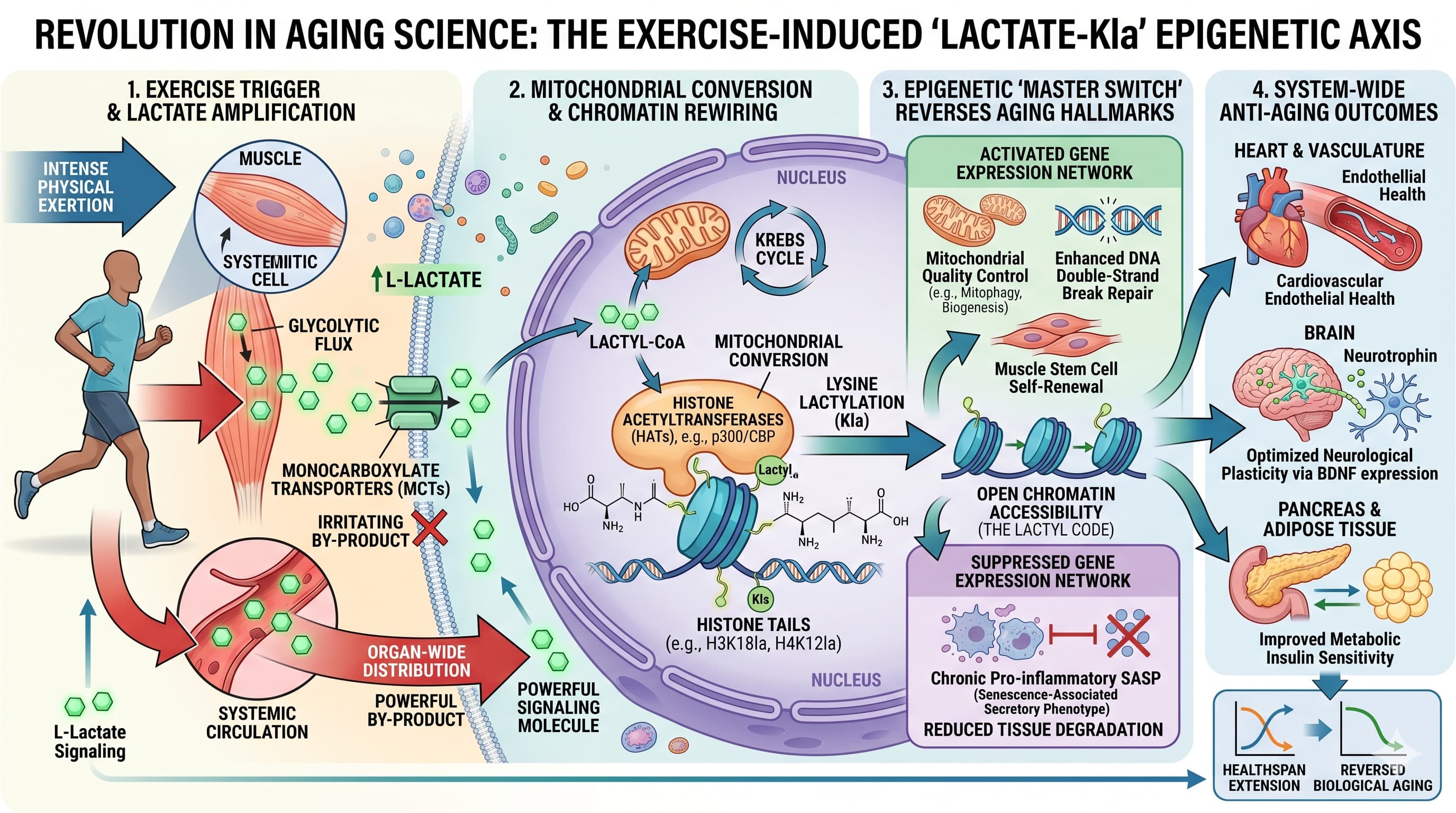
For decades, physical exercise has been recognized as a potent non-pharmacological defensive measure against the physical decay of aging. However, the molecular interface translating transient physical exertion into long-term systemic cellular protection has remained a major missing link. A comprehensive new review completely flips the script on how we view metabolic waste, establishing that exercise-induced L-lactate is not an irritating by-product of exhaustion, but a powerful signaling molecule that directly rewires the aging epigenome.
The core of this mechanism is lysine lactylation (Kla), a recently discovered post-translational modification where lactate moieties are appended to protein lysine residues, notably on nuclear histones. Physical exertion ramps up glycolytic flux, flooding tissues with L-lactate via monocarboxylate transporters. Mitochondria convert this pool into lactyl-CoA, which functions as the substrate for histone acetyltransferases—predominantly p300/CBP—to “write” a distinct lactyl code onto chromatin.
This molecular rewiring acts as a master switch that reverses classic hallmarks of biological aging. By directly remodeling chromatin accessibility, lactylation activates gene expression networks that restore mitochondrial quality control, enhance DNA double-strand break repair, promote muscle stem cell self-renewal, and suppress the chronic, pro-inflammatory Senescence-Associated Secretory Phenotype (SASP) that drives tissue degradation . Furthermore, the review outlines how this “Exercise-Lactate-Kla” axis operates as a synchronized, cross-organ communication network, promoting cardiovascular endothelial health, optimizing neurological plasticity via BDNF expression, and improving metabolic insulin sensitivity across the entire organism.
Actionable Insights
The practical takeaway from this paper is that your exercise prescription must be intentionally designed to trigger the necessary metabolic thresholds required to activate systemic lactylation pathways. To drive histone lactylation, a longevity protocol should include both pulsed high-intensity interval training (HIIT) to generate large, acute lactate spikes (≥4.0 to 10.0 mmol/L) that drive rapid nuclear chromatin opening, and Zone 2 steady-state aerobic endurance sessions to establish prolonged trans-tissue metabolic flux via monocarboxylate transporters.
Because chronic, unresolving cellular lactylation can become pathological under states of permanent cellular stress or hypoxia, incorporating counter-regulatory sirtuin-mediated “erasers” is essential. Longevity stacks should ensure optimal cellular NAD+ availability—via precursors such as Nicotinamide Riboside (NR) or Nicotinamide Mononucleotide (NMN)—to systematically boost NAD±dependent sirtuins (SIRT1-3), facilitating the sharp, orderly resolution of the lactylation mark post-exercise. Finally, given the strict stereoisomeric specificity of this axis, external interventions must exclusively favor the L-lactate isomer (found in natural physical activity and validated clean supplements), as the D-lactate isomer impairs protease activity and exacerbates mitochondrial decay.
Source:
- Paywalled Paper: Lactylation: Unlocking the regulatory code of exercise-mediated anti-aging
- Institution: College of Exercise and Health, Shenyang Sport University
- Country: China
- Journal Name: Ageing Research Reviews
- Impact Evaluation: The impact score (CiteScore) of this journal is 13.1 (based on standard index data for Ageing Research Reviews),therefore this is a High impact journal.