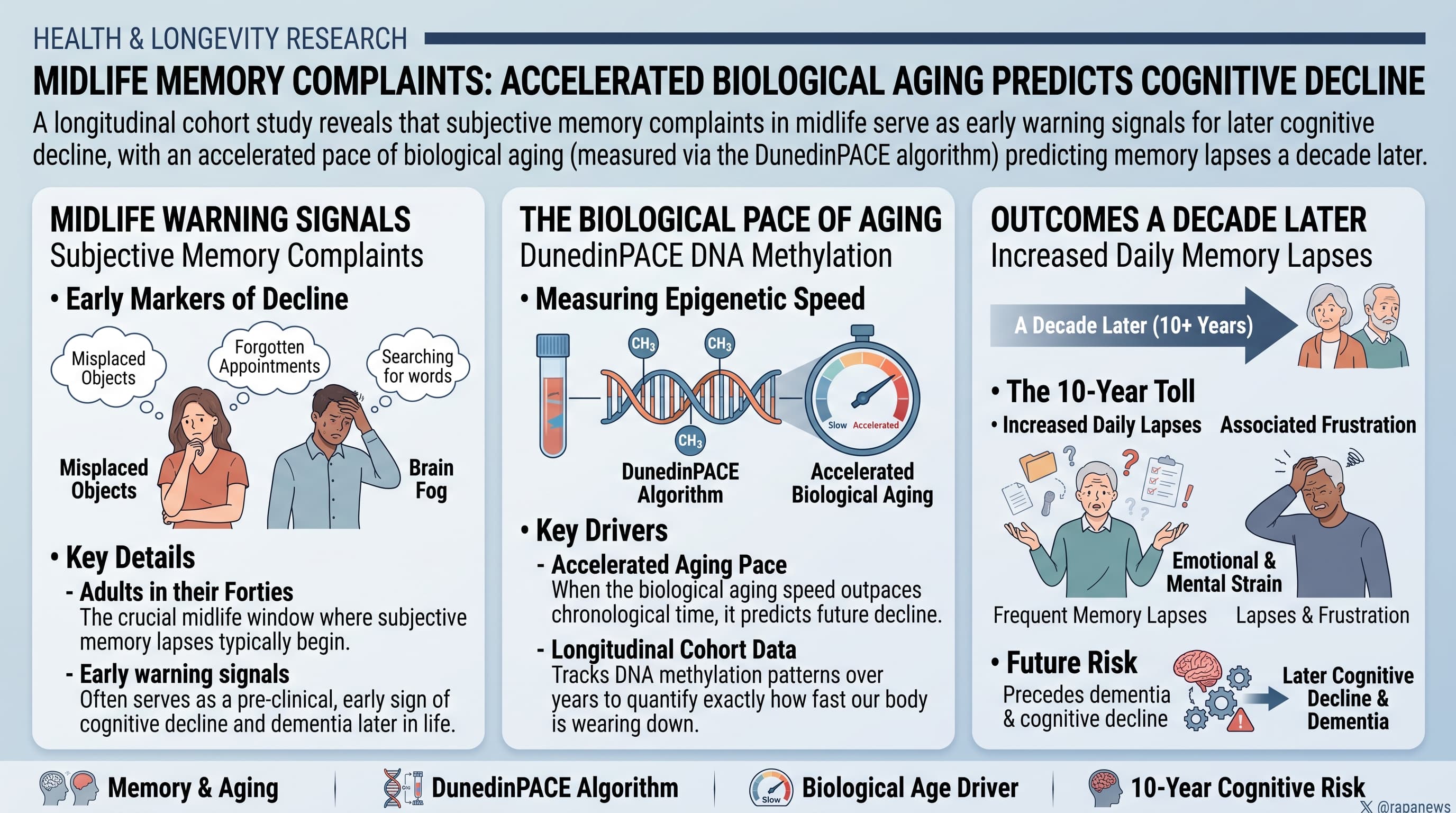
Subjective memory complaints in midlife serve as early warning signals for later cognitive decline and dementia. This longitudinal cohort study reveals that an accelerated pace of biological aging, measured via the DunedinPACE DNA methylation algorithm, prospectively predicts increased daily memory lapses and associated frustration a decade later, specifically for adults in their forties.
The measurement of biological age has shifted from static estimates of cumulative damage to dynamic quantifications of the ongoing pace of aging. First-generation epigenetic clocks predicted chronological age, whereas third-generation algorithms like DunedinPACE track the current speed of multisystem physiological deterioration. Researchers utilized this advanced epigenetic assessment to determine if the rate of biological aging precedes subtle, subjective cognitive complaints long before clinical mild cognitive impairment manifests.
The core investigation analyzed data from the Midlife in the United States (MIDUS) study, tracking participants who provided blood samples for DNA methylation profiling and subsequently reported daily memory lapses a decade later through the National Study of Daily Experiences. The research distinguished between prospective memory (forgetting to execute planned actions, such as taking medication) and retrospective memory (failing to recall past information, such as a name). These subtle cognitive disruptions often fall below the detection threshold of objective clinical tests but remain critical early indicators of cognitive vulnerability.
The findings isolate early midlife as a highly sensitive developmental window for neurological aging. The data establish no universal main effect linking epigenetic aging to memory lapses across all age groups. However, chronological age significantly moderates the relationship. For adults in their forties, a faster rate of biological aging robustly predicts an increase in prospective memory lapses ten years later, alongside greater irritation and interference with daily routines. This specific association disappears in older cohorts (individuals in their 60s and 70s), where cognitive decline may be driven by cumulative neuropathology rather than the current pace of systemic aging, or where older adults may simply lack the awareness of their cognitive lapses.
The implications suggest that cognitive decline is a downstream consequence of systemic physiological dysregulation that begins accumulating rapidly in midlife. Midlife introduces immense occupational and social stressors that accelerate biological aging. If the epigenetic pace of aging dictates the onset of subclinical cognitive deficits, interventions targeting systemic biological aging during the fourth decade of life represent a critical opportunity to alter the trajectory of neurodegeneration.
Actionable Insights
For individuals optimizing for healthspan, cognitive preservation requires systemic intervention decades before standard memory tests detect impairment [Confidence: High]. The data indicate that subjective cognitive complaints, such as forgetting why you walked into a room or failing to take a supplement, are not merely signs of distraction but are correlated with systemic biological aging.
The practical strength of this treatment effect is quantifiable. A DunedinPACE score above 1.0 indicates a faster-than-average aging rate. An individual with a score of 1.2 is aging 20% faster than the reference population. The authors report that a 10% increase in the rate of aging (a +0.10 shift in DunedinPACE) during a person’s forties indicates the occurrence of nearly one additional daily memory lapse a decade later.
To modify this trajectory, individuals must focus on the biomarkers that constitute the DunedinPACE algorithm. These include cardiopulmonary fitness, systemic inflammation (hsCRP), metabolic health (HbA1c, waist-to-hip ratio, lipid profiles), and periodontal health. Because DNA methylation is dynamic, optimizing these fundamental physiological markers in early midlife will decelerate the epigenetic pace of aging, directly mitigating downstream neurovascular and cognitive decline.
Context and Source
- Paywalled Paper: Linking epigenetic age acceleration to self-reported daily memory lapses: evidence from the National Study of Daily Experiences, (2026 Sep 5).
- Institution: Pennsylvania State University, Clemson University, Northern Arizona University, University of California Irvine
- Country: United States
- Journal: The Journals of Gerontology, Series A
- Impact Evaluation: The impact score of this journal is 5.1, evaluated against a typical high-end range of 0–60+ for top general science, therefore this is a Medium impact journal.