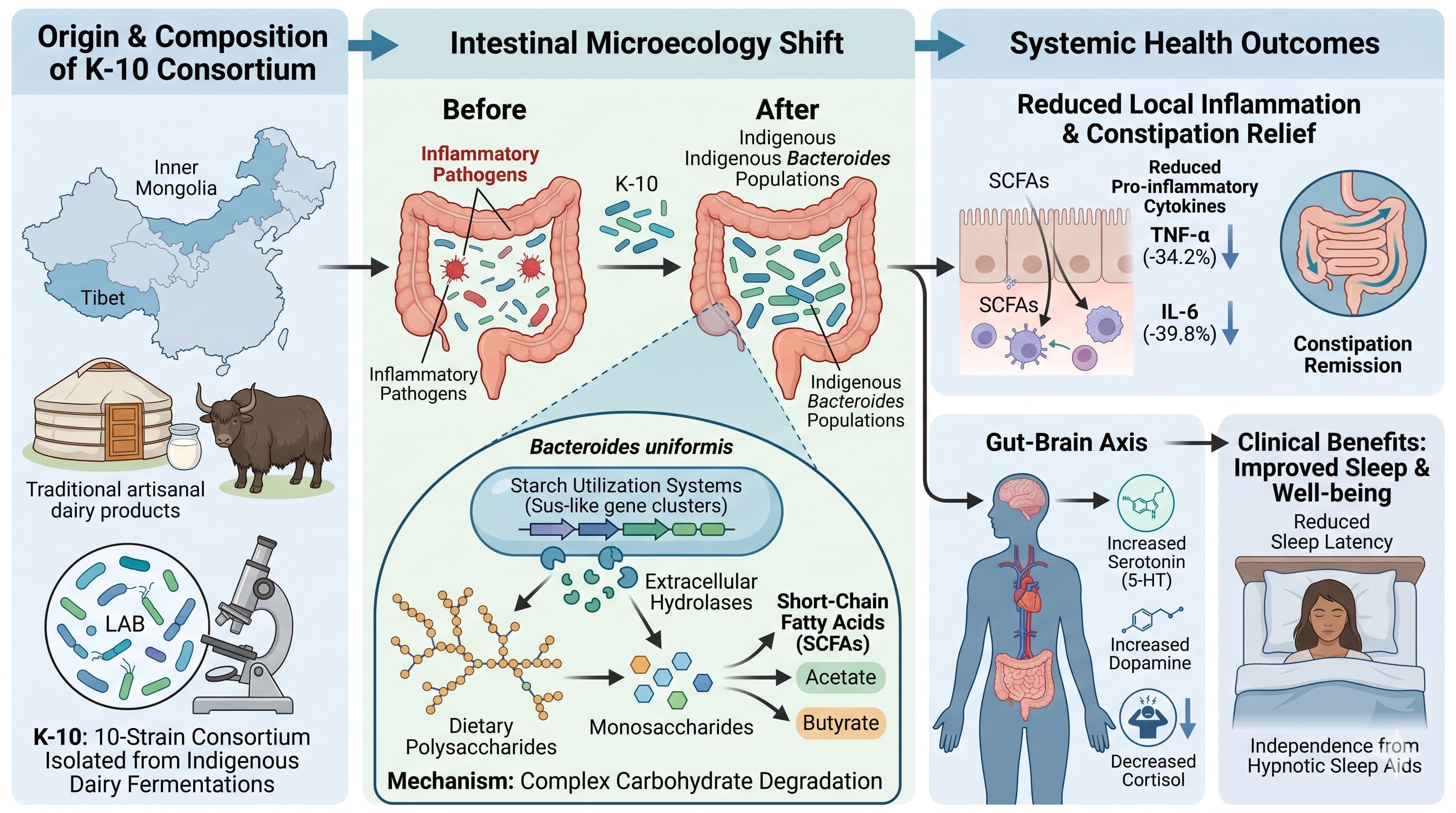
Chronic functional constipation is far more than a localized gastrointestinal inconvenience; it represents a systemic pathophysiological disrupter intimately tied to anxiety and sleep architecture degradation via the bidirectional gut-brain axis. High-fat Western diets and modern processed foods continuously alter colonic mucus secretion and select for a dysbiotic microbiome, maintaining a state of persistent low-grade systemic inflammation. While conventional commercial yogurts rely on a rudimentary two-strain baseline of Lactobacillus delbrueckii subsp. bulgaricus and Streptococcus thermophilus, emerging clinical evidence demonstrates that escalating microbial complexity within the fermentative substrate can fundamentally reshape host physiology.
The core innovation centers on an engineered 10-strain bacterial consortium, designated K-10, constructed from indigenous lactic acid bacteria isolated from artisanal dairy fermentation ecosystems in Inner Mongolia and Tibet. By deploying this highly diversified multi-strain formulation, researchers successfully engineered a cross-feeding metabolic cascade that shifts host intestinal microecology away from inflammatory pathogens and toward complex carbohydrate degradation. Rather than acting as a transient probiotic vector, the K-10 intervention systematically enriched indigenous commensal Bacteroides populations—most notably Bacteroides uniformis—within the human gut.
Bacteroides species possess specialized Starch Utilization Systems (Sus-like gene clusters) that encode extracellular hydrolases capable of breaking down complex, recalcitrant dietary polysaccharides into fermentable monosaccharides. Predictive metabolic pathway analysis confirmed a substantial upregulation of carbohydrate-degrading glycoside hydrolases under the K-10 regimen. This enzymatic shift accelerated the conversion of monosaccharides into high concentrations of short-chain fatty acids (SCFAs), specifically acetate and butyrate.
The downstream repercussions of this microbial pivot extend well beyond the colon. The localized surge in SCFAs directly correlates with a profound down-regulation of circulating pro-inflammatory cytokines, reducing serum Tumor Necrosis Factor-alpha (TNF-alpha) by 34.2% and Interleukin-6 (IL-6) by 39.8%. Simultaneously, the treatment alleviated the mechanical distress of constipation, dropping average symptom scores below clinical thresholds into full remission. Most critically, these metabolic alterations resonated up the neuro-intestinal axis: serum levels of serotonin (5-HT) and dopamine experienced significant elevation, paired with a systemic drop in cortisol. This neuro-endocrine recalibration delivered tangible clinical benefits, significantly reducing sleep latency and breaking patient dependence on hypnotic sleep aids. The study reveals that broad-spectrum probiotic consortia can exploit cross-feeding networks to optimize the gut-brain axis, presenting a scalable strategy to counter the systemic inflammatory and psychological declines of aging.
Actionable Insights for Healthspan and Longevity
To optimize healthspan and target the systemic metrics of aging, individuals should look beyond standard commercial dairy. This research highlights several practical, high-yield protocols for the longevity biohacker:
-
Prioritize Strain Diversity Over Monocultures: Transition away from basic two-strain yogurts to complex, multi-strain fermentations containing at least 8 to 10 distinct synergistic strains, targeting minimum daily doses of 10^10 to 5x10^11 CFU/g.
-
Target the Bacteroides-SCFA Axis: Upregulating Bacteroides uniformis via diverse probiotics and prebiotic substrates maximizes colonic acetate and butyrate production. Butyrate acts as an essential longevity metabolite, fueling colonocytes and suppressing chronic systemic inflammaging.
-
Monitor Systemic Upregulation of Biomarkers: Utilize targeted multi-strain interventions to actively drive down key aging biomarkers like TNF-alpha and IL-6, while boosting endogenous antioxidant defense enzymes, specifically Superoxide Dismutase (SOD) and Catalase (CAT).
-
Optimize Sleep Architecture via Gut Motility: For those experiencing age-related sleep latency or tracking high cortisol levels, improving intestinal transit via the gut-brain axis provides a non-pharmacological pathway to elevate peripheral serotonin and dopamine, lowering sleep induction times naturally.
Source:
- Open Access Paper: Multi-strain fermented yogurt alleviates constipation, anxiety, and sleep disorders via enrichment of Bacteroides: a randomized controlled trial
- Institution: Affiliated Hospital of Jiangnan University.
- Country: China.
- Journal Name: Journal of Functional Foods.
- Impact Evaluation: The impact score of this journal is 4.8, evaluated against a typical high-end range of 0–60+ for top general science, therefore this is a Medium impact journal.