@DrFraser has a new YouTube Channel. I heartily recommend subscribing to it!
Sweet… move over Kaeberlein and Attia!
New kid on the block…
6 Likes
Thanks - I plan to put out 2-3 per week as there are at least 50 items to discuss on this topic. Will have better sound/lighting upcoming and will redo the initial one. Growing pains. Hats off to those who pull off long high quality recordings, it’s taking some work. I’m used to public speaking which I find easy, but this is a somewhat different set of skills.
13 Likes
Excellent!!! I learned from a lighting designer that when you have your back facing the window, make sure you use mega lighting to offset that sunlight. More than you think.
3 Likes
Any photos or video using light as background rarely works out well, always light in front and darker background. Many youtubers just use green screen and choose their on background.
Sound is most important since that’s is the crux of the presentation. I would suggest using a an airpod or wired mic on the upper chest. Running it through cheap sound processing software for limiter/compression, noise reduction, de-essing and proper EQ for vocals will go a long way.
I was an amateur musician and sound engineer/producer back in the day…
9 Likes
I like the short clips with just good, quick info. Great backgrounds but really liked the first two videos what a nice scene with all the trees even sounded like a waterfall? All the best with it Dr. Fraser!
5 Likes
as a professional sound person, the closer you get the mic to your mouth, the more you improve the ratio of stuff you want, vs stuff you don’t want, (background noise, weird room echoes, etc).
2 Likes
That’s our patio, about 30-40 ft from the edge of the patio, it drops down 140 ft and there is a river down the bottom. We feel like we live in a National Park! Now we are 30 minutes from a decent grocery store, but waking up to that each day is pretty wonderful. I’ve worked on fixing several of the earlier technical issues. Will film one today in Puerta Vallarta on Beta Amyloid 42:40 ratio and pTau 181 and pTau 217.
I’ve done the Beta Amyloid 42:40 this week, and have a result I’m not happy with … still worth knowing. Haven’t done the pTau ones yet. Each test is $225.
I also have a group out of Seattle (Fidalab) who is putting together a panel for most of the genes associated with AD (in addition to ApoE). I’ll do an episode on that when the panel is up and available to order. They are giving a 25% off, I think with some codes, and then will allow a self ordered ApoE for $50 with a code, which I’ll put up.
2 Likes
It definitely looks like a National Park! Exit house for immediate forest bathing. :-). With planning doubt the 30 minute trip needed too often. I live 2 minutes from King Soopers and can go weeks.
Looking forward to your channel and thanks for sharing all of your knowledge on this site.
Enjoy Puerta Vallerta!
2 Likes

Thanks - we have another 10 in production right now. Finally have a setup to develop these properly. All the old ones on ApoE4 will be redone and improved. It is time consuming!
5 Likes
3 Likes
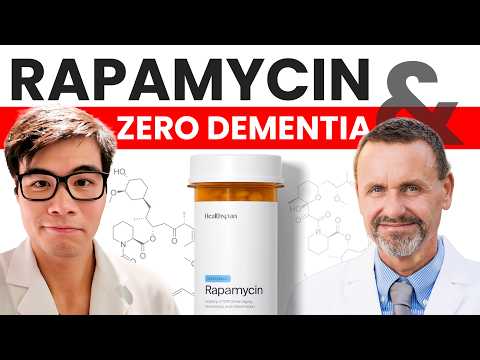
A new video interview with our @DrFraser
400 APOE4 Patients on Rapamycin. Zero Got Dementia.
I. Executive Summary
This transcript outlines a clinical framework for the off-label, cyclic administration of rapamycin (sirolimus) in patients possessing the APOE4 allele, a primary genetic risk factor for late-onset Alzheimer’s disease (AD). The core thesis posits that intermittent inhibition of the mechanistic target of rapamycin complex 1 (mTORC1) induces cellular autophagy, mitigates age-related metabolic dysfunction, and potentially delays or prevents the onset of neurodegenerative pathology.
Dr. Grant Fraser emphasizes a pragmatic, data-driven approach to dosing, rejecting blind, fixed-dose protocols (e.g., an arbitrary 5 mg/week). Instead, he advocates for individualized titration targeting a specific pharmacokinetic trough: a 3 ng/mL blood concentration at 50 hours post-administration. This precision is necessitated by massive inter-patient metabolic variability, where identical demographic profiles may require doses ranging from 3 mg to 18 mg to achieve equivalent systemic exposure.
A critical translational gap exists in the protocol. The foundational evidence for rapamycin’s efficacy in preventing AD in APOE4 carriers relies heavily on the unpublished, anecdotal observations of the late Dr. Alan Green, who reportedly managed 300–400 APOE4 patients for roughly five years with zero conversions to mild cognitive impairment (MCI) or AD. While compelling, this constitutes Level E evidence and lacks the rigor of a randomized controlled trial (RCT).
The clinical strategy acknowledges the severe limitations of rapamycin if administered incorrectly. Chronic daily dosing risks inhibiting mTORC2, which precipitates insulin resistance and dyslipidemia—counterproductive outcomes for APOE4 carriers who are already at elevated risk for cardiovascular disease. Therefore, cyclic dosing (weekly or bi-weekly) is leveraged to exploit a ~30% temporal window of mTORC1 inhibition, followed by a recovery phase to allow for muscle protein synthesis and metabolic homeostasis. Ultimately, rapamycin is positioned not as a monotherapy, but as an experimental adjunct within a comprehensive longevity protocol encompassing rigorous lipid management, insulin optimization, and neurocognitive tracking, deployed ideally two decades prior to expected symptomatic onset.
II. Insight Bullets
- mTORC Target Specificity: Cyclic dosing of rapamycin (weekly or bi-weekly) selectively inhibits mTORC1 to trigger autophagy while largely sparing mTORC2, thereby minimizing the risk of drug-induced insulin resistance and hyperlipidemia.
- Pharmacokinetic Volatility: Rapamycin absorption and metabolism are highly variable; achieving a target blood level (3 ng/mL at 50 hours) may require wildly divergent doses (3 mg to 18 mg) in demographically identical patients.
- CYP3A4 Manipulation: Co-administration with grapefruit juice inhibits intestinal CYP3A4 enzymes, increasing rapamycin absorption by approximately 300%, allowing for significant dose reduction if executed with absolute consistency.
- Bioavailability Deficits: Compounded rapamycin capsules are severely degraded by gastric acid, yielding only roughly 33% of the absorption seen with FDA-approved, enteric-coated tablets.
- Therapeutic Window: Prophylactic intervention in APOE4 carriers is ideally initiated 20 years prior to the genotype’s typical onset of dementia (early 40s for homozygotes, late 40s for heterozygotes).
- Immunomodulation: Rapamycin transiently suppresses humoral immunity (warranting cessation prior to surgery or during bacterial infections) but appears to enhance T-cell-mediated viral and antineoplastic immunity.
- Adverse Event Profile: The most frequent side effect is the development of aphthous ulcers (canker sores) in the oral mucosa, which typically self-resolve and are largely confined to the first six months of therapy.
- Bi-weekly Protocols: Administering double the standard dose every 14 days (targeting ~100 hours of continuous mTORC1 inhibition) may provide a stronger biological signal for neuroprotection while maintaining a safe resting phase.
- Blood-Brain Barrier (BBB) Penetrance: Rapamycin does not cross the BBB in clinically significant concentrations; its central neuroprotective effects are likely mediated via systemic metabolic improvements and systemic inflammatory reduction.
- Sarcopenia Mitigation: To preserve muscle mass, rapamycin should be dosed prior to rest days or light aerobic activity, allowing the subsequent mTORC1 recovery phase to align with heavy resistance training.
- Parallel Interventions (GLP-1): Glucagon-like peptide-1 (GLP-1) receptor agonists independently reduce the observational risk of dementia by approximately 40% and serve as a viable parallel intervention.
- Parallel Interventions (DORAs): Dual orexin receptor antagonists (DORA class sleep medications, e.g., suvorexant) improve sleep architecture while actively decreasing beta-amyloid levels in cerebrospinal fluid.
- Efficacy in MCI/AD: Initiating rapamycin therapy after the onset of established mild cognitive impairment or Alzheimer’s pathology is highly speculative and carries a risk of accelerating cognitive decline.
- Monitoring Biomarkers: Efficacy tracking in asymptomatic carriers relies on advanced blood biomarkers (A$\beta$ 42/40 ratio, p-tau217) and rigorous, domain-specific neurocognitive testing (e.g., CNS Vital Signs).
III. Adversarial Claims & Evidence Table
| Claim from Video | Speaker’s Evidence | Scientific Reality (Current Data) | Evidence Grade | Verdict |
|---|---|---|---|---|
| Rapamycin prevents Alzheimer’s in APOE4 carriers. | Anecdotal data from Dr. Alan Green (0 cases in 300-400 patients over 5 years). | No long-term human RCTs exist proving rapamycin prevents AD in APOE4 carriers. Pre-clinical data is strong, but human data is absent. | Level E | Speculative |
| Rapamycin increases cerebral blood flow in humans. | Mentions a recent 2024/2025 study showing increased cerebral blood flow. | A 2023 pilot RCT demonstrated that rapamycin increases cerebral blood flow in healthy older adults. (Belfi et al., 2023) | Level B | Plausible |
| Compounded rapamycin capsules absorb at 1/3 the rate of coated tablets. | Clinical observation in practice. | Sirolimus is highly lipophilic and degrades in low pH. Enteric coating is pharmacologically required for reliable GI transit and absorption. | Level C | Strong Support |
| Grapefruit juice triples rapamycin absorption. | Pharmacokinetic monitoring in clinical practice. | Furanocoumarins in grapefruit irreversibly inhibit intestinal CYP3A4, increasing sirolimus AUC by ~350%. (Cohen et al., 2012) | Level B | Strong Support |
| GLP-1 agonists decrease dementia risk by ~40%. | Association studies. | Large retrospective cohort studies indicate GLP-1 use in diabetics correlates with a significantly lower risk of dementia. | Level C | Plausible |
| DORA sleep meds decrease beta-amyloid levels. | Mentioned literature on dual orexin receptor antagonists. | An RCT showed suvorexant acutely decreases amyloid- and phosphorylated tau in human CSF. (Lucey et al., 2023) | Level B | Strong Support |
| Lithium in water correlates with 40% less dementia. | Association studies. | Meta-analyses of ecological and cohort studies show trace lithium exposure is associated with reduced dementia risk. | Level C | Plausible |
IV. Actionable Protocol (Prioritized)
High Confidence Tier (Established Pharmacodynamics/Safety)
- Formulation strictness: Utilize only FDA-approved, enteric-coated sirolimus tablets. Avoid compounded capsules entirely due to erratic gastric degradation.
- Trough monitoring: Establish a baseline and conduct quarterly blood tests specifically targeting trough levels (~50 hours post-dose) to ensure mTORC2 is not being chronically suppressed.
- Dietary consistency: Standardize fat intake (e.g., one tablespoon of olive oil) alongside dosing to regulate intestinal absorption. If utilizing the CYP3A4 inhibition method (grapefruit juice), it must be done with pharmaceutical precision to avoid accidental overdose.
Experimental Tier (Plausible Mechanisms, High Safety Margin)
- Cyclic target dosing: Titrate the dose to achieve a 3 ng/mL blood concentration at 50 hours post-administration, adjusting frequency to weekly or bi-weekly based on individual metabolic clearance.
- Resistance training integration: Schedule dosing 24-48 hours prior to heavy resistance training to ensure the mTORC1 recovery (anabolic) phase aligns with the muscle protein synthesis window.
- Biomarker surveillance: Track asymptomatic disease progression using the A$\beta$ 42/40 ratio and p-tau217 alongside longitudinal neurocognitive assessments.
Red Flag Zone (Unsupported or Safety Risks)
- Safety Data Absent: Initiating rapamycin in patients with established moderate-to-severe cognitive impairment or taking systemic amyloid-clearing monoclonal antibodies.
- Unsupported: Blind dosing (e.g., universal 5 mg/week) without verifying blood levels or assessing baseline insulin sensitivity and lipid profiles.
- Safety Warning: Continuing rapamycin administration in the presence of an active bacterial infection, or failing to halt the medication 2-3 weeks prior to scheduled surgery (due to compromised humoral immunity and wound healing).
V. Technical Mechanism Breakdown
- mTORC1 vs. mTORC2 Signaling: The mechanistic target of rapamycin (mTOR) operates via two distinct protein complexes. mTORC1 integrates intra- and extracellular signals (nutrient availability, growth factors) to drive cellular anabolism (protein synthesis) and inhibit catabolism. Rapamycin acts as an allosteric inhibitor of mTORC1 by binding to the intracellular receptor FKBP12. Acute, cyclic inhibition of mTORC1 triggers macroautophagy, allowing the cell to clear misfolded proteins (such as tau tangles) and senescent organelles. Conversely, chronic exposure inhibits mTORC2, disrupting Akt signaling, which directly impairs GLUT4 translocation, thereby inducing peripheral insulin resistance and subsequent hepatic dyslipidemia.
- CYP3A4 Inhibition and First-Pass Metabolism: Rapamycin is extensively metabolized in the intestinal wall and liver by the cytochrome P450 3A4 (CYP3A4) enzyme system. Furanocoumarins present in Citrus paradisi (grapefruit) act as mechanism-based, irreversible inhibitors of intestinal CYP3A4. Co-administration severely curtails the first-pass effect, significantly raising the (peak serum concentration) and AUC (area under the curve) of the drug, necessitating drastic dose reductions to prevent toxicity.
- Orexin Antagonism and Glymphatic Clearance: Dual orexin receptor antagonists (DORAs) block the binding of wake-promoting neuropeptides (orexin A and B) to their receptors. By consolidating slow-wave sleep, DORAs theoretically upregulate the brain’s glymphatic system—a macroscopic waste clearance network that relies on astrocytic aquaporin-4 channels. This optimized clearance state during deep sleep facilitates the mechanical flushing of neurotoxic interstitial solutes, including monomeric amyloid- and tau, before they can aggregate into insoluble plaques.
2 Likes