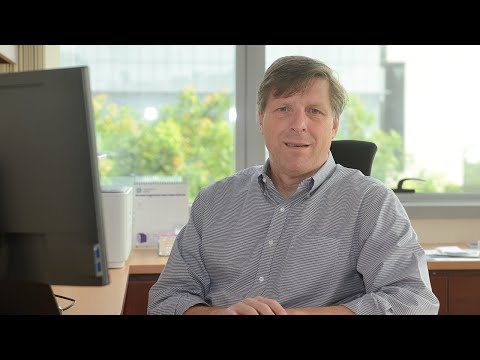
Just recently posted, recorded at the Gstaad Longevity investor Conference: https://www.longevityinvestors.ch
Just recently posted, recorded at the Gstaad Longevity investor Conference: https://www.longevityinvestors.ch
I watched the video and followed a link to a site with an article by Kennedy. Apparently he is working with the government of Singapore. First they will be testing exercise and some supplement interventions. But, he hopes to be testing rapamycin on people soon. It would be great if some large scale tests with people are done soon.
The article is here
Yes - I spoke with Max Unfried who works in his Lab (based in Singapore) at the recent San Francisco Longevity meetup. Max thought that the rapamycin study that Brian Kennedy is doing will be starting in early 2023, will consist of about 80 people, and will be 6 months long (they are looking at a large battery of biomarkers and blood tests to look for physiological improvements).
If results are as positive as I expect, I suppose that then there would be larger trials to follow.
New interview with Brian Kennedy:
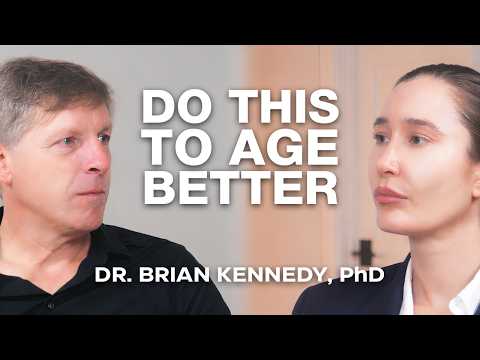
One thing he mentions is that he, personally, takes sub-lingual NAD, and he says it raises NAD levels in blood. Whether it also raises it in cells is yet to be determined.
Addendum: Oh, one other thing he did say was that he now uses a lot of language model AIs in his work. 1 hour, 1 minute in he says:
I never thought I would say this… half my lab is AI now. So, we’re doing a lot of drug screening – sort of in silico – looking at large language models and interrogating [for] drugs that might affect longevity. We’re doing that with peptides now.
New paper that includes Brian Kennedy:
https://onlinelibrary.wiley.com/doi/10.1111/acel.70517
Further down in the paper they mention some interesting results for CoQ10:
CoQ10 is a lipid-soluble antioxidant and mitochondrial electron carrier. We found that CoQ10 use at baseline was associated with significantly better odds of reduced biological age at follow-up, even though CoQ10 was not beneficial in the cross-sectional analysis. This result certainly merits follow-up given the multifaceted role of CoQ10 in longevity. CoQ10 levels decline with aging in mouse and human tissues (Kalén et al. [1989]) and, based on this, multiple groups tested whether CoQ10 supplementation can extend the lifespan of rats and mice, generally with negative results (Sohal et al. [2006]); Lönnrot et al. [1998]). In humans, on the other hand, CoQ10 has been found to improve cardiometabolic risk factors (Liu et al. [2022]) and decrease mortality in heart failure patients (Xu et al. [2024]).
Very annoying that it didn’t mention which form of Coq10 was used. Also didn’t mention which antihistamines were most beneficial. Or did I miss that?
In a longitudinal subset, intake of coenzyme Q10 (CoQ10) and dAKG was associated with increased odds of a lower Age Residual, but the results were not significant after multivariate correction.
Not impressive.
It is difficult to take this paper too seriously since it kicks off with an explicit contradiction on conflict of interest. The conflicts are substantial.
Substantively, the underlying results are messy and largely null. What’s “clean” (suspiciously so) is the abstract and conclusion. When you trace the headline claim through the supplements, almost every supportive result either fails proper correction, reverses under a more objective exposure measure, or sits with its confidence interval pinned against the null. These issues can be unpacked but I don’t think it is worth the time. The takeaway for me is that dAKG is something to keep an eye on and possibly experiment with while awaiting better data. In my view, Kennedy has diminished himself by shepherding this piece and then bombarding me with promotional email.
They should have used a shorter, tighter list, so that the false discovery rate would have been easier to overcome. Though, I guess it depends on how the list is chosen.
Its been determined that plasma NAD is rapidly broken down into it’s constituent parts.
Use of NAD is one of the biggest longevity scams going.
This PDF started with a search that had NO guardrails so the first part is highly influenced by influencers, blogs and clinics.
Then I added this guardrail “use only animal, preclinical, clinical studies published in reputable journals, NO influencers, NO youtube, NO clinics”
And the scam becomes obvious.
nad+ what is the typical dose used in clinics prov (1).pdf (520.6 KB)