Do the PSA test, guys!

Odds are, that the “powerful antioxidant” they are referring to is ergothioneine. That is a very complicated subject wrt. PC. First, because mushroom consumption seems notably protective against PC:

Mushroom consumption and incident risk of prostate cancer in Japan: A pooled analysis of the Miyagi Cohort Study and the Ohsaki Cohort Study

However, antioxidant use needs to be very carefully looked at in the context of concurrent anti-cancer therapy - there is a high likelyhood of undesirable intereference. In this specific instance, if speaking of ergothioneine, it must be noted that it occurs in some mushrooms at much higher levels and in some is virtually absent. One therefore should look at the specific mushroom species.

Therefore, it is a better approach to look at mushroom consumption impact in the context of already present PC - from the study above:

“This inverse relationship was especially obvious among participants aged ≥50 years and did not differ by clinical stage of cancer and intake of vegetables, fruit, meat and dairy products.”

“In that study, different doses of white button mushroom (i.e., Agaricus bisporus ) powder were taken by biochemically recurrent prostate cancer patients. During the trial, decline in prostate‐specific antigen (PSA) levels, which is used as an indicator of disease recurrence, was observed in 36% of patients, suggesting that mushroom intake might modulate PSA levels in biochemically recurrent prostate cancer.”

Obviously, the safer course is to stop medications, supplements and more extreme dietary intake profiles when undergoing cancer treatment, because you are cutting down on possible interactions and do not want unintended consequences - it allows the treatment to work without unnecessary variables which may be hard to calculate (even when beneficial).

3 Likes

Sorry about what you are going through, stay strong and you’ll come out of it a winner.

I just want to mention something that I’d ran into a while back (when a friend of mine was going through same situation as you) that fasting as long as heathy possible but anywhere 3-10 days water only is helpful, plus helps to reduce somewhat side effects of Chemo.

Below vid has some info on fasting, plus few anecdotal comments in the comments section.

Fasting vs. Cancer Cells: Positive Science- Thomas DeLauer

Good luck!

2 Likes

Oral health is important.

Recovering anaerobic bacterial genomes in saliva, tumour and blood whole genome sequencing data from patients with prostate cancer

https://www.nature.com/articles/s41522-026-01140-2

“Microbial constituents in the gastrointestinal tract, the urine and prostate tissue are being linked with clinical differences in prostate cancer, and a recent meta-analysis has linked periodontal disease to this cancer. Several hypotheses exist regarding how specific bacteria can contribute towards the development of prostate cancer. Recovering microbial genomes, and their genomic features, from clinical samples and investigating fine-scale taxonomy is a critical first step in investigating causality. Here, we describe the microbial diversity of samples associated with prostate cancer. Metagenomic assembly of non-human reads from the PanProstate Cancer Group, derived from blood, saliva samples and prostate tissue whole-genome data (N = 247), successfully reconstructed 249 highly complete bacterial genomes, predominantly from oral samples. Our data, reveals eighteen bacterial species from the oral cavity without species level classification, while demonstrating a wide range of known species. This approach enables us to gain additional insights of the microbes in cancer patients at no additional sequencing cost and has the potential to reveal new links that could improve our understanding of cancer initiation and development.”

Bacteria and aggressive PC:

Microbiomes of Urine and the Prostate Are Linked to Human Prostate Cancer Risk Groups

https://pubmed.ncbi.nlm.nih.gov/35450835/

" Abstract

Background

Bacteria play a suspected role in the development of several cancer types, and associations between the presence of particular bacteria and prostate cancer have been reported.

Objective

To provide improved characterisation of the prostate and urine microbiome and to investigate the prognostic potential of the bacteria present.

Design, setting, and participants

Microbiome profiles were interrogated in sample collections of patient urine (sediment microscopy: n = 318, 16S ribosomal amplicon sequencing: n = 46; and extracellular vesicle RNA-seq: n = 40) and cancer tissue (n = 204).

Outcome measurements and statistical analysis

Microbiomes were assessed using anaerobic culture, population-level 16S analysis, RNA-seq, and whole genome DNA sequencing.

Results and limitations

We demonstrate an association between the presence of bacteria in urine sediments and higher D’Amico risk prostate cancer (discovery, n = 215 patients, p < 0.001; validation, n = 103, p < 0.001, χ2 test for trend). Characterisation of the bacterial community led to the (1) identification of four novel bacteria (Porphyromonas sp. nov., Varibaculum sp. nov., Peptoniphilus sp. nov., and Fenollaria sp. nov.) that were frequently found in patient urine, and (2) definition of a patient subgroup associated with metastasis development (p = 0.015, log-rank test). The presence of five specific anaerobic genera, which includes three of the novel isolates, was associated with cancer risk group, in urine sediment (p = 0.045, log-rank test), urine extracellular vesicles (p = 0.039), and cancer tissue (p = 0.035), with a meta-analysis hazard ratio for disease progression of 2.60 (95% confidence interval: 1.39–4.85; p = 0.003; Cox regression). A limitation is that functional links to cancer development are not yet established.

Conclusions

This study characterises prostate and urine microbiomes, and indicates that specific anaerobic bacteria genera have prognostic potential.

Patient summary

In this study, we investigated the presence of bacteria in patient urine and the prostate. We identified four novel bacteria and suggest a potential prognostic utility for the microbiome in prostate cancer."
1 Like

https://jamanetwork.com/journals/jamainternalmedicine/fullarticle/2808648

In this systematic review and meta-analysis of 18 long-term randomized clinical trials involving 2.1 million individuals, colorectal cancer screening with sigmoidoscopy prolonged lifetime by 110 days, while fecal testing and mammography screening did not prolong life. An extension of 37 days was noted for prostate cancer screening with prostate-specific antigen testing and 107 days with lung cancer screening using computed tomography, but estimates are uncertain.

37 days…

Absolutely right!

Thanks Kelman. Fortunately I am not on chemotherapy (at least; not yet.)
I found fasting extremely difficult when I was healthy. Not looking forward to it when sick.

3 Likes

No idea if any of this is helpful to you @DrT , but…

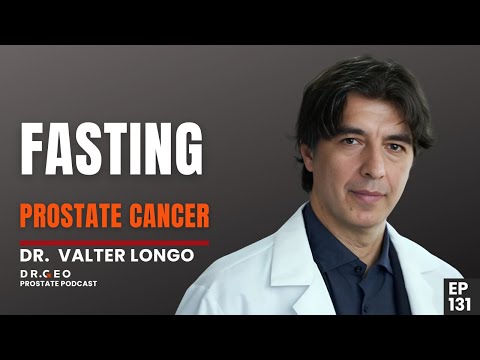
Regarding @Kelman1’s fasting idea. I did not look at his link, but Valter Longo is well known for creating Prolon. He’s done many studies on how fasting interacts with chemo (which, as you noted, you are thankfully not on).

Incase you don’t know, Prolon is a 5 day fast that allows you to eat food and it tricks your body into thinking it’s on a water only fast. I’ve done Prolon many times and I can not even do a real fast for 24 hours.

I didn’t watch, but I found Longo being interviewed about fasting and prostate cancer.

Tons of info on him out there, but here is his create cures clinic.

1 Like

My last PSA score was 0.73 which is higher than the 0.6 for people around the age of 48 at the time. I will do another test next week to see.

1 Like

Just got my PSA result back yesterday-0.3. I’m not on TRT now since a few years but that always elevated it more. So, direct impact there. Hopefully, I can maintain this level for the next 50 years (I’ll only be 125 then).

3 Likes