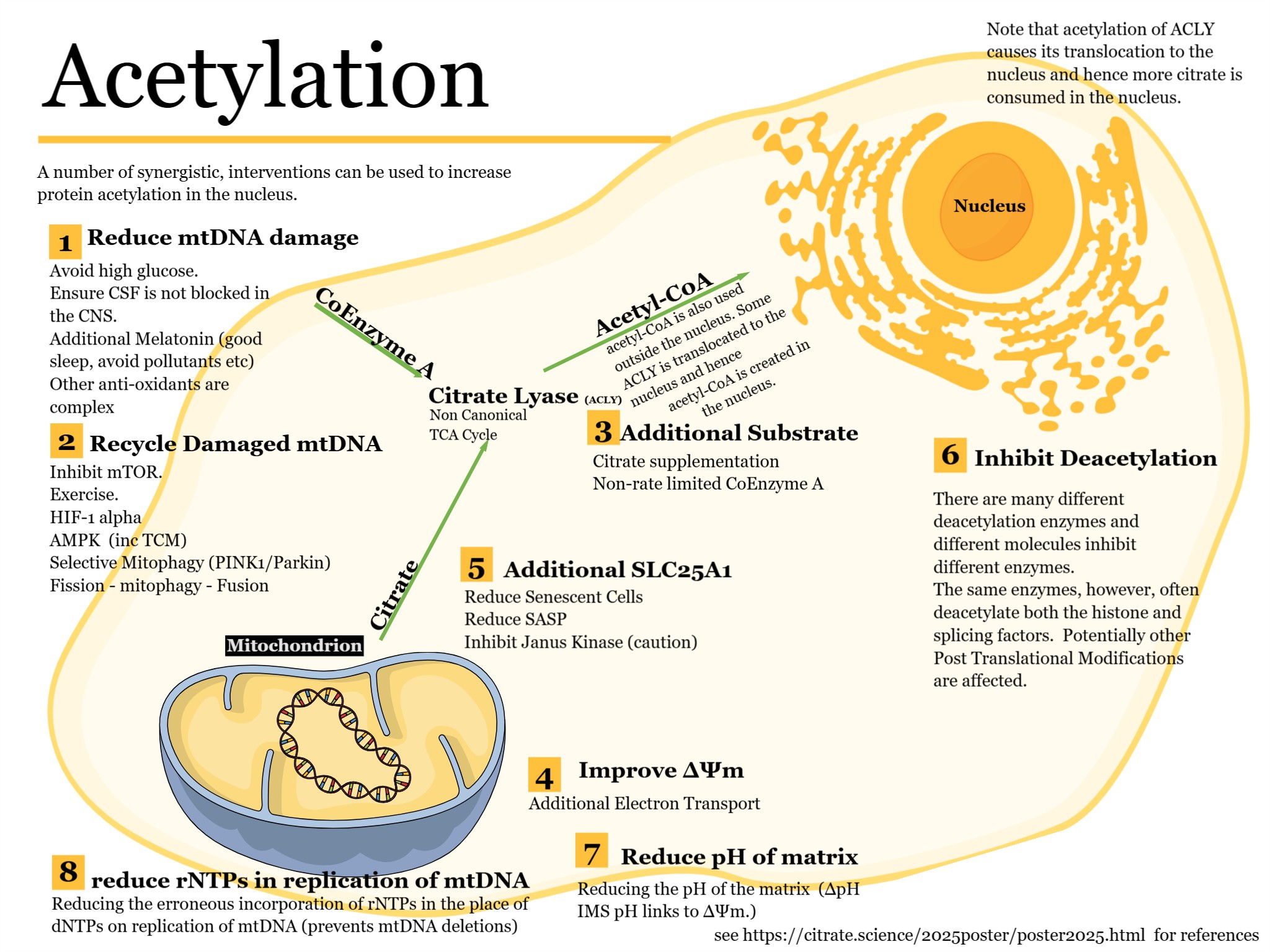
One of the reasons I started taking large amounts of melatonin was its reported anti-cancer effects. In the end it acts to protect mtDNA which is probably why it is anti-cancer (if it is).
It depends very specifically at what stage, what combination and in which context. For prevention, not very high along a continuum, already starting at 0.3mg (this is what I do), for extant cancer in combination with chemo drugs it’s very individual depending on the specific drug(s).
a) I don’t think there is a recommended dose.
b) The lack of IP means that private funding will not be available to get through the regulatory processes.
I have seen experimentation with doses of the order of grams.
I personally started taking large nightly doses (over 1,000mg=1.0g) of melatonin in 2024. It is probably a no brainer if you have some form of cancer, but timing needs to be got right. I think it needs to be taken during the night period. However, there are only anecdotal reports on this and this is unlikely to change in the near future.
Citrate is more complex as cancerous cells in prostate cancer absorb more citrate. However, whether that is because they are short of citrate and are trying to rescue themselves or whether it is part of being cancerous is where the debate lies and there is no certainty here.
The prostate and prostate cancer IMO is intimately linked to citrate metabolism.
Obviously there are complexities of polypharmacy as well.
Thanks for the response. Wow that is HUGE and I assume you haven’t experienced any sides at these high amounts. Plus, the cost seems to become an issue at that high of a dose. i.e. I see as the highest dose 40mg pills at about $20 for 120 pills which would translate to about $4 per day and that would be by far the most expensive intervention in my/anyone’s stack. So with regards to that does the cost justify marginal *or maybe not so marginal) justify 1G intake as opposed to say 20-40mg? and 2. Is there a different supply route that can be explored at much cheaper cost?
I don’t know for certain, but it is an expensive intervention.
There lots of different sources, but it remains an expensive intervention.
There are 60mg pills, but they are not the cheapest per dose. It is also possibly to buy it in a powder form.
The problem with identifying side effects is I have a large number of interventions and I manage the overall effects in the round. I think melatonin pushes up SHBG, but I am not stressed about that.
Thanks for your response, I have one final question PC related which I think you have responded in the past but just to confirm. At best of your knowledge do you know that any of the most common interventions we are doing have a negative (as in help increase the chances) of PC cancer? I.e. I see you have indicated that Telma, EMPA, Melatonin have positive effects with RAPA and lipid lowering being either neutral or perhaps helpful and that is great to know, but how about some other ones i.e. modafinil (and its class) or LDN, or metformin/Imeglimin, Acarbose etc?
I can’t say anything about drugs that I have not investigated, because I have zero interest in them - metformin (although I happen to know it’s generally regarded as anti-cancer), LDN, moda. But anti-diabetic drugs as a class should generally be anti-cancer, however that is depending on individual MOA - obviously, insulin is gasoline on fire (yikes!). The study of cancer and anti-diabetic drugs is complicated by the fact that almost nobody takes those drugs in the biohacker context (as most of us here do), usually they are taken because the patient has T2DM, and only there will you have studies. Furthermore, when it comes to PC, having T2DM lowers risk of PC - the fact that diabetics make less insulin might be a factor. And to make it more complicated, having T2DM also makes survival worse should you actually get PC. Here’s a look at some of these issues:
The Influence of Anti-Diabetic Drugs on Prostate Cancer
Acarbose by itself is fairly neutral wrt. PC, but as we know from the ITP, it synergizes with rapamycin for LE. It is therefore not utterly shocking that it would do so too wrt. some cancer (here: renal):
The Antidiabetic Agent Acarbose Improves Anti-PD-1 and Rapamycin Efficacy in Preclinical Renal Cancer.
Imeglimin is a pretty new drug. There are not going to be many studies outside its primary indication. But in keeping with its class effects, it likely has some anti-cancer impact:
Imeglimin Exerts Anti‐Tumor Activity in Multiple Myeloma Through Affecting Energy Metabolism and Downregulating IL‐16 Expression
Thanks for this. I was already aware of that case. Although I have the Fenbendazole I haven’t actually taken it yet. I’m taking ivermectin plus mebendazole and 4 days on; 3 days off.
Thanks a heap, CT.
Oddly enough. I have already been taking Telmisartan for about a year for BP and was unaware of the evidence that it synergises with both ADT and DBT.
So that was good news!
My understanding of the anti-helmintics is that in part at least they operate through a route which passes through mTOR. Hence if you are already using rapamycin I am not sure that they add that much, but they also may not subtract.
OTOH this would explain why anti-helmintics have a link to odd unpredictable successes.
As long as you are considering over the counter adjunct therapies:
High dose vitamin K2 for a week
Artemisinin for a week
Possibly doxycycline for a few days
Kelman,
FYI I took 1000mg of melatonin once and felt very odd.
But, incase this is helpful to you or anyone:
On occasion, I used to take 100mg single pills of melatonin from Purebulk.
120 pills, 100mg each and no fillers, for $46.
(They sell powder which I imagine is less expensive)
FWIW I currently take 30grams melatonin along with 3g of glycine contained in my 3 nightly Solaray pills (I chose the 3 pill dose only for the 3g of glycine content). It’s a mix of extended and immediate release of melatonin.