I’ve read articles where they estimated about 20% of oil remained encapsulated in the matrix and found undigested in stools. This doesn’t happen with nuts butters.
2 Likes
It has something to do with the fats not phytosterols. PUFA nukes apoB when replacing SFA, for instance. I’m not surprised there are weird effects when you eat very little dietary fats at all and replace carbs for mainly PUFA and MUFA.
1 Like
Spinach is one of the highest-oxalate foods, with about 970 mg of oxalate per 100g of raw spinach. Oxalates bind with calcium in the kidneys to form calcium oxalate crystals, the most common type of kidney stone. Most healthy people (usually under 40) can safely eat spinach, especially if they stay hydrated and consume adequate calcium with meals. However if your eGFR is not perfect it’s better to exclude spinach from your diet.
2 Likes
Very sensible observation, on this topic, there is a very good podcast, I think from Peter Attia, with a specialist in kidney stones. I remember what follows:
1)There are people genetically predisposed to kidney stones. Such phenotypes require exceptional attention, such as like decrese drastically dietary oxalates.
2) Countermeasures against the effect of oxalates are many: frozen spinach; dairy products in the same meal; adequate water intake; fruit acids, like malic, citric and so on (are very effective on soft stones).
A good strategy in my opinion is rotating spinach which other high-nutrient greens with little or no oxalates, like kale, collards and other. Plus eliminate other sources like almonds and almond milk.
4 Likes
Strangely, the podcast seems to be no longer available. I can rule out the eventuality that I’m hallucinating, since I remember having listened to this specialist (Dr. Coe?) and all the details, I even remember the road along which I was driving while listening. too many specific details, like almonds and almonds milk being rich in oxalates, a detail I didn’t know before. It may have been another host but…???
1 Like
Another new Diet Study, Long term. Interesting to see that they note: “In the study, Lv and her colleagues found that high fibre intake had the strongest association with increased longevity”.
These 5 diets could add years to your life even if you have bad genes
Five dietary patterns that involve eating lots of plants have been linked with living up to three years longer, even among people who are genetically predisposed to have a shorter life
Five dietary patterns have been associated with living years longer, regardless of someone’s genetic risk factors for disease, in a study of more than 100,000 people.
Yanling Lv at Huazhong University of Science and Technology in China and her colleagues looked at the association between diet and longevity by analysing data from 103,000 participants in the UK Biobank study. The individuals were scored based on how closely they reported adhering to five previously validated healthy diets: a Mediterranean-type diet, a plant-based diet, the DASH (Dietary Approaches to Stop Hypertension) diet, the DRRD (Diabetes Risk Reduction Diet), and the AHEI (Alternative Healthy Eating Index).
These five diets vary slightly in their approach, but in general, “they’re all recommending high intakes and a big variety of vegetables and fruit, they’re all recommending whole grain intake, they’re all recommending lean sources of protein, and many of those are vegetarian proteins”, says Collins. They also recommend steering away from sugary drinks and ultra-processed foods.
The study’s subjects were followed for a decade, during which time around 4300 of them died. Lv and her colleagues found that the participants whose dietary habits closely matched one or more of the five healthy dietary patterns were less likely to have died, even after adjusting for factors like their exercise levels and smoking status.
The study also found that people with genetic variants linked to reduced longevity were still less likely to die if they ate well, demonstrating that “even if you haven’t got great longevity genes, diet can make a big difference in terms of mortality risk,” says Collins.
The reason these five diets are associated with longer life is probably that they all involve eating a large amount and diversity of plants, which contain fibre, vitamins, minerals and phytonutrients, says Collins.
In the study, Lv and her colleagues found that high fibre intake had the strongest association with increased longevity, and a high intake of sugar-sweetened beverages had the least. Excess sugar consumption can lead to the development of type 2 diabetes and other metabolic conditions, thereby reducing longevity, they write.
A weakness of the study was that dietary scores were based on the participants’ recollection of what they had eaten in the last 24 hours on just two separate days, says Luigi Fontana at the University of Sydney in Australia. “A multi-day food diary can better approximate longer-term patterns,” he says.
Read the full story: These 5 diets could add years to your life even if you have bad genes (New Scientist)
Source Paper (open access) :
Healthy dietary patterns, longevity genes, and life expectancy: A prospective cohort study
2 Likes
Don’t eat ultraprocessed, hyperpalatable foods



Don’t eat much saturated fat
Don’t eat much sodium
Drink plenty of water
3 Likes
Potatoes are healthy, don’t believe the psyop brothers and sisters
Results
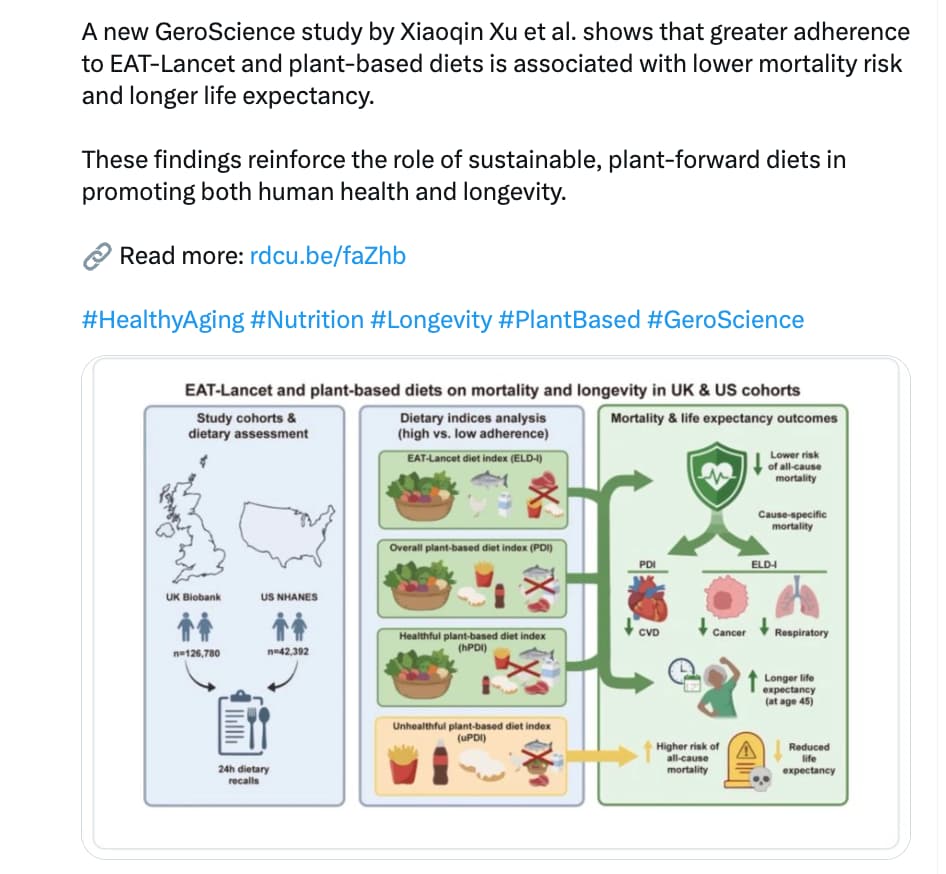
Among 77,297 participants with a mean baseline age of 41.1 y (range: 18.0–63.9 y), we observed 27,848 deaths, including 9072 deaths due to CVD, over a median follow-up of 33.5 y. Participants who consumed ≥14 potatoes/wk had a lower risk of all-cause death compared with those consuming ≤6 potatoes/wk (HR: 0.88; 95% CI: 0.84, 0.93). Potato consumption was associated with a minor, inverse risk of death due to CVD, IHD, and AMI. In continuous analyses of cumulative intakes, each 100 g/d increment was associated with 4% lower risk of death from all causes (HR: 0.96; 95% CI: 0.94, 0.98), CVD (HR: 0.96; 95% CI: 0.93, 0.99), IHD (HR: 0.96; 95% CI: 0.91, 1.00), and AMI (HR: 0.96, 95% CI: 0.91, 1.01).
Conclusions
In this cohort with a generally high consumption of predominantly boiled potatoes, we find modest, inverse associations between potato consumption and death from all causes, CVD, and IHD.
https://www.sciencedirect.com/science/article/pii/S0022316624002888
Potatoes or taters in Hobbitish, were root vegetables that were apparently among the staple foods of the Hobbits (Hamfast Gamgee was recognized locally as an expert on growing potatoes).[1] Samwise Gamgee expected to find them in Ithilien.[2] https://tolkiengateway.net/wiki/Potatoes
2 Likes
1 Like
That’s unfortunately the main, huge problem of nutritional science. One authoritative source says potatoes are unhealthy and should not be eaten (too often). This source, Walter Willett, is the indiscussed giant in his field (nutritional epidemiology) and his observations are based upon the most temporally and numerically extensive cohorts.
Then comes another study, which says otherwise. Whom should we believe?
My conclusion is that nutrition is a very imperfect science based on degrees of belief. In this instance, if A_User will beg my pardon, I will assign much more belief to Walter Willet and his NAHNES and Framingham cohorts rather than to the cited Norwegian study and its Norwegian cohort.
Even better: I’ll go on eating potatoes sparingly ( I eat them very, very sparingly) and preferentially cooled and dressed with apple cider vinegar.
I have by now built a conceptual framework for nutrition. This is one of the sciences more susceptible to individual variations, both in the dose-response relationships and in the quality-response (type of food and the system response to it).
We have a huge, millennial empirical database built upon traditional and popular medicine.
When I was 16 (almost half a century ago), I already knew the main concept of healthy nutrition: eat abundant vegetables, fruit, whole grain cereals; avoid too much meat or better avoid it completely. Eat legumes, dairy porducts and eggs instead. Eat abundant nuts.
Present day nutritional science has confirmed the above choices, although with a higher detail and minutiae, in some instances contradicting some of the indications I knew but providing evidence based on food chemistry and subjective dose response (like in coffe and cacao, I had not been taking them for many years).
Bottom line of my rant: If we take the popular and traditional healthy dietary suggestions as a prior Bayesian distribution, we can update such a distribution with modern-day evidence that, more often than not, will just reinforce the prior (traditional medicine-based dietary indications).
I have just about ceased to read articles on nutrition. They keep reinforcing the prior.
It is a stagnant science perhaps.
1 Like
Norwegian cohorts are different, that’s the point. I guess they’re skiing in their fjords to their log cabins, chopping wood, carrying water. Eating boiled potatoes, rye bread, salmon, or something. Higher potato consumption maybe implies more of the other stuff too.
Meanwhile NAHNES is potatoes as a “vegetable” served in the cafeteria, i.e fries, maybe.
So maybe less residual confounding or more. That’s a problem with observational studies, but Walter Willett’s work is good.
ICYMI

We should ask Dr. Willett how to reconcile the two. There is probably some explanation, although I doubt that today Norwegians are so active as you say, especially so in cities. But they might have a different glucose metabolism.
Willett himself says (interview with Simon hill) that in his studies there wasn’t overwhelming evidence of the health effects of beans and legumes, and he comments that is maybe due to the fact that he didn’t study Asian cohorts.
But, if we restrict the extrapolation to health-educated, western individuals, then his conclusions should hold true (within of course the limits of correct data elaboration and interpretation).
This is good to see (a movement towards the healthier types of foods we eat here in California)… Now we just need to get the middle of the USA to follow us in this area 
The Californication of middle-class Chinese diets
China wants more healthy, clean and even foreign food
Dai jianjun, an organic restaurateur in the eastern city of Hangzhou, was ahead of his time. For more than 20 years his buyers have obsessively sourced ingredients, paying farmers in Zhejiang province above-market rates not to use chemical fertilisers or pesticides. It seems to have been worth the trouble: his Dragon Well Manor restaurant has a Michelin star. He says his grandmother believed that the first rich generation buys homes, the second knows how to dress and the third knows how to eat.
As China’s almost 500m-strong middle class—with at least $15,000 in annual disposable income—grows richer and larger, its members are changing what they put into their shopping baskets. They want to eat more healthily, safely and simply. China’s food system is trying to keep up with their developing tastes. Farms are producing more proteins and fruit familiar in Western countries, grocers are selling more organic produce and restaurants are compiling healthier menus. The composition of Chinese plates is changing (see chart). Although pork is king, fish and seafood together are the second most popular protein. In fact, middle-class diets appear to be turning more Californian. Salmon, blueberries and avocados are among the foods growing in popularity.
Throughout their history Chinese often worried whether they could get enough staples, such as rice and noodles, to eat. In a nation of farmers, agriculture still employs one in five workers. It is no mean feat to feed 17% of the world’s population with 9% of its arable land. Accordingly China relies on vast imports of agricultural products and the government wants to boost self-sufficiency. Most Chinese enjoy plenty of good fare. In less than four decades, the country has gone from rationing food to reining in waistlines: more than half of its adults are now overweight or obese. Many now fret more about what exactly they are eating than whether they will get enough.
The desire to eat better is common as countries prosper. But given China’s history of food-safety problems a dearth of trust also helps explain the shift. A scandal involving tainted milk powder that sickened more than 6,000 babies in 2008 shook the country. More recent controversies over dirty cooking oil and restaurants serving pre-made meals have also ignited outrage.
To understand the Californication of middle-class diets, start by considering how demand for certain foodstuffs is changing. In 2022 government guidelines recommended salmon as a healthy source of Omega-3 for the first time. For years it was only eaten by the very rich. Now the pink, meaty flesh has grown popular across the country. An army of delivery drivers whizz cuts from grocers, specialist shops and livestreamers with sashimi-grade processing factories to the country’s growing middle class. China became the second-biggest salmon market in the world this year, says Sigmund Bjorgo of the Norwegian Seafood Council.
Full story: The Californication of middle-class Chinese diets (The Economist)
2 Likes
The Business Insider article covers practical dietary changes focused on extending lifespan while simultaneously reducing grocery costs. It addresses the common misconception that eating for longevity requires expensive, specialty wellness products or high-cost superfoods. Instead, it highlights that a longevity-focused diet centers around affordable, whole, plant-based foods.
The key strategies and actionable “simple swaps” discussed include:
- The Affordable Pantry: Prioritizing shelf-stable whole foods like beans, lentils, chickpeas, oats, and brown rice. These items cost pennies per serving but provide dense fiber, plant protein, and complex carbohydrates that support metabolic health and microbiome diversity.
- Embracing Frozen Produce: Swapping expensive, out-of-season fresh fruits and vegetables for frozen alternatives. Frozen produce is flash-frozen at peak ripeness—preserving micronutrients and antioxidants—while reducing food waste and lowering upfront costs.
- Strategic Meat Reductions: Swapping out processed meats and heavy rotations of red meat for plant-based proteins (legumes and tofu) or small fatty fish (like sardines). This reduces intake of saturated fats and advanced glycation end-products (AGEs) while lowering the grocery bill.
- Nutrient-Dense Beverage Swaps: Replacing expensive, sugar-sweetened beverages or specialty energy drinks with cost-effective options like green or black tea, which are rich in polyphenols and associated with reduced cardiovascular risk.
The Original Research
The article’s practical recommendations are anchored in robust epidemiological modeling. The core study behind these lifestyle and longevity guidelines was conducted by researchers at the University of Bergen, Norway, using data from the UK Biobank cohort.
The study analyzed the dietary habits of 467,354 participants to model how sustained shifts from unhealthy or average Western eating patterns to a “longevity diet” impact life expectancy.
Key Scientific Findings:
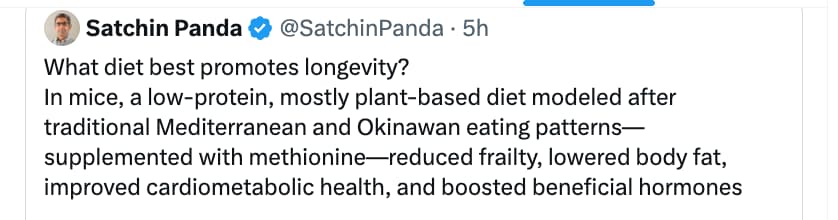
- Lifespan Extension: A sustained shift from an unhealthy diet to a longevity-associated diet (characterized by high intakes of whole grains, nuts, fruits, and legumes, and low intakes of sugar-sweetened beverages and processed meats) was associated with a 10.8-year gain in life expectancy for 40-year-old males and a 10.4-year gain for 40-year-old females.
- Impact of Modest Changes: Even switching from a typical “average” diet to standard nutritional guidelines (like the UK’s Eatwell Guide) yielded an approximate 8.6 to 8.9-year increase in life expectancy for middle-aged individuals.
- Efficacy in Older Adults: The data demonstrate that plastic adjustments to lifespan remain viable later in life; initiating these dietary changes even at age 70 predicted a 4 to 5-year gain in remaining life expectancy.
Original Research Paper
For the full methodology, hazard ratios, and cohort data, see the peer-reviewed publication:
Fadnes, L. T., Celis-Morales, C., Jørgensen, J.-S., et al. (2023). Life expectancy can be increased by up to 10 years by sustained shifts towards healthier diets in the United Kingdom. Nature Food, 4, 1019–1026.
2 Likes
1 Like
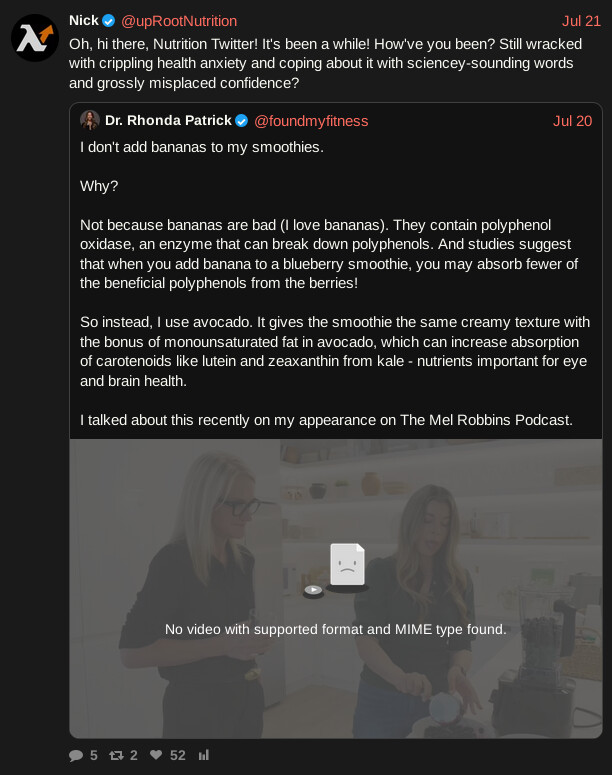
8 person study btw, where the smoothies had this effect only after long sitting times before consumption, but it’s not even worth to debunk
Can you believe if you believe this is the peak or worth your time for healthspan
2 Likes
This was an interesting paper (and video) that included a WFPB group and a control group, studying subjects with breast cancer. Those eating a WFPB diet had a 10% mortality rate whereas those in the control group had a 50% mortality rate.
This captures the intervention group diet nicely:
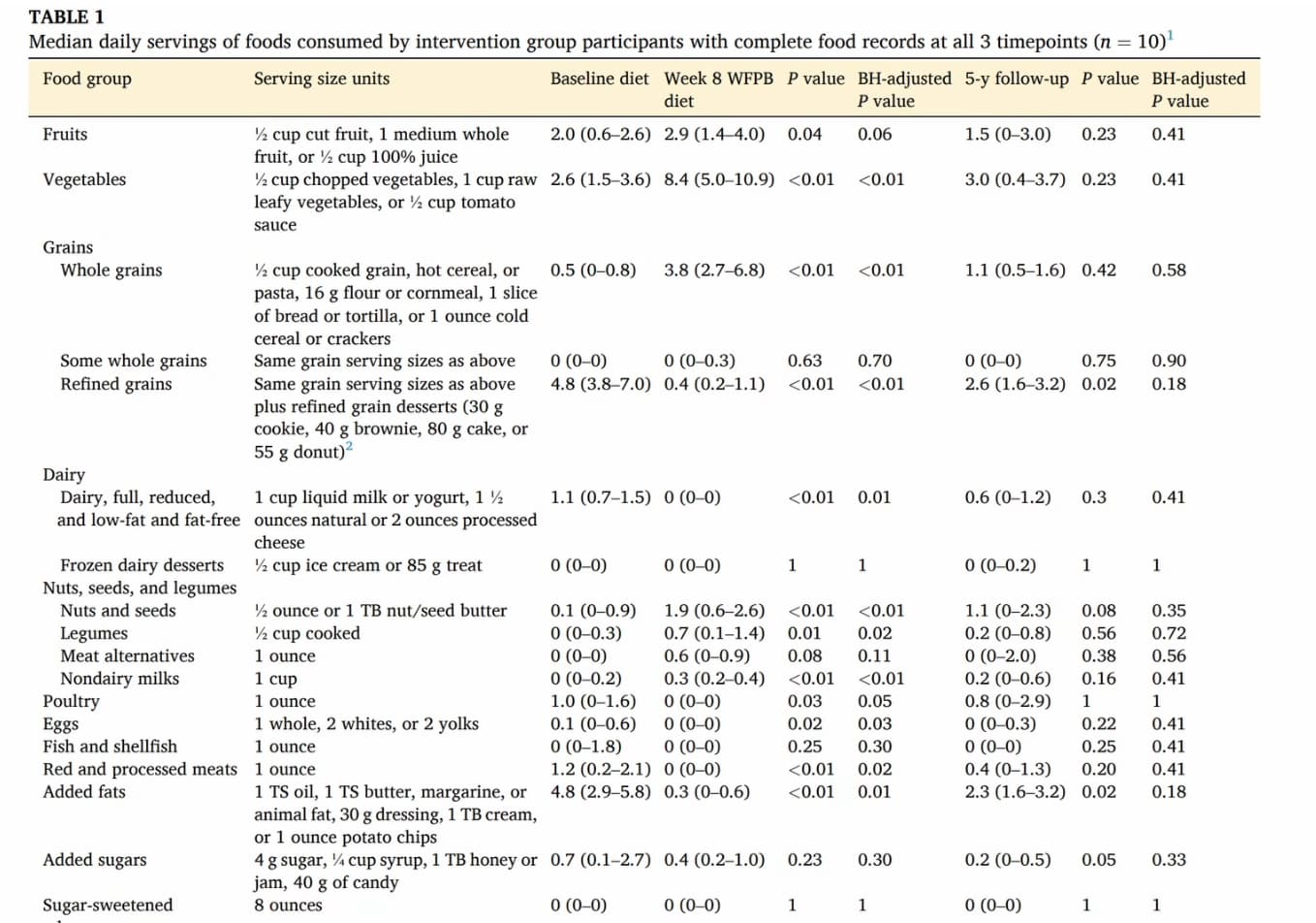
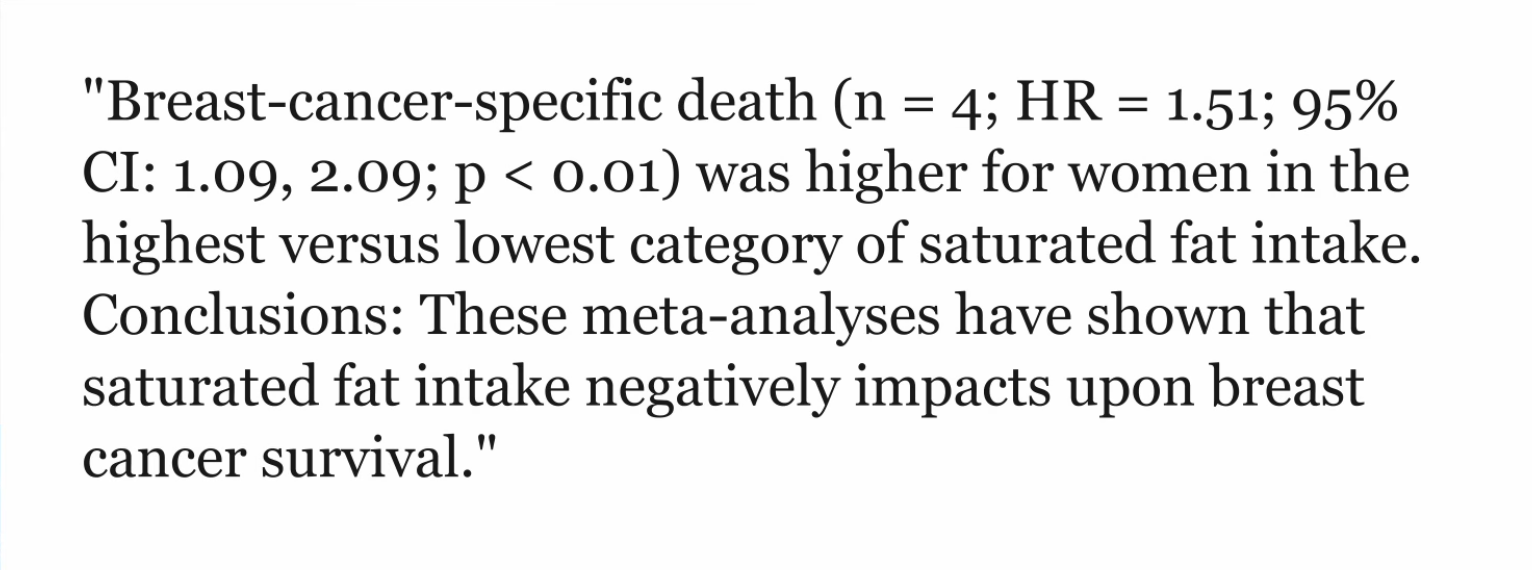
It is also quite interesting to see the extent to which saturated fat negatively associates with breast cancer survival. It lower the odds by 50%.

1 Like
I stand corrected, based on Rhonda’s response to Gil, but there’s a greater point
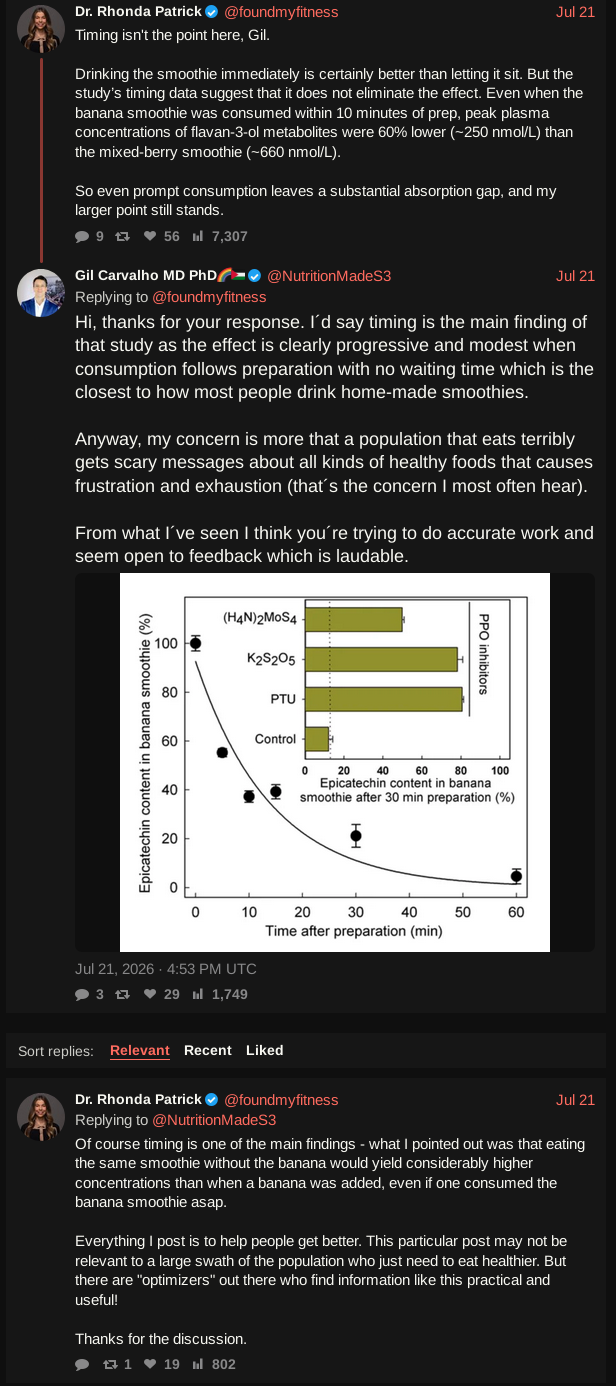
It’s banaover. I don’t eat them particularly much either way.
Source: Dr. Rhonda Patrick on X: "This is why I swap a banana with avocado in my blueberry kale smoothie. https://t.co/YRYRd3TVes" / X
3 Likes